Bathroom remodel materials in Reno typically include porcelain tile, natural stone, quartz, and porcelain slabs, selected across three main surfaces: shower walls and floors, bathroom floors, and vanity countertops. Each surface has different performance requirements, and Reno's climate adds considerations that national guides often leave out: low year-round humidity, hard water with elevated mineral content, and temperature swings from 90-degree summer afternoons to subfreezing winter nights.
At roughly 4,500 feet of elevation in the high desert of the Truckee Meadows, Reno bathrooms sit at the intersection of a dry outdoor climate and the concentrated moisture produced by daily showers. The materials that hold up best here handle both conditions without demanding constant maintenance. This guide covers the main material options for each surface, what to look for in each, and how Reno's specific climate factors into the decision.
Shower Tile: What to Know Before You Choose
The shower is the most demanding surface environment in any bathroom. Walls, floors, and niches receive daily water exposure, temperature fluctuation, and cleaning product contact, so material selection here carries more consequence than anywhere else in the room.
Porcelain tile is the most widely recommended material for shower walls and floors, and for good reason. Porcelain is fired at higher temperatures than ceramic, producing a denser body with very low water absorption and a reduced risk of dimensional movement over time.
For shower floors specifically, slip resistance is a functional requirement, not just a preference. Per ANSI A137.1, tile specified for level interior spaces expected to be walked on when wet must meet a minimum wet DCOF (Dynamic Coefficient of Friction) of 0.42, tested per ANSI A326.3. For shower floors, which fall under the Interior, Wet Plus category in the updated ANSI A326.3-2021 classification system, it is generally accepted that a minimum wet DCOF of 0.50 is appropriate. Matte and textured finishes, small-format mosaic tiles, and porcelain with a structured surface texture all tend to perform well in this category. When reviewing tile specifications, ask for the DCOF rating and the product use category declaration before finalizing your selection.
Natural stone in the shower, particularly marble and travertine, brings a level of warmth and visual depth that no manufactured material fully replicates. Both materials require sealing before installation and resealing periodically, as they are porous enough to absorb water and cleaning products over time. In Reno's hard-water environment, polished stone surfaces can show mineral deposits and water spots more visibly than honed or matte finishes. If you want natural stone in the shower and prefer lower maintenance, a honed finish reduces glare and is generally more forgiving with spotting. Acid-based cleaners, including many standard bathroom products, should never be used on marble or limestone, as they etch the surface. The Natural Stone Institute provides detailed guidance on appropriate cleaners for calcareous stones.
Large-format tile has become a dominant trend in primary bathroom showers across Reno. Tiles measuring 24 by 48 inches or larger reduce grout lines on shower walls, simplifying cleaning and creating the seamless, spa-influenced aesthetic common in newer Reno neighborhoods. On shower floors, where drainage slope is required, smaller tiles are the better choice as they allow the installer to create the necessary slope cleanly.
Mosaic tile fills a useful role on shower floors and niche accents. The density of grout lines in a mosaic installation increases traction, which is part of why small-format options work well for shower pans. Glass, glazed porcelain, and natural stone mosaics all work in wet environments, with glazed porcelain and glass being the lower-maintenance choices.
Once the shower floor material is settled, the walls are where material decisions shift from technical requirements toward design intent.
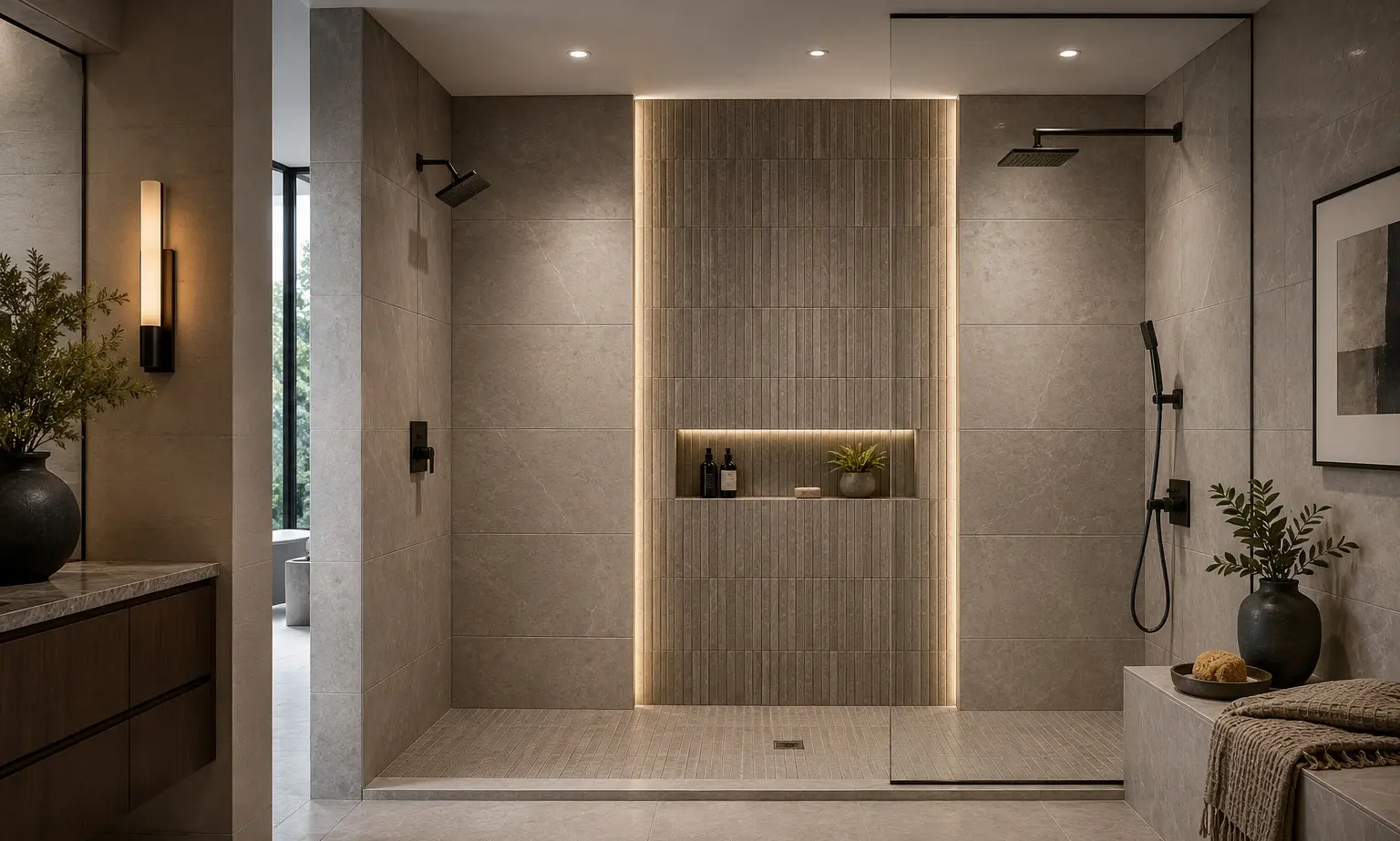
Shower Walls and Accent Areas: Design Options Worth Considering
Shower walls carry less technical constraint than shower floors. The slip resistance thresholds that apply to floors do not apply to walls, which opens up a wider range of finishes, formats, and materials.
Subway tile remains one of the most enduring choices for shower walls. The 3-by-6-inch classic format, the elongated 4-by-12 and 3-by-9 variations, and stacked or offset installation patterns all read well in Reno homes across a range of styles, from the transitional interiors of Caughlin Ranch to the cleaner, more contemporary builds in Spanish Springs and Sun Valley. Glazed white, warm cream, and soft grey are timeless colorways; darker options in navy, forest green, or charcoal are gaining traction in primary bathrooms where contrast is part of the design intent.
Feature walls and niches are one of the more effective ways to add depth to a bathroom without adding complexity to the entire room. A single wall finished in a contrasting material, a book-matched marble-look slab panel, or a vertically laid stone tile can anchor the shower visually and define the space. Mosaic tile in a shower niche serves both function and decoration, providing a practical storage surface while adding a material moment that stands apart from the surrounding wall tile.
Decorative and patterned tile is well suited to powder rooms, where the surface area is smaller and the space exists primarily for visual impact rather than heavy daily use. Geometric patterns, hand-painted cement-look porcelain, and encaustic-style tiles can all work effectively in a half bath where a bold material statement does not have to survive the same use conditions as a full shower surround.
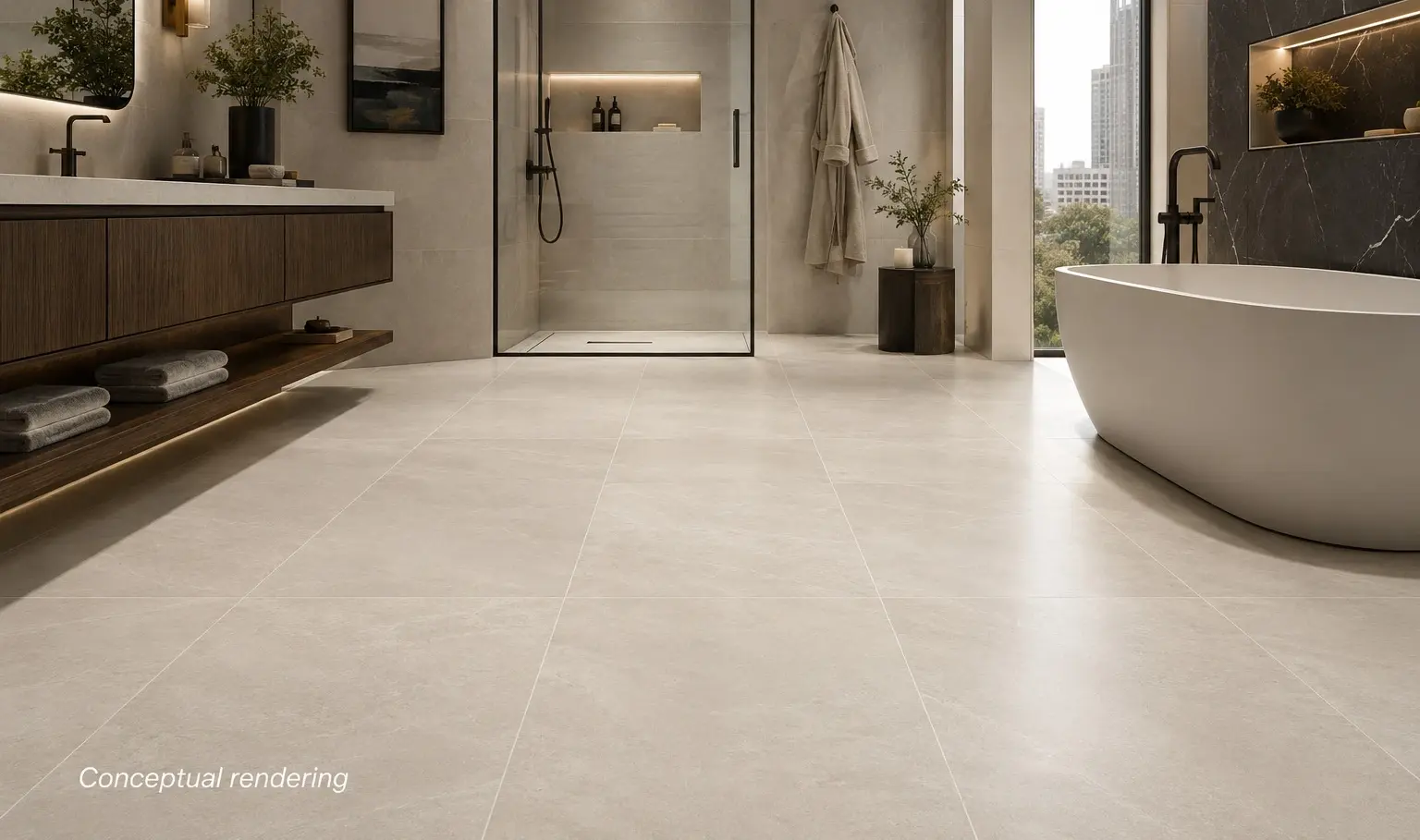
Bathroom Floor Tile: Practicality Meets Design
The bathroom floor occupies a middle ground between the high-moisture demands of the shower and the drier environment of the vanity area. It needs to handle water from drips, foot traffic from wet feet, and the full range of Reno's seasonal temperature conditions in bathrooms that may not be climate-controlled at all times in a secondary space.
Porcelain is again the leading choice for bathroom floors, particularly in larger formats. In a Reno home, porcelain holds up well against the temperature differential between a warm bathroom and the relatively cold subfloor conditions in winter, and its low absorption rate means it will not take on moisture from the occasional splash or wet bath mat sitting too long.
Wood-look porcelain has become one of the most popular bathroom floor choices across Northern Nevada. The aesthetic bridges the indoor-outdoor, High Sierra design sensibility common in the area's newer homes, bringing a warm, natural tone without the moisture sensitivity of actual hardwood. Wide-plank wood-look porcelain in warm oak, driftwood grey, or walnut tones pairs well with the natural stone vanity slabs and neutral wall tile that dominate contemporary Reno interiors.
Ceramic tile remains a practical and cost-effective option for secondary bathrooms. It is somewhat less dense than porcelain and absorbs slightly more water, but in a floor application with proper installation, it performs reliably. Glazed ceramic should be selected with a textured or matte surface finish for bathroom floors to ensure adequate traction, particularly if the space will be used by children or older residents.
In any wet bathroom floor area, the ANSI A137.1 minimum wet DCOF of 0.42 applies. For primary bath floors where bare feet are common and wet conditions are frequent, products meeting the Interior, Wet Plus classification (minimum 0.50 DCOF) provide an added margin.
Natural stone tile on bathroom floors, including marble, travertine, and slate, delivers a strong visual statement and is appropriate when properly sealed and maintained. In Reno's hard-water environment, a honed or brushed surface finish is worth considering: it holds traction better than polished stone on wet floors and shows mineral deposits less prominently.
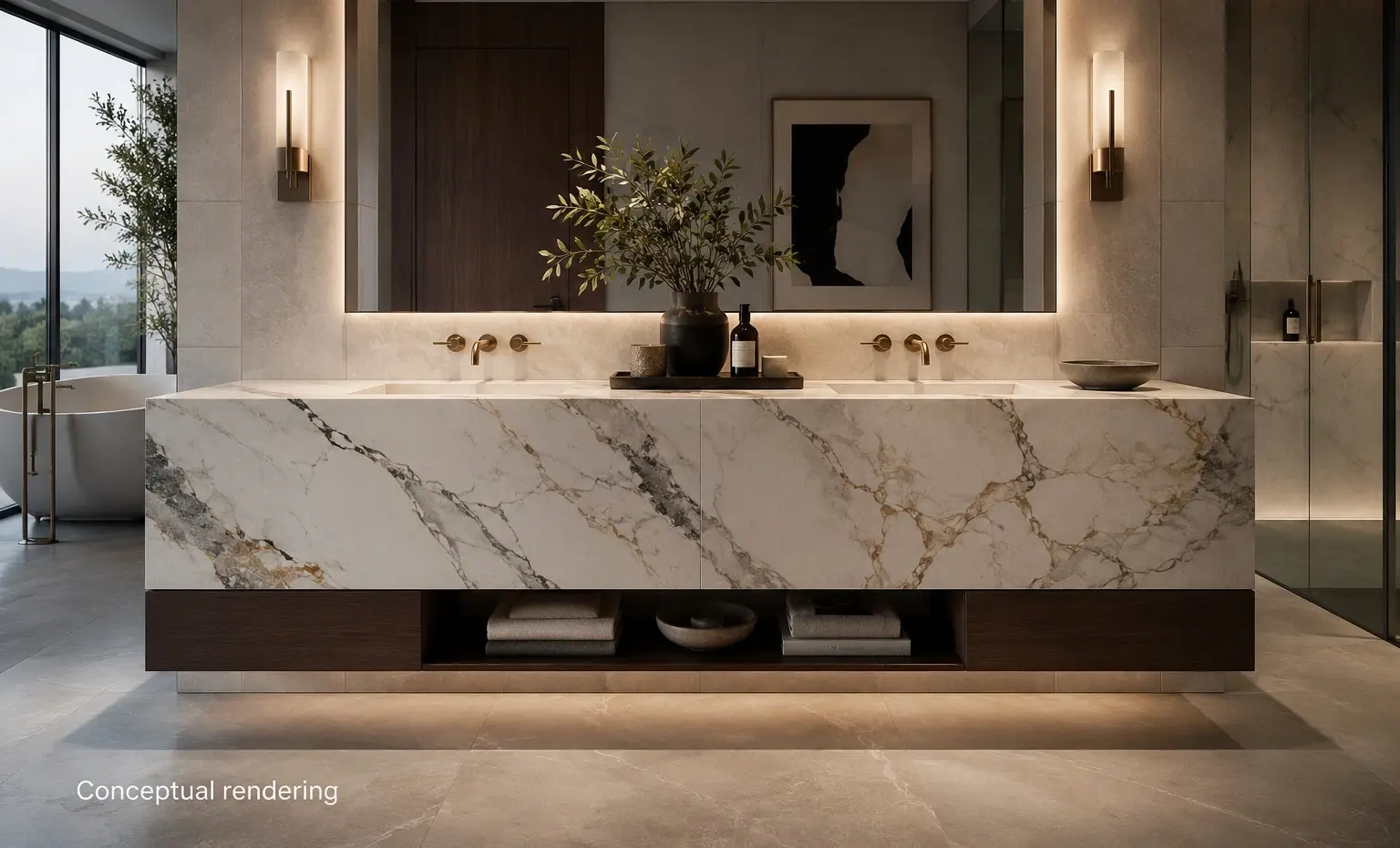
Vanity Countertop Materials for Bathrooms
The vanity countertop sets the visual tone for the bathroom more than any other single surface. It also lives in a specific use environment: daily exposure to water, soap, cosmetics, and cleaning products, but without the continuous moisture and standing water demands of the shower.
Quartz is one of the most consistent performers in bathroom vanity applications. As an engineered stone, quartz is non-porous and does not require sealing. It resists staining from cosmetics, toothpaste, and soap residue, and holds up well to the cleaning products most households use. For Reno homeowners who want a low-maintenance countertop, quartz is a strong choice. It comes in a wide range of colors and patterns, including options that closely replicate marble veining or the quiet, mineral-toned looks common in high-desert interior palettes. One consideration: engineered quartz contains polymer resins that can be affected by sustained direct UV exposure. For vanities positioned directly in front of a south- or west-facing window receiving several continuous hours of direct sun daily, discuss UV sensitivity with your supplier.
Natural stone slabs, including marble, quartzite, and granite, bring a sense of materiality and individuality to the bathroom vanity that engineered products do not replicate. Each slab carries its own veining, movement, and color variation. Marble is well suited to powder rooms and primary bathrooms where the countertop is a design focal point and the homeowner is comfortable with periodic sealing every one to two years. Quartzite offers similar aesthetics with greater hardness and density, making it a practical choice for a high-use primary bathroom. Granite is another durable natural stone option that, once sealed, handles daily bathroom use reliably.
Reno's hard water is worth keeping in mind for any polished stone vanity. Mineral deposits can leave visible residue on polished surfaces over time. This is manageable with regular wiping and the right cleaning approach, but it is worth factoring into your finish selection: honed surfaces are generally more forgiving than polished ones in this environment.
Porcelain slabs have grown significantly in popularity for bathroom vanities, particularly in contemporary and minimalist designs. They are dense, impervious to water, and require no sealing or periodic maintenance. Porcelain slabs are available in looks that convincingly replicate marble, concrete, and natural stone, which makes them a practical choice when the aesthetic goal is a natural material look with minimal upkeep.
Reno-Specific Considerations Worth Keeping in Mind
A few practical factors apply specifically to bathroom material selection in the Truckee Meadows area.
Hard water and mineral deposits. Reno's water supply carries elevated mineral content that affects both grout and stone surfaces over time. Epoxy grout resists mineral staining more effectively than standard cement-based grout and never needs sealing. On any natural stone surface, a pH-neutral cleaner protects against deposit buildup without breaking down the sealer.
Ventilation and the dry-climate moisture paradox. Reno's ambient humidity is low for most of the year, but bathrooms generate concentrated steam that contrasts sharply with that dry surrounding air. Without an adequately sized exhaust fan, that steam condenses into wall cavities and grout lines, accelerating wear on materials that are not properly sealed and maintained.
Conclusion
Choosing the right materials for a bathroom remodel comes down to matching the surface requirements, the use environment, and your own maintenance preferences. For shower floors, slip resistance and water absorption are the primary technical filters. For vanity countertops, the choice between natural stone and engineered options largely comes down to how much upkeep you want to take on. And in Reno specifically, hard water and the dry-climate moisture cycle are worth factoring in from the start rather than after installation.
Tile and stone look different at scale and in your own lighting than they do on screen. Seeing materials in person and taking samples home is the most reliable step before making a final decision.
Nova Tile and Stone carries tile, natural stone slabs, quartz, sintered stone, and porcelain slabs at the Reno showroom at 12835 Old Virginia Road, Reno, NV 89521. The showroom also carries hardwood, LVP, laminate, and carpet for projects that extend beyond the bathroom. The team is available for consultations, and tile samples are available to take home for $1. The showroom serves homeowners, contractors, and designers throughout Reno, Sparks, Spanish Springs, Washoe Valley, Incline Village, Verdi, and the surrounding Washoe County communities.
Frequently Asked Questions
Porcelain tile with a matte or textured finish is the most widely recommended choice, offering low water absorption and reliable traction. Per ANSI A137.1 and ANSI A326.3, shower floors fall under the Interior, Wet Plus category, where a minimum wet DCOF of 0.50 is generally accepted. Mosaic tile is also a strong option as the higher density of grout lines improves both traction and drainage slope.
Yes, when properly sealed and maintained. Quartzite and granite are denser and less porous than marble, making them more forgiving in a high-use bathroom, and in Reno's hard-water environment a honed finish shows mineral deposits less readily than a polished one.
Quartz and porcelain slabs are the lowest-maintenance options. Both are non-porous, require no sealing, and clean easily with standard household products.
Low year-round humidity combined with concentrated shower moisture creates a cycle that accelerates wear on unsealed grout, caulk, and natural stone. Proper waterproofing, epoxy or sealed grout, and periodic resealing of any natural stone are the main steps, and a honed finish on stone countertops shows hard-water spotting less than a polished one.
Nova Tile and Stone's Reno showroom at 12835 Old Virginia Road, Reno, NV 89521 carries tile, countertop slabs, and bathroom materials. Tile samples are available to take home for $1. Reach the team at (775) 331-6682.
Note: Some images on this page may be conceptual renderings created to illustrate design possibilities and may not depict actual installations.