A wall that glows from within is not something granite, marble, or quartzite can offer on their own. That effect comes from semi-precious stone: thin slices of natural gemstone, such as agate, amethyst, or quartz crystal, set into a resin panel rather than sold as a solid slab. The slices are thin enough to let backlighting shine through, which is what creates the glow.
This is a different type of natural stone than what's covered elsewhere in this series. This guide focuses on semi-precious stone as a wall feature, where its translucency and backlighting have the most visual payoff, rather than covering it as a work surface. The Minden showroom, part of Nova Tile and Stone, stocks a semi-precious collection alongside granite, marble, and quartzite.
The rest of this guide covers what the material is made of, where a wall like this tends to work best, and what a homeowner in Minden, Gardnerville, or the wider Carson Valley area should know before choosing one.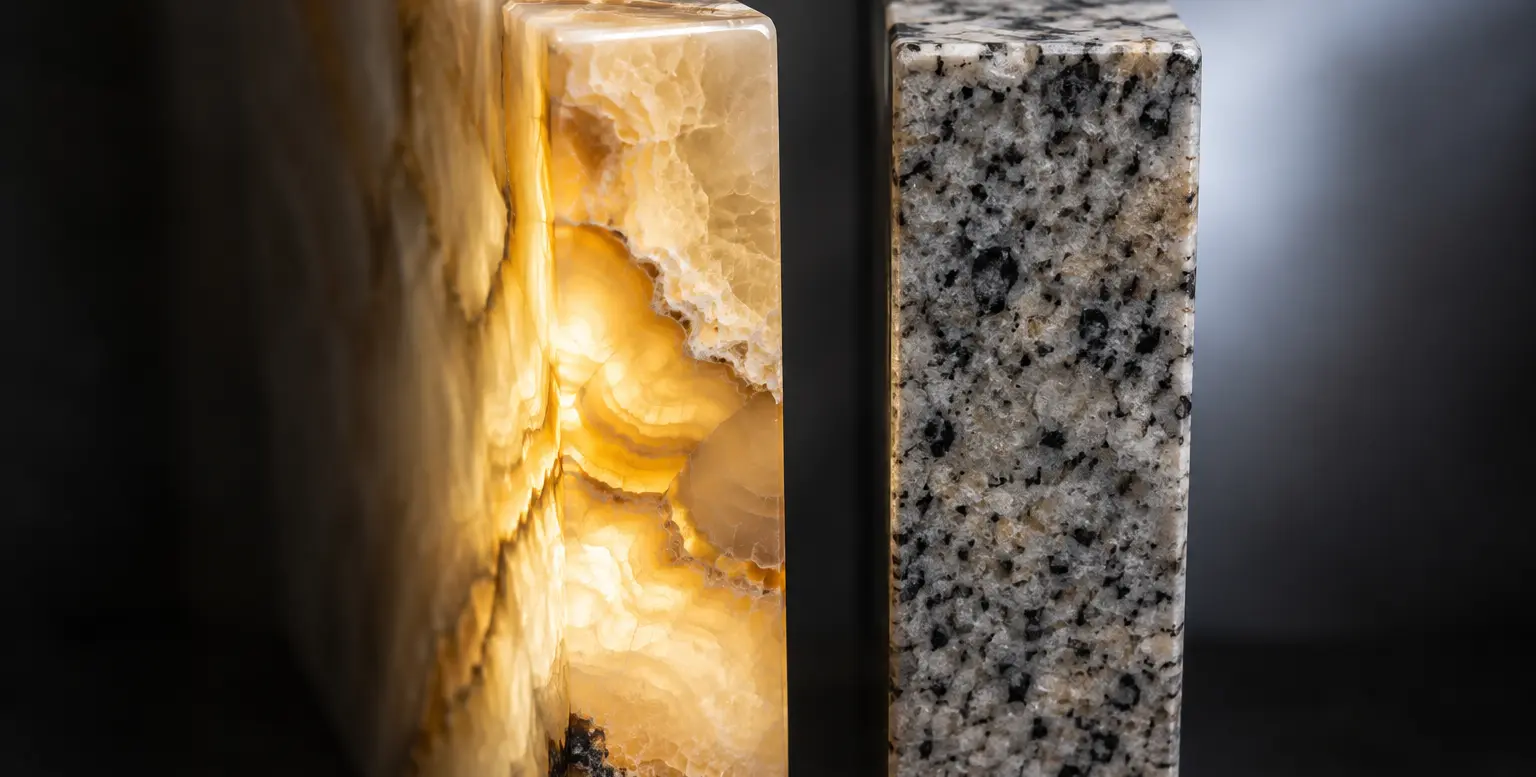
What Makes Semi-Precious Stone Different From Other Natural Stone
Granite, marble, and quartzite all come out of the ground as solid rock. Semi-precious stone starts as a natural gemstone, like agate, amethyst, tiger's eye, or quartz crystal, that gets sliced into thin sheets and set into a resin panel rather than sold as a solid slab.
That construction is what makes the material translucent, which is not something you get from a solid block of granite or marble. The Natural Stone Institute is a general resource for natural stone education, and semi-precious stone sits alongside more traditional categories like granite and marble as one of several distinct natural stone products.
The finish itself is usually polished, since a high shine is part of what makes the banding and crystal structure easy to see. Some slabs also carry a specialty finish beyond a standard polish, chosen to emphasize the stone's translucency or pattern in a particular way. Either way, the goal is to show off the material rather than mute it, which is the opposite of what a homeowner might want from an everyday food prep and cleanup surface.
The Backlighting Effect That Sets These Walls Apart
Backlighting is the main feature that sets semi-precious stone apart from a traditional material. Because the resin and gemstone slices are thin enough to let light through, an LED panel behind the wall turns the whole surface into a glowing feature rather than a static one.
Agate is known for this effect in particular, since its natural banding becomes more visible once light passes through it. Quartz crystal behaves the same way, showing off internal fractures and clarity that would not be visible under regular room lighting.
Not every semi-precious slab is equally translucent. How much light comes through depends on the specific stone, its thickness, and how much backlighting is used, so this is worth discussing before settling on a specific piece.
The effect also changes depending on the time of day and the room's other lighting. A wall that glows dramatically at night with the backlighting on can look more subdued during the day when natural light dominates the room, which is part of why seeing a slab in different lighting conditions matters more with this material than it does with an opaque stone.
Where a Semi-Precious Wall Fits in Your Home
A semi-precious wall is chosen for visual impact rather than daily wear, which is why it tends to show up in spaces built to be looked at rather than used hard. A living room feature wall, an entryway statement piece, or the wall behind a home bar are all reasonable options to consider.
Bathrooms are another strong fit, particularly a dry wall behind a vanity or in a powder room, away from direct water contact. The same idea works in a primary suite, where a semi-precious accent wall can anchor the room without competing with the rest of the finishes.
Scale matters too. Because the material is meant to draw attention, a single wall or a defined section of a wall tends to read better than covering an entire room in it. Pairing it with simpler materials nearby, such as a plain painted wall or a neutral tile floor, gives the semi-precious section a quiet backdrop to stand out against, rather than getting lost among other bold surfaces.
Our live slab inventory is updated as new bundles arrive, so you can see what semi-precious options are currently on hand before deciding where a wall like this might fit in your own home.
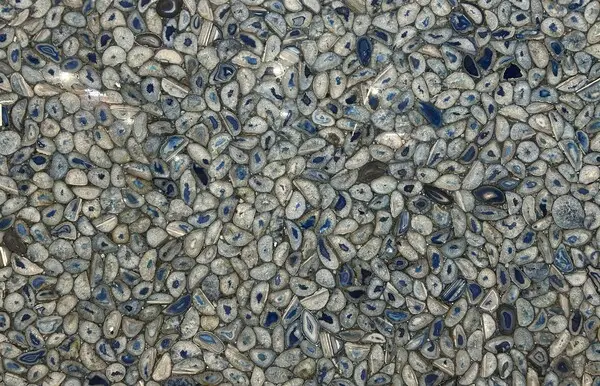
Agata Azul
Dimensions: 118" × 79" (64.74 sq ft)
Thickness: 2.0 cm
Finish: Polished
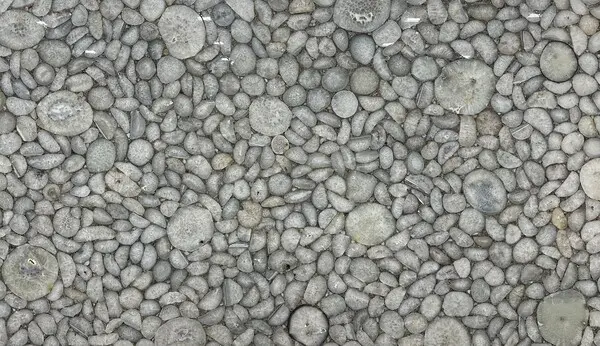
Agate White
Dimensions: 126" × 74" (64.75 sq ft)
Thickness: 2.0 cm
Finish: Polished
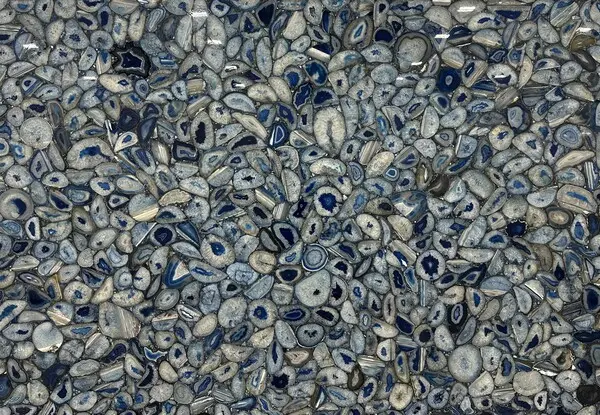
Blue Agate
Dimensions: 118" × 74" (60.64 sq ft)
Thickness: 2.0 cm
Finish: Polished
Choosing a Semi-Precious Stone Slab
Agate comes in a range of colors, from soft white and gray banding to deep blue and green tones. Named slabs such as Agate White, Blue Agate, and Agata Azul show just how differently the same stone type can read depending on the color family, from pale neutral banding to a deep, saturated blue. Its layered structure is part of what gives it that classic wavy pattern people associate with the material.
Amethyst brings a purple crystalline structure that reads more dramatic and jewel-toned than agate, while tiger's eye has a golden, almost shimmering quality caused by its fibrous mineral structure. Quartz crystal tends to be the clearest option, showing off internal formations rather than color or banding.
Each stone is genuinely one of a kind, since the pattern comes from the mineral formation itself rather than a printed design. No two semi-precious walls made from the same stone type will look exactly alike.
Choosing a color that works with the rest of the room is a reasonable place to start, though slab size and orientation matter almost as much. Because these are natural formations rather than manufactured tiles, the way the pattern flows across a single large panel tends to look more cohesive than piecing together several smaller sections.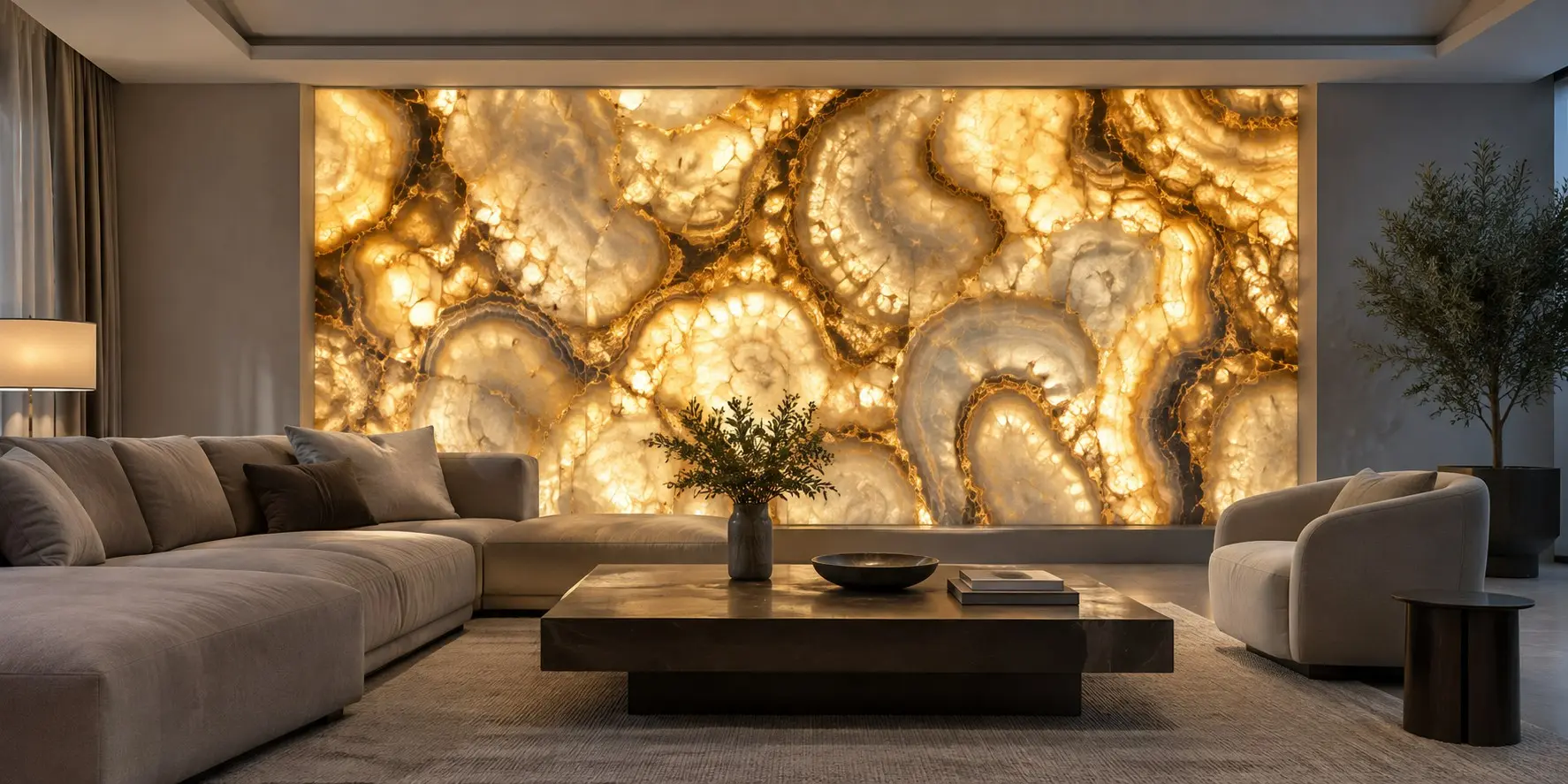
Caring for a Semi-Precious Wall
Cleaning this material calls for a gentler routine than a solid slab of granite or quartzite would need, since the resin base is more sensitive to harsh or acidic cleaners. A soft cloth and a pH-neutral cleaner are enough for routine upkeep.
Because a wall isn't handling daily food prep or heavy use, the cleaning routine can stay simple. Direct sunlight and general handling can still affect the finish over time, though, so keeping cleaning products mild is worth doing from the start. The Natural Stone Institute's care guidelines are a good general reference for natural stone care, even though semi-precious stone has some care needs of its own that differ from traditional stone.
Planning a Visit to the Minden Showroom
A semi-precious wall is one of the harder materials to judge from a spec sheet, since so much of its appeal comes down to how the color and pattern respond to actual light in the room. The Minden showroom keeps a rotating selection on the floor specifically so that comparison can happen in person rather than through a photo.
2548 Business Pkwy in Minden, NV 89423 is the address, and (775) 783-4970 connects directly to that location. Driving directions are available if that is easier than typing the address in by hand.
There are two ways to move forward from there. Book a free design consultation if you are still exploring options, or go straight to a slab quote request once a specific piece has caught your eye.
Conclusion
This isn't a replacement for granite, marble, or quartzite, and it was never meant to be one. It solves a different problem: a wall that can glow from behind and show off a pattern that comes from natural mineral formation rather than a printed design.
That makes it worth considering for a single accent wall rather than an entire home, since its strength is visual impact in a spot where the detail will actually be noticed. Whether that means starting with a look at what's on the floor in Minden or narrowing things down first through the full tile and natural stone collection online, either path gets you closer to seeing how a wall like this might actually look in your own space.
Frequently Asked Questions
Semi-precious stone slabs are made from thin slices of natural gemstone, such as agate, amethyst, tiger's eye, or quartz crystal, set into a resin panel rather than sold as a solid piece of rock.
The glow comes from backlighting placed behind a translucent slab. Because the resin and gemstone slices are thin enough to let light through, an LED panel behind the wall highlights the natural banding or crystalline structure of the stone.
Semi-precious stone works well as an indoor wall feature, such as a living room feature wall, an entryway statement piece, or a dry wall behind a bathroom vanity.
Semi-precious stone needs a gentler care routine than a solid piece of natural stone, since the resin base is more sensitive to harsh or acidic cleaners. A soft cloth and a pH-neutral cleaner are enough for routine care.
The Minden showroom at 2548 Business Pkwy, Minden, NV 89423 has semi-precious stone on the floor next to the granite, marble, and quartzite collection. Call (775) 783-4970 with questions, or set up a design consultation ahead of your visit.
Note: Some images on this page may be conceptual renderings created to illustrate design possibilities and may not depict actual installations.