The best tile and natural stone choices for a Davis, CA home depend on the property's architectural style, whether mid-century, Craftsman, ranch, or new construction. Homeowners in Davis generally match materials as follows:
- Mid-century and Streng-built homes: large-format porcelain tile and honed quartzite or matte granite in neutral tones
- Craftsman and Tudor Revival homes: smaller-format tile such as subway or hexagonal patterns, paired with marble or travertine
- Ranch-style homes (1950s-1970s): mid-size tile in the 12 by 24 inch range with granite or quartzite countertops
- Newer construction (1990s-present): large-format tile and slab surfaces, including waterfall-edge islands and porcelain shower slabs
Davis is a city built on architectural contrast. Within a few miles, a homeowner might live in a 1960s Streng-built ranch in University Estates, a 1920s Craftsman bungalow in Old North Davis, or a newly constructed home in a community like The Cannery or Mace Ranch. Matching tile and stone to a home's architectural period, rather than choosing based on trend alone, tends to produce a more cohesive result. For homeowners who want to browse options before visiting in person, our full tile and stone selection is a helpful starting point.
Why Davis Homes Call for a Different Approach
Unlike many Sacramento-area suburbs built in a single wave of development, Davis grew in distinct phases over several decades. The city's neighborhoods reflect this layered history: Old North Davis and College Park retain early 20th-century Craftsman bungalows and Tudor Revival cottages, while University Estates is known for its Streng-built mid-century modern homes constructed between 1964 and 1975. Central and East Davis carry a mix of 1950s through 1970s ranch-style houses, and newer communities like The Cannery, Wildhorse, and Mace Ranch feature traditional and transitional builds from the 1990s onward.
This variety means there is no single tile or stone recommendation that fits every Davis home. A material that reads as fitting in a mid-century ranch may look out of place in a century-old bungalow, and the reverse is often true as well. Homeowners planning a kitchen, bathroom, or flooring project generally get the best results by starting with the home's existing architectural language rather than working backward from a trend they saw elsewhere.
It also helps to think about how a home has already been modified over the years. Many Davis properties, particularly older ranch homes and Craftsman bungalows, have gone through at least one prior renovation. Understanding what's already been updated, and what finishes remain original, can help homeowners decide whether to continue in the same design direction or shift toward something that better suits how the home is used today.
Tile and Stone for Mid-Century and Streng-Built Homes
Streng homes and other mid-century properties around Davis are defined by clean horizontal lines, large windows, exposed beams, and an emphasis on the connection between indoor and outdoor space. Many were also designed with wide roof overhangs and deep eaves to manage the region's hot summers, a detail that shaped the interior material choices from the start. Tile and stone choices for these homes tend to work best when they reinforce that simplicity rather than compete with it.
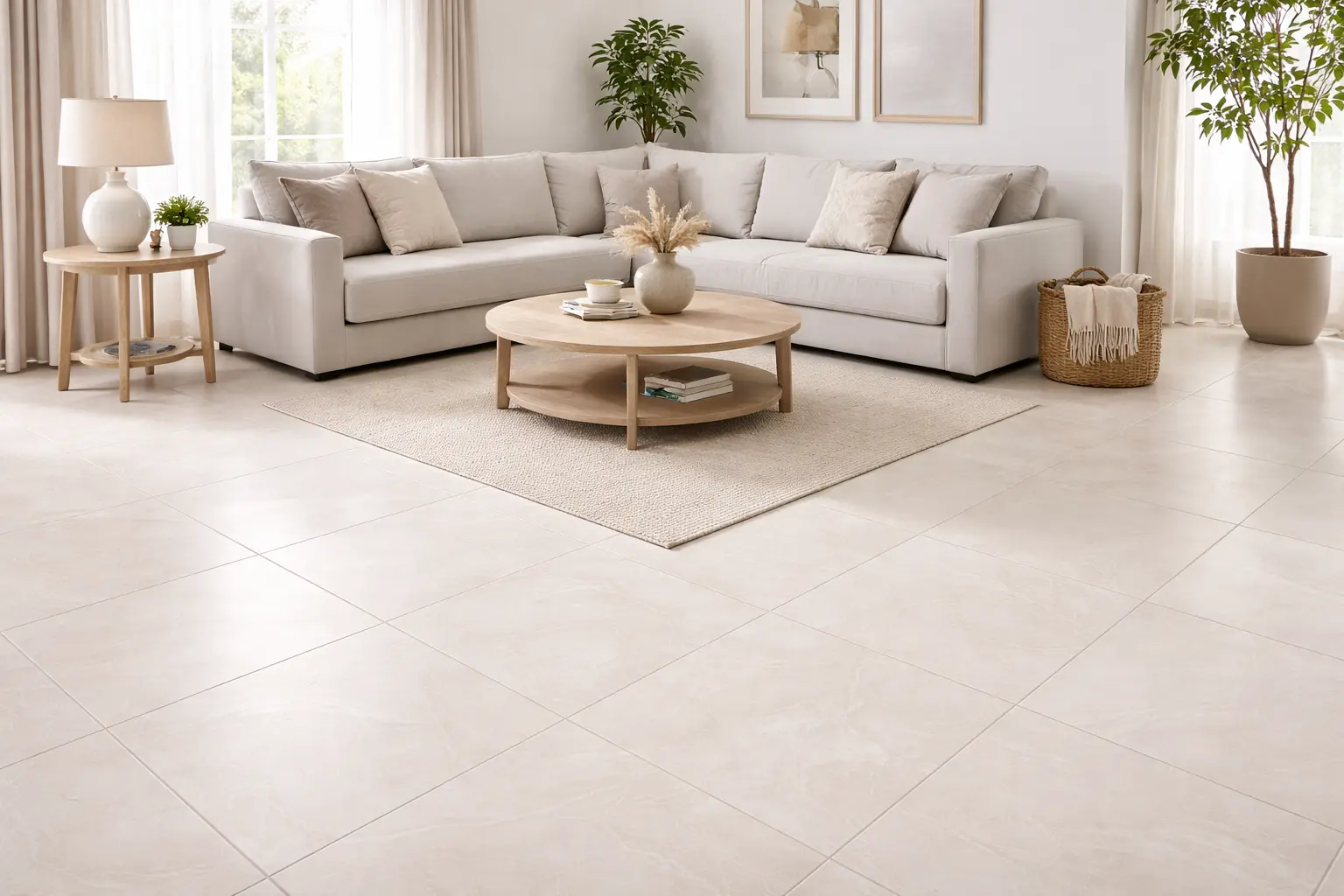
Large-format porcelain tile, typically 24 by 24 inches or larger, is a common fit for these homes because fewer grout lines create a more continuous, uninterrupted surface. Tile manufactured to the ceramic tile specifications set by the Tile Council of North America is generally a reliable baseline when comparing options across different product lines. Neutral tones such as warm grays, soft taupes, and muted greiges tend to sit alongside the wood paneling and exposed beams common in Streng construction. For countertops, honed quartzite or a matte-finished granite can echo the material palette these homes were originally designed around, without introducing heavy veining or high shine that can feel at odds with mid-century restraint.
Flooring is another area where mid-century homes call for a specific approach. Many original Streng homes featured exposed aggregate or vinyl flooring, materials chosen partly for their ability to stay cool in the region's heat. Homeowners updating these spaces today often look for large-format tile or natural stone that offers a similar visual simplicity, while providing more design flexibility for kitchens, entries, and bathrooms. Browsing available slab inventory ahead of a visit can help narrow down which stone tones fit a particular room.
Craftsman and Tudor Revival Homes
Old North Davis and parts of College Park include Craftsman bungalows and Tudor Revival cottages, many dating to the early 1900s. These homes are generally characterized by more intricate woodwork, warmer color palettes, and smaller, more compartmentalized rooms compared to their mid-century counterparts.
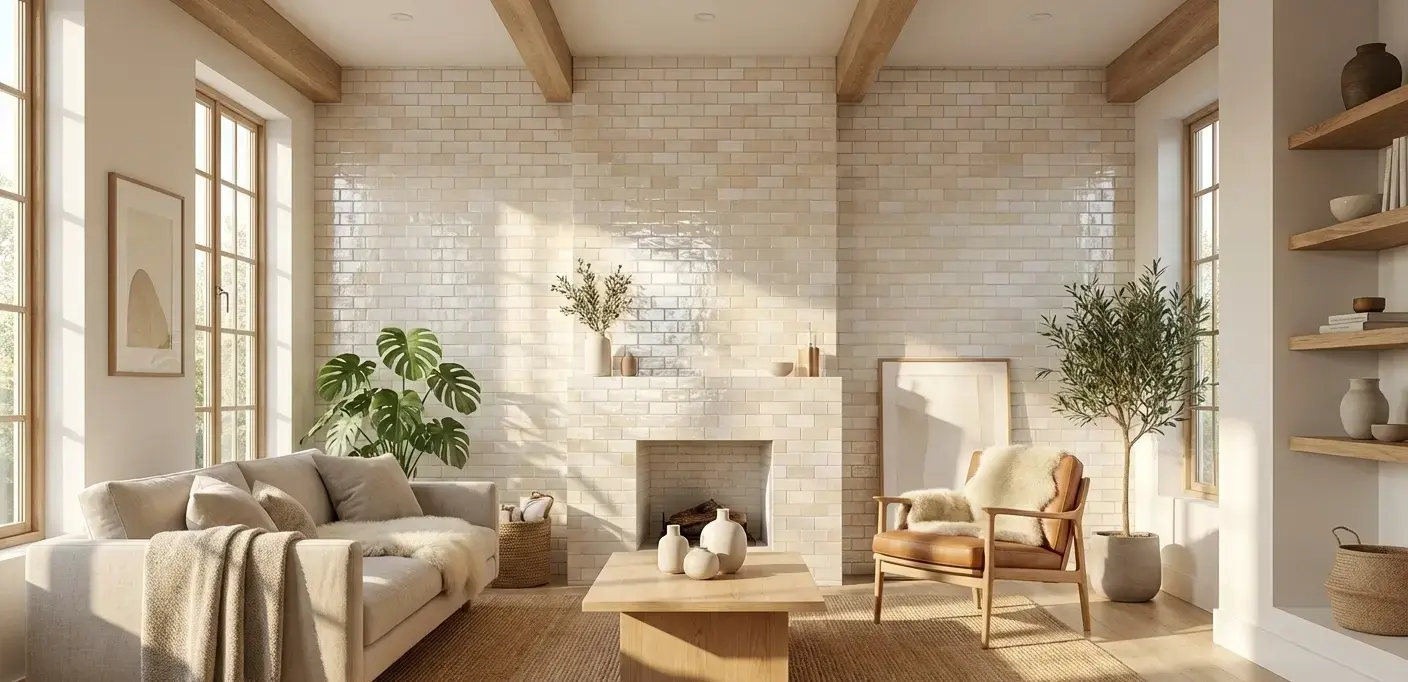
For these properties, smaller-format tile, including classic subway tile or hexagonal patterns, tends to complement the scale of the original architecture. Earthy tones such as terracotta, warm browns, and deep greens can echo the period's material sensibility. In bathrooms, a mosaic tile floor paired with a simple subway tile wall is a pattern that has remained common for this style of home because it doesn't compete with existing trim or built-ins. Marble or travertine, in either polished or honed finishes, is often used for vanity tops in these homes to reflect the era's use of natural materials, while remaining straightforward to coordinate with existing fixtures.
Kitchens in these homes present a slightly different set of considerations. Original Craftsman kitchens tend to be smaller and more segmented than the open layouts found in newer construction, so tile choices often need to work within a more contained footprint. A smaller-format tile backsplash, paired with a natural stone or quartz countertop in a warmer tone, tends to fit comfortably within these spaces without overwhelming the existing cabinetry or trim work.
Ranch-Style and Ranch-Adjacent Homes
Much of Central and East Davis consists of ranch-style homes built from the 1950s through the 1970s, often featuring vinyl siding, attached garages, and single-story layouts. These homes offer more flexibility in material selection than either the mid-century modern or Craftsman categories, since the architecture itself is less ornamental.
Homeowners in these properties often choose a middle ground: mid-size tile in the 12 by 24 inch range, neutral to warm color families, and natural stone countertops that can range from granite to quartzite. Because ranch homes frequently undergo multiple renovations over their lifespan, tile and stone choices here tend to prioritize versatility, materials that will still fit if the rest of the home's finishes are updated again in the future.
This flexibility also extends to how these homes are typically renovated in stages. A homeowner might update a kitchen countertop one year and a bathroom floor the next, rather than completing a full remodel at once. Choosing tile and stone that can coordinate with future updates, rather than a narrow, trend-specific palette, tends to serve these staged renovations well over time.
Newer Davis Communities
Communities such as The Cannery, Wildhorse, Mace Ranch, and Pole Line Terrace represent Davis's more recent development, with homes generally built from the 1990s through the present day. These properties often already include open kitchens and larger bathrooms, which gives homeowners more room to work with when selecting tile and stone.
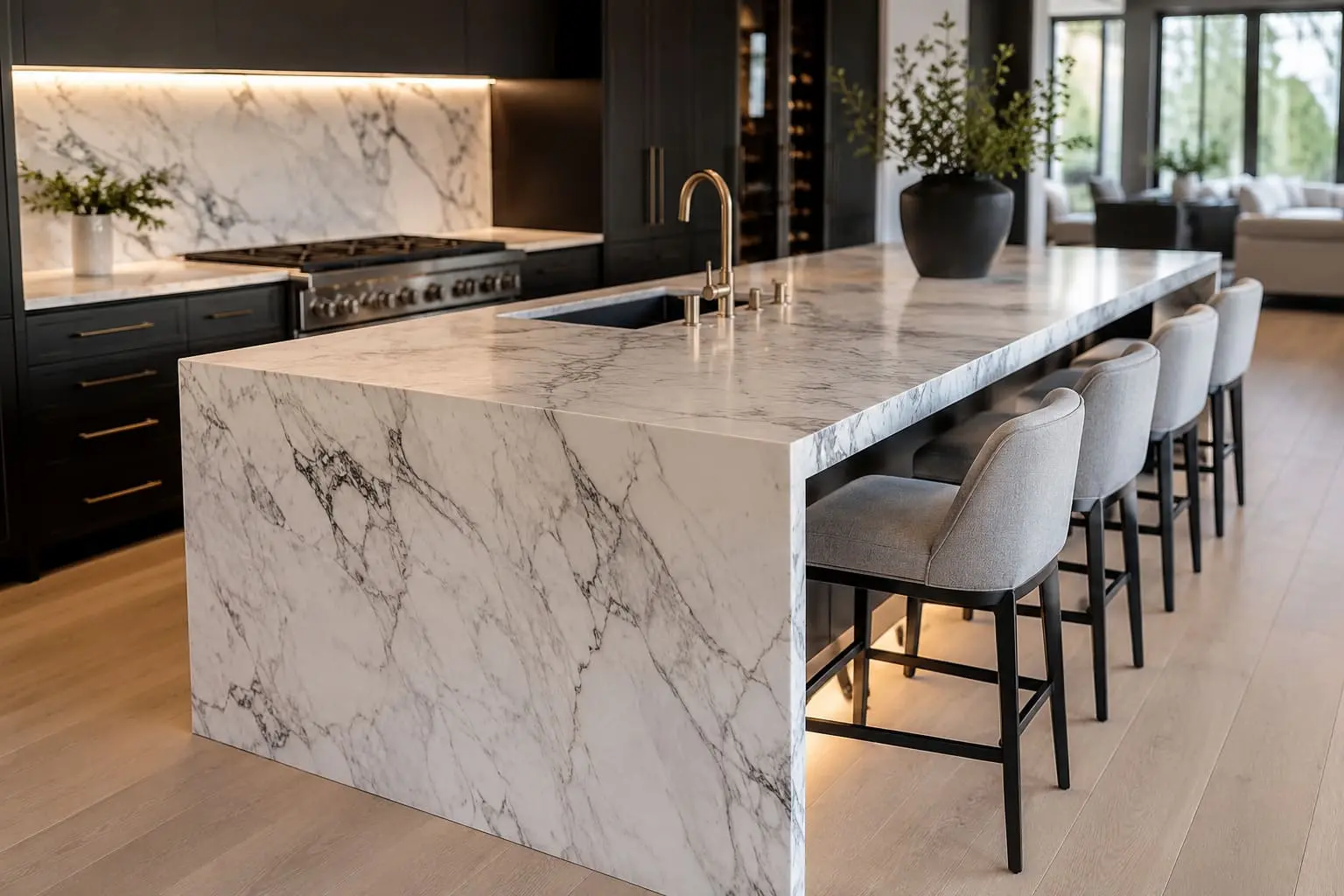
In these homes, large-format tile and slab surfaces are common choices, including waterfall-edge islands using quartzite or engineered stone, and porcelain slab applications for shower walls that minimize grout altogether. Porcelain slabs used in these applications are often backed by independent porcelain tile certification, which can be a useful reference point when comparing durability claims between products. Because these homes are less tied to a specific historical period, homeowners often have latitude to choose based on personal preference rather than matching an established architectural style, though many still gravitate toward palettes that stay consistent over time rather than tied to a single design trend.
Newer construction also tends to include larger primary bathrooms with separate soaking tubs and walk-in showers, which opens up more options for combining tile and stone within a single space. A large-format porcelain floor paired with a natural stone accent wall in the shower, for example, is a combination that fits well within the scale of these newer layouts.
Climate Considerations for Davis Homeowners
Davis experiences hot, dry summers and cooler, wetter winters, and this climate pattern plays a role in material selection, particularly for exterior applications like patios, entryways, and outdoor kitchens. Porcelain pavers are generally suited to this climate because they resist fading from sun exposure and hold up to occasional winter moisture without the sealing requirements some natural stone options need.
For interior applications, climate has less of a direct effect, though homeowners in older homes should be mindful of humidity and temperature shifts that can affect grout and sealant over time in bathrooms and kitchens. Homes with older subfloors or original plumbing, common in Old North Davis and parts of Central Davis, may also benefit from a conversation about substrate preparation before larger-format tile or heavier natural stone slabs are installed, since these materials have different support requirements than the smaller tile common when many of these homes were built.
Working Through Material Selection
Because Davis homes span such a wide range of architectural periods, homeowners often find it helpful to bring photos of their home's exterior and existing interior finishes into a showroom conversation. Seeing tile and stone samples in person, and discussing how they might read against a home's existing trim, cabinetry, or flooring, tends to clarify decisions that are difficult to make from images alone.
It can also help to bring measurements or photos of the specific room being updated, since scale plays such a large role in whether a tile size or stone pattern will suit a space. A tile that looks proportionate in a large, open kitchen may read very differently in the smaller, more segmented rooms common in Davis's older homes.
Our Sacramento showroom, located at 6100 Warehouse Way, Sacramento, CA 95826, serves homeowners throughout the region, including Davis, and offers design consultations for tile, natural stone, hardwood, LVP, laminate, carpet, and exterior stone selections.
You can find the showroom's exact location and directions on Google Maps, or reach out through our contact page with any questions before your visit. Homeowners curious about our background as a family-owned, direct stone importer can also learn more about how our sourcing works.
Conclusion
Davis's layered architectural history, from Streng-built mid-century homes to Craftsman bungalows, ranch-style properties, and newer traditional builds, means tile and natural stone selection benefits from a home-specific approach rather than a one-size-fits-all recommendation. Considering a home's existing architectural period, room scale, and the region's climate can help narrow down choices before a single sample is picked up. For homeowners who want to see the full range of what's available before narrowing things down, browsing our website is a good place to start.
Note: Some images on this page may be conceptual renderings created to illustrate design possibilities and may not depict actual installations.
Frequently Asked Questions
Large-format porcelain tile in neutral, warm-gray, or taupe tones tends to suit mid-century and Streng-built homes, since it reinforces the clean lines and minimal detailing common in this architectural style.
Natural stone, including marble, travertine, and granite, is commonly used in older Davis homes such as Craftsman bungalows and Tudor Revival cottages, particularly for vanity tops and accent surfaces that echo the home's original material palette.
Mid-size tile in the 12 by 24 inch range is a common choice for ranch-style homes, offering a balance between the scale of mid-century large-format tile and the smaller patterns used in earlier bungalows.
Davis's hot summers and cooler, wetter winters are a consideration mainly for exterior applications like patios and entryways, where porcelain pavers are often chosen for their resistance to fading and moisture.
Our Sacramento showroom at 6100 Warehouse Way serves homeowners throughout the region, including Davis, with design consultations for tile, natural stone, and other flooring materials.