AT A GLANCE
- Undertone matters more than the color name: match warm or cool stone to the roof and siding.
- Larger surfaces can handle larger stones; smaller areas suit smaller or more uniform pieces.
- Rough, split-face stone suits rustic homes, while smooth, honed stone fits modern exteriors.
- Stone looks structural when it sits low, wraps corners, and ends at a natural break.
- Two or three repeated materials usually look more cohesive than many competing ones.
- Mortar color, grazing light, and regular cleaning all change how stone reads.
IN THIS POST
- Is the Stone Color Working With the Rest of the House?
- Does the Stone Fit the Scale of the Home?
- Did They Choose the Right Finish and Texture?
- Is the Stone Placed Where It Makes Sense?
- Do Too Many Materials Compete With Each Other?
- Do Joint Width and Mortar Color Make a Difference?
- How Does Lighting Change the Way Exterior Stone Looks?
- Has the Stone Been Kept Clean?
- What Can You Do If You Don’t Love Your Exterior Stone?
- Conclusion
- Frequently Asked Questions
- Sources
Exterior stone looks better on one home than another mainly because of six design factors: color undertone, stone scale, finish and texture, placement, the number of materials used, and supporting details such as mortar joints, lighting, and upkeep. Stone tends to look natural when it shares an undertone with the roof and siding, matches the size of the surface it covers, suits the home’s architectural style, and sits where real stone would carry weight, such as along a wall base, on a column, or around a chimney. These principles apply to natural stone veneer, stacked stone, flagstone, and pavers.
Most of these differences have little to do with budget. Some can be addressed on your next project, and others can be improved with smaller changes like adjusting landscape lighting, coordinating trim colors, or cleaning the stone regularly.
Is the Stone Color Working With the Rest of the House?
The most common reason exterior stone looks out of place is an undertone clash. Most stones have either a warm undertone (gold, tan, rust, or cream) or a cool one (gray, blue, or charcoal). When that undertone conflicts with the roof, siding, or trim, the stone can look disconnected, even if the color seemed right on its own.
Your neighbor may have chosen a stone that repeats a color already on the house. A brown roof paired with stone that carries flecks of a similar brown ties the exterior together. A cool gray stone next to warm beige stucco, on the other hand, can look flat and unrelated.
A few ways to check color harmony:
- Compare the stone to the roof color, not just the siding
- Look for the stone’s secondary colors, since those often create the connection
- View the stone in daylight at different times, since morning and afternoon light change how warm or cool it appears
Color harmony doesn’t require a perfect match. The goal is a stone that shares at least one tone with the fixed parts of the home, especially the roof, which is usually the hardest and most costly element to change.
Does the Stone Fit the Scale of the Home?
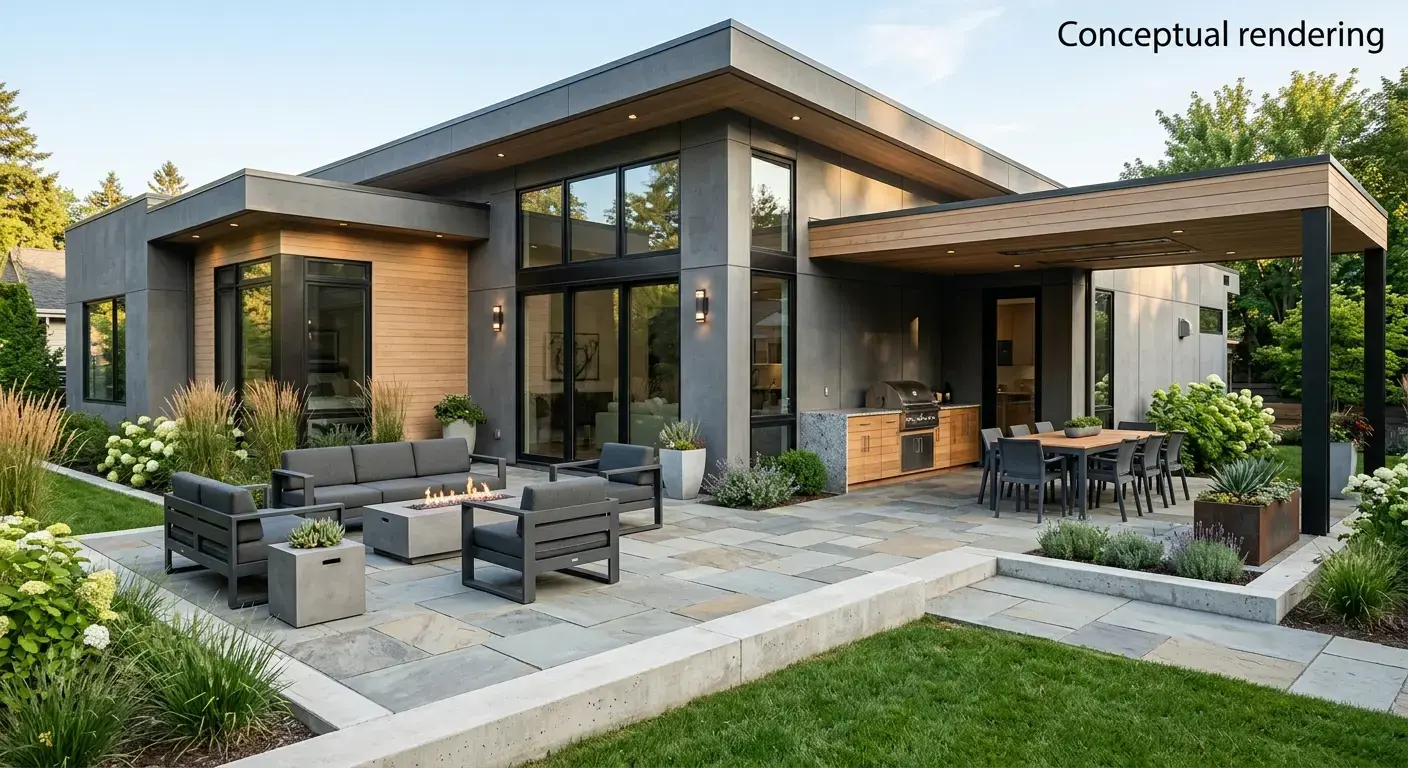
Stone size matters more than many homeowners expect. Small, tightly fitted stones can look busy across a large two-story facade, while oversized stones can overwhelm a modest single-story home or a narrow porch.
Homes with well-scaled stone tend to follow a simple principle: larger surfaces can handle larger stones, while smaller areas often look better with smaller or more uniform pieces. A broad chimney or a tall entry column can carry big, irregular stones. A low wainscot along a front wall usually looks cleaner with a stacked or ledgestone profile.
The same principle applies to outdoor surfaces. Large-format stone can make a small patio feel open and uncluttered, but on a winding garden path, the same stone may need so many cuts that the pattern gets lost. When we help homeowners compare options during a free design consultation, we often suggest picturing the stone at full size on the house, as it would appear from the street, rather than judging a single piece up close.
Did They Choose the Right Finish and Texture?
Finish and texture affect how stone catches light and how well it relates to the home’s style. A rough, split-face stone with deep shadows suits rustic, Craftsman, and mountain-style homes. A smooth, honed or sawn stone with clean edges fits modern and contemporary exteriors.
When finish and architecture don’t align, the stone can look like an afterthought. Rough fieldstone on a minimalist modern facade, or very smooth panels on a traditional ranch home, can feel out of step even when the color works.
Texture also reads differently from a distance. Deeply textured stone casts shadow lines that stay visible from the street, which adds depth. Smoother stone appears flatter from far away, so it relies more on color and joint pattern for interest. If your stone looks flat or washed out, its texture may be too subtle for the size of the wall.
Is the Stone Placed Where It Makes Sense?
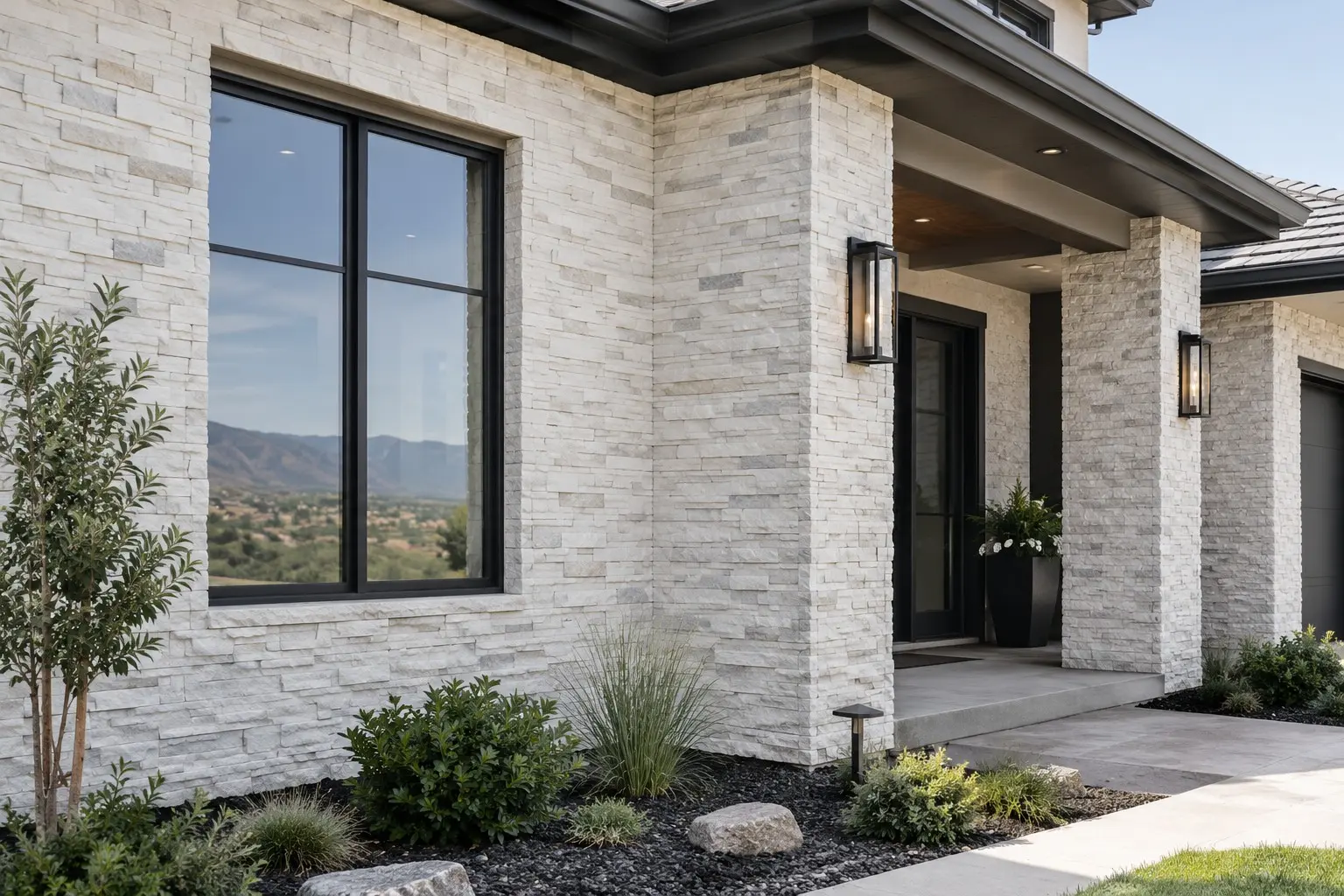
Placement is one of the clearest differences between stone that looks structural and stone that looks applied. Natural stone is heavy, so in traditional construction it sits at the base of a wall or forms a supporting element such as a column, chimney, or foundation. Stone placed according to that logic looks believable.
Stone that stops abruptly at an outside corner, begins halfway up a wall, or covers only the front of a house while the sides are siding tends to look like a facing rather than part of the building. Your neighbor’s stone may look better simply because it wraps around corners, ends at a natural break such as a window line or roof edge, and sits low, where the eye expects weight.
Placement choices that tend to look natural:
- Stone wainscot along the base of a facade
- Stone that wraps at least a short distance around outside corners
- Columns and chimneys clad fully, from bottom to top
- Stone steps and low walls that echo the facade stone nearby
Do Too Many Materials Compete With Each Other?
Some exteriors look busy because they combine several types of stone, brick, multiple siding styles, and patterned pavers in a single view. Each material may work well on its own, but together they compete for attention.
Homes with a cohesive exterior often limit the palette to two or three main materials and repeat them. The same stone might appear on the entry columns, the front steps, and a low garden wall, which links the front yard to the house. If you’re adding pavers to a walkway, choosing a color that picks up a tone from the facade stone keeps the look consistent. Browsing our pavers and exterior stone options side by side can make it easier to find materials that share a tone.
A common approach is to let one material lead while the others support it. If the stone is the focal point, the siding and trim can stay understated. If the siding is bold, a quieter stone may be the better fit.
Do Joint Width and Mortar Color Make a Difference?
Yes, often more than people realize. The lines between stones are part of the overall pattern. Wide, light-colored mortar joints emphasize the grid and can make a wall look busier. Tight joints, or mortar in a color close to the stone, keep the focus on the stone itself.
Dry-stack styles, where stones sit tightly together with little or no visible mortar, create a clean, contemporary look. Wider, recessed joints create shadow lines and suit a more rustic or old-world style. Neither approach is better; the right choice depends on the look you want and the stone you select. If your area has regular freeze-thaw cycles in winter, ask your installer whether a dry-stack look is suitable for your exterior walls.
For pavers and flagstone, the joint material matters too. Joint sand or gravel in a color that blends with the stone gives a patio a more uniform appearance, while a contrasting color highlights the pattern. These details are worth discussing with your installer before a project begins, since they’re difficult to change afterward. Contractors and designers who handle exterior stone projects regularly can apply for a trade account for trade pricing and job-site delivery.
How Does Lighting Change the Way Exterior Stone Looks?
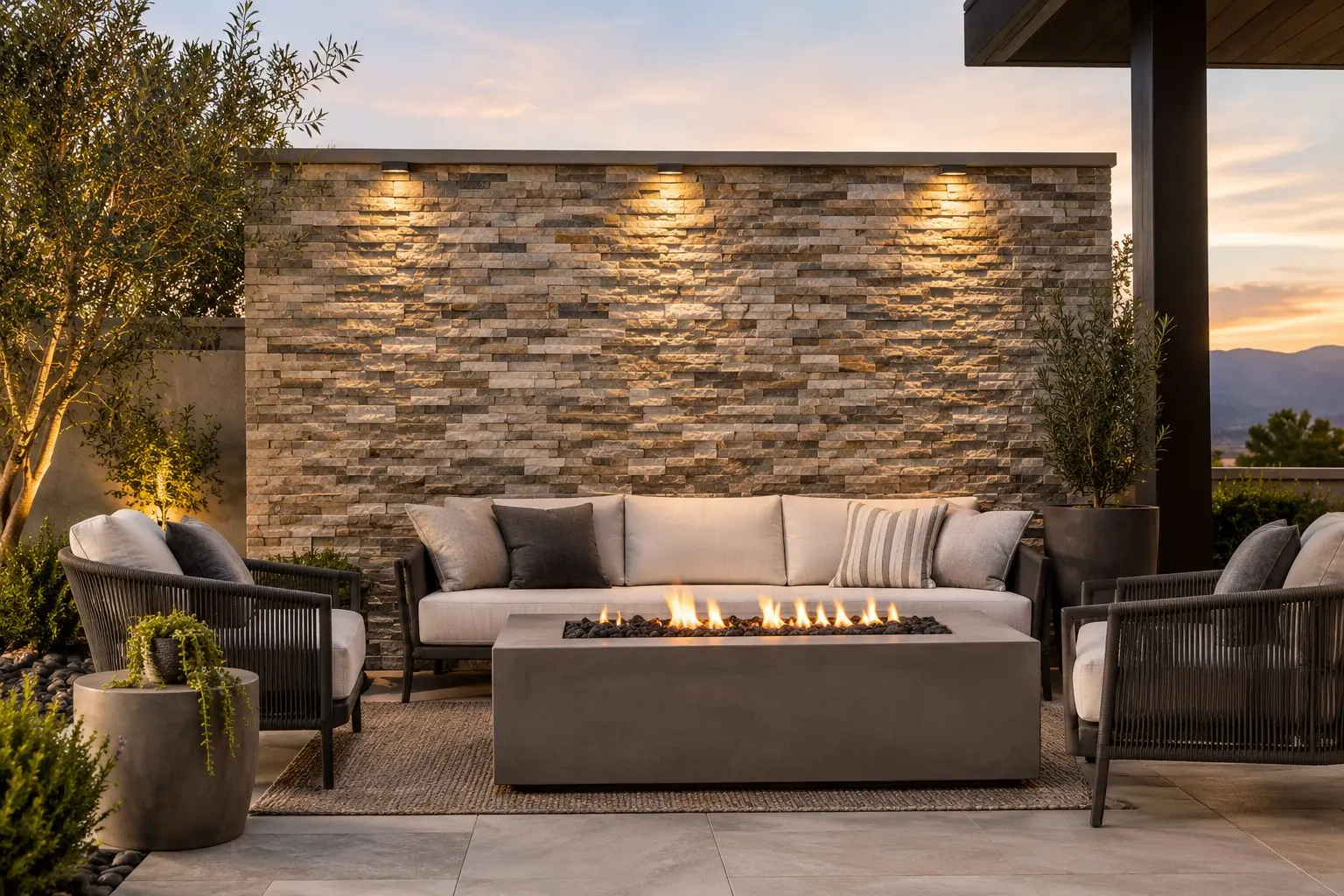
Lighting can change the appearance of the same stone considerably. Low-angle light that skims across a wall brings out texture and shadow, while overcast skies or sunlight hitting the wall head-on reduce that contrast. After dark, unlit stone can fade from view, and stone lit straight on from the front can lose its texture.
Homes where stone stands out at night often use grazing light, with fixtures placed close to the wall and aimed up or down along its surface. This casts small shadows across each stone and makes the texture visible. Warm-white light, around 2700K to 3000K, is a common choice for stone because it complements natural earth tones, while slightly cooler light can suit gray stone or a more modern home.
If your neighbor’s stone looks more dimensional in the evening, the difference may be the lighting rather than the stone.
Has the Stone Been Kept Clean?
Exterior stone collects dust, pollen, and hard-water spots from sprinklers, and shaded areas can develop moss or algae. Over time, buildup can make stone look dull and darker than its true color. A neighbor whose stone looks clean may simply wash it on a regular schedule and keep sprinklers aimed away from walls.
Water, a soft brush, and a pH-neutral cleaner made for stone handle most dirt and pollen. Stubborn mineral deposits may need a remover formulated for your specific stone. Acidic cleaners, including vinegar, can etch calcium-based stones such as limestone, marble, and travertine, and high-pressure washing can erode softer stones and mortar joints. Before you start, check what your stone can safely handle.
What Can You Do If You Don’t Love Your Exterior Stone?
Replacing stone isn’t always necessary. Smaller changes can improve how it looks:
- Repaint trim, doors, or shutters in a color that picks up a tone from the stone
- Add landscape lighting that grazes the stone surface
- Plant greenery near the base to soften and frame the stone
- Repeat the stone on steps, a planter, or a mailbox post to connect it to the yard
- Clean the stone and redirect sprinklers that leave spots
For smaller accent projects like these, our overstock sale is worth checking for discounted materials. If you’re planning a larger update, bring photos of your home, including the roof and siding, when you visit one of our showrooms. Seeing stone options alongside images of your house makes it easier to judge color, scale, and finish together.
Conclusion
The difference between exterior stone that fits a home and stone that looks out of place usually comes down to color, scale, finish, and placement, along with details such as joints, lighting, and upkeep. None of these depend on choosing the most expensive stone. They depend on choosing with the whole house in mind, from the roofline down to the front walkway.
If you’re considering exterior stone for a new project or a refresh, we’d be glad to help you compare colors, textures, and sizes side by side. Our team can walk you through natural stone, stacked stone, pavers, and coordinating materials at our showrooms in Sacramento, Reno, Minden, and Fernley. Bring a few photos of your home, and we’ll help you find a stone that suits it.
Note: Some images on this page may be conceptual renderings created to illustrate design possibilities and may not depict actual installations.
Frequently Asked Questions
Stones with cool or neutral undertones usually pair well with a gray roof. Options include gray, charcoal, blue-gray, or cream and white stone with gray tones mixed in. Look for a stone whose secondary colors repeat the roof’s shade so the two read as one palette.
They don’t need to match exactly, but they should share at least one tone. Pavers that pick up a color from the facade stone connect the yard to the house, while an unrelated color can make the two areas feel separate.
Place it where real stone would sit, such as along the base of a wall, on columns, or on a chimney. Wrapping outside corners and ending the stone at a natural break, like a window line, also helps it look like part of the structure.
Not always. Many exterior stones perform well unsealed, and dense stones may not absorb enough for a sealer to help. If a porous stone does need protection, the usual choice is a breathable, penetrating sealer rated for outdoor use, since film-forming coatings can trap moisture and break down in sunlight. Check the guidance from your stone supplier or the sealer manufacturer before applying any product.
Yes. Partial stone, such as a wainscot, entry columns, or a single accent wall, is common. It tends to look best when it covers a complete element and wraps around corners instead of stopping abruptly on a flat wall.
SOURCES
- National Park Service, Preservation Brief 1: Assessing Cleaning and Water-Repellent Treatments for Historic Masonry Buildings - https://www.nps.gov/orgs/1739/upload/preservation-brief-01-cleaning-masonry.pdf
- PROSOCO, Guide to Common Masonry Stains - https://prosoco.com/app/uploads/2020/11/PROSOCO-Guide-To-Common-Masonry-Stains-110620.pdf
- Eldorado Stone via BNP Media CE Center, Architectural Stone Veneers: Authentic and Appropriate Technology - https://continuingeducation.bnpmedia.com/architect/courses/eldorado-stone/architectural-stone-veneers-authentic-and-appropriate-technology/5
- Quarrymill, Natural Stone Veneer Installation Guide - https://quarrymill.com/wp-content/uploads/2024/06/Natural_Thin_Stone_Veneer_Installation_Guide_-_Quarrymill.pdf
- Stone World, Stone Sealers: Function, Facts, Fallacies - https://www.stoneworld.com/articles/83737-stone-sealers-function-facts-fallacies
- CAST Lighting, Landscape Lighting Techniques: The Art of Wall Grazing - https://cast-lighting.com/blog/post/landscape-lighting-techniques-the-art-of-wall-grazing