AT A GLANCE
- White, powdery haze is usually efflorescence, a salt deposit left by evaporating water.
- Gradual lightening or dulling often comes from sun exposure and surface wear.
- Orange or brown spots typically signal rust from iron in the stone or nearby metal.
- Green, black, or crusty patches are usually algae, moss, mildew, or lichen.
- Dark, cloudy, or blotchy areas often trace back to moisture, hard water, or sealer issues.
IN THIS POST
- What Is the White Haze on My Exterior Stone?
- Can Sun Exposure Fade Exterior Stone?
- Why Are There Rust Stains on My Exterior Stone?
- What Causes Green or Black Stains on Exterior Stone?
- Why Does My Exterior Stone Look Dark, Cloudy, or Blotchy?
- How Can You Tell Which Cause You Are Dealing With?
- How Can You Keep Exterior Stone from Changing Color?
- Conclusion
- Frequently Asked Questions
Exterior stone changes color for five main reasons: efflorescence, sun and weathering, iron oxidation, organic growth, and moisture or sealer problems. A white, powdery haze is usually efflorescence, a salt deposit left behind by evaporating water. Orange or brown spots typically signal rust, while green or black patches come from algae, moss, or lichen. Dark or cloudy areas usually trace back to trapped moisture, hard water, or sealer failure, and gradual lightening, especially on concrete pavers, comes from sun exposure and surface wear.
Most of these changes affect only the surface of the stone, so identifying the cause comes before choosing a cleaner. In this guide, we explain how to recognize each cause on patios, walkways, pool decks, and stone walls, and how to reduce or prevent it.
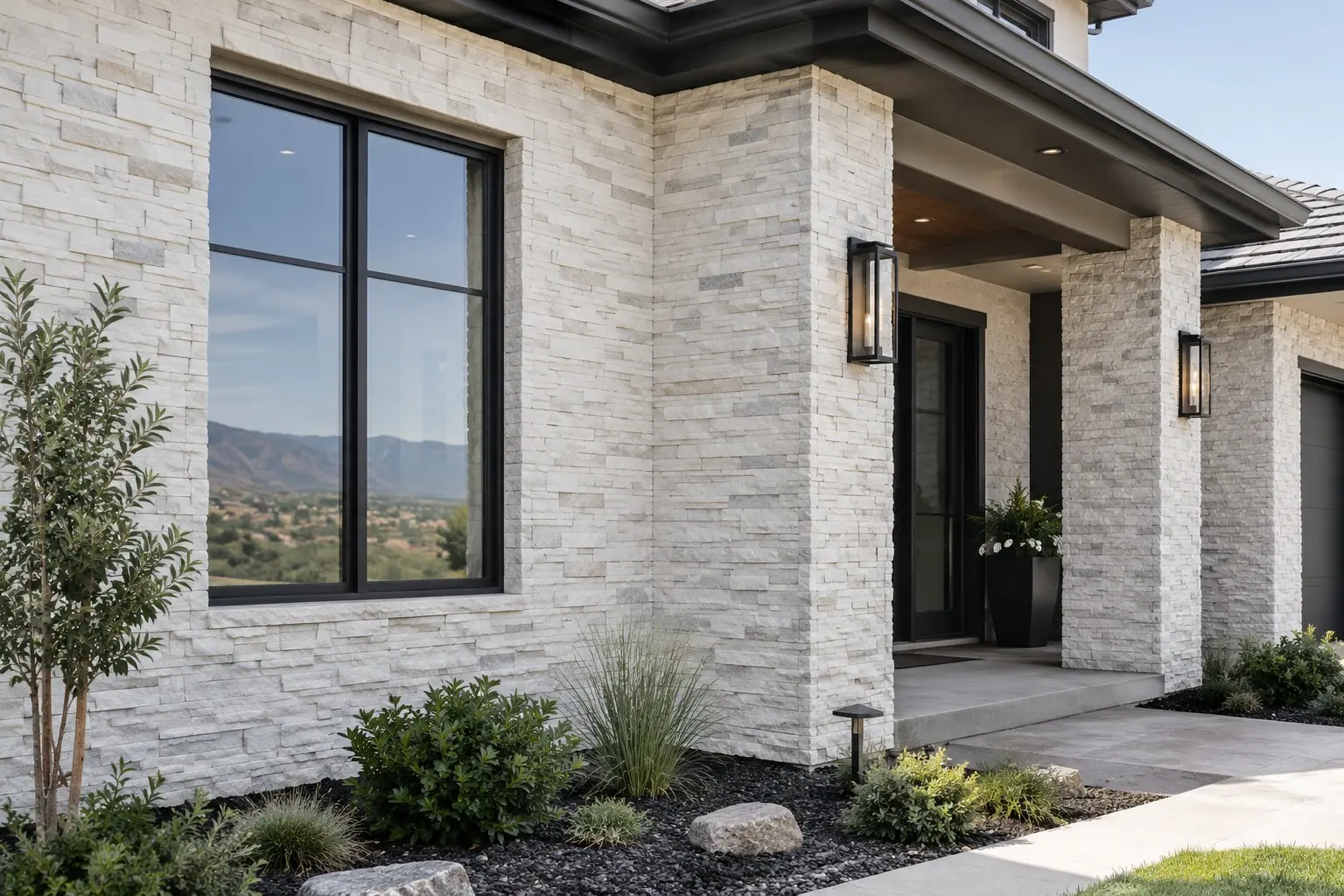
1. What Is the White Haze on My Exterior Stone?
A white, chalky haze on exterior stone or pavers is most often efflorescence. It forms when water moves through the stone, the setting bed, the mortar, or the soil below, picking up water-soluble salts along the way. When that water reaches the surface and evaporates, the salts stay behind as a powdery white or grayish film.
Efflorescence is especially common on concrete pavers during their first months outdoors, because cement-based materials contain salts that migrate out over time. It can also appear on natural stone, usually when salts come from the mortar, the base material, or groundwater rather than the stone itself.
A few signs point to efflorescence:
- The haze is white or light gray and feels dry and powdery.
- It often shows up after rain, sprinkler use, or a wet season.
- It tends to appear in patches, along joints, or near areas that stay damp.
Efflorescence is a surface deposit, not damage to the stone. In many cases, it fades on its own as the supply of soluble salts runs out. On new concrete pavers, that often takes a few months, though it can last longer in damp conditions. Dry brushing with a stiff, non-metal brush often removes light deposits.
For heavier buildup, efflorescence cleaners are available, but many are acid-based. Acids can etch calcium-based stones such as limestone, travertine, and marble, and can also roughen the surface of concrete pavers if used too strong or left on too long. Check that any product is labeled for your specific material, and follow the dilution directions closely. If efflorescence keeps coming back year after year, that usually signals an ongoing moisture source, such as poor drainage, a nearby downspout, or sprinklers soaking the same area. Landscapers and hardscape contractors who often answer efflorescence questions from clients can apply for a trade account to source pavers and stone for their projects.
2. Can Sun Exposure Fade Exterior Stone?
Yes, sun and weather can change how exterior stone looks over time, although the effect depends heavily on the material. The color of most natural stone comes from its minerals, which are generally stable in sunlight. Manufactured products behave differently.
Many concrete pavers get their color from pigments in a thin layer of cement paste that coats the sand and aggregate at the surface. Over years of foot traffic, rain, UV exposure, and pressure washing, that layer wears away and exposes the sand and aggregate underneath. The result is a lighter, duller, or slightly speckled look compared to when the pavers were new. Manufactured stone veneer is usually colored on its face rather than all the way through. The iron oxide pigments used in most veneer resist UV fading, so dirt, algae, or harsh cleaning are more common reasons veneer looks faded.
Natural stone can change too, just more slowly and for different reasons:
- Surface weathering: Softer stones such as sandstone and some limestones lose a fine layer of surface material over time, which can lighten the color and soften the texture.
- Finish changes: Polished finishes are rarely used outdoors because weather and foot traffic dull them over time. Honed finishes are more common outside, and they can also soften in sheen as the surface wears, which can make the stone read slightly lighter.
- Mineral reactions: Some stones warm slightly in tone as iron-bearing minerals near the surface react with air and water.
This kind of gradual change is a normal part of using natural materials outdoors, and many homeowners come to prefer the softer, weathered look. If you want to preserve the original tone, look for materials with color that runs all the way through when comparing natural stone and paver options, and keep surfaces clean so grit does not wear them down faster.
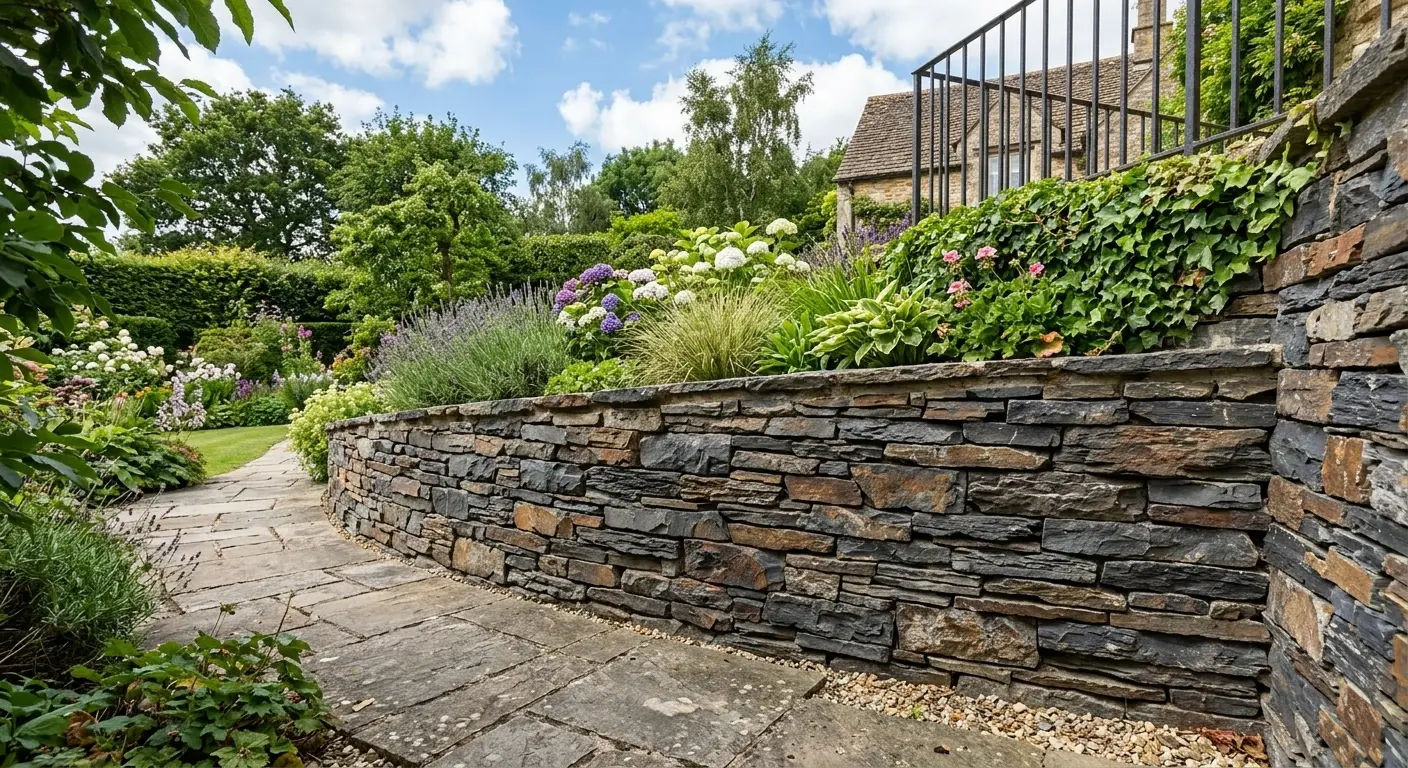
3. Why Are There Rust Stains on My Exterior Stone?
Orange, brown, or reddish spots on exterior stone are usually rust, and they come from one of two places: inside the stone or outside it.
Iron inside the stone. Some granites, slates, quartzites, and sandstones contain iron-bearing minerals, such as pyrite. When these minerals are exposed to water and oxygen outdoors, they oxidize and leave small rust-colored spots or streaks. This is a natural process. In some slates and quartzites, warm rust-colored tones from this oxidation are part of the stone’s character.
Iron from outside sources. More often, rust comes from something sitting on or near the stone:
- Metal patio furniture, planters, grills, or tools left in one spot
- Nails, rebar, or metal edging near the surface
- Fertilizers that contain iron, scattered from nearby lawns or beds
- Sprinkler water from a well or source with high iron content
The pattern usually tells you which one you have. Scattered spots across a single stone suggest minerals inside it, while rings, drip lines, or a spray pattern point to an outside source.
For rust from outside sources, removing the cause comes first. Rust removers made for stone are available, but many contain acids, so test in a small hidden area and confirm the product is safe for your stone type. Rust from minerals inside the stone is harder to remove completely and may return, since the iron is part of the material itself. Because iron content and natural tones vary from stone to stone, it helps to see a material in person before choosing it for an outdoor space, which you can do at any of our showroom locations.
4. What Causes Green or Black Stains on Exterior Stone?
Green, black, or crusty patches on exterior stone are usually caused by living organisms. Algae, moss, mildew, and lichen all thrive where stone stays damp and shaded, such as north-facing walls, areas under trees, spots near downspouts, and pool surrounds.
Each one looks a little different:
- Algae: A green or greenish-black film that can feel slick when wet. It is a common cause of slippery patios and steps.
- Moss: Soft, green, cushion-like growth, often in joints and along edges where soil and moisture collect.
- Mildew and mold: Dark gray or black spots and streaks, usually in shaded, poorly ventilated areas.
- Lichen: Flat, crusty patches in gray, green, yellow, or orange that cling tightly to the stone and can be hard to remove.
Leaves and plant material cause a related problem. Leaves, mulch, fallen fruit, and wood contain tannins that leach out when wet, leaving brown or tan stains that look a lot like the stone has changed color. These stains are most common in fall and under large trees.
To treat organic growth, start with a soft or medium brush and a cleaner labeled safe for your type of stone. Avoid harsh household chemicals unless the label confirms they work on your material, and test first. Be careful with pressure washers, since high pressure can erode the surface of softer stones and blast sand out of joints. Over time, the most effective approach is reducing shade and moisture where you can, such as trimming overhanging branches and redirecting water away from stone surfaces.
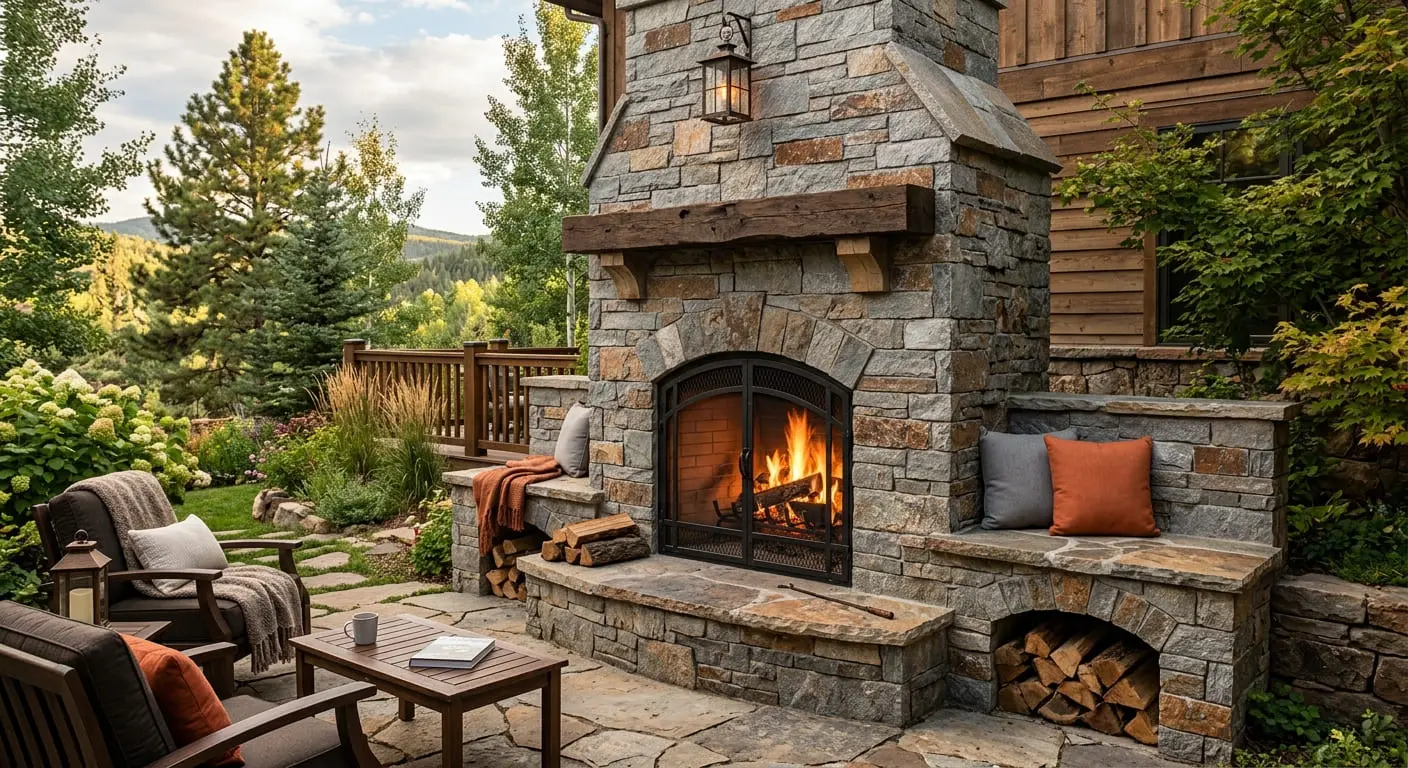
5. Why Does My Exterior Stone Look Dark, Cloudy, or Blotchy?
When exterior stone looks darker in some areas, cloudy in others, or uneven overall, the cause is often water or a surface treatment rather than the stone itself. There are three common culprits.
Trapped moisture. Most stone darkens when wet and lightens again as it dries. If certain areas stay dark long after rain or watering, moisture is likely collecting there. Low spots, poor drainage, and shaded areas that never fully dry are common sources. Ongoing dampness also encourages the efflorescence and organic growth covered above.
Hard water deposits. Sprinklers using water high in calcium and magnesium can leave white or gray mineral scale. Unlike efflorescence, which rises up from within, hard water deposits build up on the surface where the spray lands. They often appear as arcs or bands along the edge of a lawn or planting bed. Adjusting sprinkler heads so they do not hit stone surfaces is the simplest fix.
Sealer problems. Sealers can change how stone looks, sometimes on purpose and sometimes not:
- Color-enhancing sealers are designed to darken and deepen stone, so a recently sealed surface may look noticeably different.
- Film-forming sealers can turn milky or white if moisture becomes trapped underneath, often because the sealer went onto damp stone, was applied too thick, or got wet before it cured. Sealing over efflorescence can also lock a white haze under the film.
- Some topical sealers yellow, wear unevenly, or peel over time in strong sun, leaving a patchy look.
- Uneven reapplication can leave some areas darker or glossier than others.
If a blotchy appearance showed up after sealing, the sealer is the likely cause. Product labels and manufacturers can explain how to address haze or uneven coverage for that specific product.
How Can You Tell Which Cause You Are Dealing With?
The color and pattern of the change usually point to the cause.
What You See | Likely Cause | First Step |
| White, powdery haze | Efflorescence | Dry brush and find the moisture source |
| Gradual lightening or dulling | Sun and surface wear | Keep surfaces clean |
| Orange or brown spots | Rust | Remove metal or iron sources |
| Green, black, or crusty patches | Algae, moss, mildew, lichen | Clean and reduce shade and dampness |
| Brown or tan stains under trees | Leaf tannins | Clear debris promptly |
| Dark, cloudy, or uneven areas | Moisture, hard water, or sealer | Check drainage, sprinklers, and sealer history |
How Can You Keep Exterior Stone from Changing Color?
Most color changes come down to water, so managing moisture is the most effective step. Direct downspouts and sprinklers away from stone, sweep away leaves and debris regularly, and avoid leaving metal objects in one place for long periods. When you clean, use products labeled for your stone type and test them first. If you seal, follow the manufacturer’s directions closely and apply only to clean, fully dry stone.
Material choice matters too. If you are planning a new patio or walkway, you can book a design consultation to compare how different stones and pavers hold their color outdoors. If you are working with a tighter budget, our overstock sale lists close-out materials at reduced prices. All overstock sales are final, so confirm the color and quantity you need before you buy.
Conclusion
When exterior stone changes color, the cause is usually one of five things: efflorescence, sun and weathering, rust, organic growth, or moisture and sealer issues. Most of these changes are surface-level, and knowing the cause helps you choose the right response instead of trying cleaners at random. Some gradual change is simply part of how natural materials age outdoors.
If you are planning a new patio, walkway, or wall and want to understand how different materials hold their color over time, our team is glad to help. Stop by our showrooms in Sacramento, Reno, Minden, or Fernley to see exterior stone and pavers in person and talk through which options fit your space and climate.
Frequently Asked Questions
Some change is normal. Exterior stone is exposed to sun, rain, temperature swings, and plant growth year-round, so gradual shifts in tone are common. Sudden or patchy changes usually have a specific cause, such as efflorescence, rust, or organic growth.
Often, yes. Efflorescence tends to fade as the supply of soluble salts in the material runs out, which can take several months. If it keeps returning, there is likely an ongoing moisture source that needs attention.
Sealing can help reduce staining and water absorption, but it does not stop every type of color change. Some sealers also change the stone’s appearance on their own, either by darkening it or by turning cloudy if applied incorrectly.
Pressure washing can remove surface dirt and growth, but high pressure can erode softer stones and wash sand out of joints. A lower pressure setting, a wide spray tip, and a cleaner made for your stone type are safer starting points.
Natural stone generally keeps its color well because the color comes from its minerals. Concrete pavers rely on pigments and a surface cement layer, which can lighten as the surface wears. Both can still be affected by stains, efflorescence, and organic growth.
SOURCES
- Hardscape Upkeep, Landscape Architect Magazine: https://landscapearchitect.com/landscape-articles/hardscape-upkeep
- Efflorescence on Pavers, Rochester Concrete Products: https://rochestercp.com/efflorescence-on-pavers
- Concrete Pavers: Face Mix vs. Standard Mix, Lurvey’s: https://lurveys.com/concrete-pavers-face-mix-vs-standard-mix/
- Does Stone Veneer Fade?, Mountain View Stone: https://mountainviewstone.net/blogs/carved-in-stone/does-stone-veneer-fade
- Rust Stain Removal from Natural Stone, Dynamic Stone Tools: https://dynamicstonetools.com/blogs/news/rust-stain-removal-from-natural-stone-step-by-step
- How to Remove Leaf Stains from Pavers, Unilock: https://unilock.com/maintenance/how-to-remove-leaf-stains-from-pavers
- Concrete Sealer Problems, Foundation Armor: https://www.foundationarmor.com/concrete-sealer-problems/