The stone pavers that stay coolest underfoot in summer are light-colored travertine, limestone, marble, and sandstone. Pale stone reflects more sunlight than dark stone, and porous stones such as travertine and limestone have lower thermal conductivity, so they pass heat to bare feet more slowly than dense stone at the same temperature. Dark, dense stones such as slate, bluestone, basalt, and black granite absorb more solar energy and typically get the hottest in direct sun. Light granite and light quartzite fall in between: both reflect sunlight well, but quartzite conducts heat quickly and can feel warmer to the touch than travertine of a similar color.
Along with stone type, a paver's color, porosity, surface finish, sealer, and exposure to shade all affect how hot it feels. Honed, tumbled, and textured finishes look lighter than polished stone, while color-enhancing sealers darken stone and increase heat absorption. For pool decks and other barefoot areas in full sun, pale travertine is one of the most commonly recommended paver stones, and darker stones are better suited to shaded patios, covered areas, and walkways. In this guide, we compare how common paver stones handle heat and share practical ways to keep outdoor stone surfaces cooler.
Why Some Stone Pavers Get Hotter Than Others
Every paver in direct sun absorbs energy. How hot it feels depends on how much energy the stone takes in, how it stores and moves that heat, and how quickly that heat reaches your skin.
Color and reflectivity. Light surfaces reflect more sunlight, while dark surfaces absorb it. This property, called solar reflectance or albedo, is why a white stone patio and a charcoal one can feel so different at the same time of day. Of all the factors, color has the biggest effect on how hot a stone's surface gets.
Porosity. Porous stones are full of tiny voids and channels. The air trapped in those pores lowers the stone's thermal conductivity, so a porous paver passes heat to your skin more slowly than a dense stone at the same temperature. Porous stones can also hold a little moisture after rain, irrigation, or a rinse, which cools the surface as it evaporates.
Thermal conductivity. How well a stone conducts heat depends on its minerals as well as its porosity. Quartz-rich stones such as quartzite move heat quickly. That means they can feel hotter when you step on them, even when their surface temperature is about the same as a less conductive stone.
Thickness and mass. Thicker, heavier pavers take longer to warm up in the morning but also stay warm longer into the evening. Thinner pavers heat up and cool down faster.
Surface finish. Polishing deepens a stone's color, while honed, tumbled, and textured finishes usually look a little lighter. A textured surface also changes how much of your foot actually touches the stone. Finish won't make a dark stone cool, but it can make a small difference.
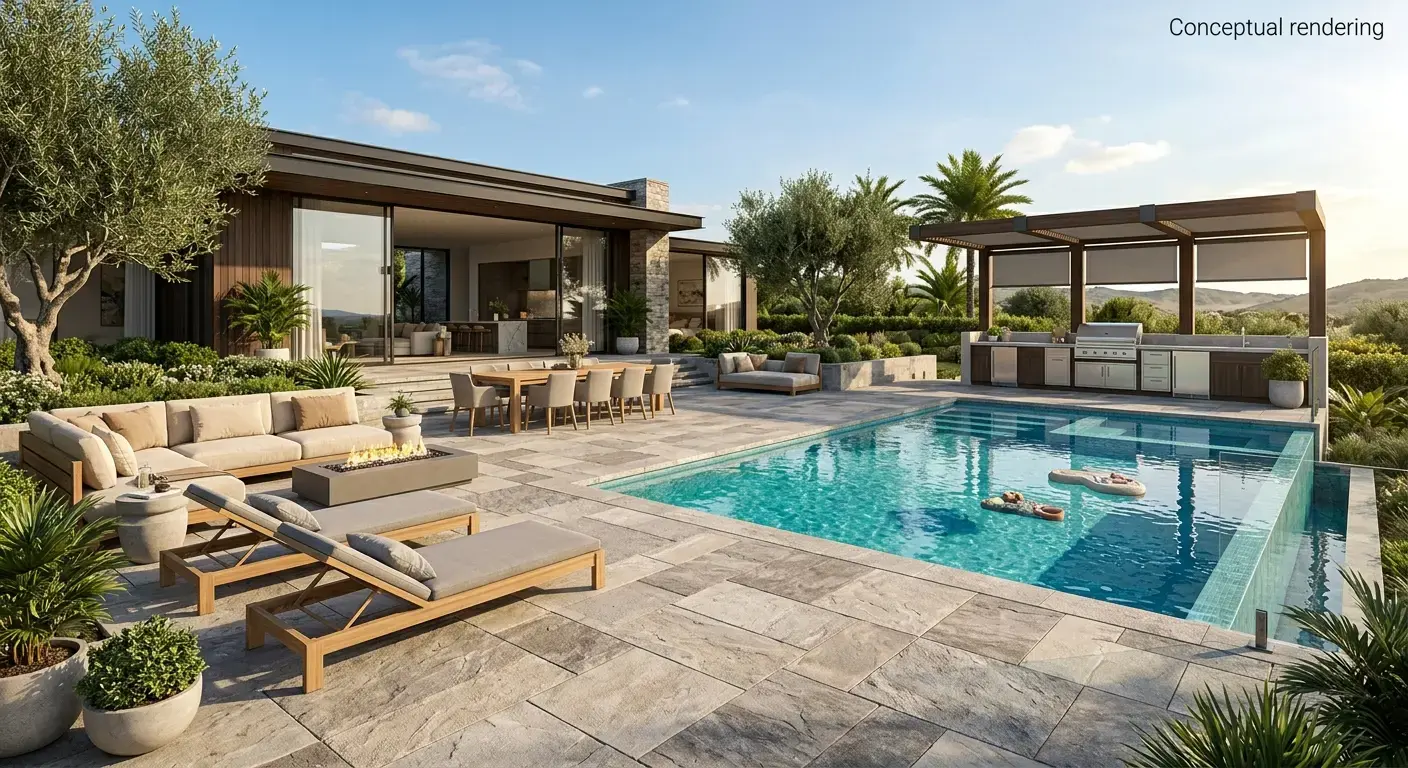
The Coolest Stone Pavers for Summer
Travertine
Travertine is one of the most commonly recommended stones for pool decks in hot climates. A form of limestone, it usually comes in pale creams, ivories, and beiges that reflect a good amount of sunlight. Travertine is also naturally porous. Its small holes and channels were left behind by gas bubbles and organic material as the stone formed from mineral deposits around springs. That porosity lowers its heat conductivity, which helps it feel more comfortable than dense stones of a similar color.
Tumbled and brushed travertine pavers have a softened, slightly textured surface. Lighter tones such as ivory and light beige generally stay cooler than darker walnut or noce tones, so color choice matters even within the same stone. The same idea applies when you compare pavers and exterior stone of different types: the lightest color in each will usually stay the coolest.
Because travertine is porous, it can also absorb stains and moisture, so sealing and regular cleaning are part of owning it. Like limestone and marble, it's a calcium-based stone, which means acidic cleaners and poorly balanced pool water can etch the surface. Many pool owners accept that upkeep in exchange for a cooler surface.
Limestone
Other types of limestone share many of travertine's advantages. Limestone is a sedimentary stone that typically comes in soft whites, creams, grays, and buff tones, and many varieties are moderately porous. Pale limestone pavers reflect plenty of sunlight and tend to stay comfortable around pools, courtyards, and garden paths.
Limestone varies widely from one quarry to the next. Some types are quite dense, while others are softer and more open. Softer limestones may be better suited to patios and walkways than high-traffic areas, and all limestone benefits from proper sealing outdoors. When comparing options, look at each stone's specific color and density rather than assuming all limestone performs the same way.
Light-Colored Marble
White and light gray marble pavers reflect a lot of sunlight, which keeps them among the cooler options in direct sun. Marble is denser than travertine and most limestone, so it doesn't get the same benefit from porosity, but its pale color does most of the work.
Outdoors, marble pavers are usually tumbled, honed, or textured for better traction. Polished marble isn't a good fit for a wet pool deck because it becomes slippery. Like travertine and limestone, marble is sensitive to acids, including some pool chemicals and cleaning products, so check its care requirements before choosing it for areas that get a lot of splash.
Light Sandstone
Pale sandstone in cream, buff, or light gold tones is another comfortable option. Its naturally grainy texture provides good grip, and many varieties are moderately porous. Sandstone colors vary a lot, though. Red, brown, and deep gold sandstones absorb much more heat than lighter ones, so choose the color carefully if comfort is your goal.
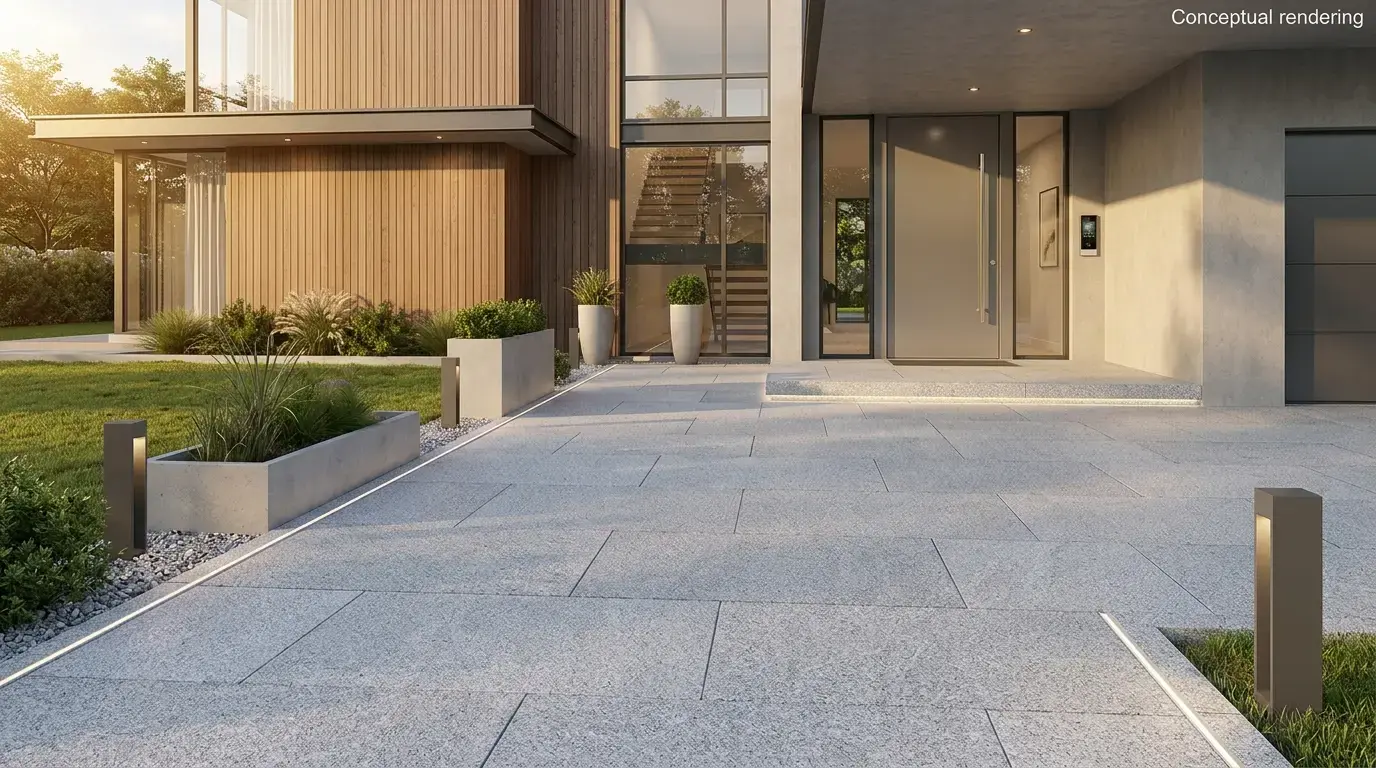
Stones That Fall in the Middle
Granite
How hot granite gets depends mostly on its color. Light gray, white, and speckled granites with pale backgrounds can be reasonably comfortable, especially with a flamed or textured finish. Black and dark granites absorb a lot of heat and can get very hot by midafternoon. Because granite is dense and low in porosity, it tends to hold heat evenly once it warms up.
Quartzite
Quartzite is hard, dense, and often very light in color, which makes it reflective. However, quartz-rich stone conducts heat well, so even light quartzite may feel warmer to the touch than travertine of a similar color. It's a practical option where you want a hard, dense surface, but it's usually not the first choice if barefoot comfort is the main goal.
Stone Pavers That Tend to Run Hot
Some stones are widely used outdoors but aren't the coolest choice for barefoot areas in full sun.
Slate. Slate's charcoal, black, deep green, and rust tones absorb a lot of sunlight. Its naturally textured surface offers good traction, but it can get very hot on summer afternoons.
Bluestone. Bluestone ranges from blue-gray to dark gray and is widely used for patios and walkways. In direct sun, though, it heats up considerably, especially in darker tones.
Basalt. Dense, dark, and volcanic in origin, basalt is often used in contemporary designs but ranks among the hotter stones underfoot in strong sun.
Dark granite. Black and deeply colored granites absorb heat easily and hold onto it.
None of these stones is a poor choice overall. They work well for shaded patios, covered porches, walkways people cross in shoes, and spaces where you want a darker color palette. The key is matching the stone to how the space will be used. If you're weighing a lighter stone and a darker one for different areas, you can visit one of our showrooms to talk through the options with our team.
How Finish and Sealer Affect Heat
Beyond the stone itself, a few choices about finish and treatment can make a noticeable difference.
Choose textured over polished. Tumbled, brushed, sandblasted, and flamed finishes are standard for outdoor stone because they improve traction, and as mentioned earlier, they also look slightly lighter than polished stone. Polished finishes are generally not recommended for outdoor walking surfaces.
Be careful with enhancing sealers. Some sealers are designed to deepen a stone's color or give it a "wet look." The catch is that a darker surface absorbs more sunlight. If staying cool is a priority, a penetrating sealer that keeps the stone close to its natural color is usually the better fit. Make sure any sealer you use is rated for outdoor use and suited to your specific stone.
Keep the surface clean. Dirt, algae, and organic stains can darken pavers over time. Regular cleaning helps the stone keep its original color and reflectivity.
Practical Ways to Keep Stone Pavers Cooler
Even the right stone benefits from good planning. These strategies can make any outdoor surface more comfortable:
- Add shade where people gather. Pergolas, shade sails, umbrellas, and trees can significantly lower surface temperatures in the areas you use most.
- Rinse before use. A quick spray of water cools stone as it evaporates, and porous stones like travertine hold that cooling effect a little longer.
- Watch how the sun moves. West-facing areas get the most afternoon heat, which makes them a good place for the lightest stone you're considering.
- Mix materials by zone. You might choose pale travertine for the pool deck and a darker stone for a shaded dining area or front walkway, balancing comfort with the look you want. For a smaller secondary area, our overstock and close-out materials are another place to look.
- Compare stones in real sunlight. Showroom lighting and outdoor sun are very different. Whenever possible, see how a stone looks and feels in natural daylight before you decide. If you'd like help narrowing down your options first, you can book a free design consultation with our team.
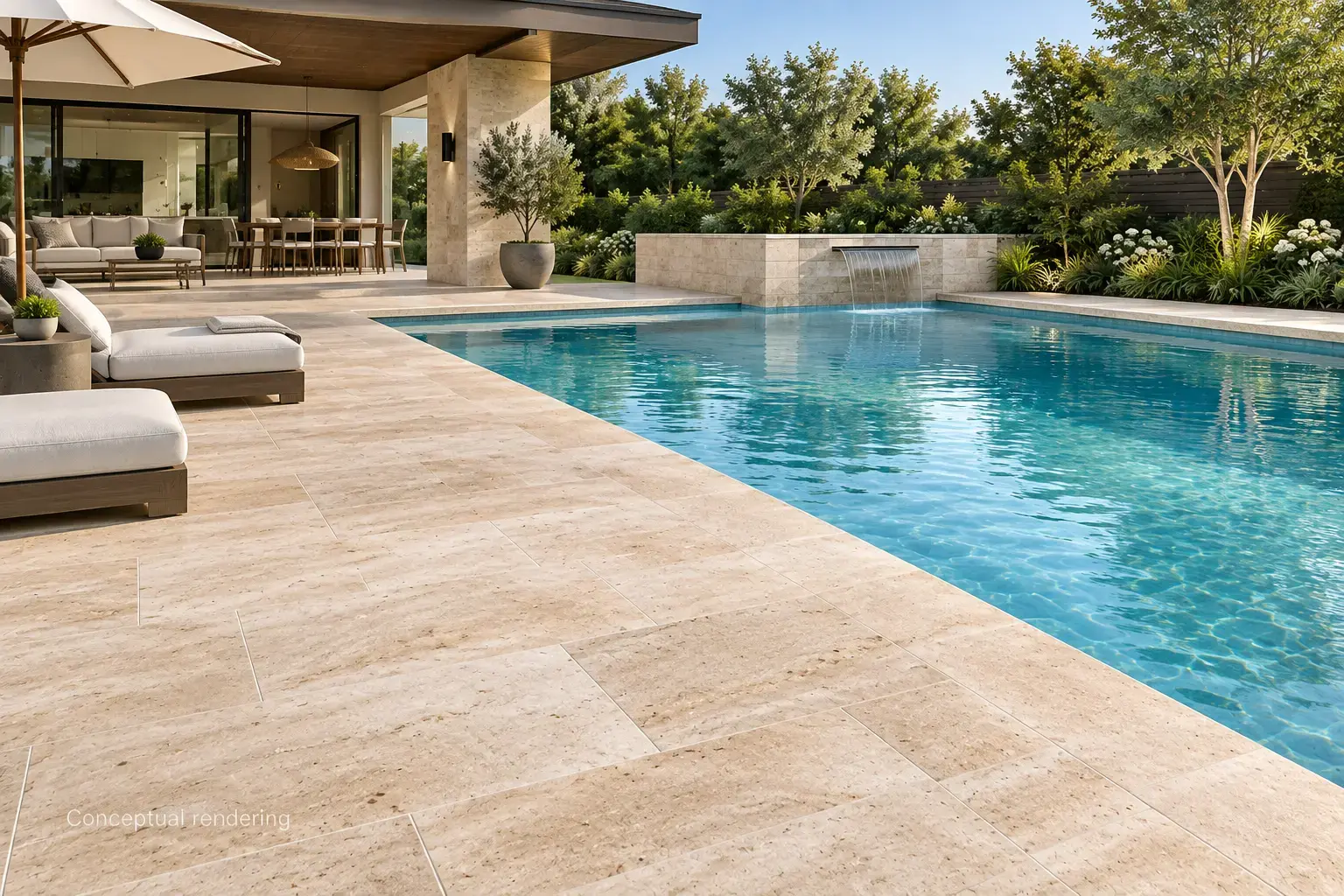
Matching the Stone to the Space
For pool decks and other barefoot areas in full sun, pale travertine and light limestone are the most consistent choices for staying cool, with light marble and pale sandstone close behind. For shaded patios, covered outdoor rooms, and walkways, you have much more flexibility, and darker stones like slate or bluestone become practical options. Light granite and quartzite fall in between and can work well when paired with shade or a textured finish. If you're a contractor, landscape designer, or builder sourcing stone for multiple projects, you can apply for a trade account to work with a dedicated rep.
Conclusion
The coolest stone pavers for summer pair a light color with low heat conductivity, which is why porous travertine and limestone lead the list for pool decks and sunny patios. Light marble and pale sandstone also perform well, while dark, dense stones like slate, bluestone, basalt, and black granite are better saved for shaded areas or spaces where people wear shoes. Finish, sealer, shade, and sun exposure all shape the final result, so it's worth thinking through how each space will be used before choosing a material. If you'd like help comparing paver colors, textures, and stone types for your outdoor project, our team is happy to walk you through the options at our Sacramento, CA showroom, Reno, NV showroom, Minden, NV showroom, and Fernley, NV showroom, so you can choose a stone that suits how you'll use each space.
Note: Some images on this page may be conceptual renderings created to illustrate design possibilities and may not depict actual installations.
Frequently Asked Questions
Travertine is one of the most popular choices for pool decks because its light colors reflect sunlight and its porous structure passes heat to your feet more slowly than dense stone. Lighter tones like ivory and beige generally stay cooler than darker walnut tones.
Yes. Any stone in direct summer sun will warm up. Light-colored pavers simply absorb less energy than dark ones, so they usually stay noticeably more comfortable for bare feet, especially in the afternoon.
It depends on the sealer. Color-enhancing or wet-look sealers darken the surface, which can increase heat absorption. Penetrating sealers that keep the stone close to its natural color have minimal effect on surface temperature.
Slate offers good traction, but its dark colors absorb a lot of heat, so it can get very hot in full sun. It works better in shaded areas or spaces where people usually wear shoes.
Thicker pavers warm up more slowly in the morning, but they also stay warm longer into the evening. Color and porosity have a much bigger effect on how cool a paver feels than thickness does.