AT A GLANCE
- Granite and quartzite suit most house exteriors.
- Low water absorption is the key outdoor property.
- Granite allows 0.40% max absorption under ASTM C615.
- Quartzite allows 1% max absorption under ASTM C616.
- Exterior travertine allows up to 2.5% absorption.
- Porcelain absorbs 0.5% or less under ANSI A137.1.
- Acid rain slowly dissolves marble and limestone.
IN THIS POST
- Is There One Best Exterior Stone?
- What Makes Exterior Stone Durable?
- What Are the Best Exterior Stones?
- Granite vs. Quartzite vs. Travertine
- Can Marble Be Used Outside?
- Where to Use Stone on a House Exterior
- How Do You Test Natural Stone?
- Conclusion
- Frequently Asked Questions
- Sources
The best stone for the exterior of a house is usually granite or true quartzite, because both absorb very little water and resist the acids in rain and polluted air. According to the ASTM C615 standard, granite may absorb no more than 0.40 percent of its weight in water, and Class III quartzite is held to 1 percent under ASTM C616.
Travertine can also work outdoors in milder climates, while marble and dolomite are better suited to interiors, and limestone needs extra care outdoors. The right choice also depends on the local climate and on where the stone sits on the house.
Every natural stone forms differently. Granite cools from molten rock, quartzite is sandstone transformed by heat and pressure, and travertine and marble are built from the mineral calcite. Those origins decide how much water a stone soaks up, how hard it is, and how it reacts to acids, which are the traits that matter most once stone leaves the shelter of a roof.
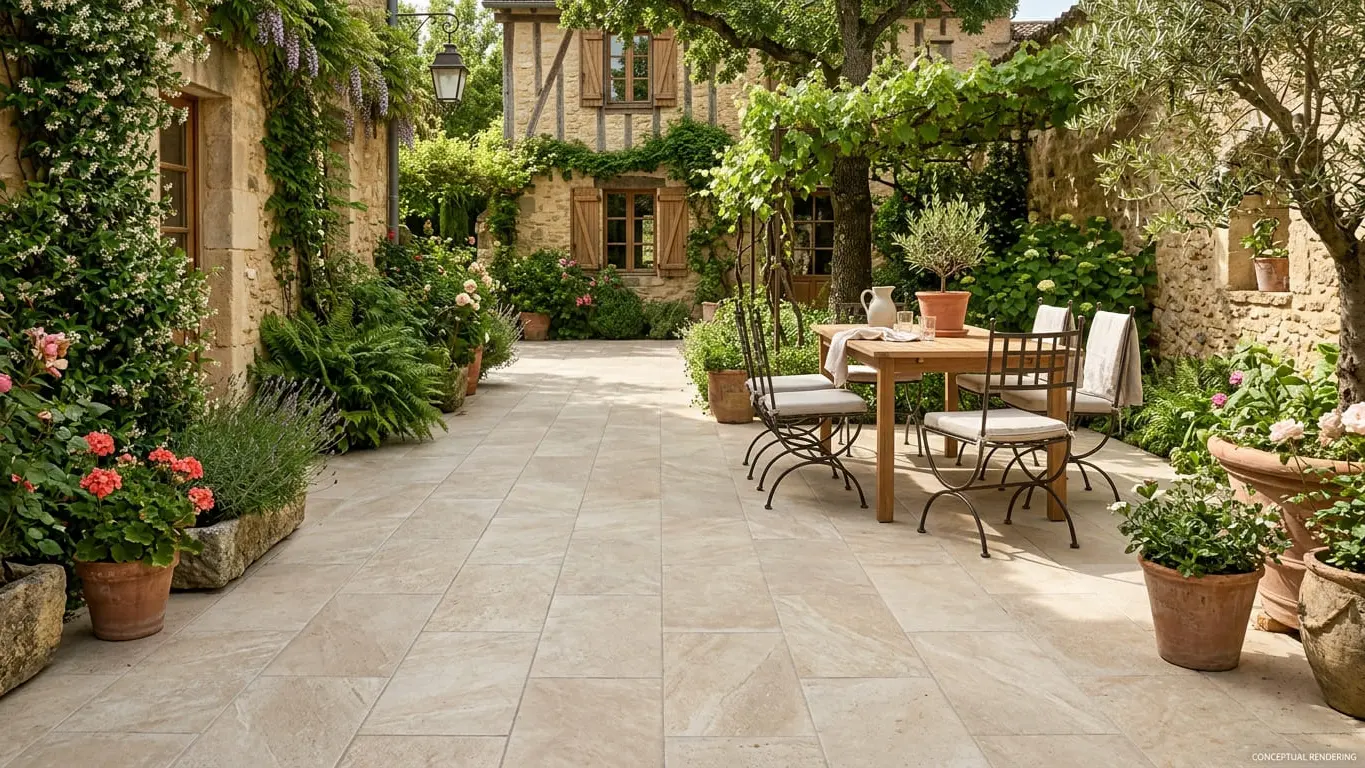
Is There One Best Exterior Stone?
No. Each stone has its own strengths and weaknesses, and every house exposes stone to different conditions, so a stone that performs well in one setting can struggle in another.
For example, a stone that thrives on a sunny wall in a dry climate may struggle as a front step that stays wet all winter and gets sprinkled with de-icing salt. A wall under deep overhangs also sees far less rain than a freestanding garden wall or a chimney cap.
That is why it helps to compare stones by measurable properties rather than by name alone. Trade names vary from supplier to supplier, but absorption limits, hardness, and mineral makeup do not.
What Makes Exterior Stone Durable?
Low water absorption matters most. In general, the less water a stone takes in, the better it resists frost damage, staining, and cracking.
Absorption is measured under ASTM C97, which reports the water a stone takes on as a percentage of its dry weight. Industry guidance holds that stone with absorption of 3 percent or lower is generally frost-resistant, though testing for the specific application is still advised. When water inside a porous stone freezes, it expands, and repeated cycles can loosen grains or open small cracks.
A few other properties also shape how a stone ages outside:
- Chemical resistance: Acid rain, airborne pollutants, and some cleaning products can attack certain minerals, so the stone needs to tolerate what it will be exposed to.
- Thermal shock: A south- or west-facing wall heated by afternoon sun can cool within minutes when a cold rain hits. Strength testing helps show how a stone will handle those swings.
- Thermal movement: Stone expands and contracts with temperature, and that movement should be reasonably close to that of the materials next to it.
- Hardness: Harder stone holds its surface and edges better on steps, walkways, and corners that see contact.
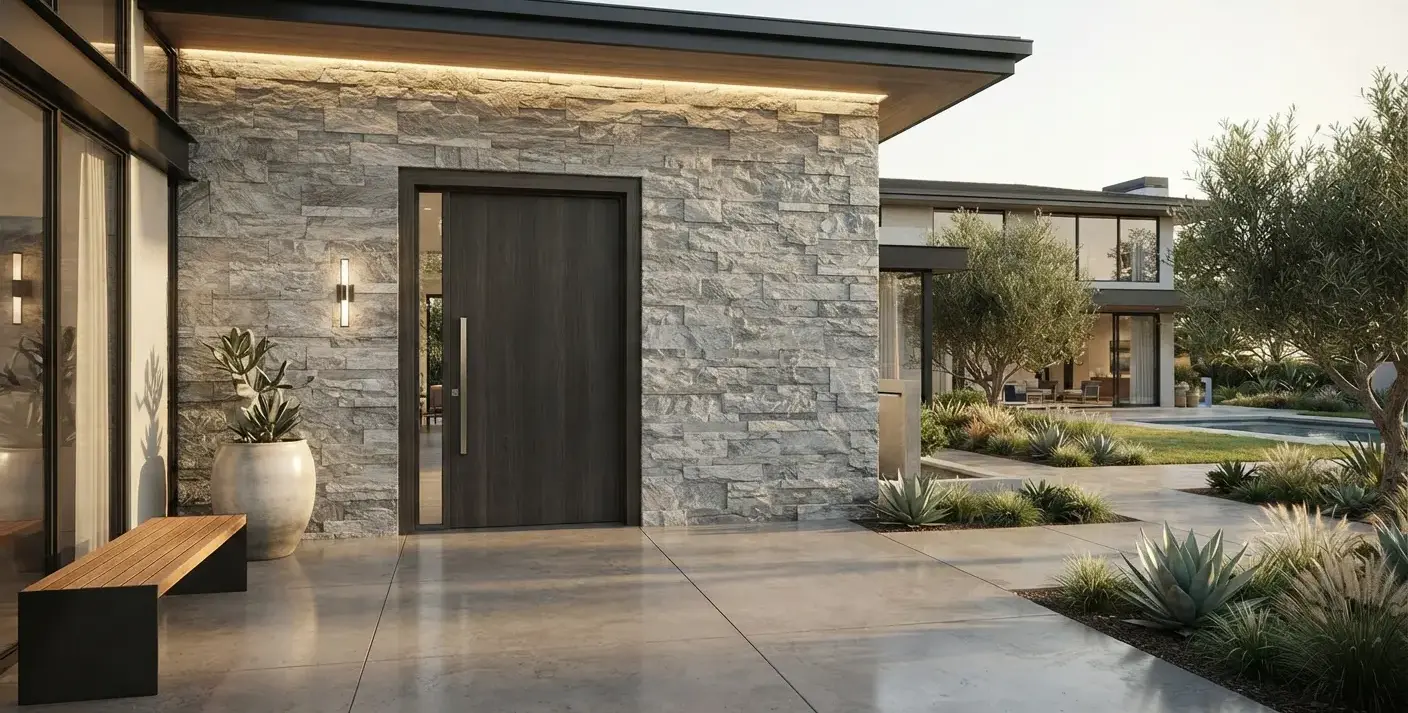
What Are the Best Exterior Stones?
Granite, quartzite, and porcelain are dependable exterior choices, and travertine is a good option where winters are milder. Each has a published absorption limit you can ask about before you buy.
Granite is made mainly of feldspar and quartz. It is hard, dense, and resistant to scratches and acids. Some granite varieties contain trace minerals that can cause discoloration after long weather exposure, so it is worth asking about a specific variety’s track record outdoors. In our product chart, granite is rated for indoor and outdoor use on floors, walls, and fireplaces, comes in polished, leathered, and specialty finishes, and falls in our UV-resistant category.
Quartzite is a dense, quartz-rich stone. Under ASTM C616, Class III quartzite must contain at least 95 percent free silica and meet a 1 percent absorption limit. Our quartzite is rated for indoor and outdoor use, is UV resistant, and comes in polished, honed, leathered, and specialty finishes. You can see the granite and quartzite slabs we have right now in our live slab inventory.
Travertine is known for its warm tones and natural voids. Its specification sets a 2.5 percent maximum absorption for exterior-grade stone. Our travertine is rated for indoor and outdoor use on floors, walls, and fireplaces, in all four finishes.
Porcelain is not natural stone, but stone-look porcelain is a common exterior alternative. Porcelain tile is defined as ceramic tile with water absorption of 0.5 percent or less, and the tile standard also references a freeze-thaw resistance test among its performance methods. Our porcelain is rated for indoor and outdoor use and comes in all four finishes.
Granite vs. Quartzite vs. Travertine
Granite and quartzite are usually better outside, because they absorb far less water than travertine. That makes them the safer picks where winters freeze and thaw or where de-icing salt is used. Travertine trades some of that toughness for its soft, textured look.
Travertine’s 2.5 percent limit is more than six times granite’s, and higher absorption raises the risk of freeze-thaw damage and of salt crystallizing inside the pores. The travertine specification itself notes that some travertines may not suit exterior use where freeze-thaw cycles are frequent. Stone industry guidance advises against travertine where de-icing salts are used, and the fillers used in travertine’s natural voids can fail when water and repeated freezing work on them together.
The three stones also differ in hardness and acid resistance. Granite and quartzite are hard enough to scratch glass, while a metal tool can scratch travertine. Travertine also etches on contact with common acids such as lemon juice and vinegar, while granite and true quartzite do not.
Appearance often decides the final choice. Granite tends to show a speckled, crystalline pattern. Quartzite can carry flowing veins that look so much like marble that the two are sometimes mislabeled. Travertine offers earthy, layered tones and a naturally pitted texture. Once a color or pattern catches your eye, list the slab names in a slab quote request to check pricing and availability.
Can Marble Be Used Outside?
It can, but marble, along with limestone and dolomite, needs the most caution of any common stone outside. The calcite and dolomite minerals in these stones react with acids in rain and polluted air.
When sulfuric and nitric acids reach it, calcite dissolves. On exposed surfaces, that shows up as roughened stone, lost material, and softened carved details, and sheltered areas can develop dark crusts that later peel away. Sealers can reduce how much water a stone absorbs, but they do not stop acids from reacting with calcite or dolomite.
Dolomite reacts more slowly than calcite, but it still etches. Marble can also be sold under misleading names, so treat the label “soft quartzite” as a red flag. In most cases, a stone sold that way is actually marble or dolomite.
In our product chart, marble is rated for indoor floors, walls, and fireplaces and is not marked for outdoor use or UV resistance. We also recommend dolomite for indoor walls, floors, and fireplaces. Both stones remain beautiful choices for interior features where they are protected from weather.
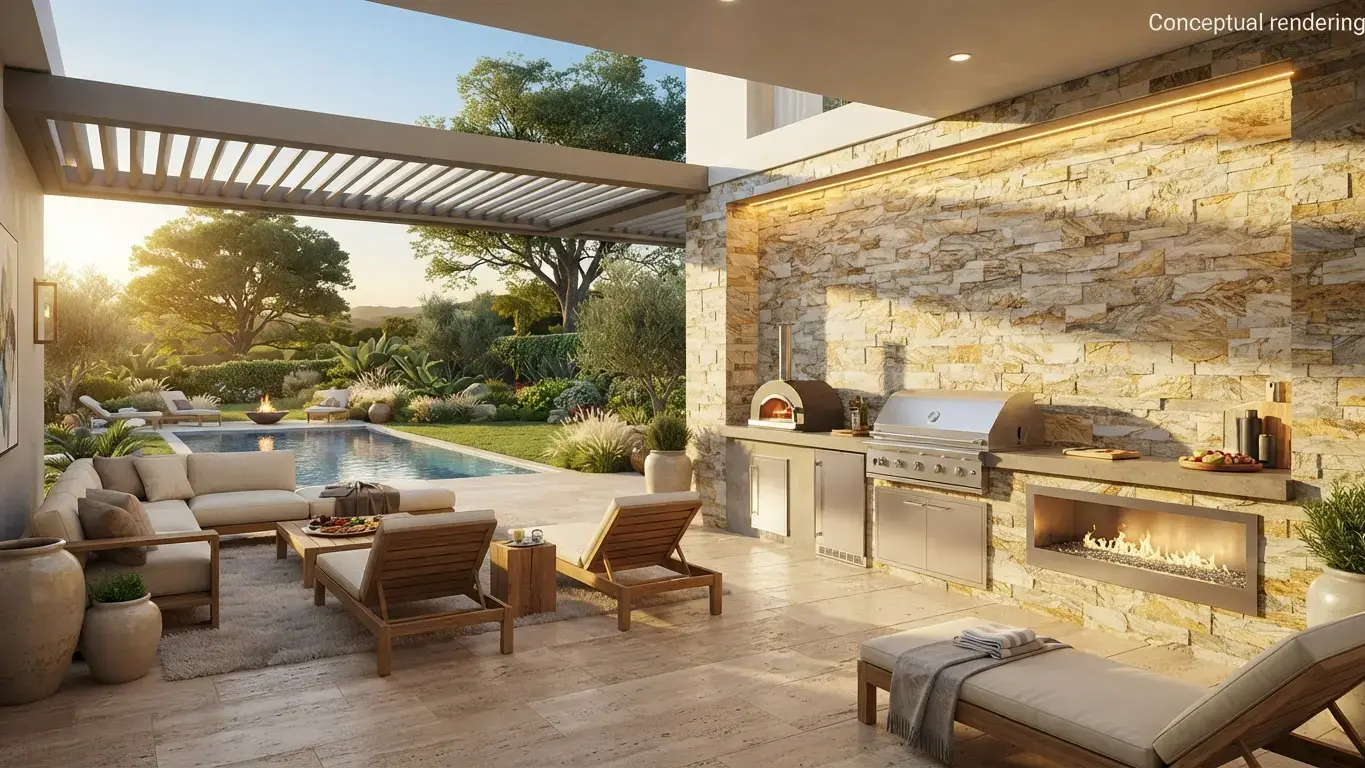
Where to Use Stone on a House Exterior
Put the densest, least absorptive stone where water and wear are heaviest, such as the base of a wall, caps, sills, and steps. A wider range of stone can work on the main wall, where conditions are milder.
Near the ground. The bottom of a wall can collect splashback, soil moisture, and in cold regions, de-icing salt. One university design standard does not allow porous sedimentary stone below grade or in contact with the ground and calls for granite or cast stone there instead. The same standard asks for sedimentary stone to be laid with its bedding planes horizontal, since vertical bedding lets moisture into thin layers that can delaminate.
Caps, sills, and steps. Horizontal surfaces catch rain and snow and take foot traffic. A stone that performs well on a wall may not be a good fit for a step or a wall cap, so orientation and exposure belong in the decision.
Sunny walls. South- and west-facing walls take the most thermal shock, so dense, low-absorption stone is a sound choice there.
Some homes combine materials for these reasons, using a tougher, less absorptive stone at the base and on caps, with a different stone or veneer across the main wall.
How Do You Test Natural Stone?
Ask for the stone’s tested water absorption, then run simple hardness, acid, and water tests to confirm it behaves the way its label suggests.
Here is a practical checklist:
- Ask for absorption data. A result reported under ASTM C97 can be compared directly with the limit for granite, quartzite, or travertine.
- Try a glass scratch test. Granite, sandstone, and quartzite scratch glass, while marble, limestone, and travertine do not. Get permission before testing a slab you don’t own.
- Try an acid test. Leave a few drops of lemon juice or vinegar on the surface for 5 to 10 minutes. A dull spot means the stone contains calcite or dolomite.
- Try a water test. Leave water on the surface for 10 to 15 minutes, then wipe it dry. A dark spot that remains means the stone is porous.
- Think about finish. Polished surfaces show etching more clearly than honed or leathered ones.
If you’re a contractor, designer, or architect choosing exterior stone for a client, you can apply for a trade account with us.
Conclusion
Choosing exterior stone comes down to how much water a stone absorbs, how it reacts to acids, and what it will face on your house. Granite and true quartzite handle all three well in most climates. Travertine suits milder climates, porcelain offers a low-absorption alternative, and marble and dolomite are best kept for interior features, while limestone needs extra care outdoors.
Before you decide, ask for tested absorption data, run the simple checks above, and match each stone to its spot on the house. A material chosen with those conditions in mind is more likely to keep its look for years.
Our design consultants can walk you through our granite, quartzite, travertine, and porcelain options, along with their finishes and outdoor ratings, so you can compare them side by side. Browse our collection to see what is available, and when you have narrowed down a material, request a slab quote for current availability and pricing. Book your free design consultation today!
Frequently Asked Questions
Yes. Some homes pair a dense, low-absorption stone such as granite at the base of a wall and on caps or steps with a different stone or veneer across the main wall. This puts the toughest material where water, salt, and foot traffic are heaviest.
Less is better. Stone that absorbs 3 percent or less of its weight in water is generally considered frost-resistant. Granite is limited to 0.40 percent, quartzite to 1 percent, and exterior travertine to 2.5 percent under their ASTM specifications.
Yes, especially in milder climates. Travertine absorbs more water than granite or quartzite, so it is less suited to areas with frequent freeze-thaw cycles. It is also not recommended where de-icing salts are used.
Marble is made of calcite, which dissolves slowly when acids in rain and polluted air reach it. Over time, exposed marble can become rough and lose fine detail. Sealing does not stop this reaction.
True quartzite scratches glass and does not etch from lemon juice or vinegar. If a stone fails the glass test or dulls under a few drops of acid, it is likely marble or dolomite.
Sources
- ASTM C615/C615M-23, Standard Specification for Granite Dimension Stone | https://store.astm.org/c0615_c0615m-23.html
- ASTM C616/C616M-22, Standard Specification for Quartz-Based Dimension Stone | https://store.astm.org/c0616_c0616m-22.html
- ASTM C1527/C1527M-23, Standard Specification for Travertine Dimension Stone | https://store.astm.org/c1527_c1527m-23.html
- ANSI Blog, Porcelain Tile Definition Under ANSI A137.1 | https://blog.ansi.org/porcelain-ceramic-tile-ansi-a137-1-astm-definition/
- ASTM International, Standards and the Ceramic Tile Industry | https://www.astm.org/news/standards-and-ceramic-tile-industry-jf24
- Natural Stone Institute (Use Natural Stone), How to Be Your Own Stone Sleuth | https://usenaturalstone.org/how-to-be-your-own-stone-sleuth/
Visit Us In Person
Reno
12835 Old Virginia Rd, Suite 24 Reno, NV 89521
- Mon–Fri: 7:30am – 6:00pm
- Sat: 9:00am – 3:00pm
- Sun: Closed

VISIT PAGE BOOK NOW
Minden
2548 Business Pkwy, Minden, NV 89423
- Mon–Fri: 7:30am – 6:00pm
- Sat: 9:00am – 3:00pm
- Sun: Closed

VISIT PAGE BOOK NOW
Sacramento
6100 Warehouse Way, Sacramento, CA 95826
- Mon–Fri: 7:30am – 6:00pm
- Sat: Closed
- Sun: Closed

VISIT PAGE BOOK NOW
Fernley
1855 Hwy 95A, Fernley, NV 89408
- Mon–Fri: 7:30am – 4:00pm
- Sat: Closed
- Sun: Closed

VISIT PAGE BOOK NOW
Note: Some images on this page may be conceptual renderings created to illustrate design possibilities and may not depict actual installations.