Stone siding looks best on the lower front wall, porch columns, the entry surround, garage piers, and the chimney. A stone wainscot that lines up with the first-floor window sills is the strongest first placement for most homes.
A full stone facade suits only a few house styles: mountain-style homes with one dominant gable, contemporary homes with a single tall feature wall, and small stone cottages. On a long, low ranch or tract home, full coverage makes the front look flat and heavy.
When choosing stone siding for house exteriors, granite, quartzite, travertine, porcelain, and stacked stone are good fits, while marble, dolomite, and engineered quartz belong indoors. Climate matters as much as style: freezing winter nights in Reno, Minden, and Fernley and long, hot summers in Sacramento both change which stone belongs where.
Stand at the Curb Before You Pick a Stone
Stone placement gets decided from the sidewalk, not from a foot away. Walk to the curb, take a straight-on photo of the front, and notice where your eye lands first, because that spot is where stone does the most work.
Squint at the same photo and the strongest horizontal lines on the house show up: the window sills, the porch floor, the garage header. Stone that starts or stops on one of those existing lines looks intentional, while stone that stops mid-wall looks like it ran out.
That curb photo is the most useful thing to bring to a free design consultation. It shows our team the whole elevation instead of one wall at a time.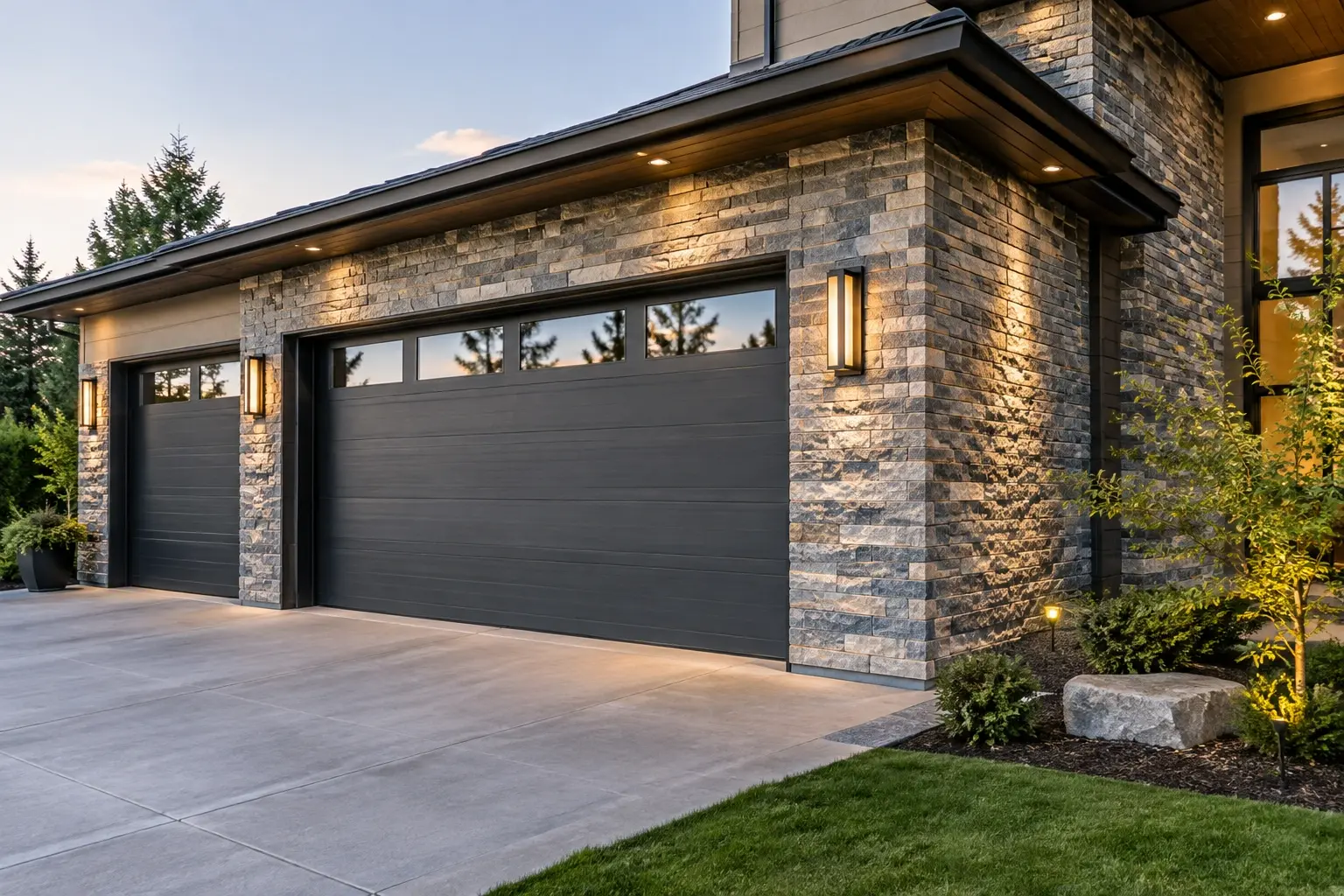
The Bottom Band Comes First
The lower wall takes sprinkler overspray, patio rain splash, and shoveled snow, so a stone wainscot is the most practical first placement on almost any home. Line the top of it up with the first-floor window sills rather than borrowing a height from a catalog photo.
On a two-story house, keep the stone below those first-floor sills. Stone that climbs past the lower windows makes the whole front feel heavy, and the upper story looks better staying light.
The base also sets the color story for everything above it. Browse our stacked stone, slab, and tile selection with your roof and trim colors in hand, and choose the base stone before you settle on paint.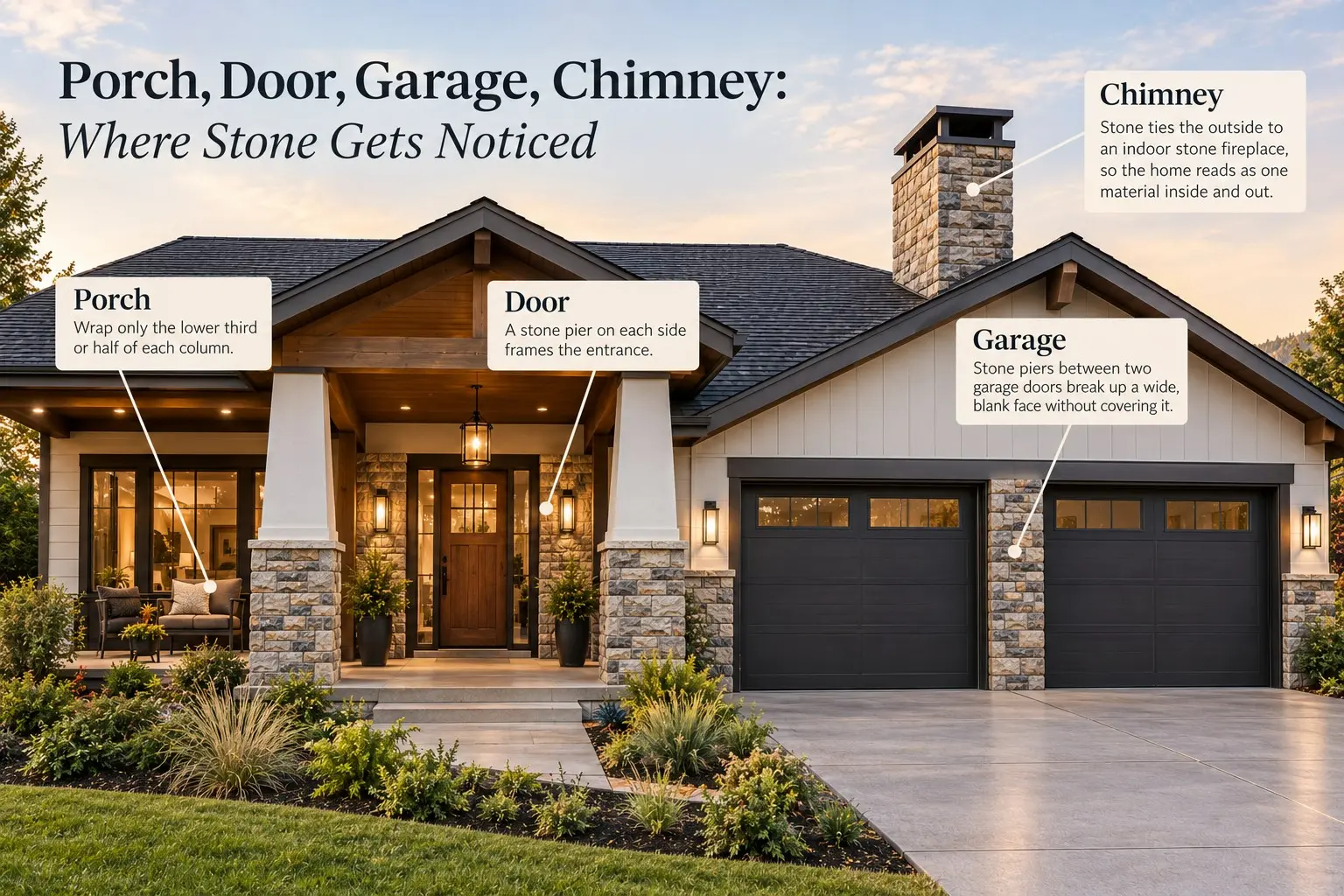
Porch, Door, Garage, Chimney: Where Stone Gets Noticed
On a porch, wrap only the lower third or half of each column. The stone gives the posts weight at the ground, and the painted tops keep the porch from looking bulky.
At the front door, a stone pier on each side frames the entrance. A single granite or quartzite slab from our live slab inventory beside the door does the same job with a cleaner, more modern face.
Garage fronts get skipped more than any other spot, yet stone piers between two garage doors break up a wide, blank face without covering it. Up top, a chimney finished in stone ties the outside to an indoor stone fireplace, so the home reads as one material inside and out.
Going Full Height Is a Narrower Call Than It Looks
Full stone coverage looks right on three kinds of houses: a mountain-style home with one dominant gable, a contemporary house with a single tall feature wall, and a small cottage where stone is the whole character. On a long, low ranch or tract home, full stone flattens the front into one heavy plane.
A full facade also uses more stone than any other placement, so material choice matters most here. Use Natural Stone, the Natural Stone Institute's consumer campaign, reports that industry-wide environmental product declarations put natural stone cladding at roughly one-third of the embodied carbon of precast concrete cladding per square meter.
Three Placements We'd Talk You Out Of
The first is stone that stops dead at the front corner. From the street, a front-only band with plain siding around the side looks like a panel stuck on, so carry the stone around the corner to a natural break like a downspout or the first window.
The second is stone above a lighter material. Siding or stucco under a stone upper story looks upside down, because the eye expects the heaviest material at the ground.
The third is mixing too many stones on one front. One stone for the base and columns, with a slab or porcelain saved for a single feature spot, reads as a plan, while three different stacked stones across one elevation read as leftovers.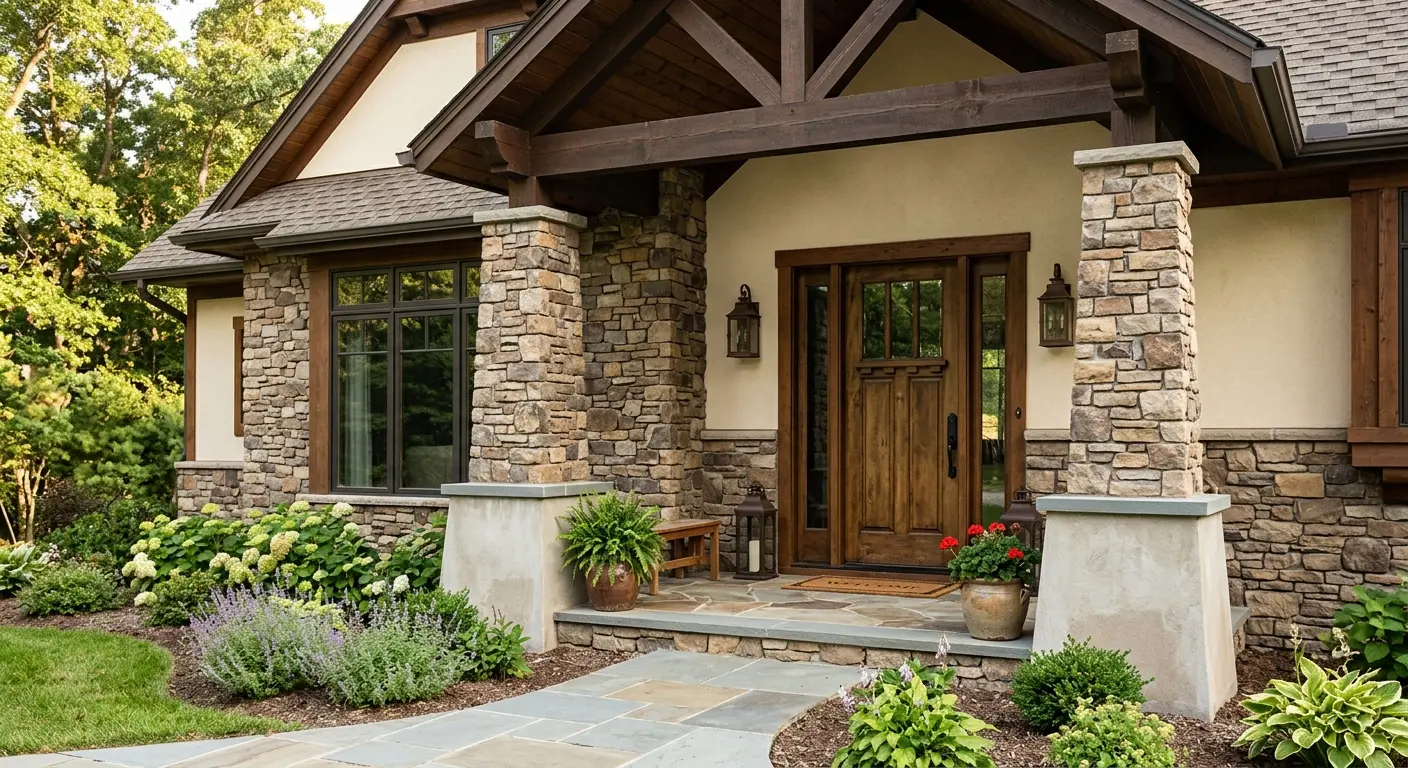
Let the Architecture Set the Stopping Point
A ranch with a long roofline wants a continuous wainscot across the full width, with stacked stone in long horizontal courses echoing the eaves. Craftsman and bungalow homes keep stone to the column bases and low porch walls, where texture at the bottom lets painted trim do the refined work above.
Modern farmhouse fronts with white board and batten depend on contrast, so the stone base or porch piers should be clearly darker than the siding. Contemporary and desert-modern homes skip the base and put stone on one feature wall beside the entry, where large-format porcelain in a concrete look, limestone look, or slate look keeps the lines clean with few joints.
A pattern that looks great on a small piece can feel loud across a whole frontage. Compare stacked stone, porcelain, and slabs at full scale in the showroom closest to you before committing to a style.
Which Stone Goes Where
Granite, quartzite, travertine, and porcelain are all good fits for exterior wall applications, but each one looks right in a different spot. Stacked stone from our Pavers and Exterior Stone offerings gives a wainscot or column base the most texture and depth, while granite and quartzite slabs look cleanest on smooth entry surrounds and feature walls.
Porcelain gives contemporary feature walls a crisp, even face. Travertine is a porous stone, so climate decides where it belongs: it looks best on Mediterranean-style homes in milder areas like Sacramento.
In Reno, Minden, and Fernley, keep travertine to covered spots such as a porch-protected entry surround, away from the snow and splash zone. Ask our team which options suit exterior walls in your area.
Marble and dolomite stay inside, where they shine on a fireplace or bathroom wall, and engineered quartz belongs indoors as well. For a closer look at how natural stone gets matched to an application, ASTM C1528, Standard Guide for Selection of Dimension Stone, is the industry reference, and local building codes always apply.
Once you've narrowed your picks, request a slab quote with the slab names or bundle numbers you liked.
The Driveway Wall, the North Wall, and the West Wall
Each side of a house ages differently, so the same stone can look fresh on one wall and tired on another. Around Reno, where winters bring snow and freezing nights, the wall beside the driveway catches shoveled snow and meltwater.
Some stones absorb far more water than others, so it's safest to keep snow piles and standing water off any stone-covered wall. Hard-water sprinkler spray is the other threat on that wall, leaving mineral spots that stand out on darker stone, so aim heads away from it.
Shaded north walls grow algae and moss first. The Natural Stone Institute's care guidance recommends flushing outdoor stone with clear water and using a mild bleach solution to clear that growth.
Travertine on any wall needs gentle, non-acidic cleaners, because calcium-based stone reacts to vinegar or lemon. A white, chalky powder on new stone is usually efflorescence, which brushes off dry; water can bring it back.
In Sacramento, long summer afternoons put the most sun on west-facing walls. For those placements, granite and porcelain are UV resistant, but performance may vary by color and finish.
A honed or leathered face suits an open, sunny wall, while polished stone looks best as a small accent under a covered entry. Sealing is optional on many stones, and it makes a surface more stain resistant, not stain proof.
Conclusion
Each slab has natural variation in tone, veining, and movement, so choose the actual bundle rather than a photo of it. Browse the slabs in person, reserve the ones that suit your curb photo, and our team holds them for three days while you decide.
For stacked stone, bring your curb photo and a paint or siding chip to the showroom so you can judge the stone against your real colors. To see the stone at full size, stop by Nova Tile and Stone in Reno, Sacramento, Minden, or Fernley.
Note: Some images on this page may be conceptual renderings created to illustrate design possibilities and may not depict actual installations.
Frequently Asked Questions
On most homes, the best spots are a low band across the front wall, the bottom of the porch columns, the area around the front door, the piers between garage doors, and the chimney. Those placements put stone where people look first without covering the whole front.
Match it to the first-floor window sills. Starting from an existing line on the house keeps the stone band looking like part of the design.
Yes. A stone band that stops at the front corner looks applied from the street, so carry it around the side to a natural break such as a downspout or the first window.
Only on a few house types, such as mountain-style homes with one big gable, contemporary homes with one tall feature wall, and small stone cottages. On a long, low ranch or tract home, a stone base and accents look better than full coverage.
Granite, quartzite, porcelain, and stacked stone are good fits for exterior walls. In freezing climates like Reno, Minden, and Fernley, porous travertine belongs in covered spots away from snow and splash, while marble, dolomite, and engineered quartz stay indoors.