Stacked stone is a veneer, a thin layer of real stone bonded to a backing, not a structural building block, and that single fact decides where it actually belongs on a property. Garden walls, entryways, columns, and accent walls all take it well, since the job is facing a surface rather than holding one up. The real question is which stone handles ground-level moisture and close-range wear at each of those spots, not whether stacked stone can survive being outside at all.
Travertine, quartzite, and slate are the natural stones that matter most for Nova Tile and Stone's outdoor stacked stone applications, and picking between them depends on the conditions at a specific spot rather than personal preference alone. Matching the stone to the location, rather than picking one finish and using it everywhere, is what actually makes an outdoor stacked stone project hold up.
Stacked Stone Is a Veneer, Which Decides Where It Fits
Stacked stone panels are cut from real natural stone, then trimmed and bonded onto a backing to form a modular facing, typically around 6 by 24 inches, with thickness varying by finish from about three-eighths of an inch up to roughly an inch and a half. That thin profile is exactly why the material counts as a veneer: it faces a wall, a column, or a surround, while the structure underneath still does the load-bearing work.
Because of that, stacked stone belongs on the visible face of an outdoor wall, a column wrap, an entryway surround, or the street-facing side of a low garden wall, not as the wall's structural core. Understanding how a natural stone product is labeled and sourced sets the same expectation before buying: a veneer panel is a facing material, not a substitute for the structural work behind it.
Travertine and quartzite are both well suited to outdoor wall use, the same two stones found across our natural stone slab collection. Slate has a long, independently documented track record outdoors as well. Any of the three works as an outdoor facing, and the difference between them shows up in how each handles ground-level moisture, corners, and close-range wear near an entryway.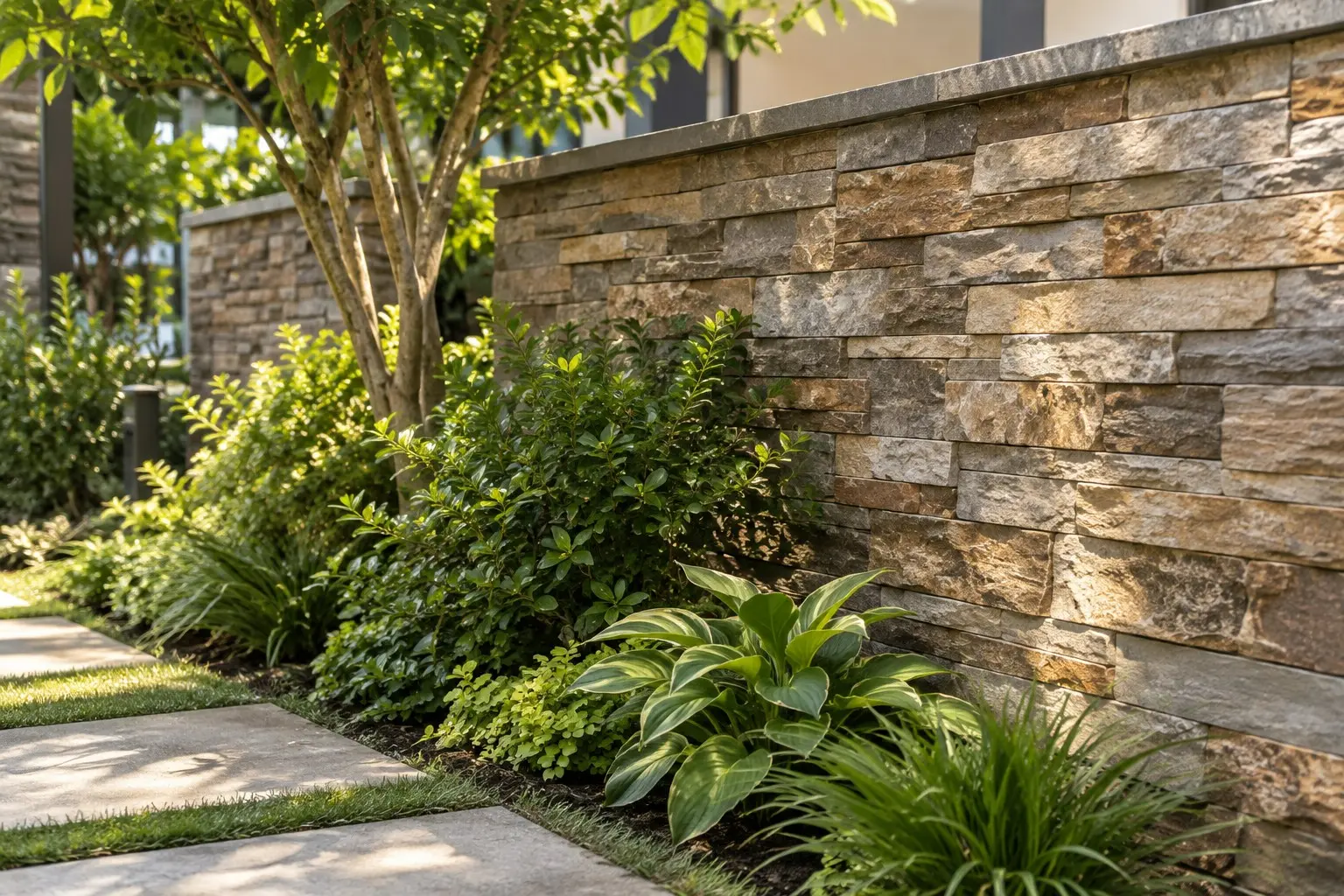
Which Stacked Stone Handles Garden Walls Best?
A low garden wall or planter wall sits closer to soil, mulch, and irrigation overspray than a full-height accent wall ever does, and that changes what matters most at the base. Travertine is more porous than quartzite or slate, both of which are dense, low-absorption stones, so travertine tends to pick up ground moisture more readily than the other two.
A raised planter bed holding back soil for a slope is a common spot people reach for stacked stone, and it is worth repeating here: the veneer faces the visible side of that structure, it does not replace the retaining wall or the drainage work behind it. Getting that distinction right before buying avoids a mismatch between what the material is actually meant to do and what a specific yard project needs.
Ground-level walls also face an added freeze-thaw factor beyond what a taller accent wall sees, since soil moisture near the base freezes and expands directly against the stone. Quartzite and slate's lower porosity gives them an edge here too, since freeze-thaw damage happens when absorbed water expands inside the stone, and a denser stone with less water to freeze is naturally less exposed to that risk. Homeowners near our Minden showroom dealing with Sierra winters should weigh this specifically for a garden wall, separate from an accent wall set higher off the ground.
Sealing helps manage that exposure either way, and the Natural Stone Institute's care guidance is a reliable reference for testing a specific stone rather than resealing on a fixed calendar.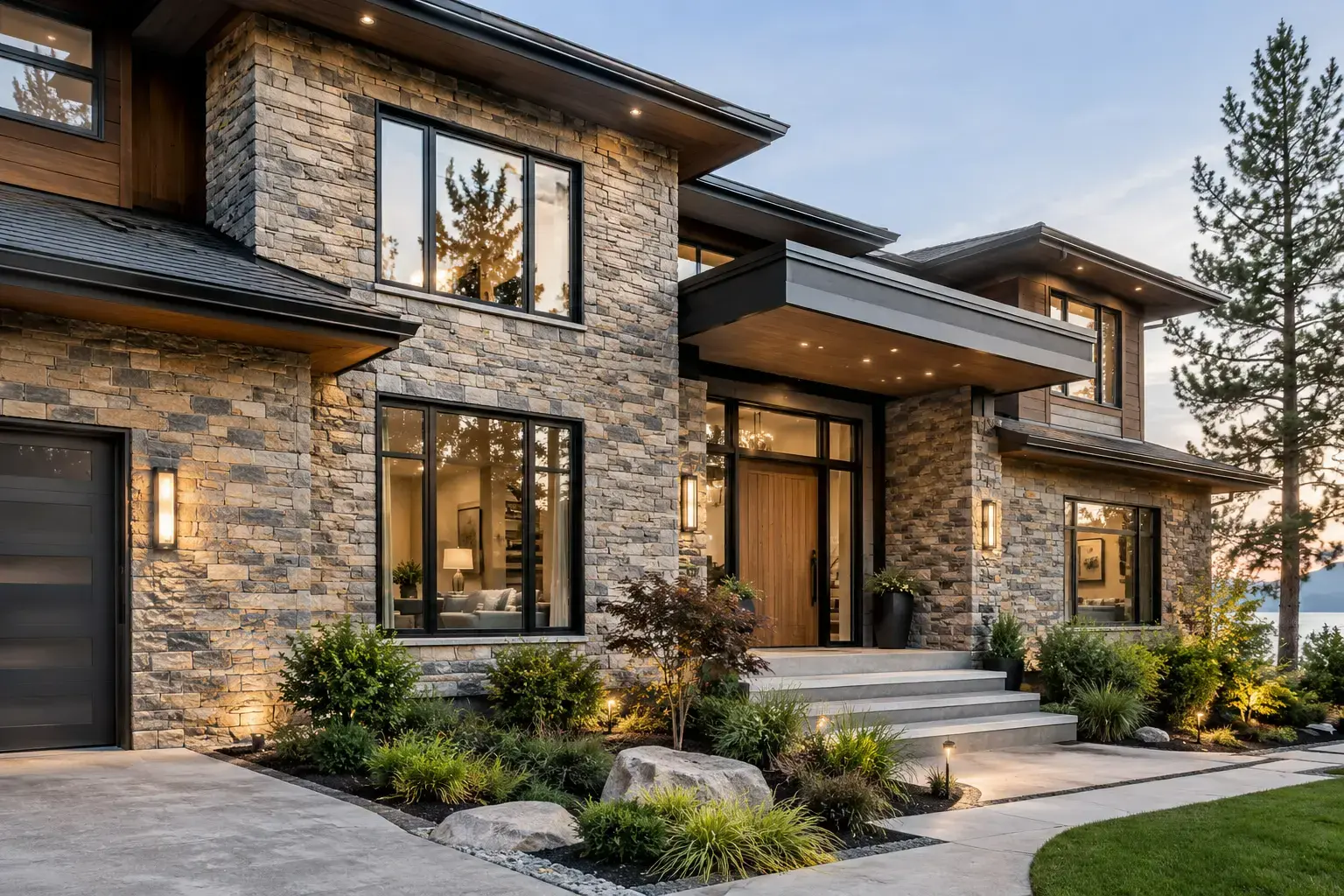
Entryways and Columns Turn Stacked Stone Into an Architectural Accent
An entryway surround or a column wrap asks something different of the stone. It needs to read well at close range and hold a crisp edge at corners, since these are focal points people walk past and brush against every day.
Quartzite's density gives it the strongest resistance to small dings and scuffs from foot traffic among the three. Slate holds up well against everyday wear too, thanks to a layered structure that resists compressive loads well, though that same structure can make it more prone to chipping at a sharp corner than a solid-bodied stone like quartzite. Travertine is the softest of the three and shows close-range wear the soonest.
Finish choice plays a bigger role at an entryway than it does on a garden wall, simply because people stand close enough to touch it. A polished finish shows fingerprints and smudges at that touch height more readily than a honed or leathered finish does, since a reflective surface draws the eye to anything sitting on top of it.
Corner pieces matter more here too. Stacked stone's L-shaped corner units are what let a column or an entry pillar wrap cleanly without a visible seam at the edge, which is the detail that makes an entryway accent look finished rather than pieced together.
Our Reno and Sacramento showrooms both display corner pieces wrapped around sample columns, which is a far better way to judge an entryway stone than a flat panel photo.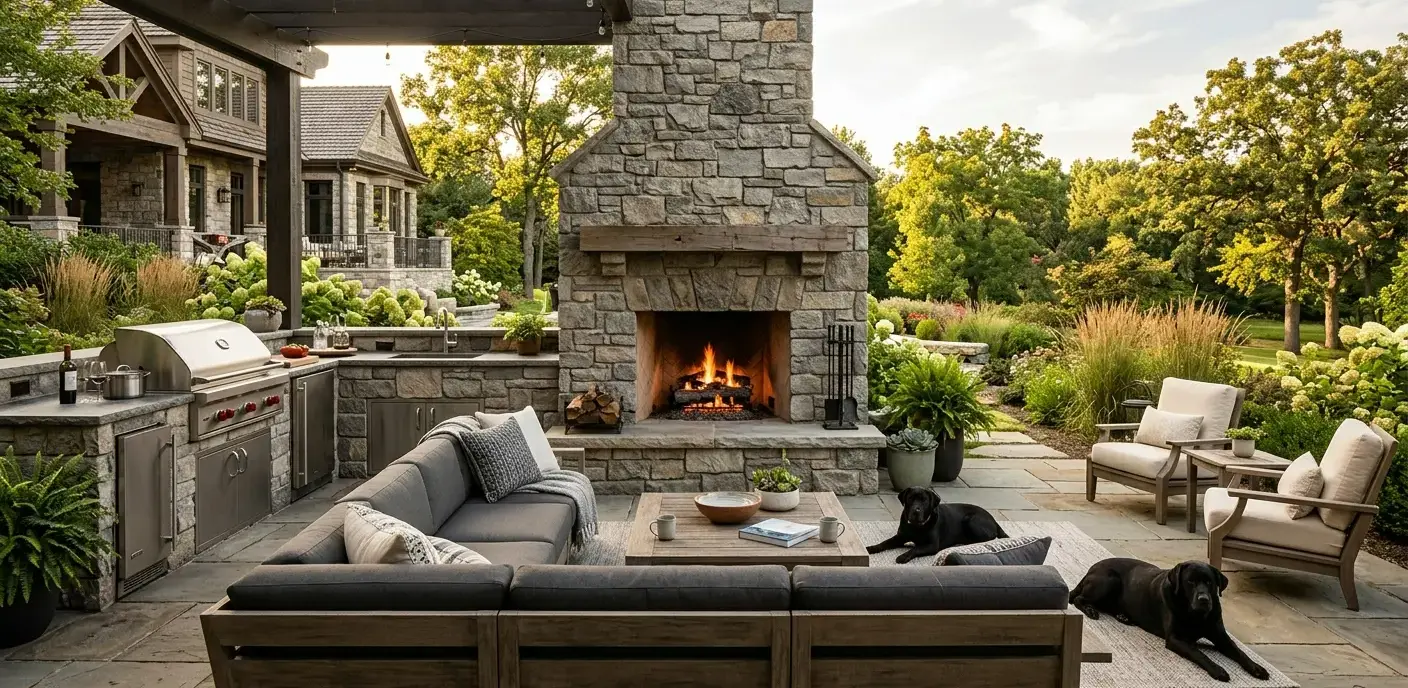
How Does This Compare to a Fireplace Surround?
A fireplace surround, the toughest test for stacked stone, combines direct heat with years of daily use in one spot. A garden wall or an entry column never faces that heat, so the deciding factor shifts from heat resistance to ground moisture and close-range wear instead.
Quartzite and travertine are both well suited to fireplace surrounds, and slate has a long tradition as a hearth and fireplace material thanks to its natural heat resistance. This rundown of outdoor fireplace types is useful context even for a buyer who is not building a fireplace, since it shows how differently the same stone can perform across different outdoor uses.
A buyer who already chose a stone for a fireplace does not need to use that same stone everywhere else on the property. A travertine fireplace surround and a quartzite garden wall on the same property is a reasonable combination, since each stone is doing the job it actually suits rather than being stretched across every application for the sake of matching.
Seeing These Applications in Person
Photos of a garden wall or an entry column rarely capture how a stone reads at that specific scale and distance. Visiting one of our showrooms is worth doing before committing to a stone for a highly visible spot like a front entry or a column.
Our Fernley location carries the full range of stacked stone options alongside the natural stone slabs used elsewhere in a project, which helps when matching a new garden wall or entryway to material already used on the house.
Because each piece is cut from natural stone, color and veining shift somewhat between panel runs, which matters more on a project spanning several panels, like a full column wrap or a long garden wall, than it does on a single small accent. Ordering enough panels from the same run helps keep that variation from becoming an obvious patchwork once the project is finished.
Conclusion
Once a stone and a location are matched, requesting a slab quote is the practical next step, since it accounts for the actual dimensions of the wall, column, or surround rather than a general estimate.
For buyers still weighing a garden wall against an entryway accent, booking a free design consultation is a good way to walk through travertine, quartzite, and slate side by side with someone who can speak to how each performs in that specific spot. Current overstock selections are also worth checking for buyers open to whatever stock happens to be available that week.
Stacked stone is just one part of what is available across our full natural stone and tile lineup, and matching the right stone to the right spot on a property is what actually determines whether it looks right for years to come.
Note: Some images on this page may be conceptual renderings created to illustrate design possibilities and may not depict actual installations.
Frequently Asked Questions
Stacked stone is a veneer, a thin facing bonded to a backing, so it is meant to cover the visible face of a wall rather than serve as the structural retaining material itself. It works well applied to the face of an existing garden or retaining wall, but the structural work underneath is a separate consideration.
Quartzite and slate handle ground-level moisture better than travertine, since both are denser, lower-absorption stones. A wall near sprinklers or drip irrigation is a reasonable case for choosing one of those two instead.
Yes, using the L-shaped corner pieces made for outside corners, which let a column or pillar be wrapped without a visible seam at the edge. Quartzite tends to hold the cleanest edge at high-touch points, while slate's layered structure can be more prone to chipping at a sharp corner than a solid-bodied stone.
A fireplace surround has to handle direct heat, while an entryway or column mainly deals with close-range wear and foot traffic. Quartzite and travertine are both suited to both uses, and slate has a long tradition in fireplace surrounds too.
A wall or column set higher off the ground and out of direct irrigation spray needs less attention than a low garden wall near soil and sprinklers. Quartzite and slate also need less frequent sealing than travertine in any of these spots, since both are denser and less porous, while travertine's higher porosity calls for closer to annual attention.
Curious About Something Else?