At A Glance
- Seal after mortar and grout joints cure, following the setting material manufacturer
- Reseal when water soaks in or darkens the stone quickly
- Choose a breathable, penetrating exterior sealer with a clear outdoor rating
- Check freeze-thaw and UV stability on the product label
- Test a small hidden area before treating the full wall
In This Guide
- Why stacked stone sealing matters
- Penetrating versus topical sealers
- When to seal and how often
- A four-step sealer checklist
- Advantages and disadvantages
- Nova guidance and common questions
Quick Answer On Sealing Stacked Stone
Stacked stone generally benefits from sealing after mortar and grout joints have cured, then again when water begins soaking in quickly. A breathable, penetrating exterior sealer rated for outdoor use is usually the safest starting point.
Timing and product choice both matter because stacked stone has textured faces, deep crevices, and mortar lines that hold moisture. The wrong exterior sealer can trap water or noticeably change the look of the wall.
Projects in Northern Nevada and Northern California face winter freeze-thaw cycles, strong summer sun, and irrigation splash. Matching the sealer to the stone type helps the finish stay consistent from season to season.
This guide explains when to seal, how sealer types compare, and which label details to check before choosing an exterior sealer for an outdoor accent wall, fireplace surround, or column wrap.
These recommendations are general guidance, so the product label and the stone's own specifications should take priority over any single rule of thumb.
Why Does Stacked Stone Sealing Matter Outdoors?
Stone World's sealer guide describes sealers as buying extra reaction time for cleanup rather than making stone immune to stains. That extra time matters on walls exposed to soil, splash, and debris.
Stacked stone faces have many edges, crevices, and joints where moisture collects. Those textured areas can absorb water unevenly, so darker patches may appear near the base of a wall.
Exposure also changes across one wall. The base and areas near irrigation or planting beds take the most splash, while sheltered upper sections may stay drier and need different attention.
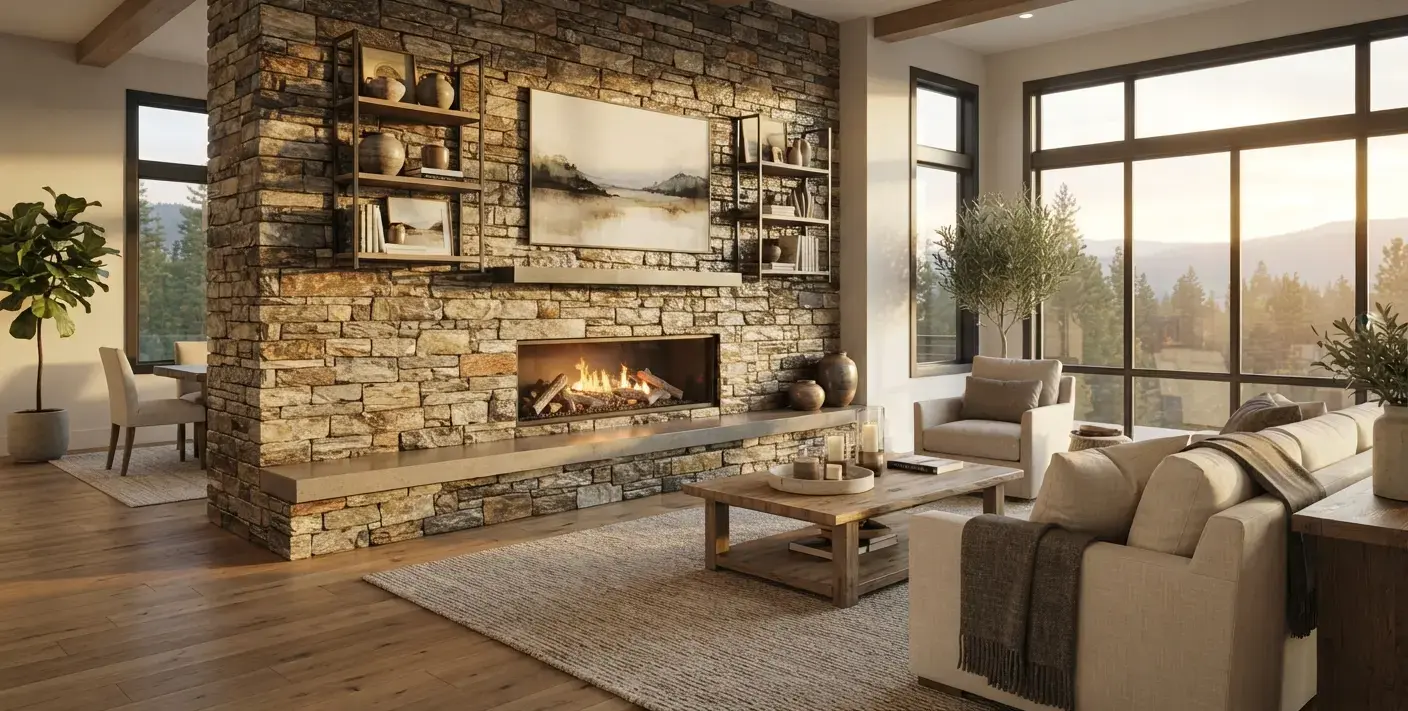 Conceptual rendering
Absorption also varies by stone type. Granite, quartzite, and travertine typically call for sealing according to Nova guidance, though porosity differs. For other stacked stone materials, confirm the outdoor exposure rating in the product specifications first.
- Helps resist staining from splash, soil, and organic debris
- Can make routine rinsing easier on textured faces
- May slow moisture absorption in porous stone
- Can deepen color when an enhancing product is chosen
- Supports a more even look when matched to the stone type
How Do You Choose The Best Exterior Sealer For Stacked Stone?
Choosing the best exterior sealer for stacked stone starts with the stone, then the exposure, then the product label. Each step narrows the options quickly.
Penetrating Versus Topical Sealers
Penetrating sealers, often called impregnators, absorb below the surface and leave no sheen. Topical coatings bond on top of the stone and usually add some gloss.
Outdoors, breathability matters because trapped moisture can cause discoloration or flaking. According to National Park Service guidance, coatings that block vapor can hold moisture inside masonry and contribute to freeze damage.
Coating sealers need a porous or textured surface to bond, which is why dense stone is usually better served by penetrating products. Label details on bonding and sheen deserve a close look.
Water-based and solvent-based penetrating products can both work as an exterior sealer, so the rated performance on the label matters more than the carrier.
Sealer Type | How It Works | Appearance | Outdoor Consideration |
Penetrating | Absorbs below the surface | Natural, no sheen | Often suited to exterior use when breathable and rated |
Enhancing penetrating | Absorbs and deepens tone | Richer color, no gloss | Confirm exterior and UV rating first |
Topical coating | Bonds on the surface | Low to high sheen | Many are interior only, so evaluate with caution |
When To Seal And How Often
Seal once the stone, mortar, and grout joints have fully cured, following the setting material manufacturer's guidance. Treating the wall before the first winter freeze helps protect it when moisture exposure rises.
Surface condition matters at the moment of treatment, too. Stone that is dirty or damp can resist absorption, and trapped moisture may cause problems later, so the wall should be clean and fully dry first.
Reseal when water soaks in or darkens the stone quickly, or when stains linger longer than before. Water beading alone is a weak gauge, because beading fades after routine cleaning.
The Natural Stone Institute notes that sealing improves stain resistance without making stone immune, and that many stones may not need it. Reapplication intervals vary by product and exposure, so the label sets the schedule.
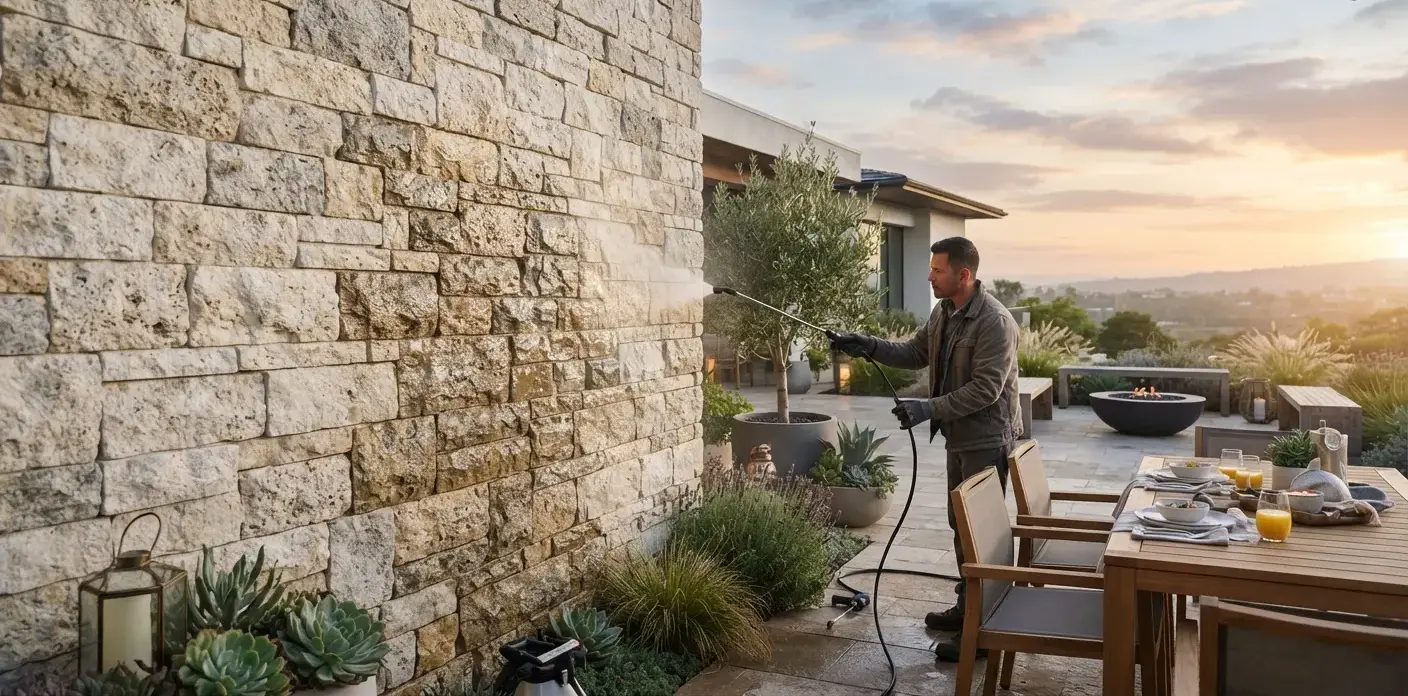 Conceptual rendering
A Four-Step Sealer Checklist
Use these four steps to narrow the choice before buying.
- Identify the stone type and request its absorption and exposure specifications.
- Decide between a natural look and a color-enhancing finish.
- onfirm the exterior sealer label lists outdoor use, breathability, freeze-thaw stability, and UV stability
- Test a small hidden area, let it dry fully, then review color and texture.
Application on larger walls is typically handled by a qualified stone care professional, who can also confirm coverage rates and drying times from the label.
Advantages And Disadvantages Of Sealing Stacked Stone
Advantages
- Improves stain resistance on porous, textured faces
- Eases routine cleaning of splash and dust
- Offers natural-look or color-enhancing finishes
Disadvantages
- Needs periodic reapplication, and old coats can be hard to remove
- Can darken or change the look of some stones
- A non-breathable product can trap moisture
- Some stones may not need sealing at all
Pairing Stacked Stone With Matching Slabs
Stacked stone accent walls pair well with granite or quartzite slabs on outdoor surfaces. Browse natural stone slabs to compare tones, and verify each product's UV rating before deciding.
Nova Tile And Stone Guidance For Exterior Stone Projects
Nova Tile and Stone supplies natural stone and tile materials, and commission-free design consultants help match stone type, finish, and exposure before sealer questions come up.
Nova serves Reno, NV, Minden, NV, and Sacramento, CA. Visit the Reno showroom to compare stacked stone textures and tones in person. The Minden showroom serves Northern Nevada homeowners. Projects in Sacramento are supported through the Sacramento showroom.
Ready to talk through a wall or fireplace? Schedule a free consultation now! Ask about arranged delivery assistance for stacked stone and coordinating slabs.
Useful details to bring include photos, wall dimensions, sun and irrigation exposure, and any manufacturer specifications. Consultants use them to narrow stone options and flag questions for exterior sealer manufacturers.
Larger outdoor surfaces may call for matching slabs, and a slab quote request lets a consultant review the project details.
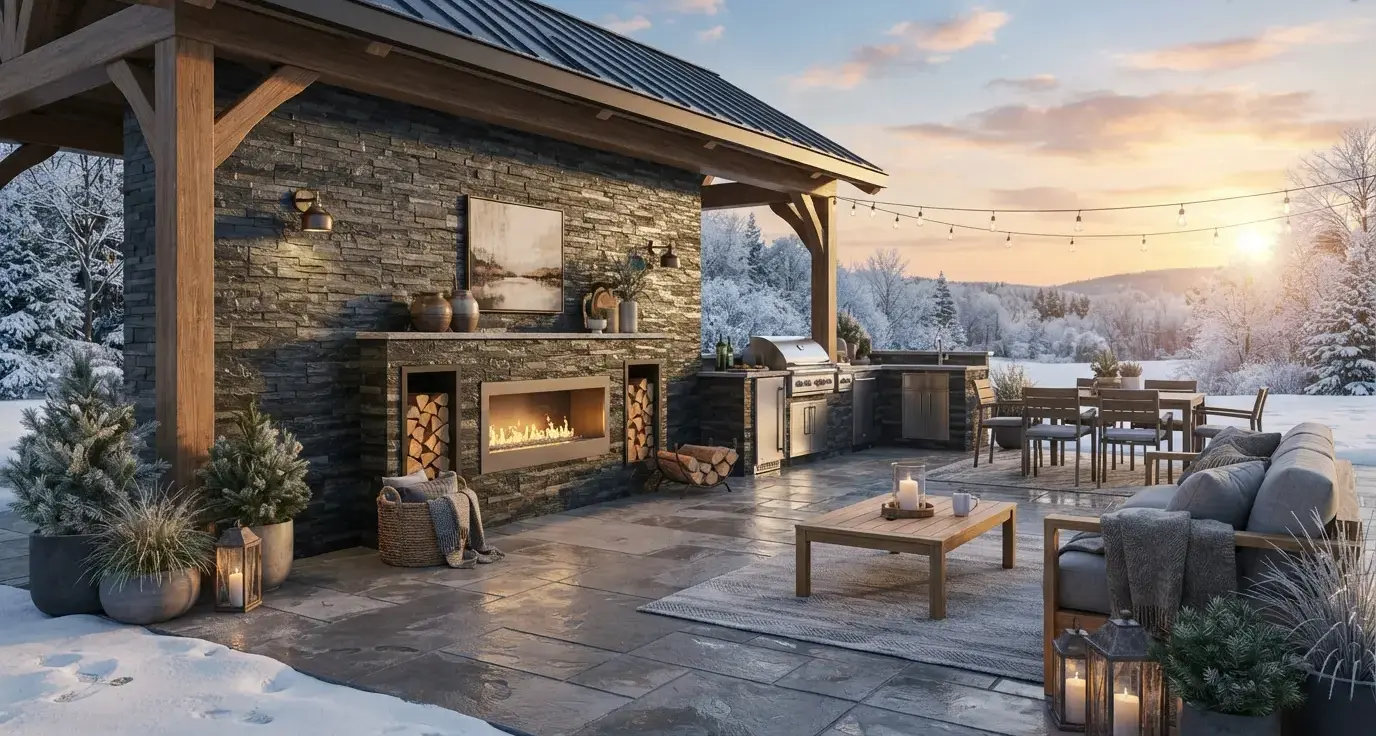 Conceptual rendering
Key Takeaways
- Stacked stone sealing works best after joints cure and before heavy weather exposure
- A breathable, penetrating exterior sealer is a common starting point, subject to the label
- Check freeze-thaw stability, UV stability, breathability, and the desired look
- Reseal based on product guidance and signs of faster water absorption
- Confirm stone type and outdoor rating with Nova design consultants before choosing
Schedule Your Free Consultation
A confident sealing plan starts with the right stone and honest exposure details. Bring photos of your wall, fireplace, or outdoor surface, and a commission-free design consultant will help you compare stacked stone options and the questions to ask sealer manufacturers.
Reno
12835 Old Virginia Rd, Suite 24 Reno, NV 89521
- Mon – Fri: 7:30am – 6:00pm
- Sat: 9:00am – 3:00pm
- Sun: Closed
BOOK NOW
Minden
2548 Business Pkwy, Minden, NV 89423
- Mon – Fri: 7:30am – 6:00pm
- Sat: 9:00am – 3:00pm
- Sun: Closed
BOOK NOW
Sacramento
6100 Warehouse Way, Sacramento, CA 95826
- Mon – Fri: 7:30am – 6:00pm
- Sat: Closed
- Sun: Closed

BOOK NOW
Expect clear guidance on stone type, finish, and maintenance expectations. Book your free consultation today!
Note: Some images on this page may be conceptual renderings created to illustrate design possibilities and may not depict actual installations.
Frequently Asked Questions
Seal stacked stone after mortar and grout joints have cured as directed by the setting material manufacturer, ideally before winter moisture arrives. Reseal when water soaks in quickly or darkens the stone. Intervals vary by product and exposure, so the sealer label and a stone professional should guide the schedule.
The best choice is usually a breathable, penetrating sealer rated for exterior use, with freeze-thaw and UV stability listed on the label. Natural-look and color-enhancing versions exist. Because stone type, texture, and exposure vary, confirm the product with its manufacturer and a Nova design consultant before buying.
It can. Penetrating sealers typically leave a natural, matte appearance, though some darken or lighten the stone slightly. Enhancing sealers deliberately deepen color, and topical coatings can add sheen. Testing a small hidden area and letting it dry fully shows the true result before treating the whole wall.
Yes, if the product is not breathable or the wall is still damp. Trapped moisture can contribute to discoloration, flaking, and freeze damage in cold weather. Choosing a vapor-permeable, exterior-rated sealer and confirming the stone is dry before treatment helps reduce that risk.
No. Suitability depends on the stone type, absorption, and the specific product's exposure rating. Granite and quartzite fall in Nova's outdoor and UV-resistant categories. Travertine is generally outdoor-approved but sits outside Nova's UV-resistant group, so each product's UV rating should be verified before purchase.
Sources
- Stone World sealer guide: stone sealer function, facts, and fallacies
- NPS Preservation Brief 1: cleaning and water-repellent treatments for masonry
- Natural Stone Institute care: care and cleaning of natural stone