For exterior walls, dense natural stones with low water absorption, such as granite, quartzite, and exterior-grade slate, tend to perform well because they take on very little water. According to the ASTM C629 standard, slate for exterior use should absorb no more than 0.25 percent of its weight in water, while ASTM C615 sets a 0.40 percent limit for granite and ASTM C616 sets a 1 percent limit for quartzite.
Stone veneer is a thin layer of natural or manufactured stone adhered or anchored to a wall to create the look of solid masonry without its full weight. Whether a particular veneer holds up outdoors depends on three things working together: the stone itself, the climate it faces, and the wall assembly behind it.
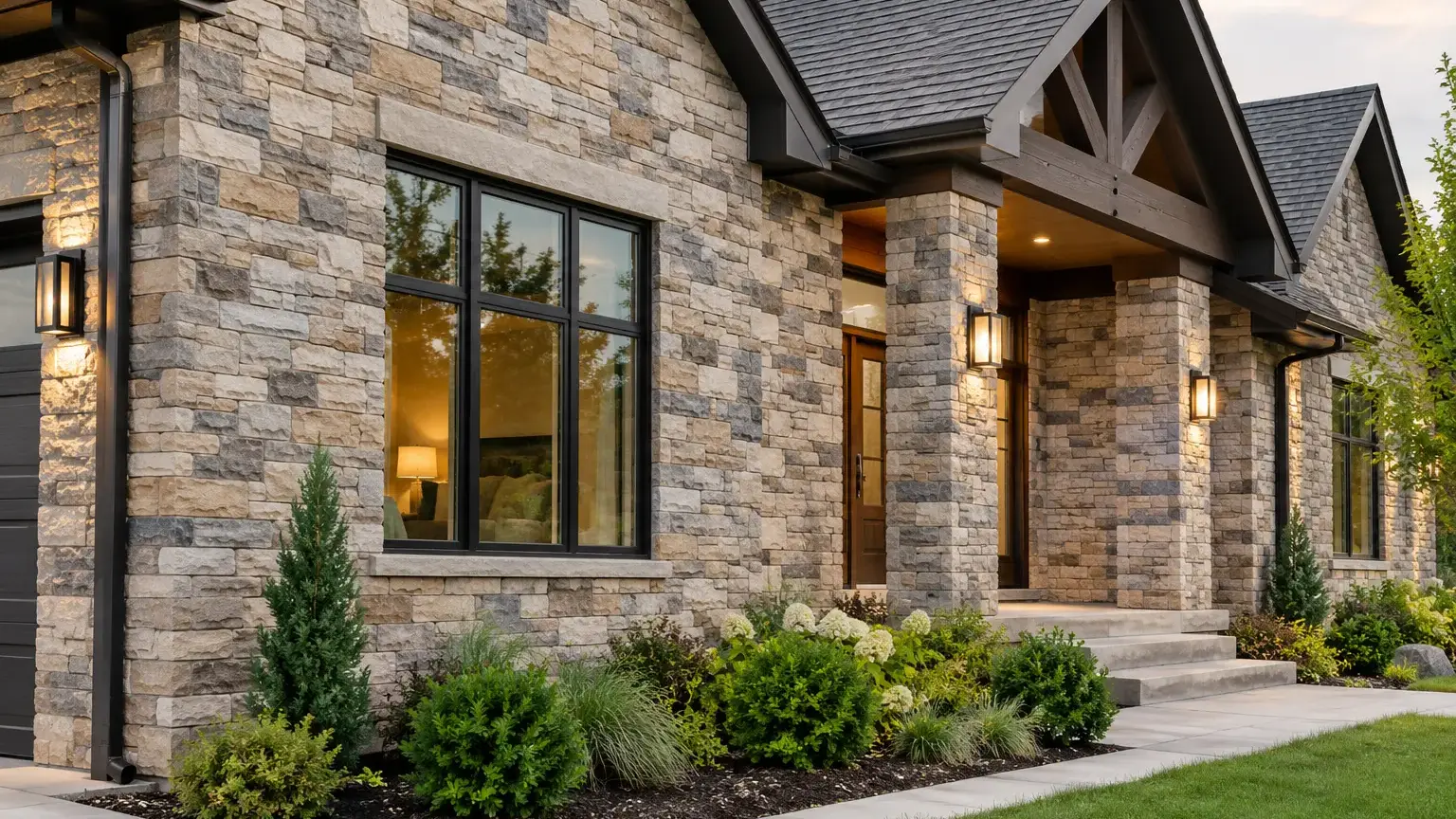
What Outdoor Exposure Asks of Stone
A facade faces rain, snow, sun, wind, and temperature swings every day, often for decades. A few physical properties do most of the work in deciding how a stone handles that exposure.
Water absorption. Absorption is measured under ASTM C97 and expressed as a percentage of a stone's weight. Lower absorption generally corresponds to greater frost resistance, stain resistance, and breaking strength, which is why guidance on how absorption affects stone cladding performance treats it as one of the first factors to review, with testing advised for the specific application.
Thermal movement. Stone expands and contracts with temperature. A wall that heats up in direct afternoon sun and then cools quickly during a storm puts stress on both the stone and the joints around it. Stone that moves at a rate similar to that of neighboring materials is less likely to cause problems over time.
Chemical resistance. Acid rain, airborne pollutants, and cleaning products wear on outdoor stone over time, and some stones resist chemical attack far better than others.
Weight. Natural veneer is usually heavier than manufactured veneer, and the wall behind it needs to support that load. Thickness and density both affect the final weight per square foot.
Natural Stone Veneer vs. Manufactured Stone Veneer
Natural stone veneer is cut from quarried stone, so its density, absorption, and strength come from the rock itself, and its color is part of the mineral makeup rather than an applied finish. The trade-offs are typically higher material cost and more weight, along with natural variation that some homeowners love and others find harder to plan around. Exploring the natural stone options in Nova Tile and Stone offerings provides an opportunity to consider different colors, textures, and finishes for exterior applications.
Manufactured stone veneer is lighter and more uniform in size and shape, which can simplify layout on large surfaces and reduce structural load. According to the ASTM C1670 standard, it is made from cementitious materials, aggregates, and coloring pigments that are wet-cast into shapes resembling natural stone. These products are formally called adhered manufactured stone masonry veneer (AMSMV), and they are considered a reservoir cladding, meaning the material itself holds water. That is why manufactured stone needs a drainage space behind it. A well-installed manufactured veneer can make sense where weight or budget is the main concern, provided that drainage is detailed carefully.
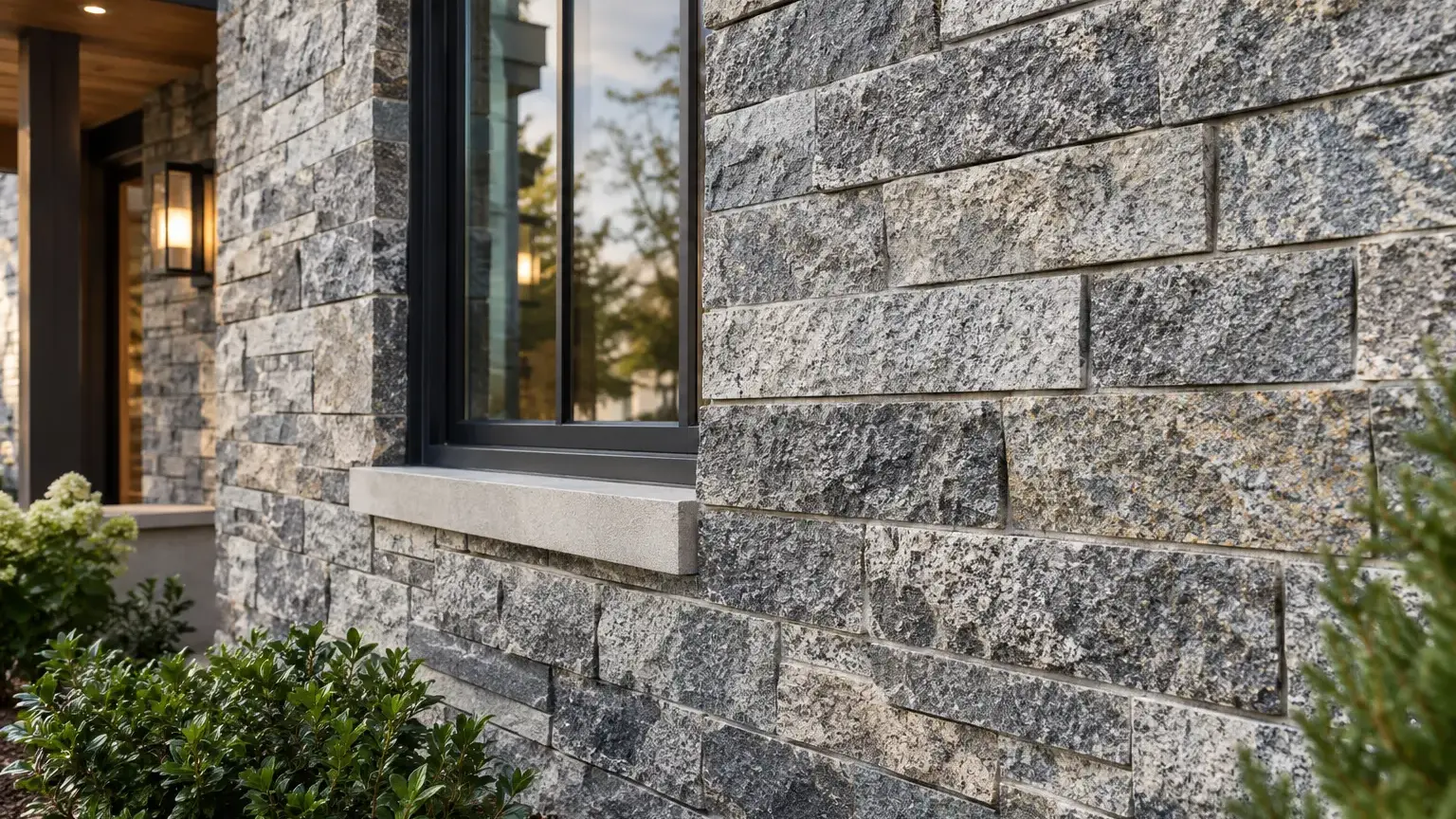
Natural Stones Commonly Considered for Exterior Walls
Not every natural stone is suited to outdoor walls. These are the types most often considered, along with what the relevant ASTM specifications say about them.
Granite
Granite is an intrusive igneous stone that formed from molten rock cooling slowly underground, which gives it a hard, dense, crystalline structure. Beyond its absorption limit, the ASTM C615 standard calls for granite to be free of minerals that may cause objectionable staining. Some varieties contain trace minerals that can discolor after prolonged weathering, so it helps to ask about a specific stone’s outdoor track record.
Quartzite
Geologically, quartzite forms when sandstone is metamorphosed, and its quartz grains become welded together with additional silica. The bond is so tight that the stone breaks across the grains rather than between them, as sandstone does. ASTM C616 classifies quartzite as stone with at least 95 percent free silica. That density, along with UV resistance, makes quartzite a frequent choice for stacked stone on facades, especially in split-face finishes.
Slate
Slate forms when shale is transformed by heat and pressure, which aligns its fine clay minerals and allows the stone to split into thin, smooth layers. That layering gives a wall a distinct texture, and slate graded for exterior use under ASTM C629 is notably dense.
Travertine and Sandstone
These stones vary more widely, which makes product-specific data important. Under ASTM C616, standard sandstone may absorb up to 8 percent, while quartzitic sandstone is held to 3 percent, so two stones sold under the same general name can perform very differently. Travertine can also be used outdoors, but its absorption varies by quarry and product, so reviewing test data before committing helps avoid surprises.
Marble and Limestone
For marble, absorption is not usually the main concern, since the ASTM C503 standard for exterior marble limits absorption to 0.20 percent. The issue is chemistry. Most marble and limestone are made mostly of calcite, and acids in polluted air and rain dissolve calcite, roughening surfaces and wearing away fine detail over time. For fully exposed walls, especially in areas with heavy air pollution, granite, quartzite, and exterior-grade slate are generally more resistant to this kind of weathering.
With these factors in mind, shop locally to explore natural stone options that complement your exterior design and project requirements. For additional guidance on choosing materials and finishes, schedule an appointment with our team to discuss your project.
How Climate Shapes the Choice
The same stone can perform differently depending on where the home is located.
Freeze-thaw climates. Water expands by roughly 9 percent when it freezes. When a stone absorbs water and temperatures drop below freezing, that expansion pushes outward from inside the stone's pores. One freeze rarely causes visible harm, but repeated cycles over many winters can lead to spalling (the surface flaking or popping off), hairline cracks, or crumbling edges. A stone that takes on very little water has less water inside it to freeze, which is why low-absorption stones are the safer choice in cold regions.
Hot, sunny climates. Intense sun brings UV exposure along with thermal movement. Natural stone gets its color from minerals, and stones rated as UV resistant tend to hold their appearance well in direct sun.
Wet or humid climates. Frequent rain tests the drainage behind the veneer as much as the stone itself.
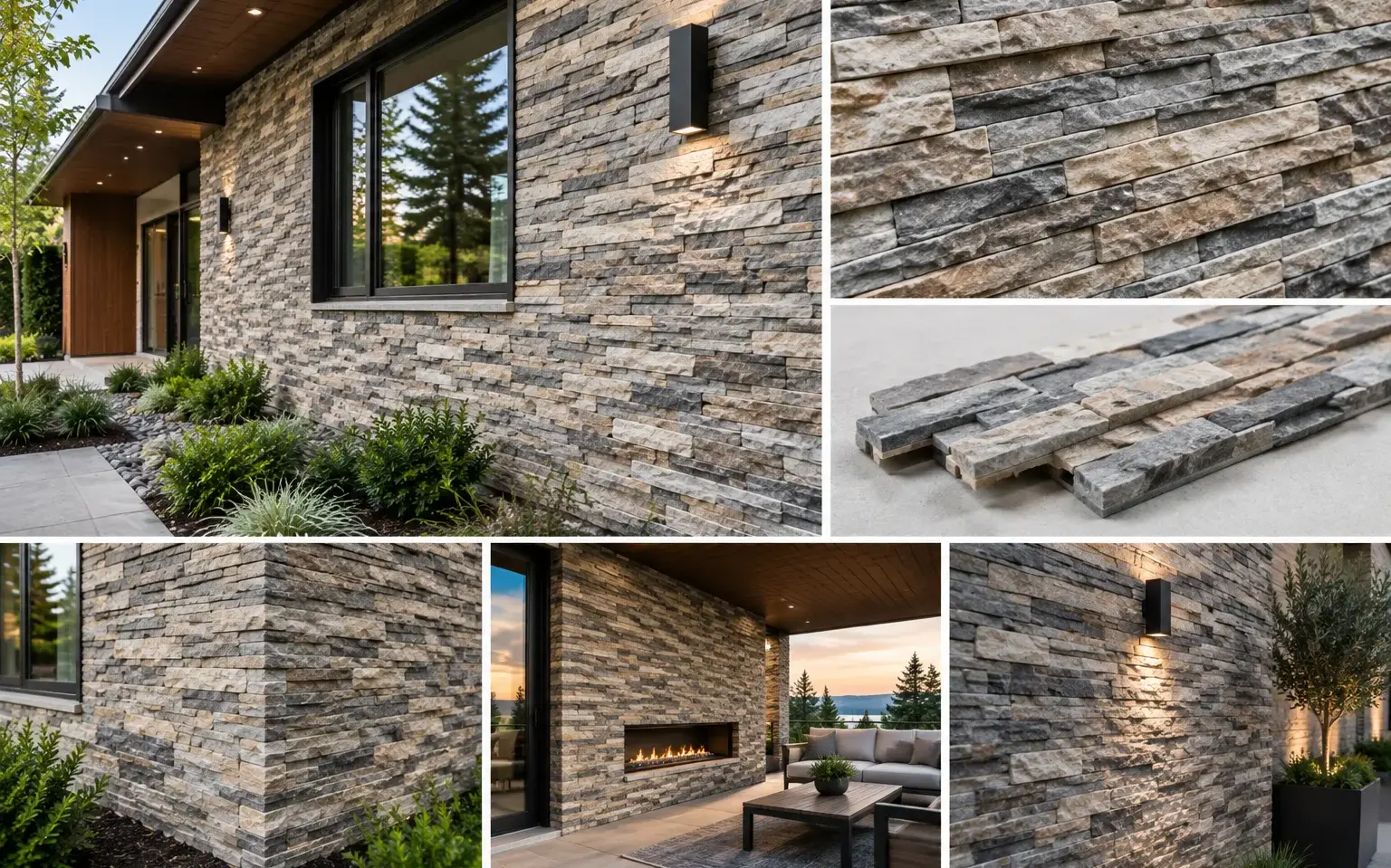
Stacked Stone Panels on Outdoor Walls
Stacked stone ledger panels are a popular way to bring stone to a facade. The panels are typically about 6 inches tall and 24 inches long and are made from narrow strips of stone pre-assembled so they interlock, which speeds installation compared with setting individual stones. Matching corner pieces wrap outside corners and help the wall read as solid stone rather than a thin facing. Because a panel is only as durable as the stone it is made from, the guidance above on stone type and climate applies directly.
Moisture Management Matters as Much as the Stone
Even a dense, low-absorption stone can run into trouble if water gets trapped behind it. Water that collects in the wall assembly can keep the back of the stone damp long after the face has dried, and it can reach the framing and sheathing.
Adhered veneer of any kind relies on a properly built wall assembly to shed and drain moisture. Common elements include a water-resistive barrier, a drainage space or rainscreen mat, and a weep screed at the base of the wall that lets water escape. Drainage best practices for adhered stone veneer also include kick-out flashing where roofs meet walls and flexible sealant joints where stone meets windows, doors, or other siding. These details are handled by your builder or installer, and local codes can vary.
Caring for Outdoor Stone Veneer
Stone veneer on a facade needs relatively little routine care. A garden hose and a soft-bristle brush remove most dirt and pollen. When a cleaner is needed, a pH-neutral product made for natural stone is the safer choice, since acids and harsh chemicals can damage many stones. Checking mortar joints, caulked transitions, and the base of the wall after winter helps catch small gaps before water finds its way in.
Conclusion
The stone veneers that last on exterior walls share a few traits: they take on little water, resist chemical weathering, and sit on a wall assembly that lets moisture drain out. Climate determines how much weight each of those factors deserves, whether that means prioritizing frost resistance in cold regions, UV stability in sunny ones, or drainage where rain is frequent. Spec sheets with tested absorption values and a clear exterior rating offer a more dependable basis for comparison than color or texture alone.
Seeing stones side by side in natural light also makes it easier to judge texture, color variation, and scale. Nova Tile and Stone has showrooms in Reno, Minden, Fernley, and Sacramento with natural stone such as granite, quartzite, and travertine, and free design consultations are available if you would like help comparing options for your project.
Frequently Asked Questions
Look at the product's spec sheet for three things: an ASTM C97 absorption result, a rating for full weather exposure rather than only covered areas like porches, and a freeze-thaw rating if you live where winter temperatures drop below freezing. If any of these are missing, ask the supplier for the test data before deciding.
Stacked stone is a style of stone veneer rather than a separate material. It refers to narrow, horizontal strips of stone laid in tight courses, an arrangement based on traditional ledgestone walls, and it is often sold as pre-assembled panels. Stacked stone is available in both natural stone and manufactured versions, so the same questions about absorption, weight, and drainage apply.
Not always, since many dense stones perform well unsealed. If you do seal, a breathable penetrating sealer lets moisture vapor escape rather than trapping it. Clear penetrating sealers tend to change the stone's appearance very little, while color-enhancing sealers deepen its tone, so test any product on a small, hidden area first.
White, powdery deposits are usually efflorescence, which forms when water dissolves salts inside masonry and leaves them on the surface as it evaporates. The deposit itself is generally cosmetic, but it shows that water is moving through the wall, so it is worth finding the moisture source rather than just scrubbing the deposit away.
High-pressure washing can erode mortar joints, damage softer stone surfaces, and drive water into the wall. A garden hose with a soft-bristle brush is the gentler option for routine cleaning. If heavier cleaning is needed, keeping the pressure low and holding the nozzle well back from the surface reduces the risk of damage.
Note: Some images on this page may be conceptual renderings created to illustrate design possibilities and may not depict actual installations.