Granite, quartzite, and limestone are the best natural stones for a house exterior, with granite and quartzite ranking highest for durability because their low porosity resists water absorption, UV fading, and freeze-thaw cracking, while limestone offers a softer, more traditional look that requires more frequent sealing. Natural stone veneer, cut from these same materials into thinner panels, is the most practical option for covering large facade areas without added structural weight. The right choice ultimately depends on climate exposure, architectural style, and how much long-term maintenance a homeowner is willing to take on.
This guide compares granite, limestone, quartzite, and natural stone veneer against manufactured stone alternatives, covering weather performance, maintenance needs, and which options suit different home styles and climates. For homeowners who want to see these materials firsthand, browsing our full range of natural stone and surface options is a useful starting point before narrowing down a final choice.
Why Exterior Stone Selection Matters More Than It Seems
A home's exterior stone does more than establish curb appeal. It's exposed to sun, rain, and temperature swings year-round, and different climates place different demands on the material. Some stones handle this cycle of expansion and contraction well. Others are more prone to cracking, staining, or color shift when left unsealed or improperly maintained.
Because exterior stone is a long-term architectural investment, it's worth understanding the tradeoffs between material types before settling on one. Density, porosity, and finish all play a role in how a stone performs once it's installed on a facade, chimney, or accent wall.
Granite: A Strong Choice for High-Exposure Areas
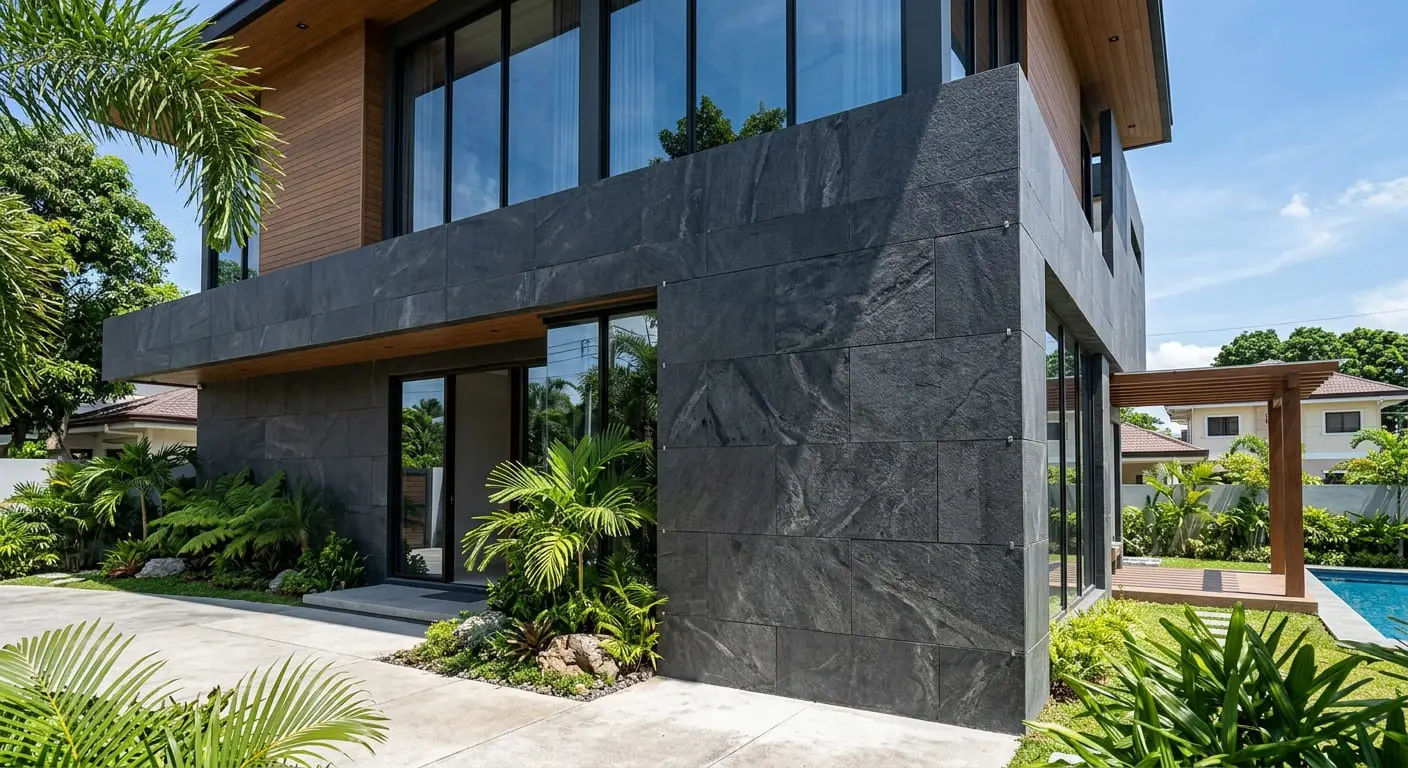
Granite is one of the denser and harder natural stones commonly used for exterior applications, which makes it a common choice for areas that see heavy sun or foot traffic, such as entryways, columns, and lower facade sections. Many granite products have relatively low water absorption, which can help reduce moisture-related staining and freeze-thaw damage. However, the exact granite, finish, thickness, and installation system should be confirmed as suitable for the local climate and intended exterior application.
Many granite products offer good color stability in exterior settings, but prolonged UV suitability should be confirmed for the exact stone and finish selected. It's available in a wide range of colors and finishes, from polished to flamed, giving homeowners flexibility depending on whether they want a more formal or a more textured, natural look. Homeowners narrowing down a specific granite color or finish can browse current granite bundles in our live slab inventory to see exact veining and tone before committing. Exterior suitability should be confirmed for the exact slab, finish, thickness, fabrication method, and installation system.
The tradeoff is weight. Granite is heavier than many alternatives, which can affect how it's specified for larger wall sections and may factor into overall project planning.
Limestone: A Softer, More Traditional Look
Limestone offers a warmer, more muted aesthetic that works well with traditional and Mediterranean-style architecture. It's generally softer and more porous than granite, which means it benefits from sealing and periodic maintenance to guard against moisture absorption and staining.
Because limestone is more porous, it tends to be better suited to areas of a facade that see less direct rain exposure, or to homes in drier regions where seasonal moisture is limited. Its natural, slightly chalky texture also gives it a distinct character that many homeowners prefer for a softer, more understated exterior.
Quartzite: Strength With a More Refined Appearance
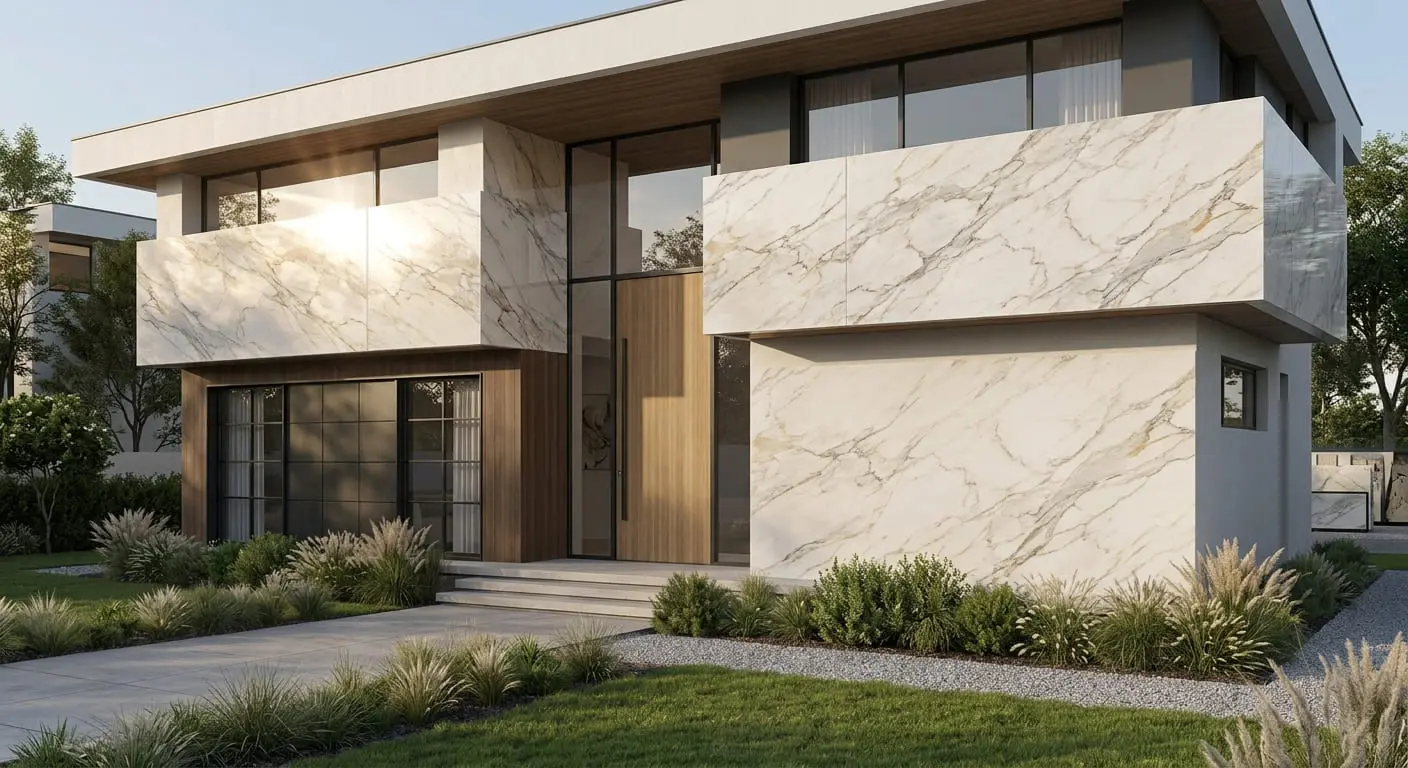
Quartzite sits between granite and marble in terms of appearance, often featuring the veining and light reflectivity associated with marble but with hardness and weather resistance that matches or exceeds granite. This combination makes it a strong option for homeowners who want a refined look without sacrificing performance in an exterior setting.
Quartzite resists scratching and etching better than marble, and its low porosity helps it stand up to moisture without absorbing water the way softer stones might. It's a reasonable middle ground for homeowners weighing both appearance and long-term performance. Once a specific quartzite bundle has been chosen, homeowners can submit a slab quote request to get pricing before moving forward with a facade project.
Natural Stone Veneer: A Practical Alternative for Full Facades
For homeowners looking to cover larger sections of a home's exterior, natural stone veneer is a common alternative to full-thickness stone. Veneer is cut into thinner panels or pieces, which reduces weight and can make it more practical for facade applications, accent walls, and features like exterior fireplaces.
Because veneer is still cut from natural stone, it retains the same general performance characteristics as the parent material, whether that's granite, limestone, or another type. The main consideration with veneer is proper installation and sealing at the seams and edges, since these areas can be more exposed to moisture if not addressed correctly.
Comparing Manufactured Stone to Natural Stone
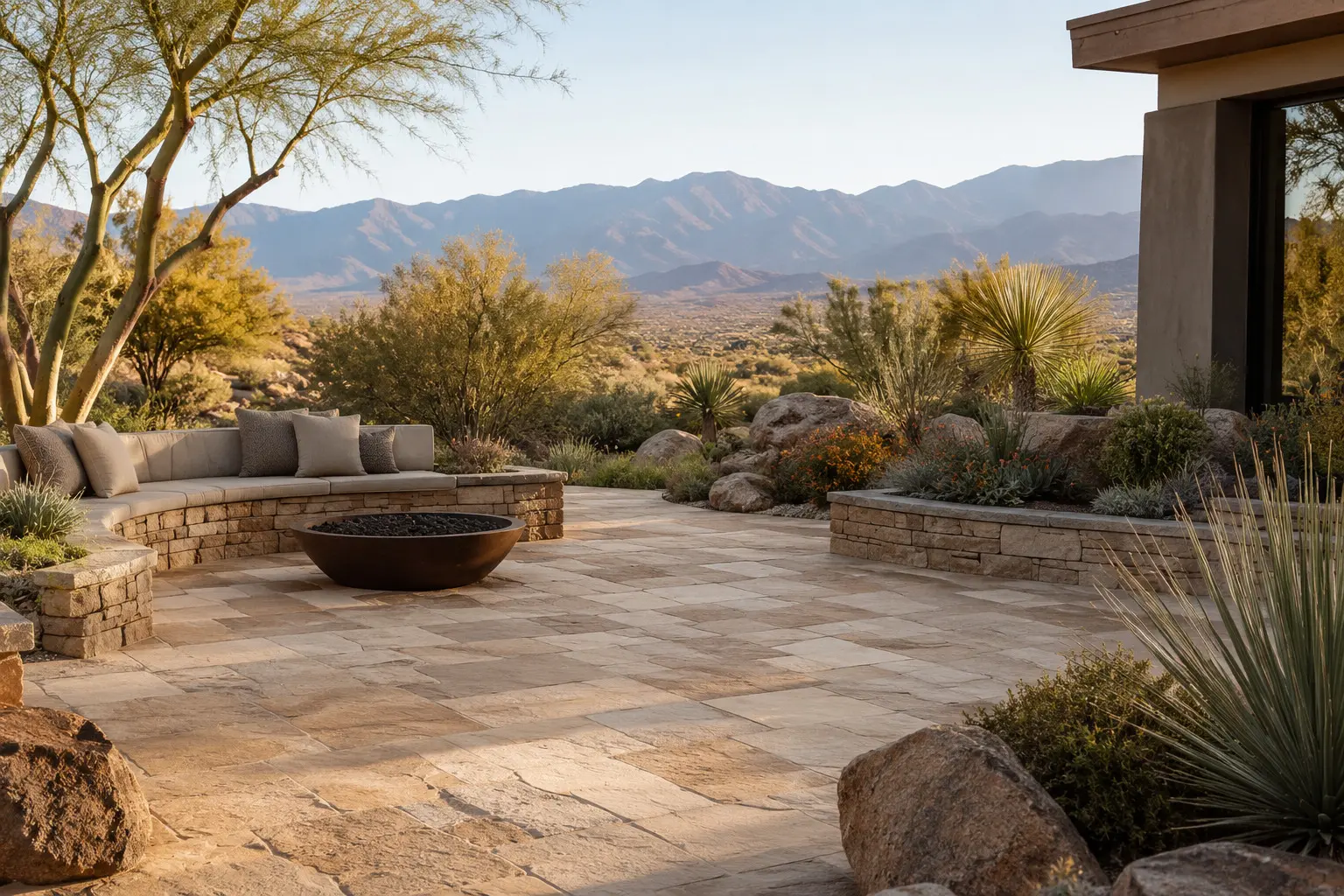
Manufactured stone veneer, made from cement and aggregate, is often marketed as a lower-cost alternative to natural stone. While it can mimic the look of natural stone fairly closely, it doesn't carry the same mineral composition, and its performance over time depends heavily on the quality of the manufacturing process and the sealants used.
Natural stone, by contrast, has been used in exterior architecture for centuries and has inherent variations in color, pattern, and structure that reflect its geological origin. For homeowners weighing upfront cost against expected maintenance and performance, natural stone remains the more established choice.
Climate Considerations for Exterior Stone
Climate plays a major role in determining which stone performs best on a given home. In regions with hot, dry summers and intense sun exposure, UV resistance and color stability become the most important factors. In colder or wetter climates, moisture management and freeze-thaw resistance take priority, since repeated cycles of water absorption and freezing can stress more porous stones over time.
Granite and quartzite tend to perform well across a wide range of conditions given their low porosity and color stability. Limestone can still work well, particularly on areas of a home that are more sheltered from direct rain, but homeowners should factor in periodic sealing to manage its higher porosity in wetter or freeze-prone climates.
Matching Stone to Architectural Style
Beyond performance, the visual character of each stone type tends to suit different architectural styles:
- Granite pairs well with modern and contemporary designs, particularly in polished or leathered finishes.
- Limestone complements Mediterranean, Tuscan, and traditional-style homes with its warm, muted tones.
- Quartzite works across both modern and transitional styles, thanks to its blend of texture and refined veining.
- Natural stone veneer offers flexibility across nearly any style, since it can be sourced from multiple stone types depending on the desired look.
Working With a Design Team to Narrow Down Options
Because exterior stone involves a mix of aesthetic and performance considerations, it helps to view full slabs and current inventory in person and understand how different finishes and colors will look alongside a home's existing materials, such as siding, trim, and roofing. Working through these decisions with a design team also makes it easier to weigh tradeoffs between stone types before committing to a full facade project. For contractors and designers managing exterior stone work on behalf of clients, a separate path is available: applying for a trade account provides access to trade pricing and job-site delivery.
Conclusion
Choosing the best stone for a house exterior comes down to balancing appearance with how well a material performs against sun, moisture, and everyday wear in a given climate. Granite and quartzite tend to offer the strongest overall performance thanks to their density and resistance to UV fading, while limestone remains a solid choice for homeowners drawn to a softer, more traditional look who are willing to keep up with periodic sealing. Natural stone veneer offers a practical path for covering larger facade areas without the added weight of full-thickness stone. For homeowners weighing these options, our team offers design consultation to help compare stone types, finishes, and colors in person, with showrooms in Sacramento, Reno, Minden, and Fernley available to visit before making a final decision. Homeowners can also find the showroom nearest them to schedule a visit in advance.
Note: Some images on this page may be conceptual renderings created to illustrate design possibilities and may not depict actual installations.
Frequently Asked Questions
Granite and quartzite are generally the most weather-resistant options due to their low porosity, which limits water absorption and reduces the risk of cracking or staining from moisture exposure.
Sealing needs vary by stone type. Denser stones like granite and quartzite require less frequent sealing, while more porous stones like limestone benefit from periodic sealing to reduce moisture absorption and staining.
Natural stone veneer is cut from natural stone, but its installed performance also depends on its thickness, substrate, attachment method, climate exposure, and installation system.
Manufactured stone is made from cement and aggregates, while natural stone is quarried and has inherent variations in color, pattern, and structure. The long-term performance of either option depends on the specific product, climate exposure, maintenance, and installation system.
Limestone is a common choice for Mediterranean and Tuscan-style homes due to its warm, muted coloring and texture, which complements the stucco and terra cotta elements typical of that architectural style.