At a Glance
- Best overall: Granite, especially for patios, grill areas, and outdoor dining spots where spills happen.
- Best marble look: Quartzite, for a contemporary patio that carries an indoor marble-look style outside.
- Best for pattern and texture: Travertine, laid in a French pattern on garden paths, covered porches, and reading nooks.
- Best finish: Honed or leathered, since polished stone can get slippery when wet.
- Spill care: Travertine is a calcareous stone and can etch from acidic spills, so blot first, then rinse, on any stone.
In This Post
- Which Paver Stone Handles Spills Best?
- Why Start With Granite Pavers?
- When Should You Choose Quartzite Pavers?
- When Is Travertine the Better Paver?
- Which Outdoor Stains Should You Plan For?
- How Can You Compare Stone's Environmental Impact?
- How Do You Match Pavers to the Rest of the Yard?
- What Should You Decide Before Ordering?
- Conclusion
- Frequently Asked Questions
Our pick for the best natural stone paver for most outdoor spaces is granite, especially for patios, grill areas, and outdoor dining spots where spills happen. Quartzite is the better choice for a marble-like look, and travertine is the better choice for textured French pattern layouts on garden paths and covered porches.
The Natural Stone Institute notes that acidic spills are a bigger concern for travertine than for granite or quartzite. Whichever stone you choose, a honed or leathered finish suits outdoor paving better than polished, since polished stone can get slippery when wet.
Below, our design team at Nova Tile and Stone compares the three stones in our paver and exterior stone selection. Our showrooms are in Reno, Minden, and Sacramento.
Which Paver Stone Handles Spills Best?
Granite and quartzite are the safer picks where spills happen, and the reason comes down to which chemical family each stone belongs to.
The Natural Stone Institute groups natural stone into two families, calcareous and siliceous. Granite and quartzite belong to the siliceous group, while travertine sits in the calcareous group alongside marble and limestone.
That grouping matters on a patio where people eat and drink. NSI cautions that acidic products, from citrus to vinegar, can leave calcareous stone like travertine dull or etched.
NSI still advises against acidic cleaners on every stone, and it warns that some household rust removers can damage granite and quartzite as well. Whichever stone you choose, blot spills and then rinse, rather than wiping them across the surface.
For a backyard dining area or grill zone, this is the main reason we recommend granite first. Spills should still be cleaned promptly on any stone, granite included.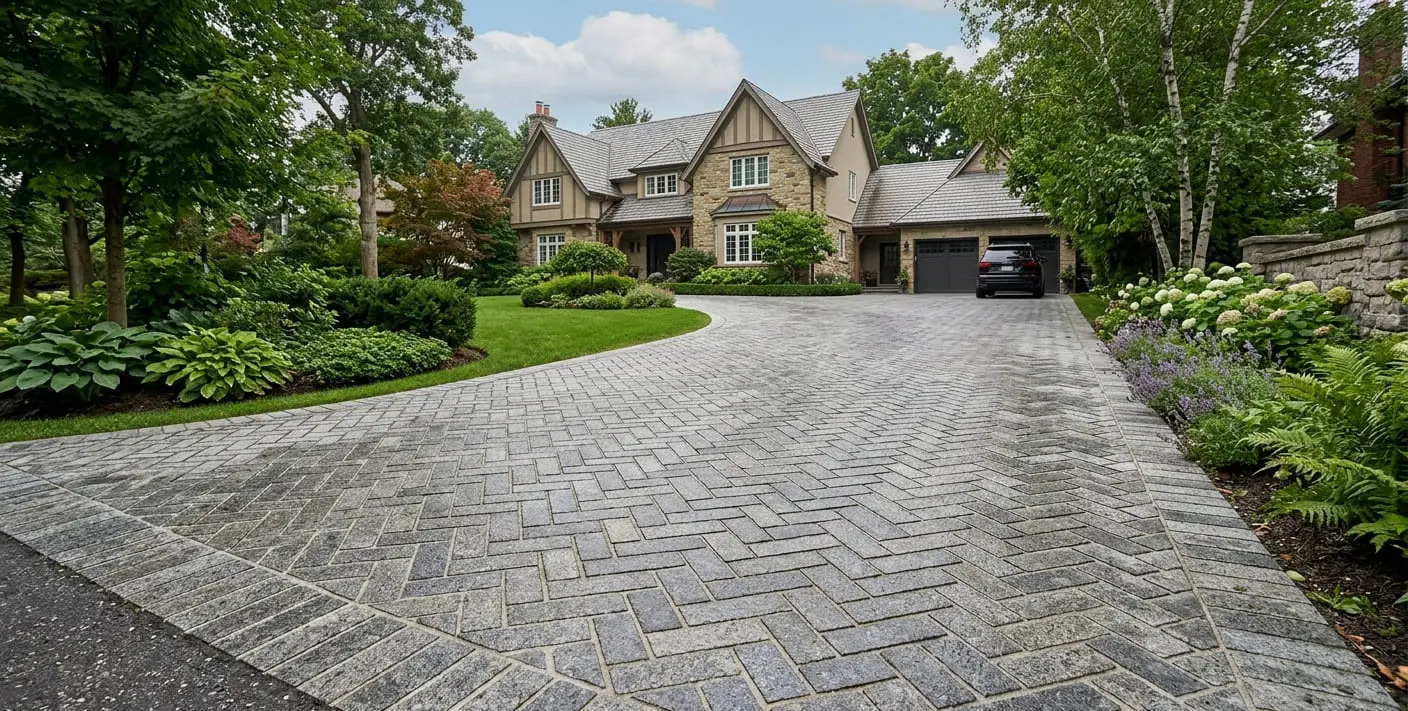
Why Start With Granite Pavers?
The ASTM specification for granite dimension stone lists paving and landscape work among the uses granite is meant for. Granite suits front walks, side paths, entry steps, and entertaining areas alike.
For outdoor paving, choose a honed or leathered granite over a polished one, because a polished surface can become slippery when wet. Granite comes in all three finishes, so you can keep the color you love and choose the surface that suits the space.
If an outdoor kitchen is part of the plan, browse our live slab inventory for a granite counter, then choose pavers in a tone that works with it. Picking the counter first gives the rest of the area a fixed color to build around.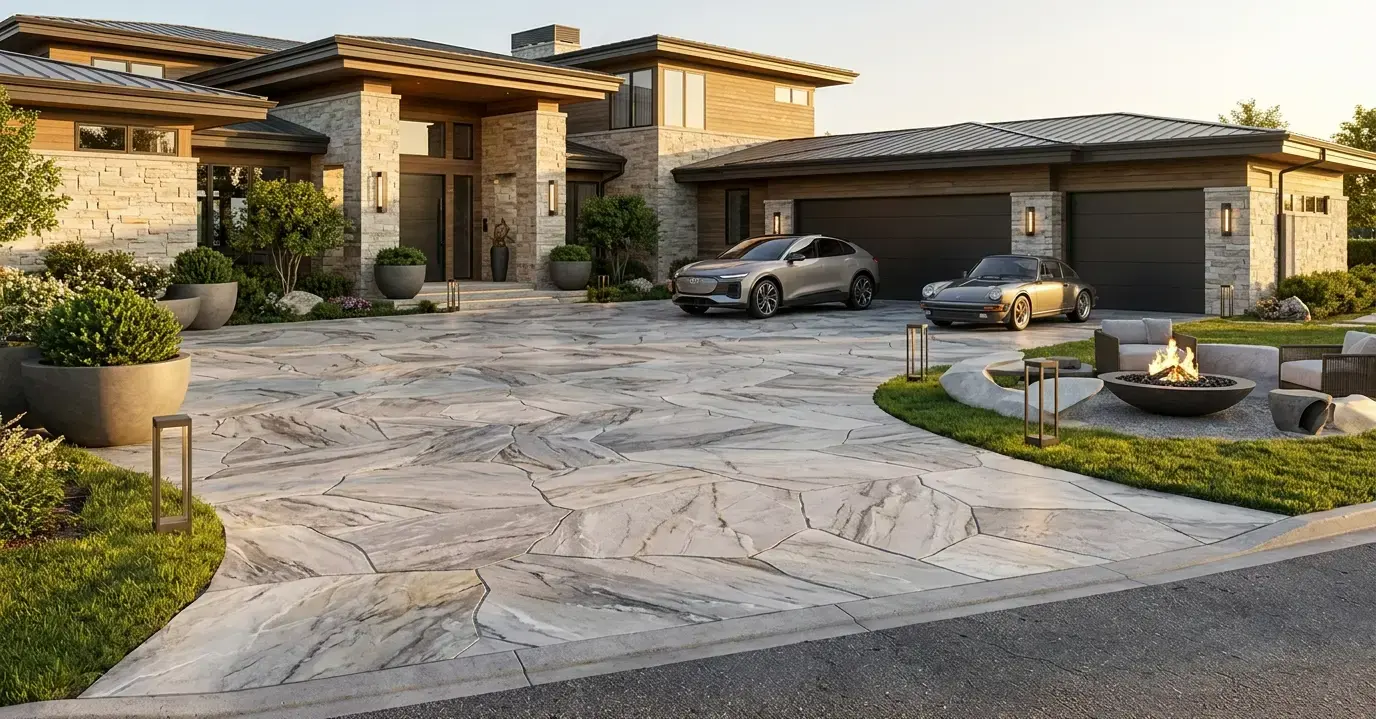
When Should You Choose Quartzite Pavers?
Quartzite is the stone to look at when you want a marble-like look in an outdoor space. Like granite, it is well suited to exterior paving.
That makes quartzite our pick for a contemporary patio that continues the style of a marble-look interior through a sliding door. It comes in polished, honed, and leathered finishes, and the same honed or leathered advice applies outside.
Each quartzite slab has natural variation in tone, veining, and movement, so photos only tell part of the story. Seeing quartzite next to granite settles the choice faster, which is exactly what a free design consultation is for.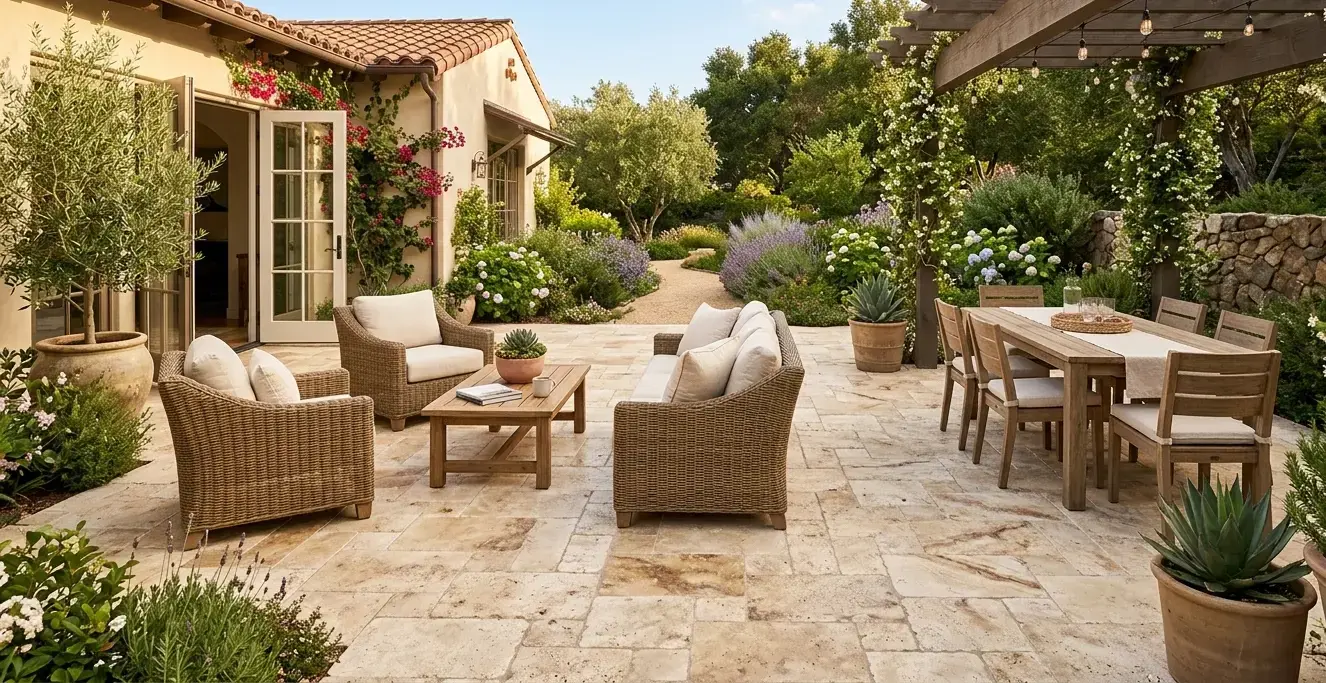
When Is Travertine the Better Paver?
Travertine is the stone for texture and pattern. Our travertine outdoor paving works in French pattern, ashlar, running bond, herringbone, and straight layouts, and a French pattern interlocks four sizes for an old-world look.
A leathered travertine laid in a French pattern can bring out silver and gold tones in the stone. That look is the clearest reason to choose travertine over granite.
Because travertine is a calcareous stone, we would keep it away from the grill and dining table and use it on a garden path, a covered porch, or a reading nook instead. Clean it with neutral, non-acidic products, and blot spilled wine or juice before rinsing.
Which Outdoor Stains Should You Plan For?
Acidic spills are only one concern for a patio, and NSI's care guide covers three more that show up outside. Each one points to a small decision you can make early.
Rust is the hardest to deal with. Metal chair legs, steel planters, and pots can leave orange-brown marks, and NSI cautions that rust which soaks in deeply can be very hard to remove.
For any of the three stones, choose planters with saucers and patio furniture with plastic or rubber feet. That one habit protects granite as much as it protects travertine.
Leaves, bark, and bird droppings are easier. NSI notes that once the debris is cleared, sun and rain usually fade these marks outdoors, so a terrace under a mature oak is less of a worry than it looks.
Shaded areas can grow algae and moss, and NSI's suggestion is a rinse with plain water and a diluted bleach mix. That matters most for travertine on a shaded path, since acidic cleaners are already off the table.
Where a patio meets an indoor stone floor, NSI suggests mats on both sides of the doorway to cut down on grit carried inside. It is a simple step that helps the indoor and outdoor stone stay looking their best.
How Can You Compare Stone's Environmental Impact?
All three of these stones are quarried natural materials. The stone industry publishes industry-wide environmental product declarations for natural stone cladding, flooring and paving, and countertops, so its environmental impact can be compared with other materials.
For homeowners and designers working toward greener projects, those declarations offer independent data to bring into the conversation. We think that is a stronger basis for a decision than marketing language from any supplier, ours included.
How Do You Match Pavers to the Rest of the Yard?
Our exterior stone category covers more than pavers, with pool coping, stacked stone, and small to large format pavers in the same selection. That makes it easier to plan a patio, a seating wall, and the edges around it as one project instead of three separate purchases.
Pick the paver first, since it covers the most ground, then choose stacked stone for a garden wall or planter in a tone that sits well beside it. A gray granite patio next to warm stacked stone creates contrast, while matching tones keep a small yard calm and simple.
Format is the other half of the pairing. In our view, smaller pavers suit herringbone and French pattern layouts on a garden path, while larger formats suit straight or running bond layouts across a wide entertaining area.
If you want the paver, wall stone, and edging chosen together, bring rough measurements of each area to your visit. Having those numbers on hand lets our team lay out options for every part of the yard at once.
What Should You Decide Before Ordering?
For homeowners, two questions sort out most paver decisions. What tends to get spilled in the space, and does the paver need to work with a counter, wall, or indoor floor?
If spills are part of daily life, as on a deck beside a grill, choose honed granite. If the space continues a marble-look living room, choose quartzite, and if a garden path calls for a French pattern, choose travertine.
Contractors and designers can turn to ASTM C1528, the standard guide for selecting dimension stone, written for the people who specify and supply stone for construction. Its starting point is simple: every stone application has to meet applicable building codes.
Trade professionals sourcing pavers across several jobs can apply for a trade account. For an outdoor kitchen, list the granite slabs you like on a slab quote request and add any bundle number you noted from the inventory.
Conclusion
Bring a photo of the space, a note on how much sun it gets, and a short list of what tends to land on the table. With those three details, our team at Nova Tile and Stone can help you narrow granite, quartzite, and travertine to one choice at any of our showrooms in Reno, Minden and Sacramento.
If a contractor or designer is already on the project, bring them along. Book a time with our design team so the stone, the finish, and the layout are settled in one visit.
Note: Some images on this page may be conceptual renderings created to illustrate design possibilities and may not depict actual installations.
Frequently Asked Questions
For a patio near a grill or dining table, we recommend granite, since the Natural Stone Institute notes that acidic spills are more of a concern for calcareous stone like travertine. Travertine is the better choice when a French pattern look matters most.
Yes, quartzite is a good fit for outdoor paving. We recommend it when you want a marble-like look on a patio or walkway, ideally in a honed or leathered finish.
We suggest honed or leathered finishes for outdoor paving rather than polished, since polished stone can get slippery when wet. Granite, quartzite, and travertine all come in those finishes, so you can choose the stone first and the surface second.
Not always. According to the Natural Stone Institute, a sealer helps stone repel stains without making it immune to them, and plenty of stones perform fine unsealed, so the answer comes down to the specific stone you choose.
Keep acidic products such as citrus or vinegar cleaners off travertine, and check the label on rust removers, since NSI warns that some can damage every stone, granite and quartzite included. For routine cleaning, NSI suggests a neutral stone cleaner or a little mild dish soap in warm water.