If you genuinely had to pick just one best overall hardscape stone, it would be granite. It has the highest abrasion resistance and among the lowest porosity of any hardscape stone, so it resists staining, scratching, and freeze-thaw cracking better than the alternatives. It performs well in nearly every application, including patios, driveways, and retaining walls, needs the least upkeep of any option, and routinely lasts 50 to 100+ years with proper installation.
Its real weaknesses are narrow. It runs hotter underfoot in direct sun than lighter stones like travertine, so it is not the top pick for a sun-baked pool deck, and it carries a higher upfront cost than sandstone or limestone.
This guide breaks down the most common hardscape stone types, what each one does well, and how to match a stone to a specific project instead of guessing based on looks alone.
What Is Hardscape Stone?
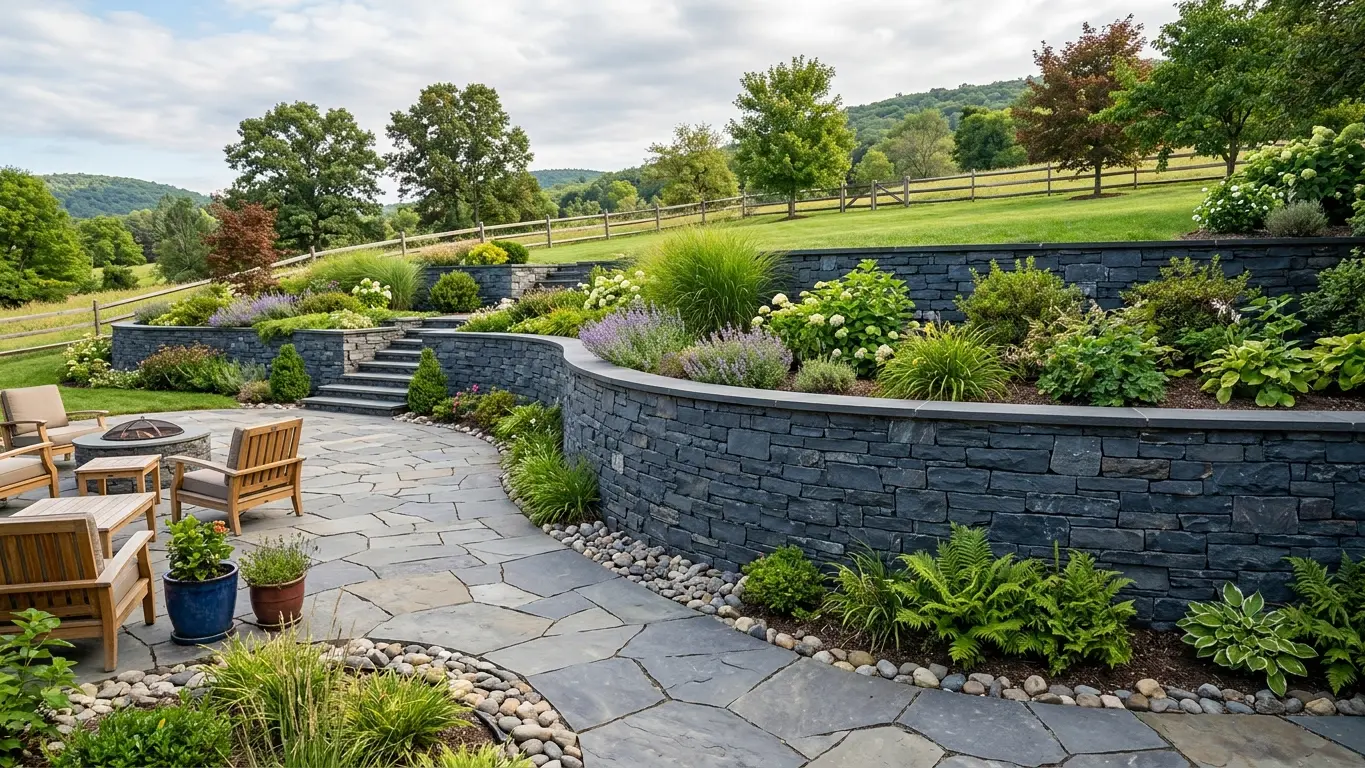
Hardscape refers to the non-living, structural elements of an outdoor space: patios, walkways, driveways, retaining walls, steps, and pool surrounds. Hardscape stone specifically means the natural or quarried stone used to build those features, as opposed to poured concrete, brick, or manufactured pavers. Common hardscape stones include granite, bluestone, travertine, limestone, sandstone, slate, and quartzite. Several of these (sandstone, limestone, slate, and quartzite) are also grouped under the broader term "flagstone," which describes any flat, quarried stone cut or split into slabs for paving. These materials show up in very different ways across patios, walkways, and driveways, from granite-edged contemporary patios to rustic flagstone walkways and stacked-stone fire pits.
What Makes One Hardscape Stone Better Than Another?
Before comparing individual stones, it helps to know which factors actually separate a good choice from a poor one for a given project.
Climate and freeze-thaw exposure. In regions with cold winters, water that seeps into a porous stone can freeze, expand, and crack the surface over time. Denser, less porous stones hold up better in these conditions.
Foot and vehicle traffic. A stone that's fine for a garden path may not hold up under a driveway's weight or a patio's daily use.
Heat retention. Darker, denser stones absorb and hold more heat in direct sun, which matters for pool decks and patios where people walk barefoot.
Slip resistance. Textured or tumbled finishes provide better grip than polished surfaces, which matters most around pools and in wet climates.
Maintenance tolerance. Porous stones generally need periodic sealing to resist staining; denser stones need less upkeep but often cost more upfront.
Budget. Material cost varies significantly by stone type, and so does the cost of the labor and base preparation each one requires.
Best Stone by Application
Best Stone for a Patio or Walkway
For general patio and walkway use, flagstone types (sandstone, limestone, and bluestone in particular) remain the most common choice, largely because of their range of natural colors and their ability to be cut into varied, irregular shapes. Among these, bluestone is prized for its durability and relatively uniform color, while sandstone and limestone tend to be softer and more porous, meaning they benefit more from routine sealing. Flagstone's earthy, irregular look is part of its broad appeal for patio and walkway materials, though different flagstone types carry different maintenance needs: sandstone stays cooler in summer heat but is more prone to water damage, while bluestone is more durable but needs a sealer to hold its color over time.
Best Stone for a Driveway
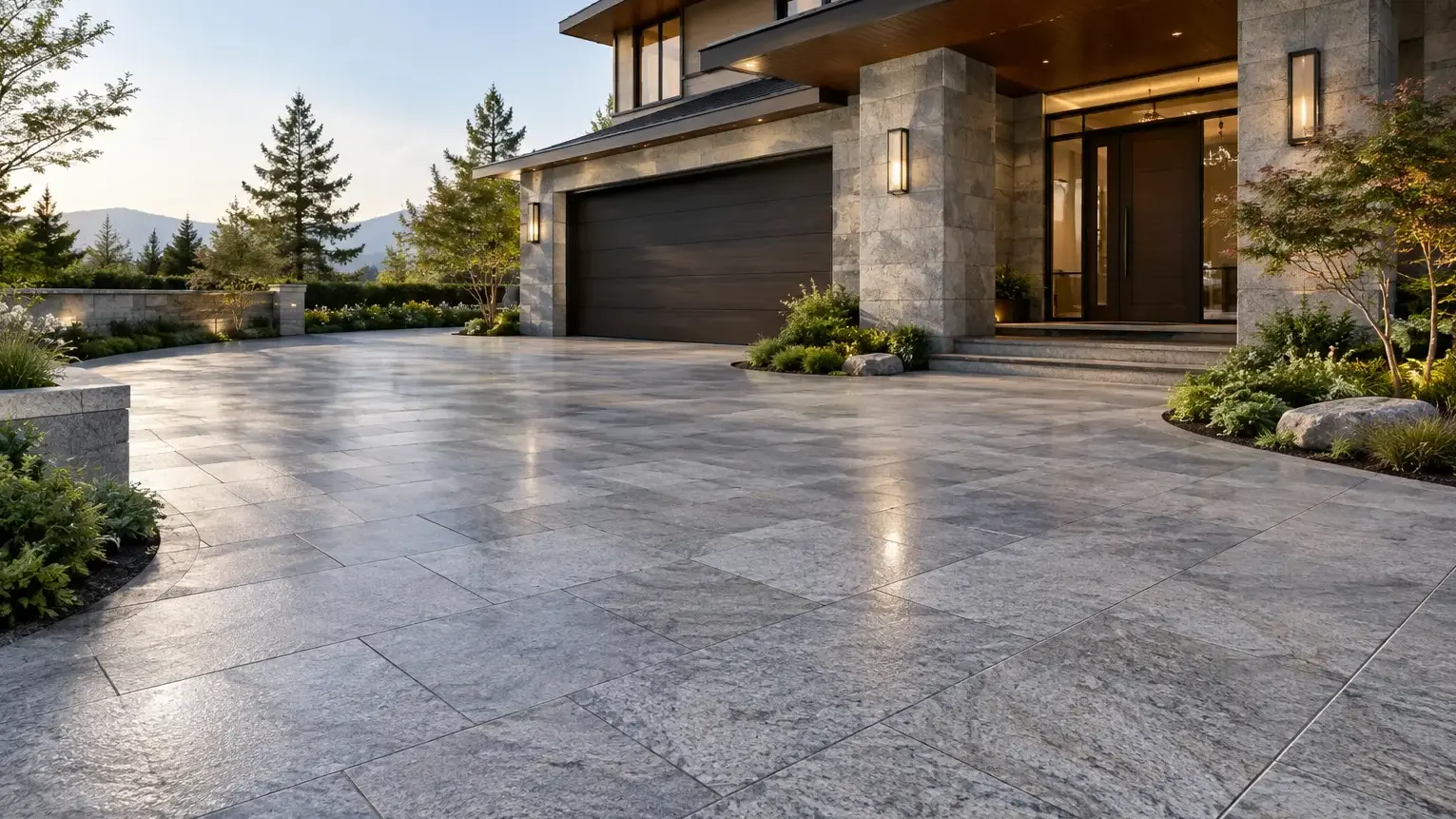
Granite and basalt are generally considered the two toughest options for driveways and other heavy-use surfaces, though they hold their advantages in different ways. Granite has a slight edge in abrasion resistance, thanks to its coarse-grained, low-porosity structure, which helps it resist scratching and wear from repeated vehicle traffic. Basalt is denser and finer-grained, giving it higher compressive strength, which makes it especially well suited to heavy loads and to coastal or high-salt environments where weathering resistance matters most. Both come with a higher upfront cost than lighter-duty stones, but that's typically offset by minimal long-term maintenance and a low risk of needing early replacement.
Best Stone for a Pool Deck
Around pools, comfort underfoot and slip resistance usually outweigh raw durability. Travertine is a common choice here because it stays comparatively cool in direct sun and, when properly filled and honed, provides good traction. Its main drawback is porosity: unfilled or unsealed travertine can absorb water, which becomes a problem in freeze-thaw climates, so filled and sealed travertine is the safer specification for pool surrounds. Lighter-colored stones in general perform better than dark stones in high-sun applications, since color has a direct effect on surface temperature.
Best Stone for a Retaining Wall
For retaining walls and other vertical hardscape elements, durability and weight-bearing strength matter more than surface comfort. Granite and dense flagstone varieties like slate and quartzite are common choices, since their low porosity limits water infiltration and the freeze-thaw damage that comes with it.
For homeowners comparing materials for different outdoor applications, our tile and stone complete offerings make it easier to consider a range of suitable options, while our showrooms provide a chance to see the materials and finishes in person before making a decision.
Natural Stone vs. Pavers: Which Is Better?
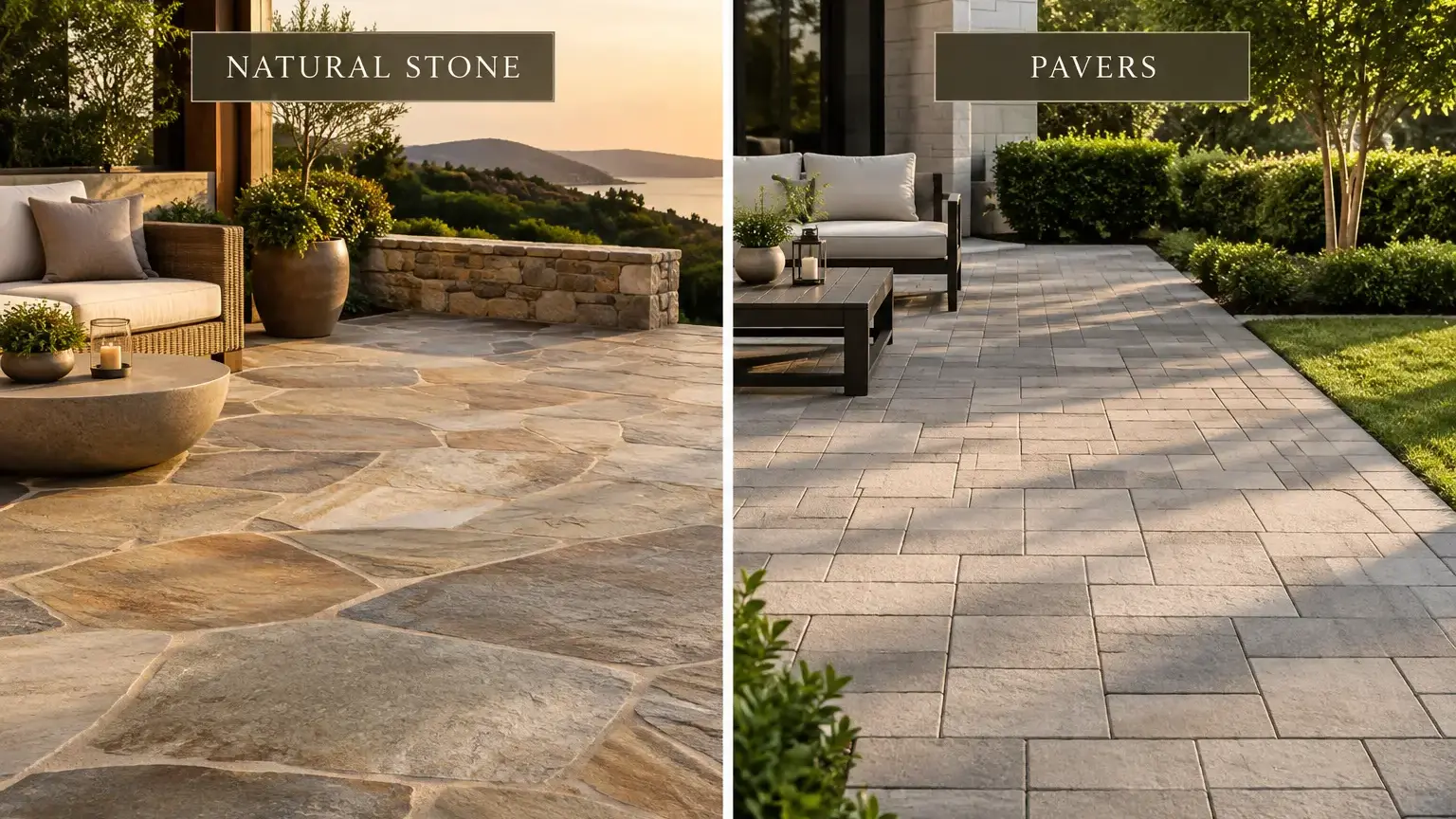
A related question that comes up almost as often as "which stone is best" is whether to use natural stone at all, instead of concrete or manufactured pavers. Each material has real trade-offs. Interior and landscape designers note that natural stone tends to stay cooler underfoot than concrete, handles freeze-thaw cycles better in most cases, and allows for easier spot repairs since individual pieces can be replaced without redoing the whole surface. Concrete, by contrast, is generally more budget-friendly and faster to install, and it can be poured into custom shapes that stone can't easily replicate. The tradeoff is that concrete is more prone to cracking over time and typically needs resurfacing sooner than a well-installed stone surface.
There's no universally "correct" choice between the two. Homeowners prioritizing a natural, one-of-a-kind look and long-term durability tend to land on stone. Those prioritizing upfront cost and design flexibility often choose concrete or manufactured pavers instead.
How Long Does a Natural Stone Patio Last?
Even the most durable stone benefits from some upkeep, and the type of maintenance needed varies by stone type. Denser stones like granite and quartzite need very little beyond periodic cleaning. Porous stones like travertine, limestone, and sandstone benefit from a penetrating sealer, which protects against staining and moisture absorption without changing the stone's natural appearance. Practical issues that come up with stone patios over time, like cleaning discoloration on bluestone or correcting heaved stones, are common results of years of weather exposure and settling.
As a general rule, a well-installed and properly maintained natural stone patio can last several decades, considerably longer than most concrete surfaces, though the exact lifespan depends heavily on the specific stone, the climate, and how consistently it's cared for.
Conclusion
Matching the stone to the application, rather than picking one because it's popular or trending, is what actually determines whether a hardscape project holds up for years or needs repair within a few seasons. Climate, traffic, sun exposure, and maintenance tolerance all narrow the field before aesthetics even come into play, and starting with those questions saves homeowners from the more common mistake of picking a stone because it looked great in a photo, only to find out later that it wasn't built for the job.
It's also worth remembering that these are general guidelines, not hard rules. Local climate, the specific finish of a stone, the quality of the base it's installed on, and how consistently it's maintained can all shift how a stone performs in practice. Two homeowners in different regions can install the same type of stone and get very different results over ten years, even with the same material.
The good news is that none of this requires becoming an expert in geology. Narrowing down the application (a driveway, a pool deck, a low wall) and the climate it has to withstand already rules out most of the wrong choices. From there, it's mostly a matter of comparing finish, color, and feel underfoot, which is easier to judge in person than from a description or a photo.
Nova Tile and Stone has four showrooms across Northern Nevada and the Sacramento area: Reno, Minden, Fernley, and Sacramento.
Frequently Asked Questions
Hardscape refers to the fixed, non-living elements of an outdoor space, such as patios, walkways, driveways, and retaining walls. Landscape refers to the living elements, like lawns, trees, shrubs, and garden beds. Most outdoor designs combine both, using hardscape to define structure and function and landscape to fill in the softer, growing spaces around it.
It depends on the stone's color and density. Darker, denser stones like slate or dark granite absorb and hold more heat in direct sun, while lighter-colored stones like travertine and light limestone reflect more heat and stay cooler underfoot. This is one of the main reasons lighter stones are favored around pools and sun-exposed patios.
No. Denser, less porous stones like granite and quartzite typically need very little sealing, since they don't absorb much moisture. Softer, more porous stones like travertine, limestone, and sandstone benefit from periodic sealing to prevent staining and reduce water absorption, which becomes especially important in climates with freeze-thaw cycles.
It can, if water gets into the stone's pores, freezes, and expands. Denser stones like granite, slate, and quartzite resist this kind of freeze-thaw damage better than more porous stones like unsealed travertine or certain sandstones.
Generally, yes, natural stone tends to carry a higher upfront material and installation cost than concrete or manufactured pavers. That cost is usually offset over time by natural stone's longer lifespan and lower likelihood of needing full replacement, though the actual value depends on the specific stone chosen and how the space is used.
Note: Some images on this page may be conceptual renderings created to illustrate design possibilities and may not depict actual installations.