Hardscaping uses durable, non-living materials to build patios, walkways, walls, and driveways. The most common are natural stone such as granite, quartzite, and travertine; manufactured materials such as porcelain pavers, concrete pavers, and clay brick; and loose materials such as gravel. Each one differs in how much water it absorbs, how it handles freezing and thawing, and how much traction it offers when wet.
Water absorption is often the deciding factor outdoors. According to the ANSI A137.1 standard, porcelain tile falls in the impervious tile porosity category, absorbing less than half a percent of its weight in water. This guide explains what sets each hardscaping material apart outdoors, including absorption, freeze-thaw behavior, and slip resistance, so you can match the material to your climate and the way you plan to use the space.
What Makes a Material Work Outdoors
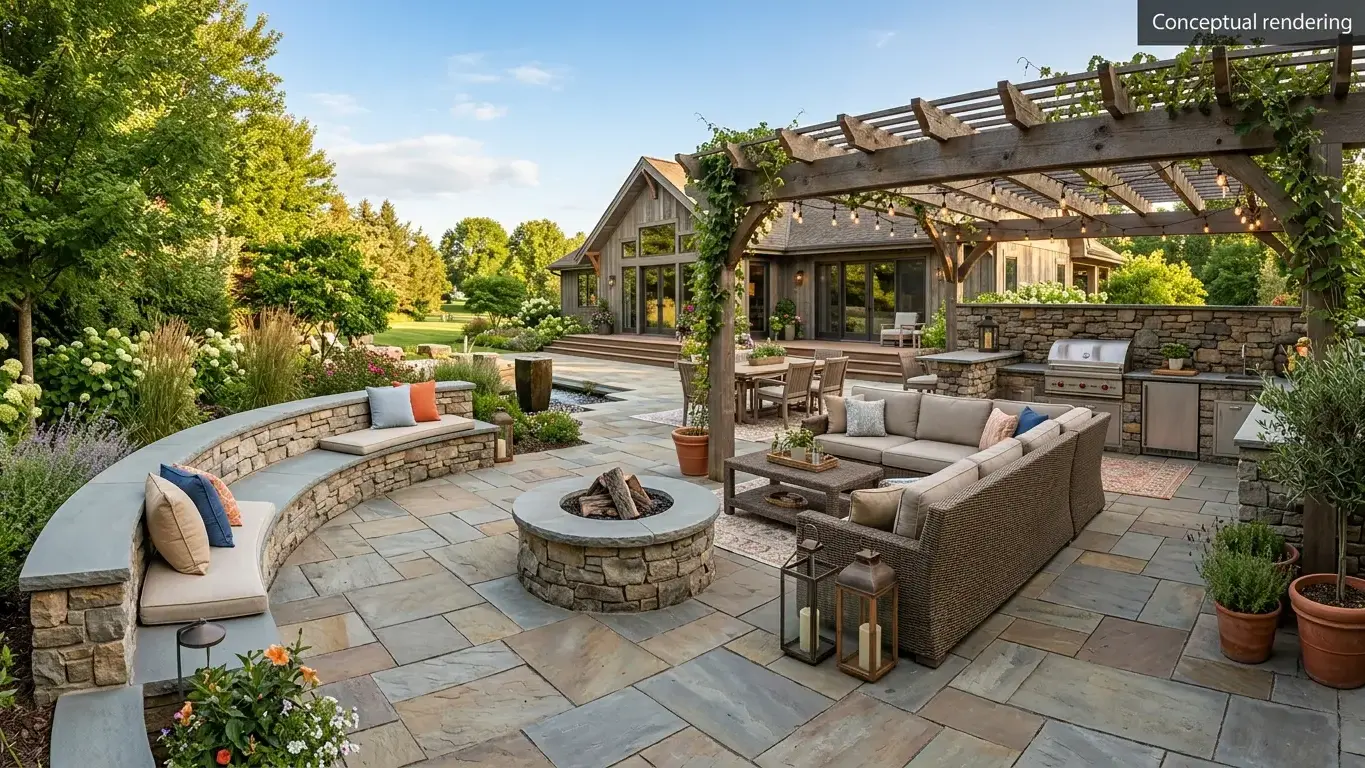
Hardscaping covers more than the surfaces you walk on. Other common hardscape features include retaining walls, water features, pergolas, and fire pits, along with any other built, non-plant feature of a yard. Whatever the feature, the material has to cope with the same outdoor conditions.
Water plays a central role. Water expands about 9% when it freezes, and inside a porous material, that expansion can cause cracking. The bigger threat is repeated freeze-thaw cycles, since climates that stay frozen all winter tend to cause fewer problems. Flat surfaces such as patios, walkways, and pool decks are more exposed than walls because water sits longer on them. That is why dense, low-porosity stone is preferred where winters are cold and humid, and why absorption ratings matter for every material in this guide. In very hot climates, the concern shifts to surface temperature, since dense stone such as granite can get very hot in direct sun.
Natural Stone
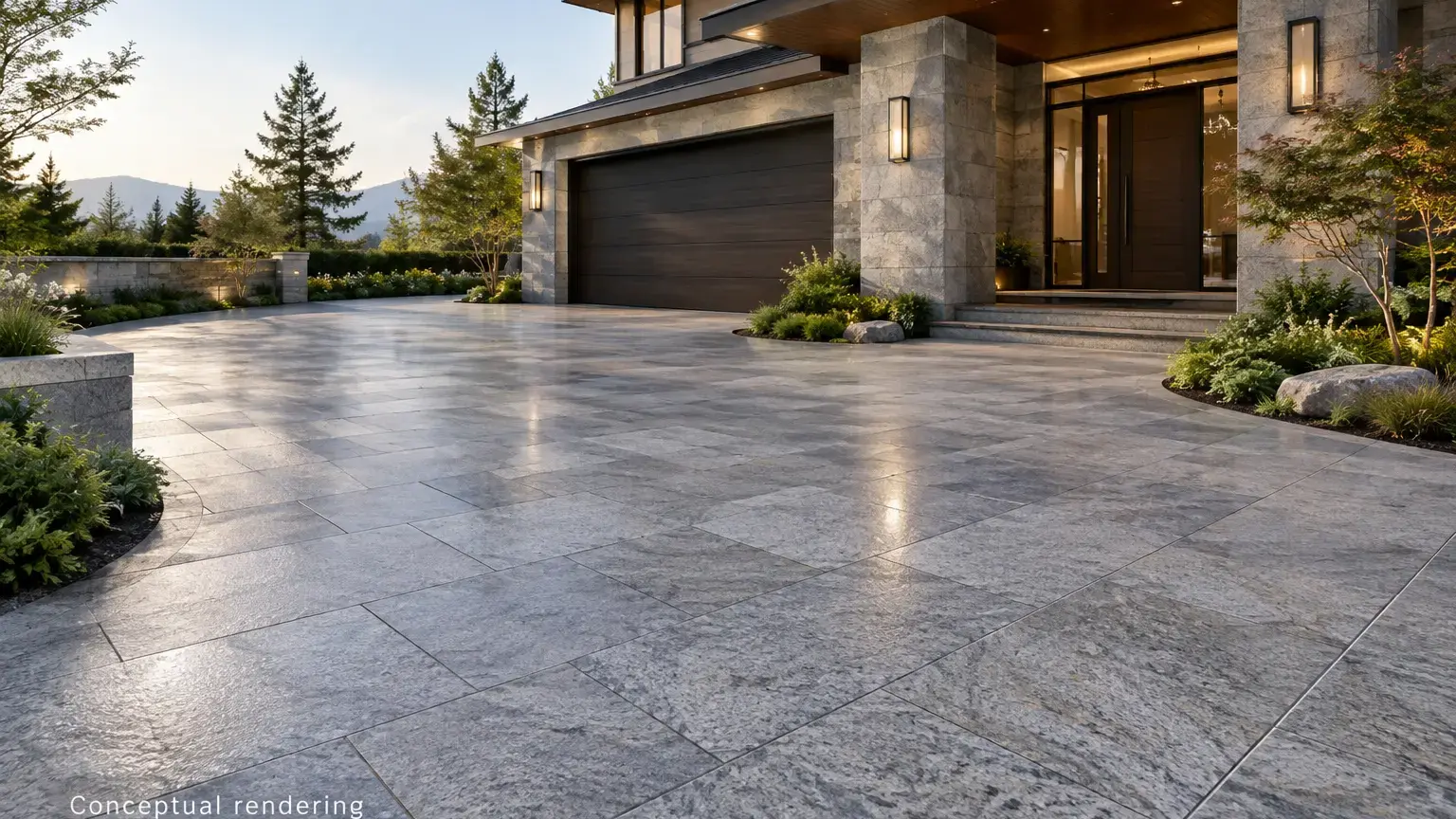
Natural stone is quarried, cut, and finished rather than manufactured, so no two pieces are identical in color or pattern. The sections below cover three stones used outdoors and two that are less suited to outdoor paving.
Granite
Granite is an igneous stone made mostly of feldspar and quartz. It is hard, dense, and resistant to scratches and acids, and the water absorption limit for building granite under ASTM standards is 0.40% by weight. That figure sits well below the general frost-resistance guideline of 3% absorption by weight. Lower absorption also tends to go with better stain resistance and breaking strength. Testing for the specific application is still recommended.
Quartzite
Quartzite is a metamorphic stone composed mostly of quartz. Under the physical requirements of ASTM C616 for quartz-based dimension stone, quartzite can absorb no more than 1% of its weight in water, compared with 3% for quartzitic sandstone, and must reach a minimum compressive strength of 20,000 psi. That low absorption is a large part of why quartzite is considered for exterior surfaces. If you are weighing quartzite against other stones on budget as well as performance, the overstock sale is worth checking for materials currently offered at a reduced price.
Travertine
Travertine is known for its warm, earthy tones, and it has been used in construction since ancient Roman times. It is often recommended as a patio paver option for in-ground pools. Its naturally rough texture can help provide traction on wet surfaces, and its lighter colors help the stone stay cooler in the sun, which matters where people walk barefoot. Since that traction comes from the stone's texture, confirm the finish before using travertine on a surface that gets wet. Some travertines may not be suitable where freeze-thaw cycles are frequent, so check the product’s absorption and freeze-thaw data.
Marble and Limestone: Less Suited to Outdoor Paving
Marble and limestone are both made largely of calcite, a mineral that dissolves readily in weak acid. When acids in rain reach these stones, the calcite dissolves, and how acid rain affects marble and limestone shows over time as roughened surfaces and lost detail. Travertine is also a form of limestone and shares this sensitivity to acid, which is one reason its finish and care matter outdoors.
Contractors, designers, and architects choosing marble for interiors and other stones for exterior work can apply for a trade account to access trade pricing.
Manufactured Materials
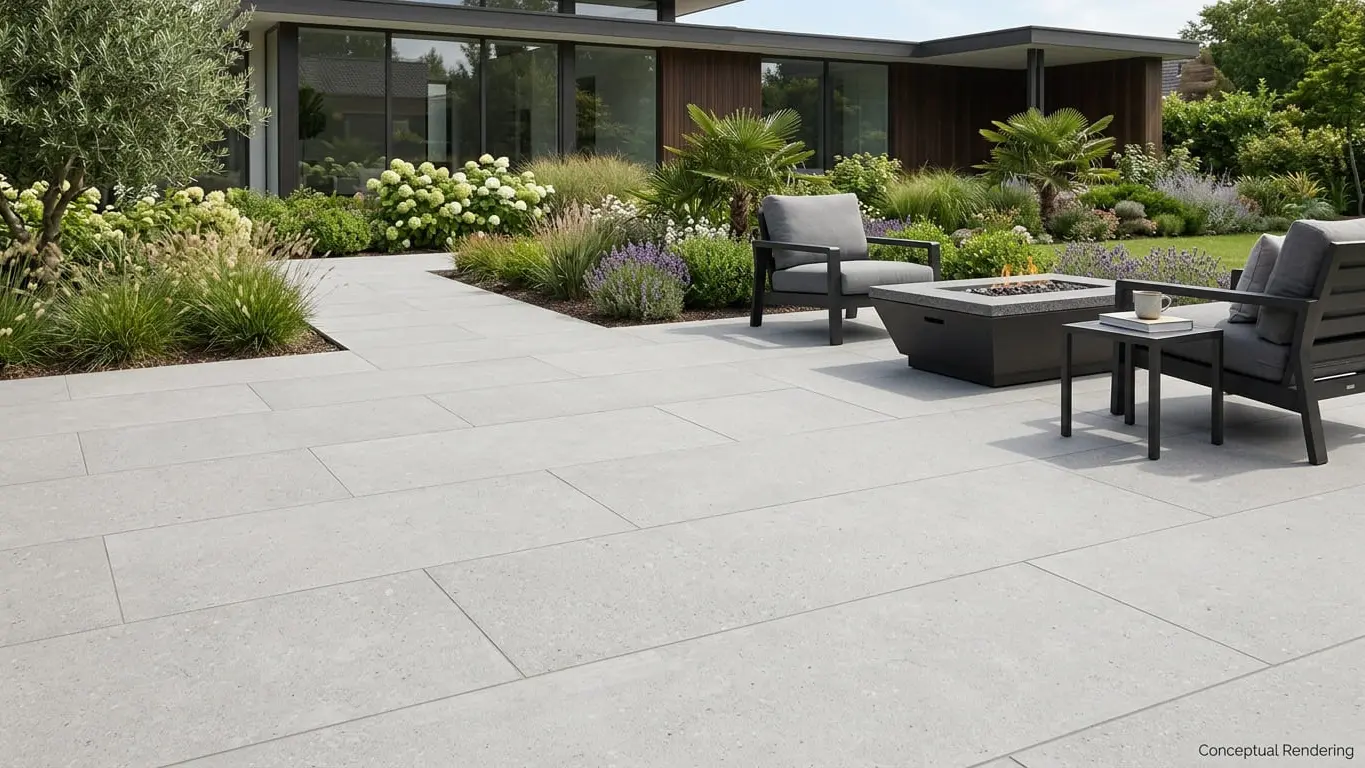
Manufactured materials are produced to set dimensions, so pieces are consistent in size and, in most cases, color. Each one is covered by its own industry standard, which sets requirements for properties such as absorption and strength.
Porcelain Pavers
Porcelain is a manufactured tile that can be made to resemble natural stone, wood, or concrete. Its low absorption is part of its definition, and products carrying the Porcelain Tile Certification Agency mark are certified as true porcelain tile. Before choosing porcelain for a climate with cold winters, confirm that the manufacturer's data sheet lists the product as freeze-thaw resistant.
Slip resistance is the other key factor. The ANSI A326.3 standard sorts hard surface flooring into product use categories, including an Exterior, Wet product use category that manufacturers show on product data sheets. The standard's examples of areas of use for that category include level outdoor living spaces such as patios, walkways, and pool decks, so it is the classification to look for when porcelain will be used underfoot outdoors.
Concrete Pavers
Concrete pavers are molded units available in many shapes, sizes, and colors. They are widely used for patios, walkways, and driveways. Specifications for interlocking concrete pavers made to the ASTM C936 standard call for an average compressive strength of 8,000 psi, an average absorption of 5%, and resistance to freezing and thawing. Concrete can also be poured in place instead of formed into pavers. Poured concrete can be stamped, colored, or textured to imitate other materials.
Clay Brick
Brick is a long-established material for walkways, patios, and garden walls, valued for its warm color. Paving brick has its own ASTM specifications, separate from brick made for walls. ASTM C902 covers pedestrian and light traffic paving brick, and ASTM C1272 covers heavy vehicular paving brick.
Within C902, Class SX brick is rated for severe weathering, the most demanding of the durability classifications for paving brick. C902 also assigns types by expected wear. Type I is for heavy abrasion such as driveways, and Type III is for light traffic such as patios at home. Brick can sometimes develop efflorescence, a crystalline deposit of water-soluble salts on the surface. It is mainly a cosmetic concern and typically does not harm the brick.
Loose Materials
Gravel
Gravel is a loose material used for driveways, garden paths, and as a base layer under other hardscape materials. Uncompacted gravel is one of several permeable materials that let rainwater soak into the ground, though gravel and stone may require weeding. Compacted gravel behaves differently and is often treated as impervious.
Many outdoor designs pair gravel with a harder surface, and Nova Tile and Stone carries outdoor-suitable granite, quartzite, travertine, and porcelain that can be combined with gravel paths and borders.
Questions to Ask Before You Choose
A few questions can narrow the field quickly. Does your area see frequent swings above and below freezing? If so, what is the product's water absorption figure and freeze-thaw rating? Will the surface be walked on when wet, and is the product classified for Exterior, Wet use? Will de-icing salts be used on or near the surface?
It also helps to think about sun and upkeep. How much direct sun does the area get? In Nova Tile and Stone’s slab specifications, granite, quartzite, and porcelain are marked UV resistant, which is worth considering for surfaces in full sun. Finally, how much sealing, weeding, or other maintenance are you prepared to do over the years?
Conclusion
Choosing a hardscaping material is less about finding a single winner and more about weighing trade-offs. A stone that works well on a covered patio in a mild climate may be the wrong pick for an uncovered pool deck that freezes every winter and gets salted. Looking past color and pattern to the figures on a data sheet, and to the conditions the surface will actually face, is a practical way to choose a material suited to your space.
If you'd like to compare outdoor-suitable granite, quartzite, travertine, and porcelain in person, Nova Tile and Stone has showrooms in Reno, Minden, Fernley, and Sacramento. Free design consultations are available, and tile samples can be taken home to see how a material looks in your own outdoor light.
Frequently Asked Questions
Hardscaping materials fall into three broad groups. The first is natural stone, such as granite, quartzite, and travertine. The second is manufactured materials, such as porcelain pavers, concrete pavers, and clay brick. The third is loose material, such as gravel. The right choice depends on climate, traffic, and how much maintenance you plan to do.
Low-absorption materials generally hold up better, since less water gets inside to freeze and expand. Granite, quartzite, porcelain rated for freeze-thaw exposure, Class SX paving brick, and concrete pavers made to ASTM C936 all fit that description.
Natural stone is quarried, so its color and pattern vary from piece to piece, and its absorption depends on the type of stone. Porcelain is manufactured to an absorption limit of 0.5% or less, with consistent sizing and a slip classification listed on its data sheet.
Yes, with some care. It is often used for patios and pool surrounds, but check the finish for wet traction and the product’s freeze-thaw suitability in cold climates. It is often sealed outdoors and is not recommended where de-icing salts are used.
Check the manufacturer's data sheet for the ANSI A326.3 product use classification. Exterior, Wet is the category intended for level outdoor surfaces that may be walked on when wet.
Note: Some images on this page may be conceptual renderings created to illustrate design possibilities and may not depict actual installations.