Stacked stone is a style of exterior stone cladding made to look like individual stones fitted tightly together, typically with little or no visible mortar joint. It can be made from two different materials: natural stone cut into thin veneer pieces, or manufactured stone cast from cement, lightweight aggregates, and pigments to replicate that same look. Both versions are used on home and building exteriors, most often on entries, foundations, chimneys, and accent walls rather than full facades. The difference between natural and manufactured stacked stone, covered in detail below, is the main factor in cost, weight, and long-term durability.
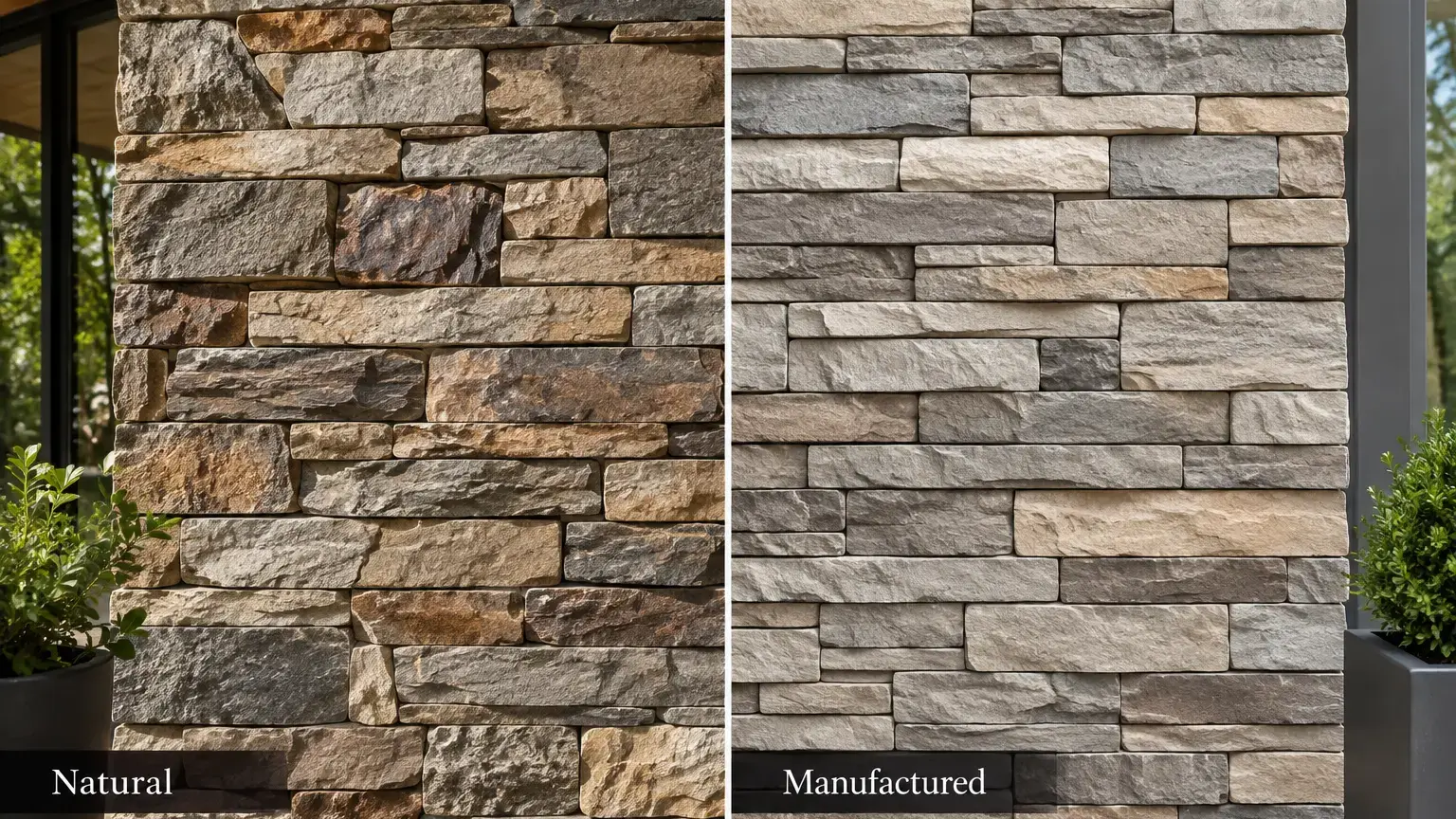
Natural vs. Manufactured Stacked Stone
Natural stacked stone starts as real quarried stone, most often limestone, granite, slate, or fieldstone, cut into thin veneer pieces. The back of each piece is flattened so it can adhere to a wall, while the face keeps its natural texture and color variation. Because it comes from the earth, no two pieces are exactly alike, which is part of the appeal for homeowners who want an authentic, one-of-a-kind look.
Manufactured stacked stone, sometimes called manufactured stone veneer, is cast from molds made from real stone using cement, lightweight aggregates such as pumice, and iron oxide pigments for color. It can cost less than natural stone and offer more consistency from piece to piece, although price and weight vary by product. Some designers prefer that consistency, while others favor the individual variations of natural stone.
Weight is where the two options diverge most. Full-thickness natural stone or brick typically weighs more than 60 pounds per square foot, while thin veneer, whether natural or manufactured, runs closer to 15 pounds per square foot. That lower weight is a major reason thin veneer is the more common choice on standard wood-framed walls. Regardless of which option is chosen, whether a given wall can support it is something only a qualified professional can determine for that specific structure.
For help comparing these options and exploring Nova Tile and Stone's complete offerings, you can book an appointment to discuss suitable materials for your project.
Dry-Stack Appearance vs. Visible Mortar Joints
Material is only half the equation. How the individual pieces are set is what actually creates the "stacked" look, and that can be done two different ways:
- Dry-stack appearance: Closely fitted pieces with little or no visible mortar between them create a clean, tailored look.
- Visible mortar joints: Mortar joints outline the individual stones and give the surface a more traditional or rustic appearance.
Manufactured stone products are often engineered specifically for the dry-stack look, since the panels or pieces are shaped for a tight, interlocking fit. Natural stone can achieve a similar effect, but it typically requires more hand-fitting and mason skill to get pieces to sit flush against one another.
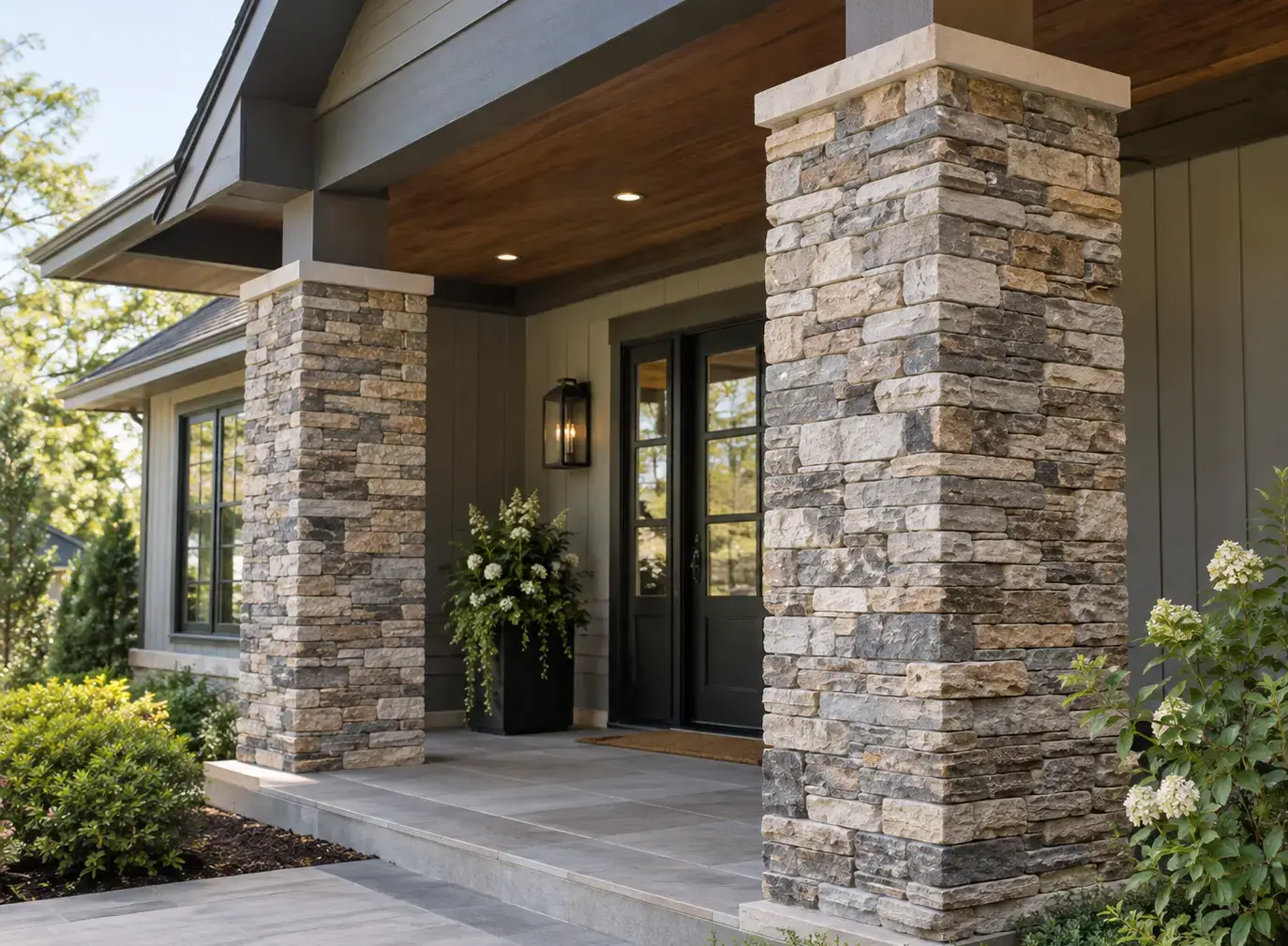
Where Stacked Stone Gets Used on Exteriors
With that distinction in mind, where stacked stone actually gets applied is largely a matter of budget and design intent. It rarely needs to cover an entire building to make an impact. Full-wall coverage is possible, but it's the most expensive way to use it. A more common approach applies it selectively, on entries, foundations, chimney surrounds, porch columns, and knee walls, while pairing it with another siding material like fiber cement, brick, or stucco for the rest of the exterior. This selective use keeps material and labor costs down while still delivering the texture and depth that make stacked stone a popular curb-appeal upgrade.
It also works well above the roofline or on upper stories in manufactured form, since the lighter weight of cast veneer makes those installations more practical than they would be with full-thickness natural stone.
Durability and Lifespan
Both natural and manufactured stone veneer can provide long service lives, but performance depends on the specific product, exposure conditions, installation quality, and maintenance. Published lifespan estimates are general references, not guarantees for an individual project. A detailed comparison of manufactured stone veneer against other cladding materials puts its minimum lifespan at 25 to 50 years, with real-world performance likely much longer given how long cement-based products have held up historically, while full stone siding is commonly cited at more than 100 years. That same comparison also points to a return on investment of about 153 percent for manufactured stone veneer, notably higher than fiber cement or vinyl siding replacement.
Installation quality remains the biggest variable in how long any veneer lasts, more than the material choice itself. For that reason, working with an experienced, qualified installer matters just as much as choosing between natural and manufactured stone.
Cost Considerations
Durability matters, but for most homeowners, cost is what ultimately decides between natural and manufactured stone. A per-square-foot cost breakdown by stone type shows that pricing depends heavily on which stone is chosen and how much of the exterior it covers. Natural stone materials vary widely by type, with some options priced closer to manufactured stone and others, like granite and limestone, sitting well above it. Manufactured stone can be a more budget-friendly option for covering larger exterior areas, although the cost advantage depends on the specific products being compared.
Because of that cost gap, many homeowners use natural stone selectively as an accent while relying on manufactured stone or another siding material for broader coverage, getting the authentic texture where it matters most without paying for full coverage in real stone. For trade professionals planning larger projects, applying for a trade account can provide another way to work with material options while managing project costs.
Conclusion
Stacked stone covers a wider range of materials and looks than the name suggests, from real quarried stone cut into thin veneer to cast concrete panels engineered to mimic it closely. The right choice comes down to weighing authenticity and long-term durability against weight, cost, and how the finished wall will be used, whether that's a full facade, an accent wall, or a foundation and entry detail. Either option, chosen and installed correctly for the structure it's going on, can add real texture and depth to a home's exterior for decades.
For homeowners who want to see and feel these materials before deciding, Nova Tile and Stone serves customers from four showroom locations: Reno, Minden, Fernley, and Sacramento.
Frequently Asked Questions
It can be either real quarried stone, such as limestone, granite, slate, or fieldstone, or a manufactured veneer molded from cement and lightweight aggregates to replicate the same look.
Not quite. Stone veneer refers to the thin, lightweight format the material comes in, while stacked stone refers specifically to the tight, dry-stack or minimal-joint appearance. Most stacked stone products happen to be sold as veneer, which is why the terms often get used interchangeably.
Yes, in both styles. "Dry-stack" describes the finished look, tight joints with little to no visible mortar, rather than the absence of mortar behind the stone. A full mortar bed is what actually secures the stone to the wall, whether or not it's visible from the front.
In many cases, yes, though this depends on the condition of the existing surface and is something a qualified installer should assess before any work begins.
It's durable, but natural stone generally lasts longer over the long term. In both cases, installation quality matters more to lifespan than the material choice itself.
Note: Some images on this page may be conceptual renderings created to illustrate design possibilities and may not depict actual installations.