Ledger stone is a stacked, panelized form of stone cladding available in both natural and manufactured versions, cut or cast into strips and fitted together in a linear, layered pattern on a wall. Common natural types include quartzite, slate, and travertine, while manufactured versions are cast from cement, aggregate, and pigments to mimic the look of real stone. It's a popular choice for home exteriors, which is why it turns up so often on facades, garden walls, and outdoor fireplaces.
This guide breaks down what ledger stone actually is, how natural and manufactured versions differ, and how it performs as an exterior material, including where it works best, what affects its durability, and what to consider before choosing it for an outdoor project.
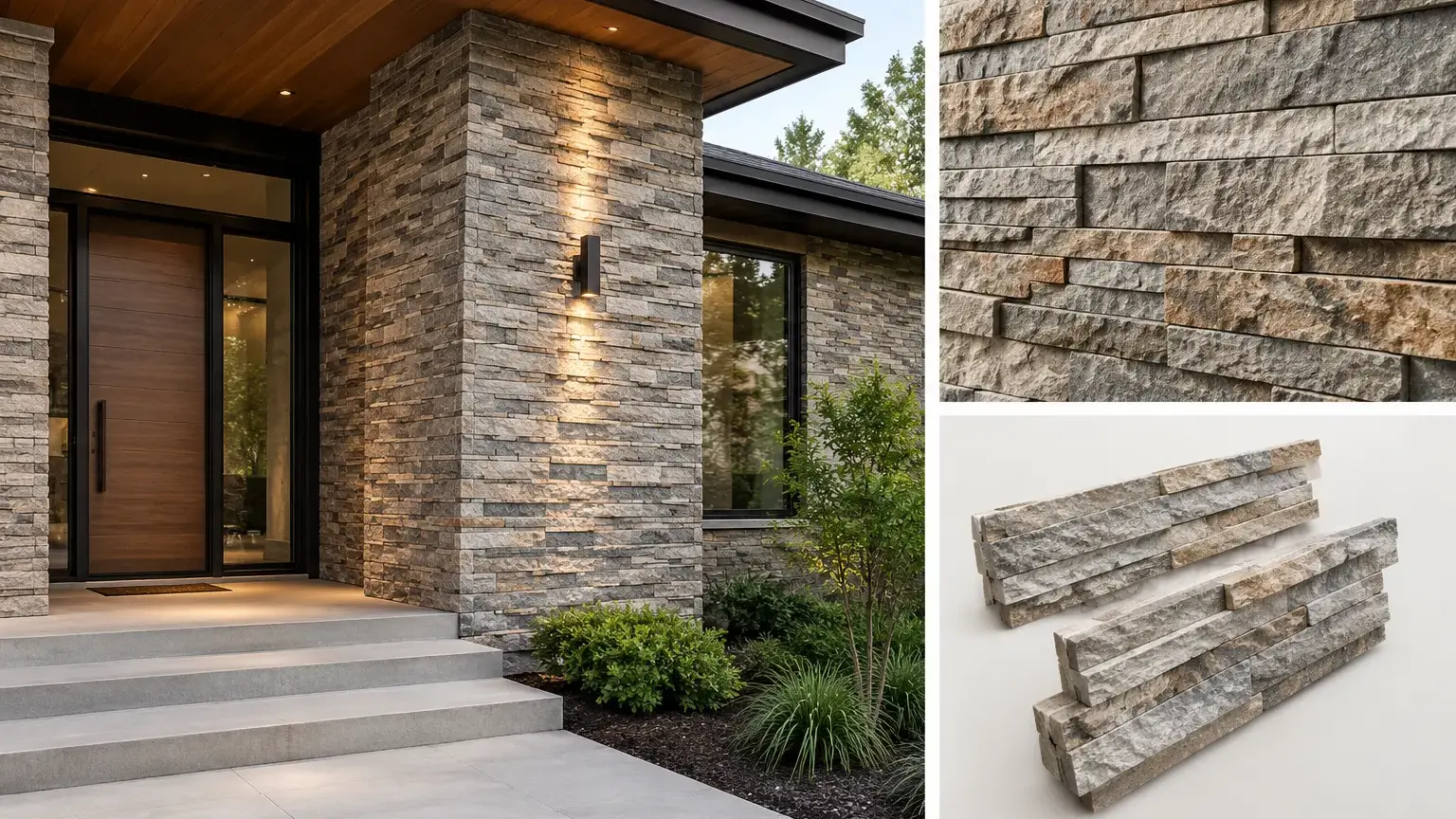
What Is Ledger Stone?
Ledger stone refers to individual pieces of stone, cut and trimmed into strips or panels, that are stacked and fitted together to create a linear, layered pattern on a wall. The panels are typically installed as modular sections rather than one piece at a time, which is part of what sets ledger stone apart from traditional full-size stone cladding.
The material also goes by a few other names, which is where a lot of the confusion comes from. Ledger stone and stacked stone are often used interchangeably, and both fall under the broader category of stone veneer: thin-cut or cast stone pieces designed to be applied to a wall surface rather than built as a structural element.
Natural Stone vs. Manufactured Ledger Stone
Ledger stone comes in two general forms.
Natural ledger stone is cut directly from quarried stone. Common types include quartzite, slate, and travertine, each with its own texture, color range, and performance characteristics. Quartzite in particular is frequently cited for its hardness and resistance to fading, which is part of why it comes up so often in discussions of exterior stone.
Manufactured ledger stone is made from a blend of materials, typically Portland cement, lightweight aggregate, and iron-oxide pigments, cast in molds taken from real stone. It's lighter and generally less expensive than natural stone, though it tends to fade with prolonged outdoor light exposure, while natural stone generally holds its color better, although colorfastness varies by stone type.
Neither option is inherently better across the board. The right choice depends on the look, budget, and performance requirements of the specific project.
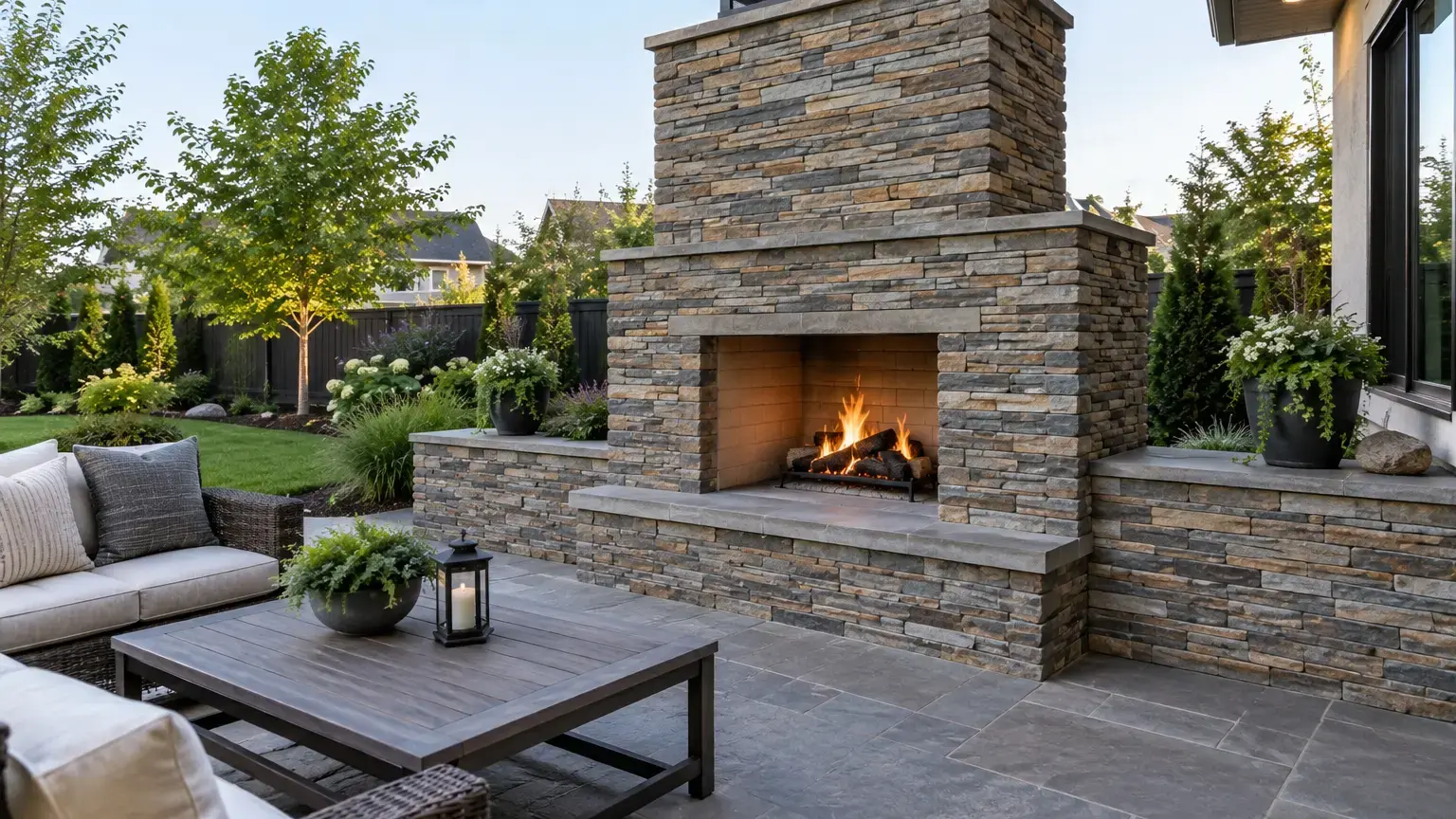
Where Ledger Stone Is Used Outdoors
Ledger stone panels turn up in a range of exterior applications, including:
- Home facades and exterior accent walls
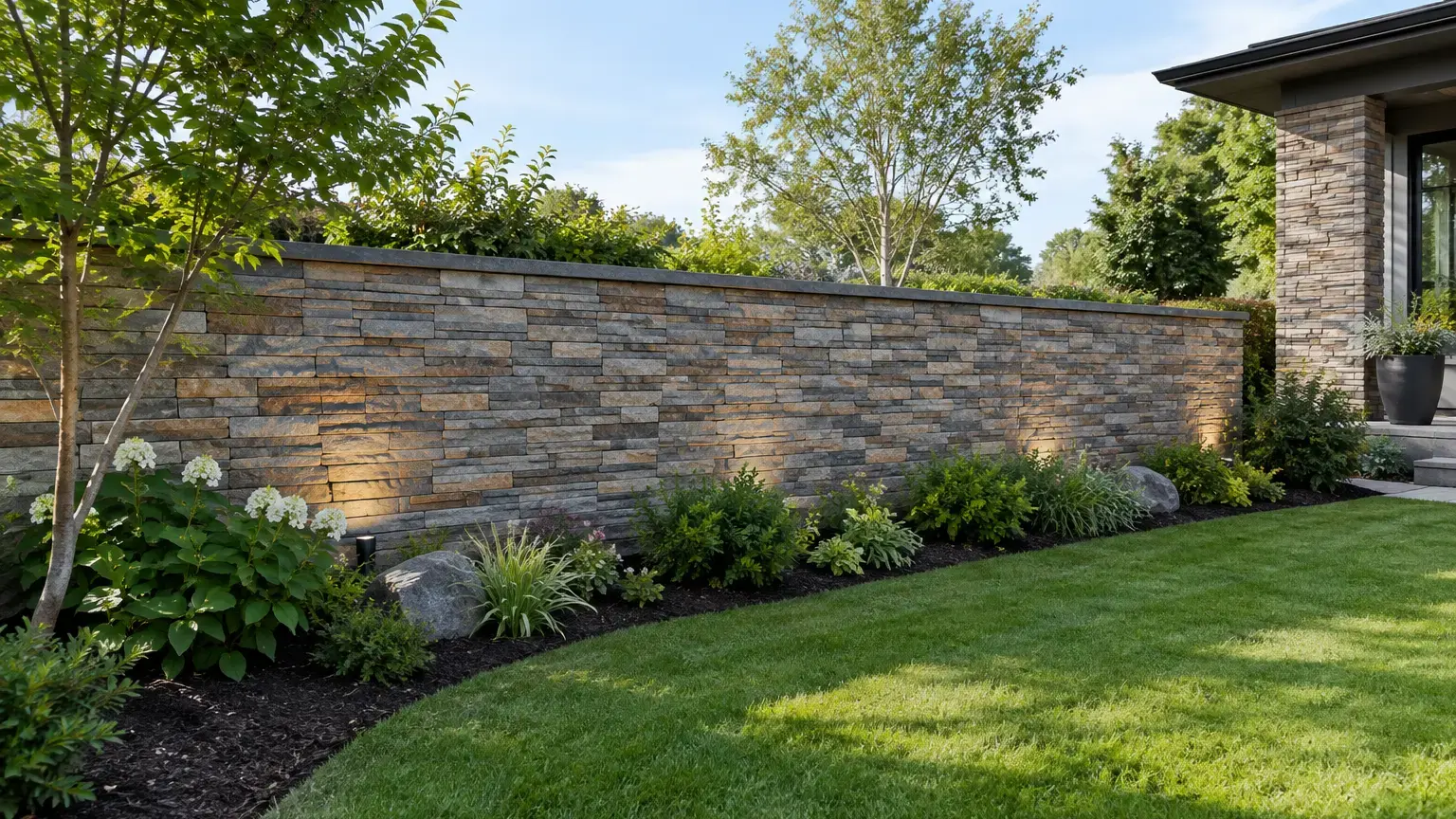
- Garden and retaining walls
- Outdoor kitchens and grill surrounds
- Pool and fire pit surrounds
- Entryways, columns, and porch fronts
- Outdoor fireplaces
For poolside walls, confirm that the selected ledger stone product is suitable for the expected moisture and pool-chemical exposure. Fireplaces tend to be the most commonly referenced use case, largely because the rugged texture of natural stone pairs well with that application. Confirm that the specific stone and setting materials are rated for fireplace use, and follow the fireplace manufacturer's clearance requirements. Facades and garden walls are just as common in practice, particularly in projects where the goal is a natural stone look without the weight or cost of solid stone construction. Nova Tile and Stone’s trade account program provides a straightforward option for qualifying trade projects involving ledger stone and other materials.
Is Ledger Stone Good for Exterior Use?
Yes, in general. Natural stone ledger panels generally hold up well outdoors when the stone is rated for exterior use and installed correctly.
Freeze-thaw resistance in particular varies by the type of natural stone, which is why ASTM is developing a test standard to measure how different natural stones hold up to repeated freezing and thawing. That said, exterior performance also depends on the installation itself. Trapped moisture, inadequate drainage, and poor substrate preparation are common causes of failure that have nothing to do with the stone's inherent durability. In other words, the stone can handle the outdoors, but the installation has to be designed for it. Nova Tile and Stone collections include natural stone options suitable for a range of exterior applications, and an appointment can be booked to explore available materials and finishes.
Cement-Backed vs. Non-Cement-Backed Panels
Ledger stone panels are available with different backing constructions. Cement-backed panels have a cementitious base and are set with a cement-based mortar directly onto the substrate, similar to how tile is installed. Non-cement-backed panels have the stone pieces bonded together or to a mesh backing, without a cementitious base.
Both formats can be used indoors and outdoors when the manufacturer approves them, but exterior installations are typically set in a polymer-modified thin-set or veneer mortar rather than construction adhesive. The choice of panel affects things like installation time, substrate requirements, and how the panels perform under exterior moisture exposure. On masonry or concrete surfaces, the stone can often be applied directly, while other surfaces need a lath and scratch coat first. This is a detail worth discussing directly with whoever is handling the installation, since substrate type and climate both factor into which backing method makes sense for a given project.
Sealing and Weatherproofing Considerations
Sealing is commonly recommended for ledger stone used outdoors, particularly in climates with freeze-thaw cycles or significant moisture exposure. The purpose is to reduce staining and water absorption. Outdoors, a penetrating, breathable sealer is typically preferred so moisture can still escape, and many manufactured stone makers treat sealing as optional, so follow the product's care instructions.
Whether sealing is necessary, and how often it needs to be reapplied, depends on the specific stone type and finish. Denser stones like quartzite generally have lower porosity and need less frequent sealing than more porous materials like travertine or sandstone. Manufacturer specifications and an installer's recommendations matter more here than a one-size-fits-all rule. A simple water-drop test can show when the surface has started absorbing water again.
Conclusion
Ledger stone is a stacked, panelized form of stone cladding used across a range of exterior applications, from facades to outdoor fireplaces. Choosing between natural and manufactured versions, confirming the right backing method for the substrate, and following through on sealing where needed are what separate an exterior installation that holds up for decades from one that runs into trouble within a few years. The stone itself is rarely the weak point; the installation and ongoing care around it usually are.
For anyone comparing natural stone options for an exterior project, seeing the material and finish in person makes a real difference, since color, texture, and veining vary from batch to batch. Nova Tile and Stone has natural ledger stone and tile options available to view in person at its showrooms in Reno, Minden, Fernley, and Sacramento.
Frequently Asked Questions
Ledger stone is either cut from quarried natural stone, such as quartzite, slate, or travertine, or manufactured from a blend of Portland cement, lightweight aggregate, and iron-oxide pigments cast in molds shaped like real stone.
Yes, particularly natural stone versions rated for exterior use. Quartzite is UV-resistant, while freeze-thaw and moisture performance vary by stone type, so confirm the exact product for your climate. Manufactured versions can also work outside but are more prone to fading over time.
Ledger stone and stacked stone are largely interchangeable terms, and both fall under the broader category of stone veneer: thin-cut or cast stone pieces applied to a wall surface rather than used as a structural material.
Often, yes, especially in freeze-thaw or high-moisture climates, to guard against staining and water absorption. Denser stones like quartzite typically need less frequent resealing than more porous options like travertine or sandstone. Follow the supplier's care instructions, use a breathable penetrating sealer outdoors, and reseal when a water-drop test shows the surface is absorbing again.
Cement-backed panels have a cementitious base, while non-cement-backed panels have the stone pieces bonded together or to a mesh. Both can work indoors and outdoors when the manufacturer approves them; exterior installations are typically set in thin-set or veneer mortar, and the right choice depends on the substrate and climate.
Note: Some images on this page may be conceptual renderings created to illustrate design possibilities and may not depict actual installations.