Hardscape is the non-living, built part of a landscape. It includes features such as patios, walkways, driveways, retaining walls, steps, and fire pits, made from materials like natural stone, porcelain pavers, concrete, brick, and gravel. Hardscape gives an outdoor space structure, usable surfaces, and a way to manage water, while softscape covers the living elements, such as grass, trees, and plants.
A long-lasting hardscape depends on four planning basics: choosing a material suited to the local climate and traffic, sloping surfaces so water drains away from the house, selecting a finish with enough traction for wet conditions, and weighing upfront cost against long-term repairs. According to the ANSI A326.3 standard, hard surface flooring is classified into product use categories based on slip resistance, including a category for exterior wet areas.
This guide covers where hardscape is typically used, how the most common materials compare, and the decisions to make before anything is ordered.
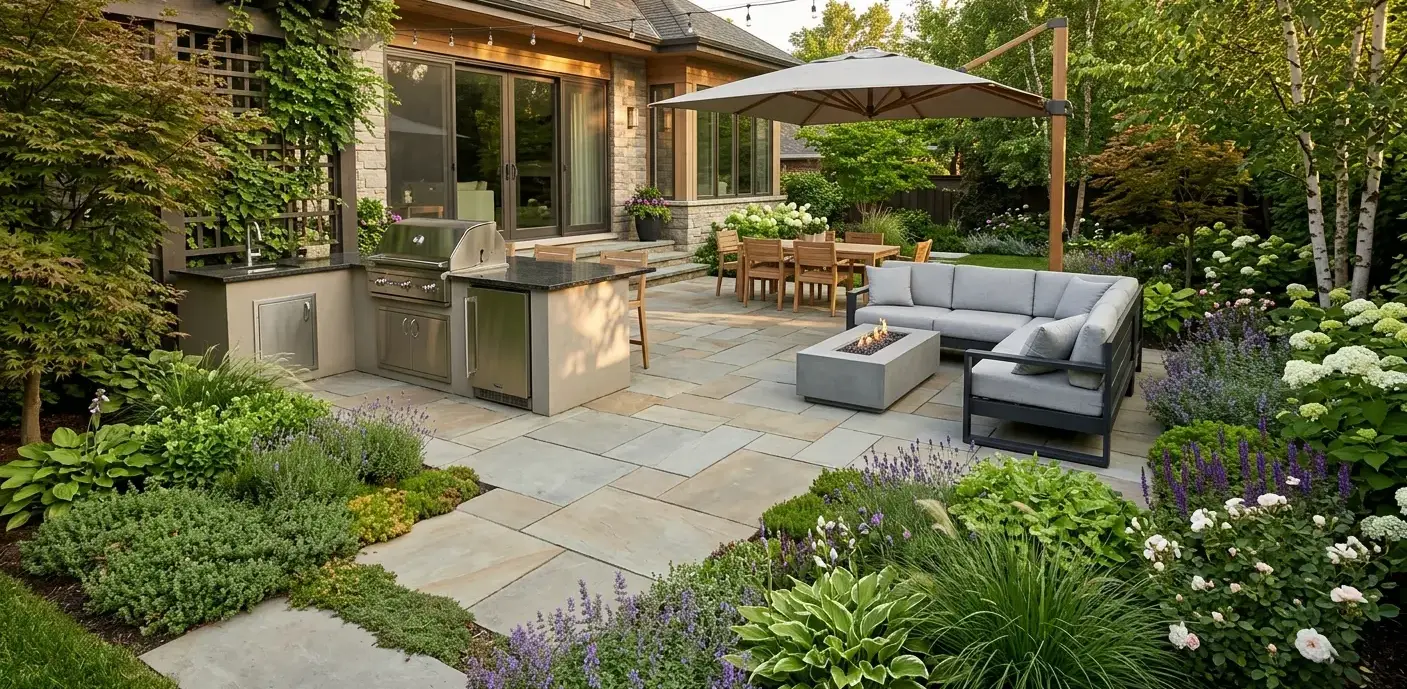
Hardscape vs. Softscape: How the Two Work Together
Most outdoor spaces work best with a mix of hardscape and softscape, because each does something the other can’t. Paving and walls provide structure, clear edges, and surfaces that hold up to foot traffic. Plantings soften those edges, add color and shade, and absorb rainwater.
A common design guideline is to plan the hardscape first and plant around it, since paths and patios set the boundaries that beds and lawn fill in. Working in that order also keeps new plants away from heavy equipment and construction traffic.
There’s no ideal ratio between the two. A small courtyard may be mostly paving with a few large planters, while a large lot might use one stone path to connect wide planted areas.
Where Hardscape Is Used
Hardscape shows up in nearly every part of an outdoor space, and each use places different demands on the surface:
- Patios: Ground-level surfaces for dining and seating, usually right off the house.
- Walkways and garden paths: Routes connecting entries, driveways, gardens, and other zones.
- Driveways and parking pads: Surfaces built to carry vehicle loads.
- Pool surrounds and coping: Areas that stay wet, where traction and surface temperature both matter.
- Steps and stair treads: Level changes that need secure footing and clearly visible edges.
- Retaining walls: Structures that hold back soil and can turn a slope into usable level terraces.
- Fire pits, outdoor kitchens, and seat walls: Built features that give a space a focal point.
At Nova Tile and Stone, we carry pavers and exterior stone for many of these areas, including granite, quartzite, travertine, and porcelain, all of which are rated for outdoor use on floors and walls. Granite and quartzite are also rated as UV resistant, a useful property for surfaces that sit in full sun. Quartzite and travertine are available in polished, honed, leathered, and specialty finishes, and porcelain in polished, honed, and specialty finishes, so the surface texture can be matched to where it’s going, such as a smoother finish for a covered patio or a textured one with a suitable slip-resistance classification for a pool surround or steps.
Around pools and sunny patios, color also affects comfort. Lighter-colored paving generally stays cooler in direct sun than darker paving, which makes it the better choice where people walk barefoot.
Paved areas also affect where rainwater goes. A solid surface sheds most of the rain that falls on it, while permeable pavements let rain and snowmelt soak through to the soil and gravel layers below, which can reduce runoff and help filter out some pollutants.
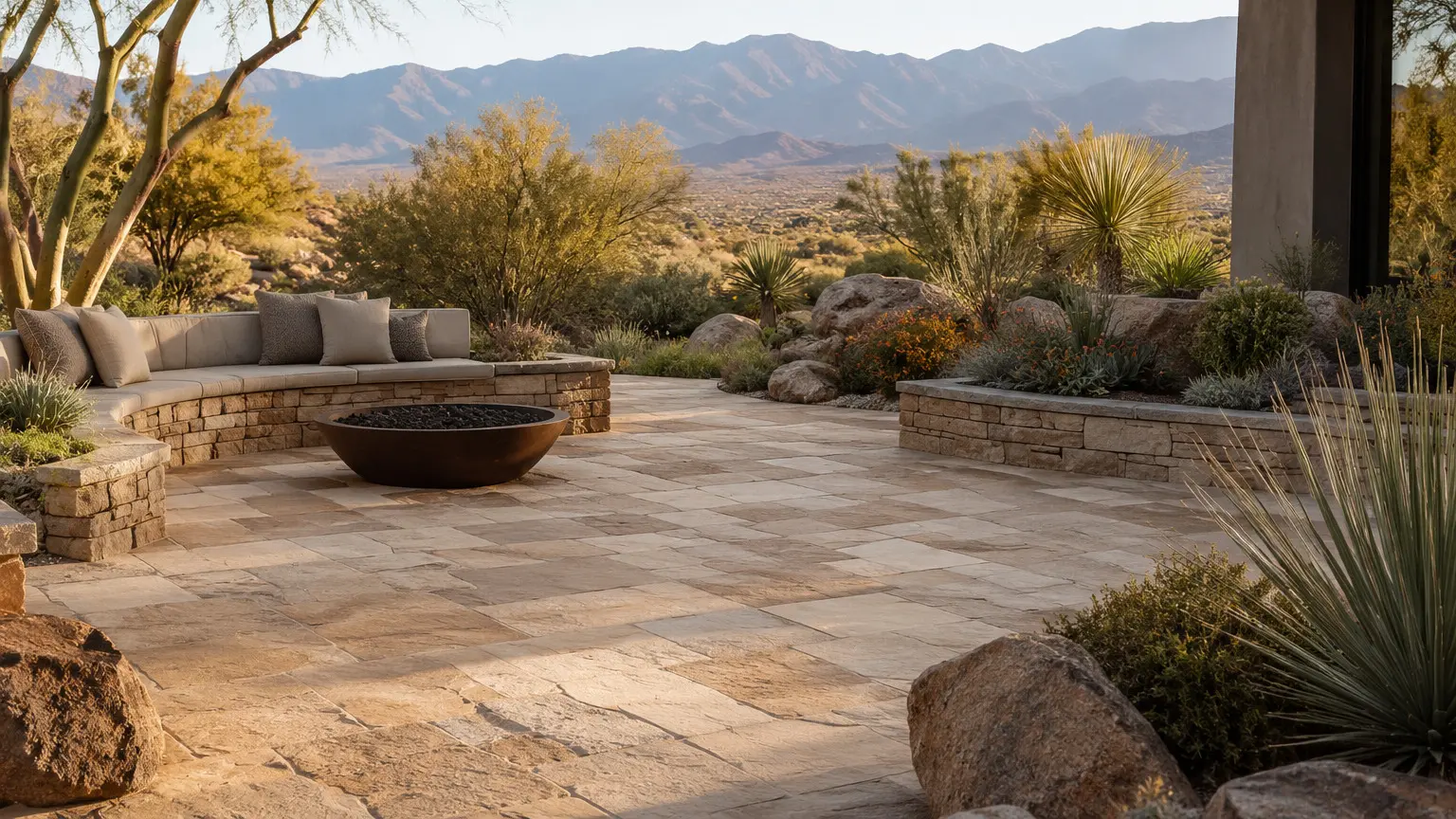
Common Hardscape Materials
With the uses in mind, the next step is deciding what each surface will be made of. The materials below differ most in how they handle water, freezing temperatures, and long-term wear.
Natural Stone
Natural stone offers variation in color, veining, and texture that no two pieces share. Granite, quartzite, travertine, bluestone, limestone, and sandstone all appear in patios, walkways, and pool surrounds, but they don’t all behave the same way outside.
Climate is the biggest factor. Water expands when it freezes, so if a porous stone has absorbed water and then freezes, that expansion can stress the stone from the inside. Over repeated freeze-thaw cycles, this can lead to cracking or surface damage. For this reason, absorption is one of the key properties reviewed when stone is selected for paving: higher absorption can signal more freeze-thaw distress. The same review notes that a stone suited to a vertical wall may not be appropriate for horizontal paving.
Because porosity varies by stone type and even by quarry, it’s worth asking for absorption data on any stone you’re considering for outdoor use. Appearance varies just as much. For outdoor kitchen counters, bar tops, seat wall caps, and wall cladding, natural stone is often chosen as full slabs, and color and veining can differ noticeably from one slab to the next, even within the same type of stone. Our slab selection at Nova Tile and Stone lets you compare natural stone slabs for these features, so you can weigh color, veining, and finish alongside outdoor suitability before making a choice.
Porcelain Pavers
Porcelain pavers are thick, dense units made specifically for outdoor surfaces such as patios, pool decks, and rooftop terraces. They come in looks that resemble natural stone, wood, and concrete, which makes it easier to coordinate an indoor floor with an adjoining patio. In areas with freezing winters, check that the product is rated as frost-resistant by its manufacturer.
What Does Gauged Porcelain Mean?
“Gauged” means the porcelain is manufactured to a specific thickness tied to how it will be used. According to the ANSI A137.3 standard, gauged porcelain pavers have a nominal thickness of 20mm (about 0.79 inch) or greater, roughly the thickness that suits outdoor paving. When comparing products, look for the term “gauged porcelain paver” or a 20mm thickness, since “gauged” on its own also covers thin porcelain tiles and panels.
Concrete Pavers and Poured Concrete
Concrete comes in two very different forms. A poured slab is a single rigid surface that can be stamped, stained, or brushed for texture. Concrete pavers are individual units laid in a pattern, with joints between them, and they’re available in a wide range of shapes, sizes, and colors.
Can Pavers Be Reused?
Often, yes. Because pavers aren’t bonded into one continuous slab, they can be lifted and set back in place after repairs underneath, or removed, cleaned, and used again in another part of the yard. Poured concrete, by contrast, usually has to be broken up and hauled away for recycling or disposal when it’s replaced. Reusability makes pavers a practical choice for spaces you may want to reconfigure or expand later.
Brick, Gravel, and Loose Aggregates
Clay brick has a warm, traditional look and works well for walkways and edging laid in patterns like herringbone or basketweave. Gravel, decomposed granite, and crushed stone are among the least expensive options for garden paths and side yards, and they let water pass through, though they can shift underfoot and usually need edging to stay in place.
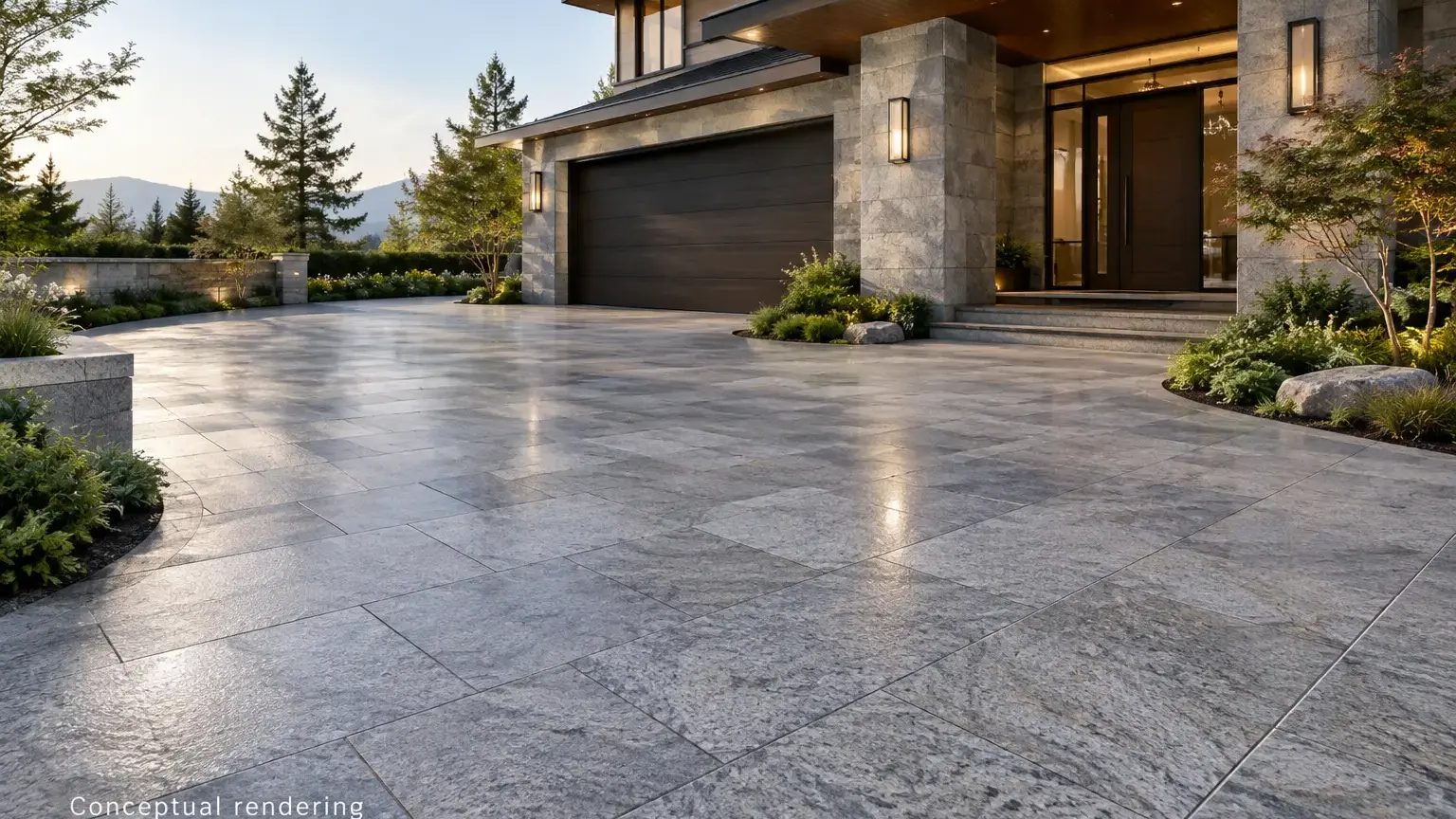
Planning Basics Before You Choose a Material
Picking a material is only part of the job. The steps below follow the order most projects move through, from the first sketch to the day digging starts. If you’d like help working through them, you can book a free design consultation at one of our showrooms to compare materials, colors, and finishes for your project.
Start With How the Space Will Be Used
Begin with function. A dining patio needs room for a table plus space to pull chairs back. A front walk should be wide enough for two people side by side. An area that will hold a grill or fire pit needs enough clearance around it to move safely. A rough sketch with measurements helps you size each area before comparing materials.
Plan for Drainage
Once the layout is set, decide where water will go. Surfaces next to a house should be pitched so water runs away from the foundation. Building-science guidance recommends sloping patios, walks, and driveways at least 1/4 inch per foot away from the house for the first 10 feet, which works out to roughly 2.5 inches of drop over that distance. Where a wall, property line, or existing grade makes that slope impossible, the same guidance suggests adding drains or swales to carry water away. Without proper pitch, standing water can also cause staining and slick spots on the surface itself.
Think About Traction
With the layout and drainage planned, the surface finish comes next. Polished finishes that work well indoors can be slick outside, while textured finishes such as leathered, flamed, or tumbled offer more grip. When comparing tile and pavers for pool decks, steps, and ramps, look for products the manufacturer has classified in the exterior wet category, which is one of the ANSI A326.3 product use categories.
Do Pavers Cost More Than Poured Concrete?
Upfront, often yes. Poured concrete usually has a lower initial cost, which is why it’s common for large, simple areas like driveways. The comparison changes once repairs are factored in. When a poured slab cracks or settles, the damaged section typically has to be cut out, hauled away, and repoured, the area can’t be used while the new concrete cures, and the patch rarely matches the original surface. With pavers, the affected units can be lifted and reset after the problem underneath is corrected, which usually leaves a repair that’s hard to spot.
The better value depends on how long you plan to keep the space, how much ground movement your site sees, and how much a visible patch would bother you.
Budget for the Whole Project
Beyond the surface material itself, excavation, edging, drainage features, setting materials, and labor all add to the total. It’s also common to order some extra material to cover cuts and to keep a few spare pieces for future repairs, since an exact color or batch match can be hard to find later.
Check What’s Underground Before Digging
The last step before work begins is having underground utilities marked. Almost every paving project involves digging, even if it’s only a few inches, and buried utility lines can sit close to the surface.
Conclusion
The material on top of a patio or path sets the look, but how well it performs comes down to decisions made before any work begins: matching the material to the climate and to how the space will be used, directing water away from the house, choosing a finish that stays safe when wet, and weighing upfront cost against long-term repairs. Working through those decisions in order, and confirming product ratings and utility locations before digging, makes it far easier to end up with an outdoor space that holds up and stays enjoyable for years.
At Nova Tile and Stone, we offer free design consultations covering colors, finishes, and outdoor ratings for our pavers and exterior stone, including granite, quartzite, travertine, and porcelain. Showrooms are located in Reno, Minden, Fernley, and Sacramento.
Frequently Asked Questions
Yes, though usually less than planted areas do. Paver surfaces need occasional cleaning, topping up of joint sand, and weed removal. Poured concrete can develop cracks and surface flaking over time, and freeze-thaw cycles can make both worse. Sealers can make stains easier to clean on many surfaces, but they typically need to be reapplied on a schedule that depends on the sealer and exposure.
Common options include pervious asphalt, pervious concrete, permeable interlocking pavers, and plastic grid pavers. Each allows rain and snowmelt to pass through the surface into the gravel and soil layers below instead of running off.
ANSI A326.3 is a standard for measuring the dynamic coefficient of friction (DCOF) of hard surface flooring, which indicates how slip-resistant a surface is. It also sorts products into five use categories: Interior Dry, Interior Wet, Interior Wet Plus, Exterior Wet, and Oils/Greases. Manufacturers declare which categories each product fits, so the classification is a useful reference when comparing outdoor surfaces.
No. Some stones that perform well on indoor floors and walls, including many marbles, are not typically recommended for exterior use. Stones intended for outdoor paving should have low absorption and a finish suited to wet conditions, so it’s best to confirm a stone’s outdoor rating before choosing it for a patio or pool surround.
It can be. Paved areas, walls, and gravel paths don’t need irrigation, so replacing part of a lawn with hardscape reduces the area that requires regular watering. Pairing hardscape with drought-tolerant plants and permeable surfaces can lower overall water use while still letting rainfall soak into the ground.
Note: Some images on this page may be conceptual renderings created to illustrate design possibilities and may not depict actual installations.