Hardscape comes first in most outdoor projects. Patios, walkways, retaining walls, and other hardscape features are built before plants, lawn, and mulch go in, because hardscape work involves digging, grading, and heavy equipment that can damage new plants. The best approach is to plan both together, then build the hardscape first.
A typical project follows this order: plan the whole yard, mark underground utilities, grade the site, lay irrigation sleeves, build the hardscape, finish irrigation, then plant and add lawn and mulch. The main exceptions are large trees that need machinery to place, projects built in phases, and slopes that need early erosion control.
In this context, hardscape means the non-living parts of a yard, such as stone, pavers, gravel, and walls. Landscape refers to softscape: the trees, shrubs, lawn, and other living plants that fill the spaces hardscape creates.
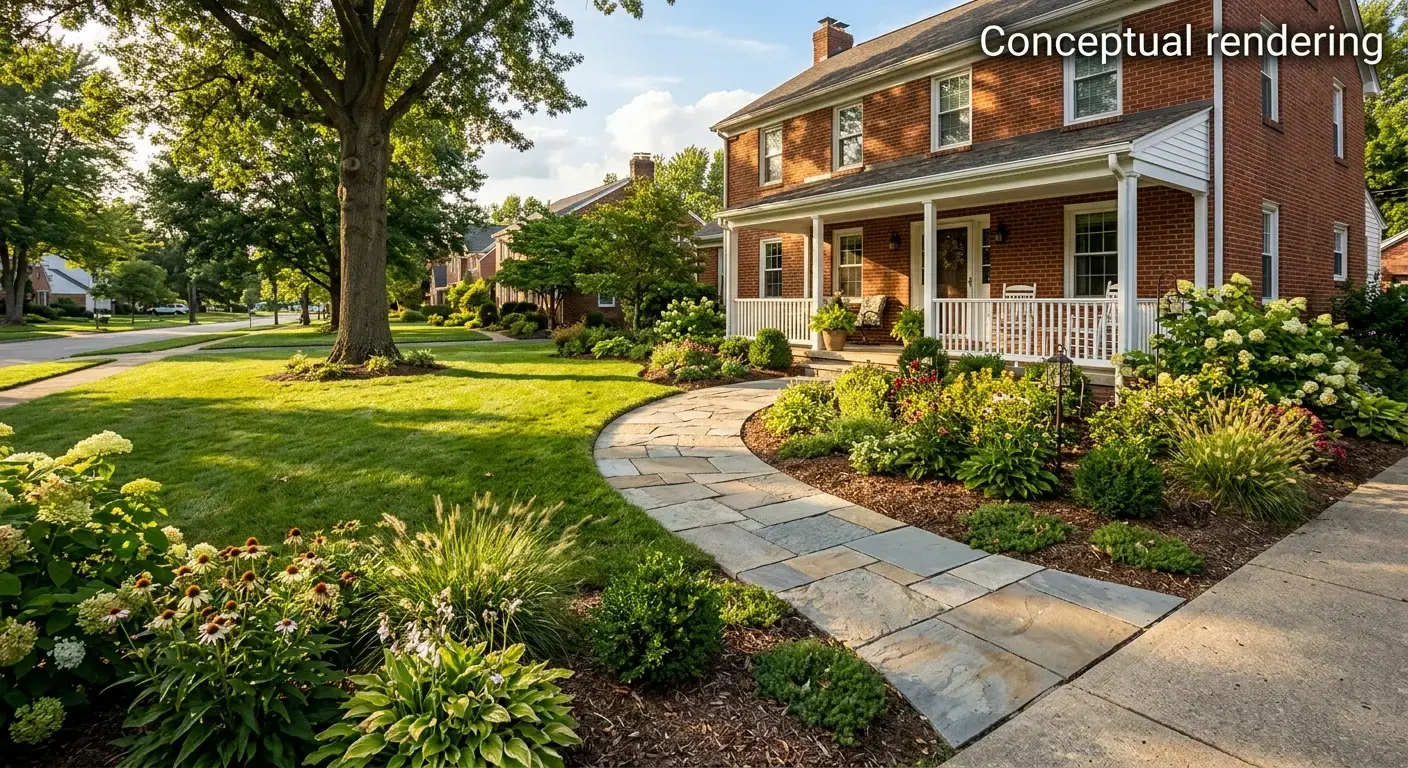
What Counts as Hardscape and What Counts as Landscape
Hardscape covers the surfaces and structures that shape how people move through a yard and where they spend time. Common hardscape features include:
- Patios and pool decks made from pavers, natural stone, or porcelain
- Walkways, garden paths, and stepping stones
- Driveways and parking pads
- Retaining walls, seat walls, and raised planter walls
- Steps, stairs, and terraces
- Fire pit surrounds, outdoor kitchen bases, and water feature basins
- Gravel areas, dry creek beds, and decorative rock
Strictly speaking, landscaping covers the whole yard, hardscape included, which is why softscape is the more precise term for the living side. Softscape includes trees, shrubs, perennials, ground covers, and lawn, along with the soil, mulch, and irrigation that support them.
The two depend on each other. Hardscape gives a yard its structure, while landscape softens edges, adds color, and provides shade. A patio with no plants around it can feel bare, and a garden with no paths can be hard to use. Thinking of them as two halves of one plan makes the question of order much easier to answer.
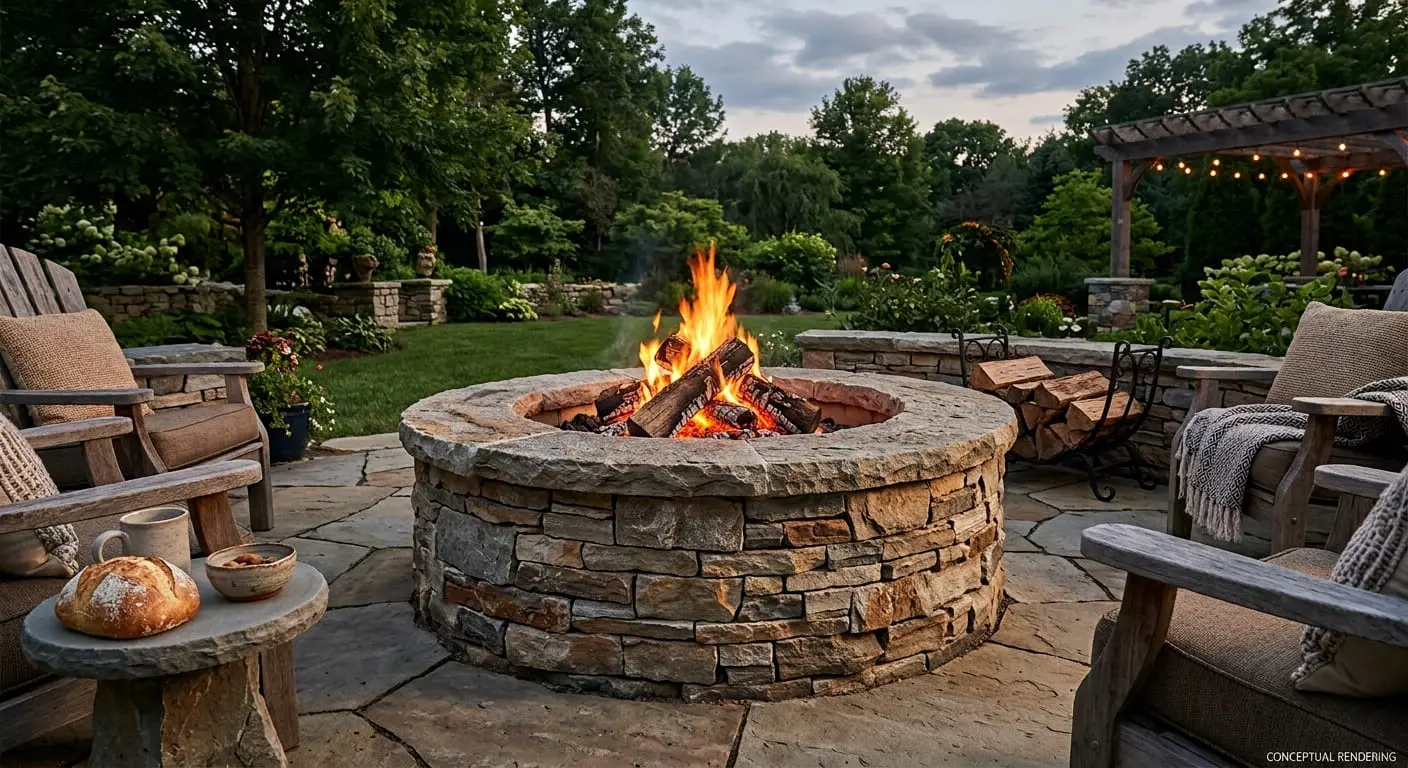
Why Hardscape Usually Comes First
Landscape guides commonly recommend finishing most hardscape before the irrigation system and plants go in. There are several practical reasons for this order.
Construction Is Hard on Soil and Plants
Building a patio or wall usually means digging, hauling base material, and moving heavy stone or pallets of pavers across the yard. Equipment like skid steers, plate compactors, and wheelbarrows can compact soil, snap young plants, and leave ruts in a new lawn. If the plants go in first, there is a good chance some of them will need to be replaced.
Grading and Drainage Set the Stage
Hardscape work often involves reshaping the ground. Patios and walkways need a slight slope so water runs off rather than pooling, and retaining walls change how water moves across a slope. Once the grade is set, it becomes clear where water will collect, which areas will stay dry, and which planting beds will need more or less irrigation. Planting before grading makes it harder to predict which beds will stay wet or dry.
Irrigation Lines Need to Be Planned Around Hard Surfaces
Drip lines and sprinkler pipes often need to pass under walkways or patios to reach planting beds on the other side. Installers typically lay sleeves, which are empty pipes placed under the hardscape, so irrigation lines and outdoor lighting wires can be added or changed later without lifting stone. Sleeves have to go in before the paving, so the layout of both the hardscape and the planting beds needs to be settled first.
Hard Surfaces Define the Planting Areas
A patio, path, or wall creates the edges of each planting bed. Once those lines are set, it is easier to measure beds, choose plant sizes, and figure out how much soil and mulch are needed. Planting first and then fitting stone around existing plants tends to produce awkward shapes and tight gaps.
Why You Should Still Plan Both at the Same Time
Building hardscape first does not mean designing it first and thinking about plants later. The layout of every patio and path should already account for the planting plan. Here is why.
Existing trees need protection. Mature trees are often among the most valuable features of a yard, and their roots commonly spread past the edge of the canopy. Digging for a patio base or footing can cut through roots and stress the tree. Marking a protection zone around important trees before any digging starts helps keep them healthy.
Sun and shade affect both stone and plants. A patio placed in full afternoon sun will feel very different from one tucked under a shade tree. The same sun exposure also decides which plants will thrive in the beds around it. Mapping sun and shade once helps guide both choices.
Mature plant size matters. A small shrub planted beside a narrow walkway can grow into it within a few years. Leaving enough room between hard surfaces and plantings avoids constant trimming and blocked paths.
Views and privacy work together. A seating area might face a garden bed, while a row of shrubs might screen it from a neighbor. Planning those relationships early means the patio and the plants support each other instead of competing for space.
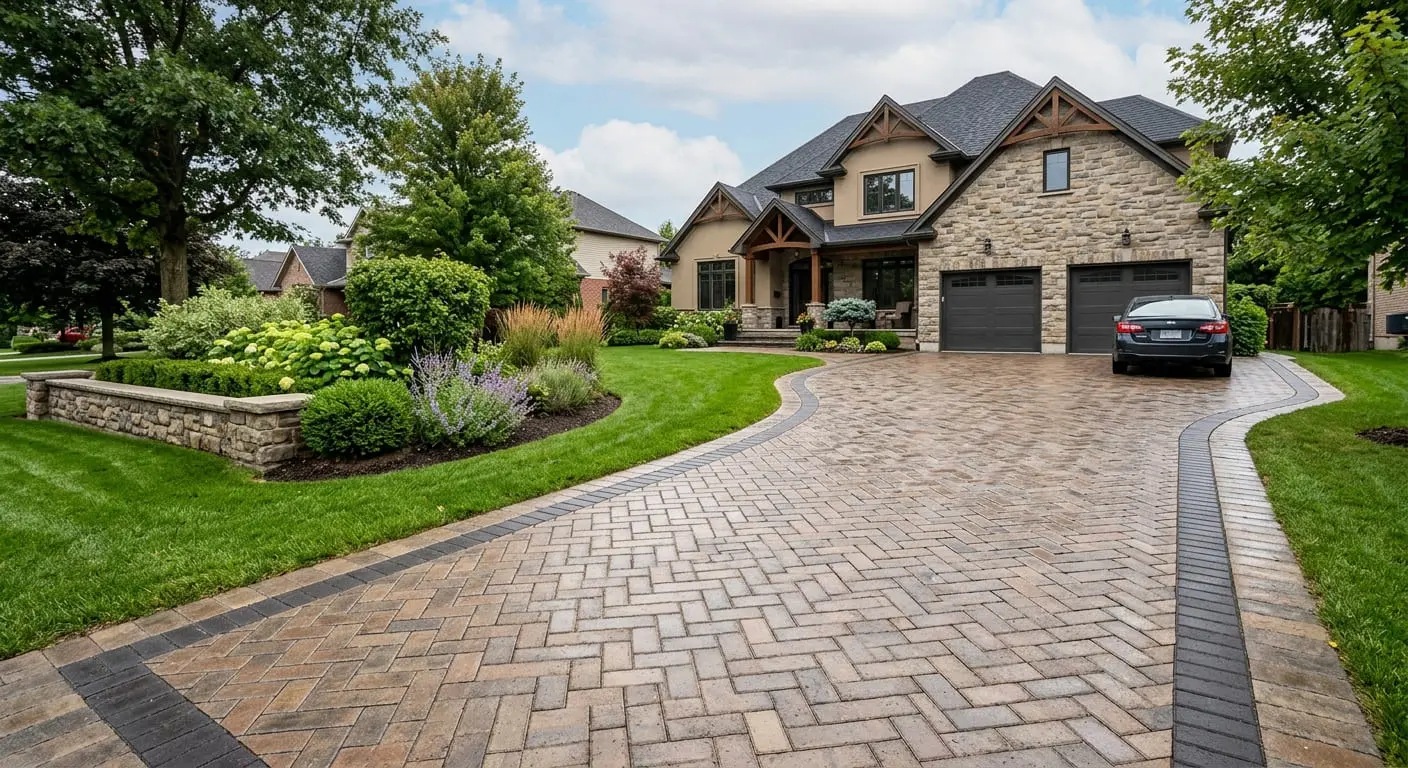
A Typical Order for an Outdoor Project
Every yard is different, but most projects follow a similar sequence from planning to planting.
- Plan the whole space. Decide how you want to use the yard, sketch the layout, and choose materials for both hard surfaces and plantings. This is the stage to visit a showroom, compare stone colors and textures, and bring photos or measurements of your space.
- Remove what is not staying. Clear old lawn, unwanted shrubs, broken concrete, and debris. Protect trees and plants you plan to keep.
- Handle utilities and drainage. Call 811 before any digging so underground utilities can be marked. Plan drainage and decide where irrigation and lighting lines will need to cross under future hard surfaces.
- Grade the site. Shape the ground so water flows away from the house and toward planned drainage areas.
- Build the hardscape. Sleeves for irrigation and lighting are laid before any paving goes down. Patios, walkways, walls, steps, and features like fire pits are then built, usually starting with the largest structures.
- Finish irrigation. Run drip lines and sprinklers to the beds and lawn areas defined by the hardscape, and connect the controller. Drip emitters are often placed or adjusted after planting so they sit right at each plant.
- Prepare soil and plant. Amend planting beds, then add trees first, followed by shrubs, perennials, and ground covers.
- Add lawn, mulch, and finishing touches. Lay sod or seed, spread mulch, and add light fixtures, furniture, and planters.
Following this order keeps heavy work away from new plants and lets each stage build on the one before it. Your contractor or landscape designer can adjust the details for your site. Contractors and designers sourcing materials for multiple outdoor projects can also apply for a trade account to get trade pricing and job-site delivery.
When Some Landscape Work Comes Earlier
Hardscape first is the general rule, but there are a few common exceptions.
Large trees. Big trees often arrive by truck and need machinery to set in place. If a large tree is going in near a future patio, it may make sense to plant it before the patio is built so equipment does not have to cross finished stone.
Phased projects. Many homeowners build their outdoor space over several seasons. You might plant a privacy hedge this year and add a patio next year. In that case, leave a clear access route for equipment and keep new plantings away from areas that will be dug later. Building in phases can also help spread out costs, and our overstock sale is worth browsing for discounted materials to use in smaller areas, such as a side path or seating nook.
Erosion control. On slopes or bare soil, erosion control may be needed before or during hardscape work. This often starts with temporary measures such as straw wattles or erosion control blankets, and some slopes are seeded or planted with ground covers early to help hold soil in place.
Seasonal timing. Some plants do best when planted in fall or spring. If your hardscape timeline runs into the ideal planting window, it may be worth planting part of the yard first, as long as those areas are protected from later construction.
Choosing Hardscape Materials with Your Plants in Mind
Because hardscape is chosen before planting, it helps to think about how each material will look and perform next to greenery.
Color. Warm stones like travertine, many sandstones, and tan or gold pavers pair well with Mediterranean and drought-tolerant plantings, such as lavender, rosemary, and ornamental grasses. Cool gray and blue-gray stone, such as bluestone and gray slate, sit comfortably beside lush green foliage and white or purple flowers. Neutral tones give you the most flexibility if you expect to change plantings over time.
Texture. Smooth, large-format pavers create a clean look that contrasts with loose, layered plantings. Tumbled pavers and irregular flagstone have a softer, more relaxed edge that blends easily into garden beds.
Joints and edges. Wide joints filled with gravel or ground covers let plants grow between stones and blur the line between hardscape and landscape. Narrow joints filled with polymeric sand create a crisper separation.
Heat and light. Light-colored stone reflects more sunlight, which can help keep surfaces cooler but may also bounce heat onto nearby plants. Darker stone absorbs more heat. In hot inland climates, consider how the material will affect both bare feet and the plants around it.
Water. Permeable pavers and gravel allow rainwater to soak into the ground, which can benefit nearby trees and beds. Solid surfaces send more water to their edges, so plan planting beds and drainage accordingly.
When you book a free design consultation, bringing a few photos of plants you like can make it easier to compare stone samples side by side and see how the colors work together.
Conclusion
In most cases, hardscape comes first and landscape follows. Building patios, walkways, and walls before planting protects new plants from heavy equipment, sets the grade and drainage, and defines the beds that plants will fill. The key is to plan both together from the beginning, so the stone you choose, the trees you keep, and the plants you add all work as one design. A few exceptions, such as large trees, phased projects, and erosion control, can shift the order, but the overall approach stays the same: plan the whole yard, build the hard surfaces, then plant.
If you are starting to plan an outdoor project, we would be glad to help you compare pavers, natural stone, and exterior materials in person. Our team offers design consultations at our showrooms in Sacramento, Reno, Minden, and Fernley, where you can see colors and textures side by side before you make a decision.
Note: Some images on this page may be conceptual renderings created to illustrate design possibilities and may not depict actual installations.
Frequently Asked Questions
In most cases, the patio should be built before planting. Patio construction involves digging, compacting base material, and moving heavy stone, which can damage nearby plants and soil. Finishing the patio first also defines the edges of the surrounding planting beds.
Yes, especially large trees that need machinery to place. Planting a big tree before nearby hardscape keeps equipment from crossing finished stone later. Just make sure the tree’s root zone is protected and that its mature size fits the hardscape layout.
Both. Sleeves and any main lines that run under patios or walkways should go in before the hardscape is built. The rest of the system, such as drip lines and sprinkler heads in the planting beds, is usually finished after the hardscape is complete.
Hardscape includes the non-living elements of a yard, such as patios, walkways, walls, steps, and gravel. Softscape, often called landscape, includes the living elements, such as trees, shrubs, flowers, lawn, and the soil and mulch around them.
Start with the colors and style of the plants you like, then look for stone tones that complement them. Warm stones suit Mediterranean and drought-tolerant gardens, while cool grays pair well with lush green plantings. Seeing samples side by side in a showroom makes the choice easier.