The latest paving trends center on large-format pavers with fewer joints, stone-look porcelain used alongside natural stone, and flooring that continues from indoors onto the patio. Textured finishes such as tumbled and flamed stone are replacing polished surfaces, and warm earth tones are replacing cool gray. Patterns like herringbone are returning, patios are being divided into distinct zones, and permeable surfaces that let rainwater drain into the ground are gaining attention.
Paving is the hard surface layer of an outdoor space, made from individual units of natural stone, porcelain, clay, or concrete that form patios, walkways, pool decks, and courtyards. When the units are laid on a sand or gravel base, a paved surface can flex slightly with ground movement rather than cracking like one poured slab. For natural stone, suitability for outdoor use is evaluated against standards such as ASTM C1528, the standard guide for selecting dimension stone.
Most of these changes trace back to one idea: the patio is now planned as part of the house rather than as an afterthought behind it. The sections below follow that idea from the size and material of each paver, to its surface and color, to how the space is laid out, and finally to how it handles water.
Larger Units, Fewer Joints
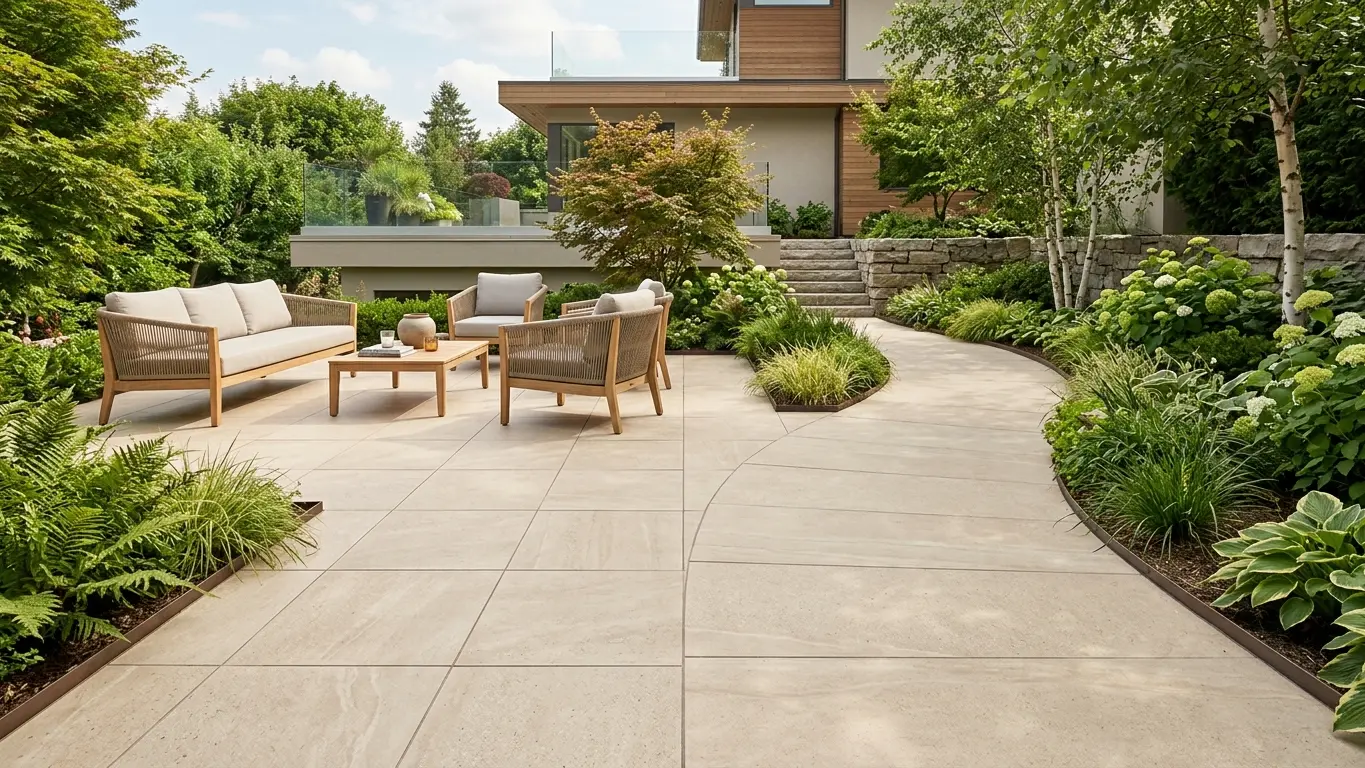
Paver sizes have grown noticeably. Units of 24" x 24" are now common on patios, and 24" x 48" planks are showing up on walkways. With fewer joints breaking up the surface, the space reads as calmer and more open, and there is less joint material to maintain.
Weight is one practical difference between materials at these sizes. Large-format porcelain is lighter than natural stone of a similar size, which is one reason it is often chosen for rooftops and balconies where load is a concern. By contrast, large natural stone pieces bring the variation and depth of real stone to an oversized format.
Porcelain and Natural Stone Used Together
That difference between porcelain and stone points to a broader shift. Rather than choosing one material over the other, many outdoor designs now use both.
Printing technology has advanced to the point where good stone-look porcelain can be hard to tell apart from real stone. Porcelain absorbs very little water, resists staining, and holds its color under UV exposure. That makes it practical for dining areas and other spots prone to spills.
Natural stone brings qualities porcelain does not replicate. No two pieces are identical, and stone can be fabricated into custom elements such as pool coping, stair treads, and wall caps.
Not all porcelain is suitable outside. Standard indoor porcelain tile is typically about 8 to 10 mm thick and is not intended for exterior paving. Outdoor porcelain pavers are usually made 20 mm (2 cm) thick, roughly double, with textured surfaces intended to improve grip. In 2022, the tile industry's ANSI A137.3 standard added a formal definition for gauged porcelain pavers manufactured at 20 mm or thicker. It is worth confirming that a product is specifically rated for exterior use.
Carrying Indoor Floors Outside
As indoor tile and outdoor pavers become harder to tell apart, another direction becomes easier to achieve: extending interior flooring outside. This takes the idea of the patio as part of the house quite literally. Using the same material or a close match on both sides of the door can make both spaces feel larger. Limestone, travertine, and stone-look porcelain are frequent choices.
The challenge is that a finish suited to a living room may not suit an exposed patio. Many porcelain ranges solve this by offering the same design in both an interior tile and an exterior paver, so the look stays continuous while the outdoor surface gets the thickness and grip it needs.
Texture Over Polish
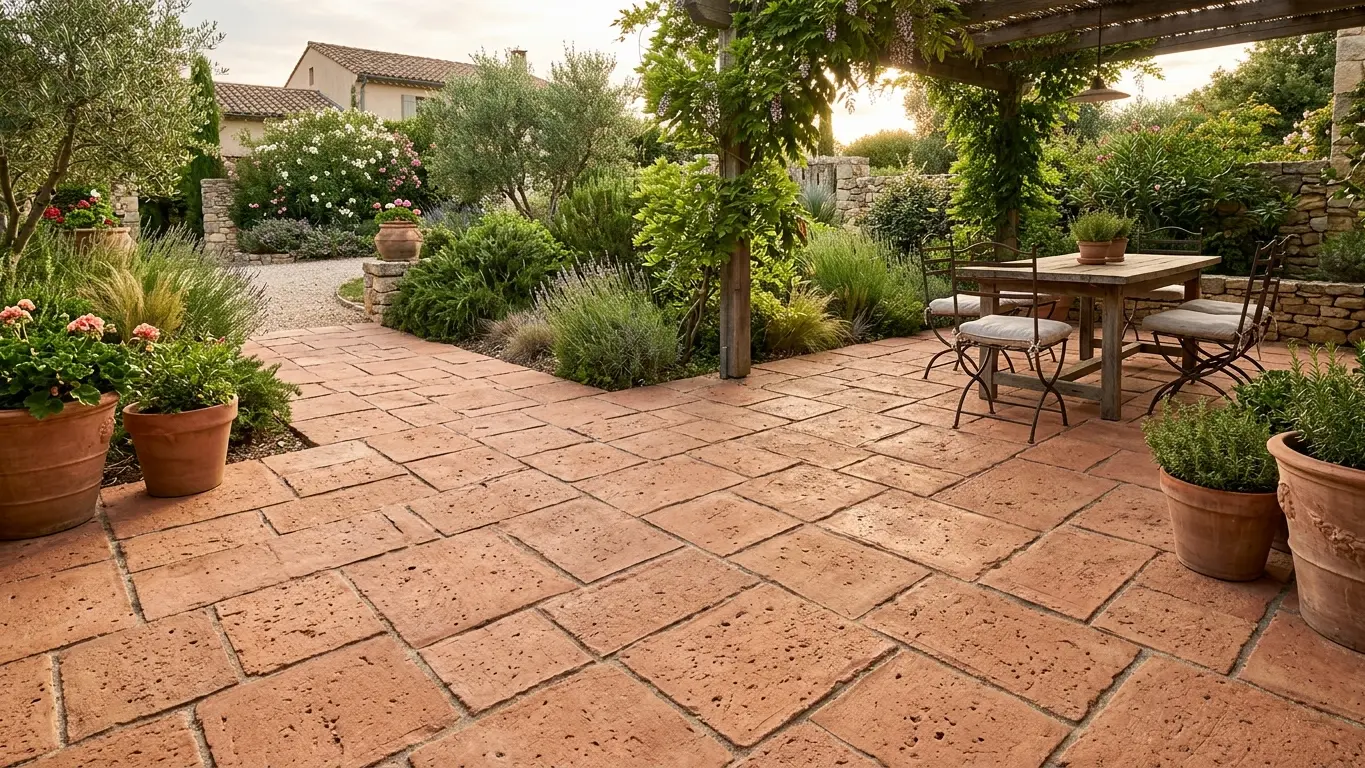
That need for grip ties into a wider move toward textured surfaces. Interior design has been moving away from glossy, uniform finishes for several years, and the same preference is now visible outdoors. Tumbled edges, sandblasted faces, and stone with a softly worn look are replacing smooth, sharp-edged pieces.
Designers and stone specialists interviewed this year describe rising interest in textured natural stone and clay pavers with aged finishes. They note that these more textured surfaces tend to age naturally and need less upkeep.
Texture also affects safety. Here is how common exterior finishes are produced and where they fit:
- Flamed (thermal). An intense flame is passed over the stone surface, causing surface crystals to fracture and leaving a rough texture. The process works well on granite because it contains minerals, such as quartz and feldspar, that expand at different rates when heated. Flamed stone is widely used for pool surrounds, steps, and walkways because of its grip when wet.
- Sandblasted. Abrasive particles are sprayed at the surface under pressure, creating a matte, textured face that adds traction.
- Tumbled. Stones are placed in a rotating drum with abrasives, which rounds the edges and gives the face a weathered, slightly pitted look. It is common on travertine and limestone.
- Honed. The surface is ground to a smooth, matte finish. Honed stone offers more traction than polished stone but less texture than flamed, sandblasted, or tumbled finishes. Slip performance varies by stone, so for wet areas it is worth checking the product's tested slip rating.
Polished finishes are generally avoided for exterior paving because they can become slippery when wet. Covered, drier areas such as a dining space under a pergola can often accommodate smoother surfaces than an open pool deck can. The right finish ultimately depends on how the space will be used, so comparing textures in person can help when narrowing down the options. Shop local with Nova Tile and Stone to see available materials and finishes, or apply for a trade account when sourcing stone for a professional project.
Warmer Colors
Alongside texture, color is changing too. Cool gray was a dominant hardscape color for many years. Palettes have since moved toward terracotta, caramel, sand, beige, ivory, and golden tan, colors that sit comfortably next to plantings, wood, and natural surroundings.
Travertine fits this direction naturally, since it occurs in shades such as ivory, beige, walnut, and gold. Many stone-look porcelain lines have also shifted toward warmer neutrals.
Color has a comfort dimension as well. Dark surfaces absorb most of the sunlight that hits them and warm up quickly, while light-colored surfaces reflect more sunlight and stay cooler. On a patio, that difference can be felt underfoot, which makes color a functional choice around pools and other barefoot areas, not only an aesthetic one.
Patterns Making a Return
Once material, finish, and color are chosen, layout determines how they come together. Several older patterns are coming back in updated forms.
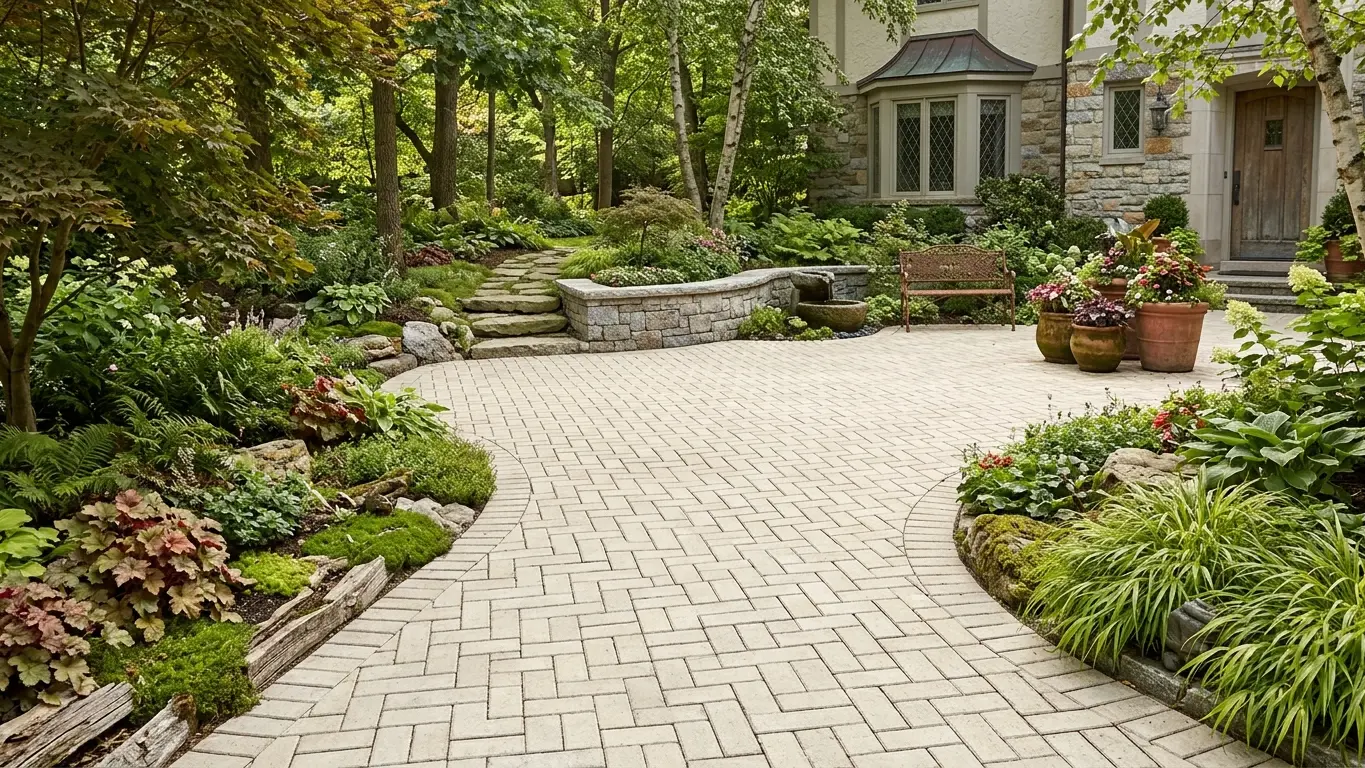
- Herringbone. Rectangular units are laid in a zigzag. Beyond its visual appeal, the pattern has a structural benefit. Technical guidance for interlocking concrete pavers notes that herringbone patterns offer greater resistance to lateral movement than other layouts, which is why they are recommended in areas with vehicle traffic, such as driveways.
- French pattern (random modular). Several sizes of squares and rectangles repeat in a set layout. It keeps large areas from looking monotonous.
- Crazy paving. Irregular pieces of flagstone, sandstone, travertine, or bluestone are fitted together like a mosaic. It suits relaxed, naturalistic gardens.
- Checkerboard. Two alternating colors are used, now often in warmer pairings, such as sage or burgundy with creamy white, rather than stark black and white.
At the same time, some designers are noticing renewed interest in small brick and clay pavers. This runs counter to the large-format direction, and the two reflect different goals. Big units suit clean, minimal spaces. Small units add texture and a traditional, handcrafted feel.
Dividing the Patio Into Zones
Patterns and materials can also be used to organize a space, much as rooms organize a house. Instead of paving one large rectangle, designers are breaking patios into smaller areas, each with a purpose: a dining spot, a seating area around a fire bowl, a quiet corner, a path through planting. Changing the material or pattern from one zone to the next signals the shift in use without walls or fences.
Mixing paving materials is a common way to define these smaller zones, for example a stain-resistant porcelain in a dining area and cobbled stone along garden borders.
The detail that makes this work is undertone. Mixing a warm, golden travertine with a cool blue-gray porcelain often looks accidental. Materials that share a color family can differ in texture and format while still looking like they belong together.
Paving That Lets Water Through
Beyond appearance and layout, homeowners are paying more attention to what happens when it rains. Conventional hard surfaces shed rain across the top and into gutters and storm drains. Permeable and pervious paving works differently. Water passes through joints or porous material into a stone layer below, where it is held temporarily before gradually soaking into the soil.
Permeable surfaces allow stormwater to soak into the soil and groundwater instead of running off. Pervious concrete, porous asphalt, permeable interlocking concrete pavers, and grid pavers are all used this way at federal facilities.
In home landscapes, this idea appears in a few forms:
- Wide joints. Pavers are spaced farther apart, with the gaps filled with gravel or low plantings.
- Spacer pavers. Many concrete pavers have small protrusions on their sides, called spacer bars or nibs, which hold neighboring units a set distance apart. On standard pavers these are only a millimeter or two. Permeable versions use larger spacers to create wider, free-draining joints.
- Self-binding gravel. Crushed stone mixed with fine particles compacts into a firm, walkable surface that still drains.
How well water drains depends on the ground underneath. Sandy and loamy soils absorb water relatively quickly, while dense clay soils absorb it slowly and are more prone to standing water. Over time, sediment and debris settling into joints can also reduce how quickly water passes through, so occasional cleaning is part of the upkeep.
What to Check Before Choosing a Material
Whichever of these directions appeals most, the material still needs to hold up to weather and use. These are the questions worth asking about any paving material.
How much water does it absorb? In climates with freezing winters, water inside porous stone expands as it freezes and can crack or flake the surface. Dense stones like granite absorb very little and generally handle freeze-thaw cycles well. More porous stones, including travertine and some limestones, can be more vulnerable in cold regions, so it is worth confirming that the specific stone is rated for exterior use where freezing is common. Absorption is measured by a standardized lab test, ASTM C97, one of several ASTM standards and test methods used to evaluate natural stone. Asking for that figure on the specific stone gives a better answer than relying on stone type alone.
Is it thick enough? Industry design guidance for exterior stone paving suggests a minimum of 1¼" for stone pavers under foot traffic. Driveways and other vehicle areas generally call for 3" or more, with the exact thickness determined by engineering analysis based on the stone’s strength, the size of each unit, and the expected load.
What upkeep is involved? Porcelain and dense stones typically need only routine cleaning. More porous stones such as limestone and sandstone often benefit from periodic sealing, and travertine's natural pores may occasionally need filling to keep the surface even. These details can narrow down the right material based on the conditions of the project rather than appearance alone. Reviewing Nova Tile and Stone's offerings can help compare available materials, and a slab quote request provides a practical next step when a specific stone has been selected.
Conclusion
Taken together, these shifts show outdoor paving being chosen with the same care as interior flooring. Material, finish, color, and layout are now selected for how they handle water, heat, and daily use, not only for how they look.
Not every trend suits every site, though. Permeable paving drains differently over clay than over sandy soil. A dark stone that looks striking in photos may feel too hot underfoot in full sun. A porous stone that does well in a mild climate may need more attention where winters freeze. Starting with the conditions of the space, including climate, soil, sun exposure, and how each area will be used, makes it easier to decide which directions are worth following.
At Nova Tile and Stone, we carry natural stone and porcelain suited to outdoor use and offer free design consultations for comparing colors, finishes, and formats in person. Our showrooms are in Reno, Minden, Fernley, and Sacramento.
Frequently Asked Questions
Several do. Textured finishes such as flamed, sandblasted, and tumbled surfaces add grip on wet ground, which is why they are common around pools and steps. Lighter colors reflect more sunlight, so they tend to stay more comfortable for bare feet on hot days.
Yes, but it is used differently. Rather than covering an entire patio in cool gray, designers are more likely to choose warm grays or use charcoal as a border or accent around lighter, warmer-toned pavers.
It can be. Self-binding gravel compacts into a firmer, tidier surface than loose gravel while still letting water drain through. Designers also note that it can cost less than paving, which has made it popular in naturalistic gardens.
In many cases, yes. Some porcelain collections offer a matching interior tile and exterior paver in the same design. This allows one continuous look through the doorway while the outdoor version is made for weather and traffic.
No. Large formats are also available in natural stone, including limestone and granite, as well as concrete. Porcelain is lighter, which suits rooftops and balconies, while large natural stone pieces bring the variation of real stone to an oversized format.
Note: Some images on this page may be conceptual renderings created to illustrate design possibilities and may not depict actual installations.