The different types of hardscape include patios, walkways, driveways, pool decks, retaining walls, steps, fire features, water features, and outdoor structures such as pergolas and fences. Hardscape refers to the permanent, non-living elements of a landscape, and these features are commonly built from concrete pavers, poured concrete, natural stone, porcelain pavers, brick, or gravel.
Each type of hardscape is defined by two things: the job it does and the material it is made from. The feature determines how an outdoor space is used, such as gathering on a patio, moving along a path, or holding back soil with a retaining wall. The material determines how that feature looks, how it handles weather and traffic, and how much care it needs over time.
What Counts as Hardscape?
Hardscape is not limited to paving. Walls, columns, built-in seating, and other vertical elements count as well. Hardscapes form the framework of a landscape, with plants, trees, and lawns designed around them, so they are usually planned before the softscape, and grading, drainage, and access routes all depend on where the hard surfaces go.
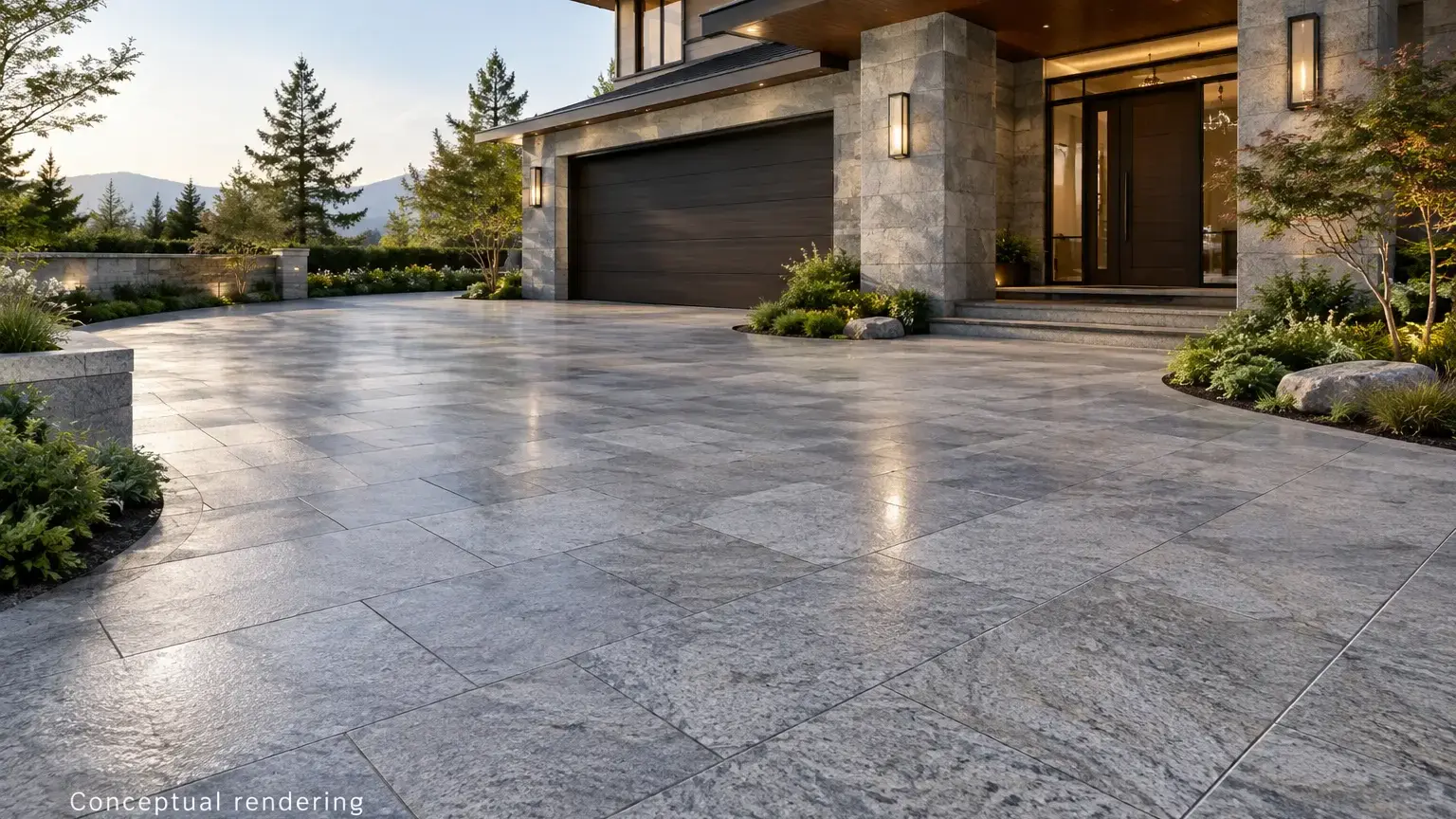
Types of Hardscape Features
The features below are grouped by function: ground-level surfaces first, then walls and changes in grade, then features built for gathering and atmosphere.
Patios
A patio is a paved outdoor floor for dining, seating, and entertaining, usually at ground level and connected to the house. Patios can be built from nearly any of the paving materials covered below, and larger patios are often divided into separate zones for cooking, dining, and lounging.
Walkways and Paths
Walkways guide people from one part of a property to another: from the driveway to the front door, from the patio to a garden, or around the side of the house. Formal walkways often use pavers or cut stone laid in a pattern, while informal garden paths may use stepping stones set in gravel or groundcover.
Driveways
Driveways are hardscape surfaces designed for vehicles, which means the surface and the base beneath it need to handle much heavier loads than a patio or path. Common driveway surfaces include poured concrete, asphalt, interlocking pavers, and gravel.
Pool Decks and Coping
The paved area around a swimming pool is its deck, and the cap along the pool's edge is called coping. Both are exposed to splashing water, bare feet, sun, and pool chemicals, so material selection here tends to focus on surface texture, heat, and moisture resistance. Natural stone and porcelain pavers are both used for pool surrounds.
Nova Tile and Stone carries pavers and other outdoor-rated surfaces, including granite, quartzite, travertine, and porcelain, so you can compare textures and finishes for a pool deck side by side.
Retaining Walls and Seat Walls
Retaining walls hold back soil on a slope and create level areas that can be used for planting, seating, or play. Seat walls are shorter, freestanding walls that double as built-in seating around a patio or fire pit. Walls can be built from natural stone, concrete block, or timber. Segmental retaining wall systems use modular concrete units that can be arranged in a wide range of layouts, from small backyard garden walls to much taller structures. Taller retaining walls must manage soil pressure and drainage behind the wall, so they are typically designed by a qualified professional.
Steps and Stairs
Outdoor steps connect changes in elevation, such as a raised patio to a lawn or a sloped front yard to the entry. Because steps are walked on in all weather, the surface texture of the tread matters as much as its look. Matching steps to the surrounding patio or walkway material helps the design read as one continuous space.
Fire Features and Outdoor Kitchens
Fire pits, outdoor fireplaces, and built-in grills create a focal point for gathering and extend the hours an outdoor space can be used. These features are usually built from stone, brick, concrete block, or metal and topped with a heat-tolerant cap or countertop. Outdoor kitchens add counters, storage, and cooking appliances to a patio.
Water Features
Fountains, ponds, waterfalls, and runnels add sound and movement to a landscape. They are considered hardscape because their basins, edges, and surrounding stonework are permanent built elements. Many are built into slopes or retaining walls, or placed near seating areas so the sound carries where people gather.
Pergolas, Arbors, and Fences
Pergolas, arbors, gazebos, and fences also fall under hardscape. They provide shade, privacy, or a frame for climbing plants and help define outdoor "rooms." Most are built from wood, metal, or vinyl.
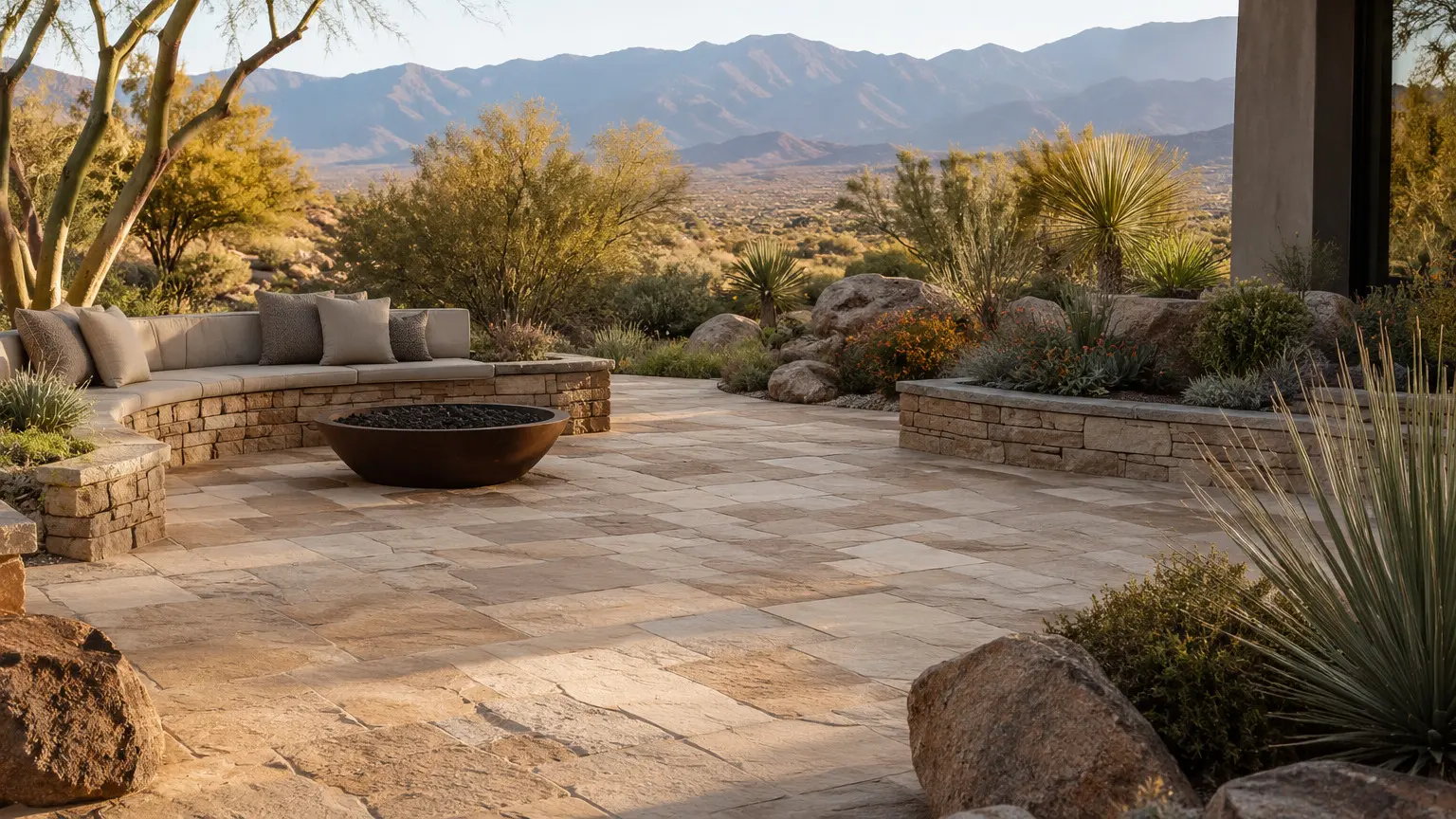
Common Hardscape Materials
Once the features are mapped out, the next decision is what to build them from. Each of these common paving and wall materials responds differently to traffic, weather, and moisture, and comparing them side by side at one of our local showrooms can make those differences easier to judge.
Concrete Pavers
Concrete pavers are manufactured units made in a wide range of shapes, sizes, colors, and textures. They are laid individually over a compacted base, which allows the surface to flex slightly with ground movement and lets damaged or settled units be lifted and reset. Interlocking concrete pavements are used in applications ranging from patios to driveways, and permeable versions let rainwater soak through the aggregate between and beneath the pavers into the soil rather than running off the surface.
Poured Concrete
Poured concrete forms a continuous slab and is commonly used for driveways, patios, and walkways with simple layouts. It can be colored, stamped, or textured to imitate other materials. Because it is one solid piece, repairs to cracked sections usually involve cutting out and replacing part of the slab.
Natural Stone
Natural stone pavers and slabs offer color variation and texture, and no two pieces are exactly alike. Granite, quartzite, and travertine are all used outdoors, along with flagstone for more informal paths and patios. Each stone has its own density and porosity, which affect how it performs. In climates with freezing winters, porous stone can absorb water that later freezes and expands, and paving is more exposed to this freeze-thaw cycle than vertical stonework because water sits longer on a horizontal surface. Denser stones are generally preferred for high-traffic paving and cold-weather sites, and test data for the specific stone, such as absorption and freeze-thaw results, is a better guide than the stone type alone.
Travertine is naturally more absorptive than granite, and industry guidance advises against using it for exterior paving where de-icing salts are applied. Color also matters in sunny climates, since darker stones absorb more heat and can get hot underfoot. Finish affects both appearance and traction, so confirm that a specific finish is suited to outdoor paving before choosing it. If a particular granite, quartzite, or travertine slab fits your project, you can request a slab quote to check pricing and availability.
Porcelain Pavers
Porcelain pavers are a type of ceramic tile made thicker than indoor tile for outdoor paving. Porcelain is defined by low water absorption: under the ANSI A137.1 standard, a tile is classified as porcelain only if its water absorption is 0.5% or less. That low porosity is a large part of why porcelain is considered for patios, pool decks, and walkways. Porcelain pavers are available in looks that imitate stone, wood, and concrete, and manufacturers publish technical data sheets that list ratings for frost resistance, breaking strength, and slip resistance for each collection.
Brick
Clay brick has been used for walkways, patios, and garden walls for centuries. It offers warm color and works well in traditional patterns such as herringbone and basketweave. Brick for paving is not interchangeable with wall brick: clay paving brick is made to separate paving standards, and the standard for pedestrian and light-traffic paving brick sets classes based on freeze-thaw exposure and abrasion resistance, so look for units sold specifically as paving brick.
Gravel and Decomposed Granite
Loose materials such as pea gravel, crushed stone, and decomposed granite are among the more affordable hardscape surfaces. They are used for informal paths, side yards, seating areas, and fire pit surrounds. Water drains through them easily, but the loose pieces can migrate onto lawns or into beds, so they usually need edging and periodic raking or topping up.
Exterior Stone for Walls and Vertical Surfaces
Natural stone is also used on vertical hardscape: retaining wall faces, seat walls, columns, outdoor fireplaces, kitchen islands, and planters. Thin stone veneer and ledger stone panels give these structures a stone finish without building them entirely from solid stone.
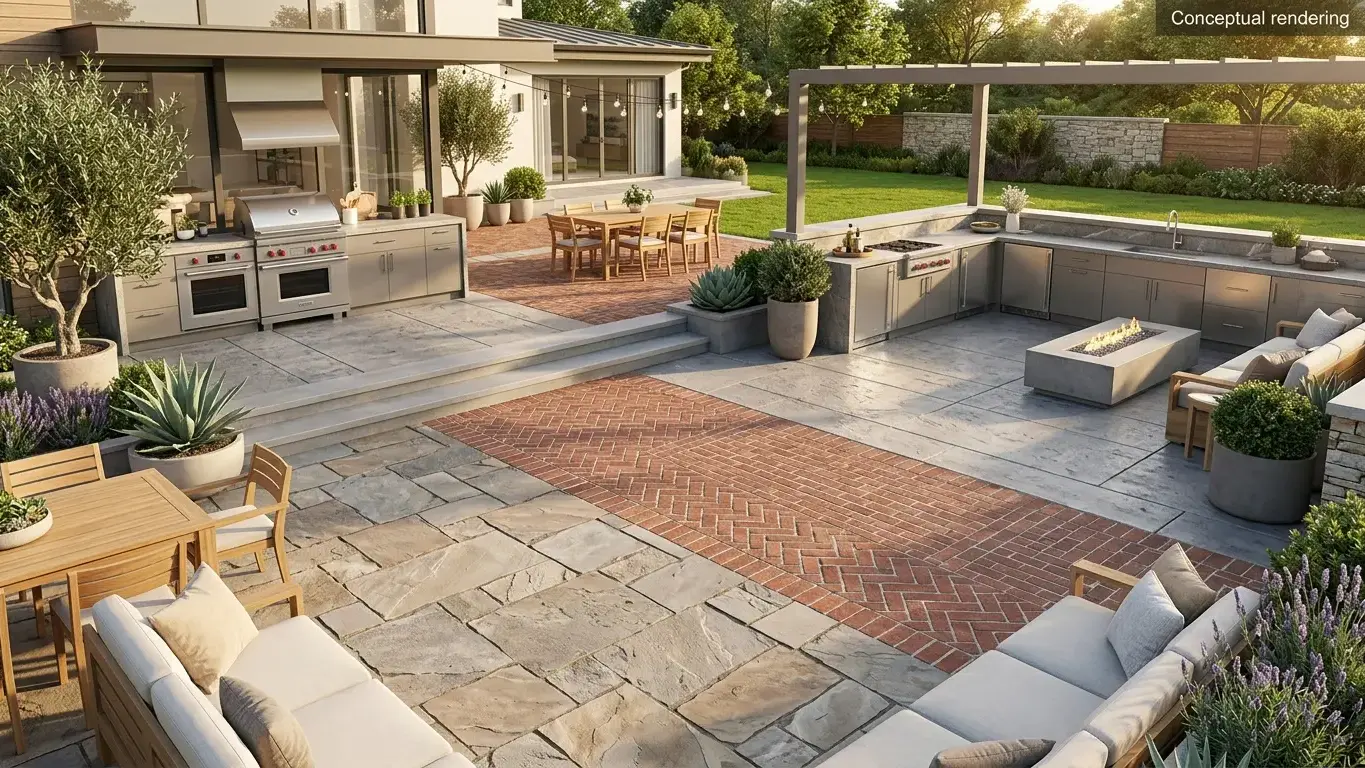
How to Choose the Right Hardscape Material
With the main materials in view, the right choice for each feature comes down to a few practical questions.
What will the surface carry? Areas that see vehicles narrow the choice to products rated for that load, such as paving brick made for light vehicular traffic, while areas used only on foot leave far more options open.
What is the climate like? Freezing winters, intense summer sun, and heavy rain all affect material performance. Low-absorption materials tend to handle freeze-thaw cycles more reliably, and porcelain is often recommended for exterior use because many higher-absorption ceramic tiles cannot pass freeze-thaw testing.
Will the surface be wet? Pool decks, walkways, and other areas exposed to rain or splashing water need adequate traction. The ANSI A326.3 standard sorts hard surface flooring into product use classifications based on slip resistance, including an Exterior, Wet (EW) category. Not every product lists a classification, so confirm the classification before choosing a material for a wet area.
How will water drain? Every hard surface changes how rainwater moves across a property. Slope and base preparation determine where water goes, and in areas where runoff is a concern, permeable surfaces are worth weighing against solid ones.
How much upkeep is acceptable? Every material needs some care, but the type of care differs. Loose materials need regular grooming, sand-set pavers depend on their joints staying full, and some natural stones benefit from periodic sealing based on the manufacturer's or fabricator's guidance.
Does it fit the house? Hardscape lasts for years, so materials should complement the home's exterior colors, roofline, and style.
Plan Your Hardscape
Hardscape planning works best as a sequence. Start by deciding what each area of the yard needs to do, choose the feature that serves that purpose, and then narrow the material by traffic, climate, moisture, and the upkeep you are willing to take on. Before committing, confirm the specifications for the exact product you plan to use.
If you are planning a new outdoor space, Nova Tile and Stone carries pavers and exterior stone, along with outdoor-rated granite, quartzite, travertine, and porcelain. Book a free design consultation or visit one of our showrooms in Reno, Minden, Fernley, or Sacramento to compare materials in person.
Frequently Asked Questions
Softscape is the living part of a landscape, including lawns, trees, shrubs, and flowers. It adds color, texture, and shade, while hardscape provides the built structure. A balanced design combines the two so that paved areas do not overwhelm the planted ones.
Yes. A deck is a built, non-living structure, so it is generally grouped with patios as hardscape, even though decks are usually made of wood rather than stone, brick, or concrete.
The sand swept into the joints between interlocking pavers, together with the edge restraints around the perimeter, keeps the units locked together so they do not shift on their own. Joint sand can wash out over time or be lost during cleaning, and empty joints tend to fill with dirt and weeds, so they should be checked and topped up when they run low. Stabilized or polymeric joint sand is designed to reduce that loss.
Porcelain pavers generally do not need sealing, because their low water absorption leaves little room for moisture and stains to penetrate. They still need routine sweeping and washing, and the joints between them should be kept clean and in good condition.
Decomposed granite is granite that has weathered and broken down into fine particles and small pieces. It compacts into a firm surface for paths and patios, and stabilized decomposed granite includes a binder that helps the material hold together after it is moistened and compacted.
Note: Some images on this page may be conceptual renderings created to illustrate design possibilities and may not depict actual installations.