The benefits of hardscaping include lower outdoor water use, less yard maintenance, better drainage and erosion control, more usable outdoor living space, and stronger curb appeal and resale value. Hardscaping is the built, non-living part of a landscape, such as patios, walkways, retaining walls, and terraces made from stone, porcelain, brick, or concrete.
Replacing lawn with built surfaces lowers water use because a patio or stone walkway needs no irrigation. Federal water-efficiency data show that outdoor use accounts for about 30 percent of average household water use. A paver patio can also add resale value. In the most recent national remodeling report on outdoor features, real estate agents estimated that a backyard paver patio recovers about 95 percent of its cost at sale.
Lower Outdoor Water Use
The 30 percent figure is a national average. Outdoor water use rises considerably in hotter, drier parts of the country, and most of it goes to irrigating lawns and gardens.
Converting even part of a lawn to built surfaces can make a noticeable difference. The best places to start are spots where grass struggles anyway, such as narrow side yards, shady corners, and strips where sprinklers overspray onto pavement.
Less Routine Yard Work
Replacing lawn also cuts down on routine upkeep. During the growing season, a lawn needs regular mowing, edging, fertilizing, and weeding. Patios and walkways need periodic sweeping, an occasional rinse, and joints kept clear.
That does not mean built surfaces are maintenance-free. Some natural stones benefit from sealing, depending on the stone type, finish, and manufacturer guidance. Gaps between pavers can also collect debris or sprout weeds over time. The difference is frequency: lawn care is weekly in season, while patio care is closer to a few tasks a year.
Better Drainage and Stormwater Control
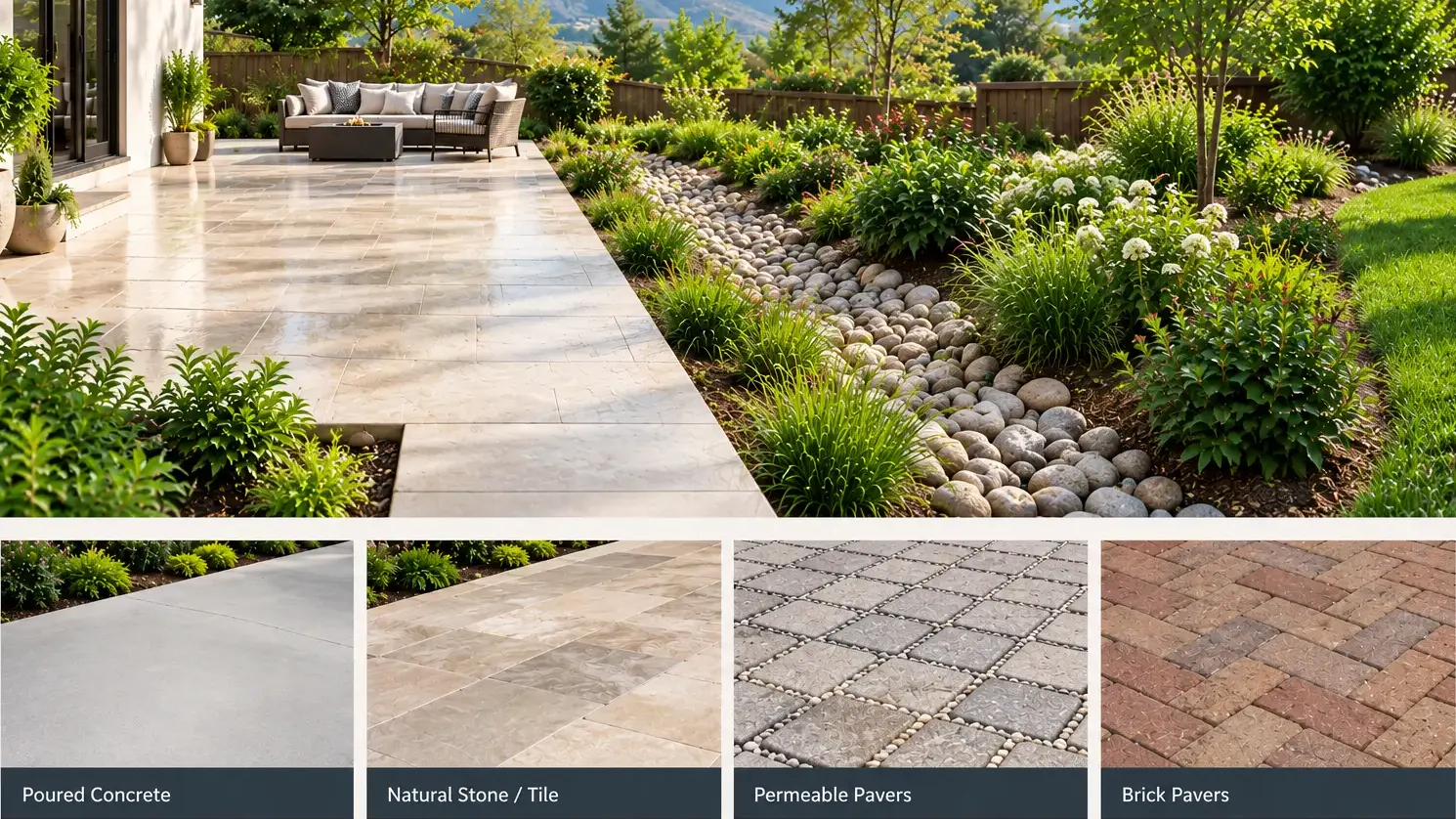
Built surfaces can also be designed to send water where you want it. Grading a patio so it slopes slightly away from the house helps keep water away from the foundation. Dry creek beds and gravel swales can carry heavy rain to areas where it has time to soak in.
Solid paving such as poured concrete sheds water quickly. In contrast, permeable surfaces let stormwater soak through into the soil below. This can reduce runoff and, depending on the soil, help recharge groundwater.
In a permeable paver system, the pavers themselves are solid. Water passes through gaps between them that are filled with small, clean crushed stone, then drains into a layer of open-graded gravel underneath. These systems need upkeep, though. Joints can clog over time and may need vacuuming to restore drainage. Permeable designs also work best on gentle slopes with suitable soil.
Because the surface you choose affects how a patio or walkway handles water, it helps to compare paving materials side by side before planning a project. You can find a nearby showroom and book a free design consultation to see outdoor tile and stone options in person.
Erosion Control on Sloped Yards
On sloped yards, controlling water becomes a matter of holding the soil in place. Grass on a steep grade is difficult and risky to mow, and bare or thinly planted slopes are prone to washing out during storms.
How much structure a slope needs depends on how steep it is. Gentle slopes can often be held with deep-rooted plants and mulch. Steeper grades, especially those over 50 percent, meaning one foot of rise for every two feet of horizontal distance, are good candidates for terracing or retaining walls.
Terracing works by breaking a long slope into shorter, more level steps. Each step slows runoff so rain has time to soak in rather than carry soil downhill. Each terrace also becomes a level area you can plant, sit on, or walk across.
The same guidance makes two more points. First, stone and masonry walls generally cost more than wood but tend to last considerably longer. Second, homeowners building their own walls should keep them to a foot or two in height. Taller walls must resist significant pressure from soil and water, so they call for professional design and proper drainage.
More Usable Outdoor Living Space
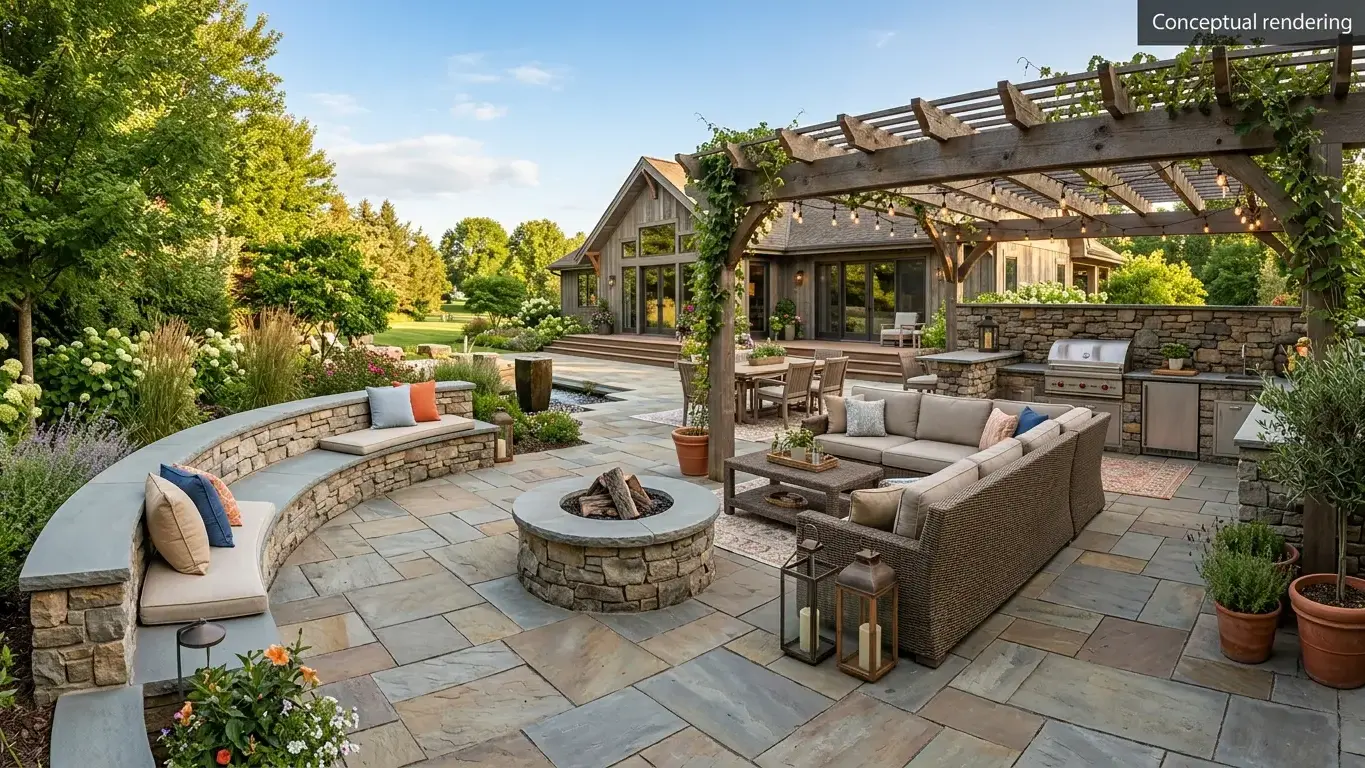
Level ground, whether created by terracing or by a new patio, changes how often people actually go outside. A dry, even surface lets you set up a table, grill, heater, or lounge chairs without legs sinking into soil or wobbling on uneven grass.
Built surfaces also extend the seasons when a yard is usable. A lawn turns muddy after rain and can stay soggy for days, while a well-built patio or walkway dries faster. Defined, level paths also make a yard easier to get around for anyone with limited mobility.
Homeowners tend to rate these projects highly. The 2023 report behind the patio figure in the introduction also measured homeowner satisfaction with completed outdoor projects. A new patio earned a score of 9.9 out of 10, and 68 percent of owners said they had a greater desire to be in their homes after remodeling.
Spaces tend to get more use when the main patio sits close to the kitchen door and is sized for the furniture you actually plan to use. For homeowners planning a patio, walkway, or other outdoor gathering area, Nova Tile and Stone carries pavers and exterior stone suited to these spaces.
Curb Appeal and Resale Value
The same projects that make a yard more livable also shape how a home looks from the street. Front walkways, entry steps, driveway borders, and stone planters shape a buyer's first impression.
The report's outdoor project cost recovery estimates went beyond the patio figure. An overall landscape upgrade that included a natural flagstone front walkway was estimated to recover its full cost. Actual returns vary with the local market, design quality, materials, and the condition of the rest of the home. These figures are a general signal rather than a guarantee.
Trade-Offs Worth Planning For
These benefits come with a few trade-offs, and they are easier to manage when you plan for them early.
Heat. Hard surfaces absorb and release heat. Rock surfaces in sunny areas can radiate heat and increase water loss from nearby plants. Shade trees, pergolas, and lighter-colored materials can help keep outdoor spaces more comfortable.
Upfront cost. Built surfaces generally cost more to install than seed or sod. Many homeowners phase the work, starting with a main patio or walkway and adding walls or features later.
Choosing Materials for Outdoor Use
How well these benefits hold up over time depends largely on the material. Two properties matter most outdoors: how much water a surface absorbs and how much grip it offers when wet.
Water Absorption and Freeze-Thaw Resistance
Generally, the lower a stone's water absorption rate, the greater its frost resistance, stain resistance, and breaking strength. This matters because water that soaks into stone expands when it freezes. In climates with repeated freeze-thaw cycles, a more absorbent material faces more stress over time.
Stones can differ widely on this measure. Typical absorption runs about 0.05 to 0.4 percent for granite, compared with roughly 0.5 to 2.5 percent for filled travertine, and higher for unfilled travertine. Higher absorption means a greater risk of staining and a more regular sealing schedule. For more absorbent stones, check freeze-thaw test data before using them outdoors in cold climates.
Slip Resistance and Finish
For tile and other hard surface flooring, slip resistance is measured as dynamic coefficient of friction (DCOF). DCOF is a lab measurement of how much grip a surface offers when a foot is already moving across it. According to the ANSI A326.3 standard, manufacturers classify hard surface flooring into product use categories for slip resistance, including one for exterior wet areas. Before choosing porcelain for a patio, pool surround, or outdoor stair, check whether the product is classified for exterior wet use.
Finish matters for natural stone, too. In laboratory testing of outdoor granite pavers, flamed finishes delivered the best slip resistance, and hammered finishes also performed well. Not every stone can take every finish, so the options depend on the material.
No hard surface is slip-proof. Drainage, slope, and regular cleaning still matter.
Common Outdoor Options
With absorption and slip resistance in mind, here is how common outdoor materials compare:
- Granite is dense and low in absorption, which makes it a common choice for patios, steps, wall caps, and paving.
- Quartzite forms when sandstone is transformed by heat and pressure, and it can be of exceptional strength, density, and hardness. Because its properties vary from one quarry to the next, check the test data for the specific stone.
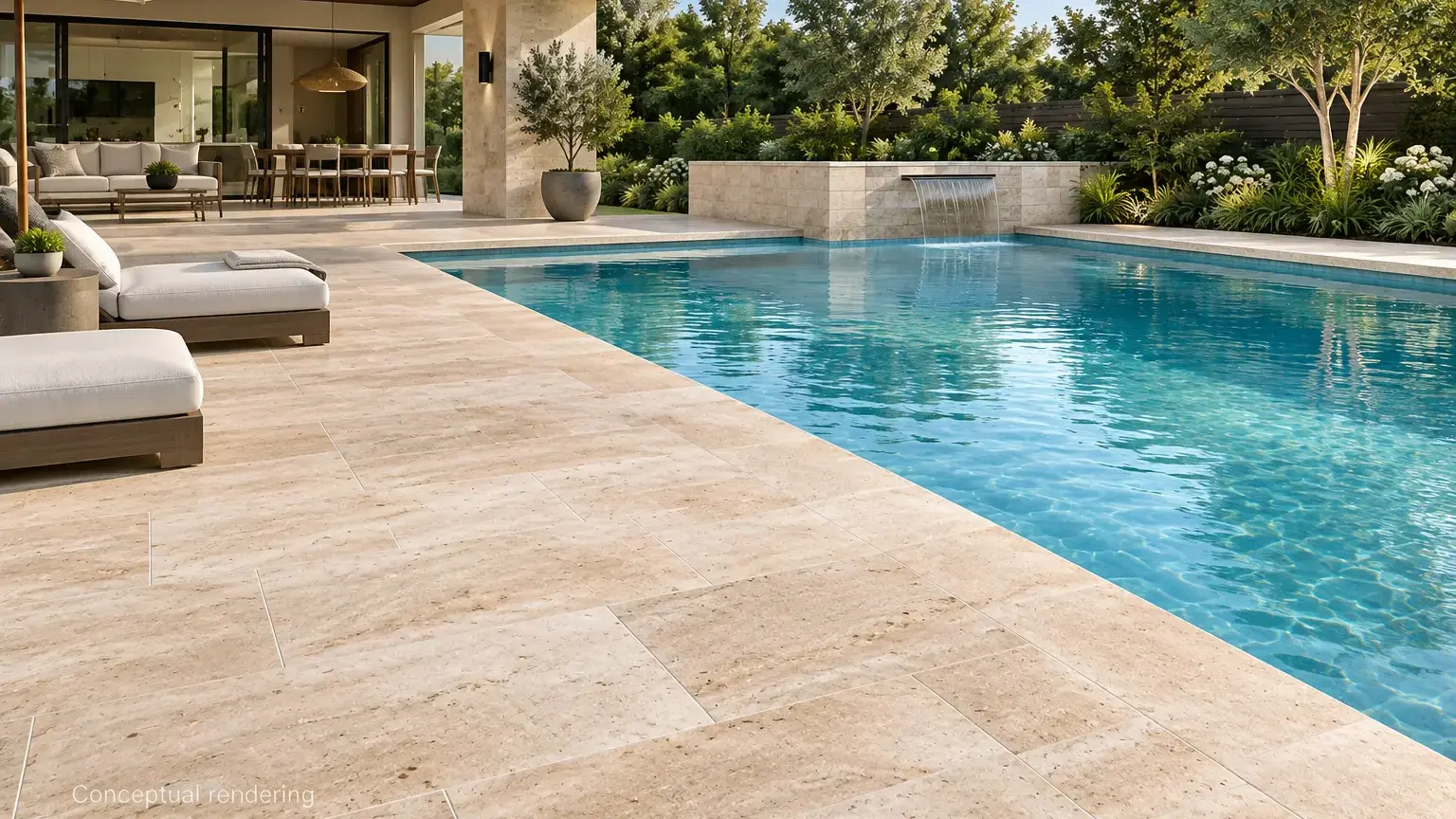
- Travertine has a warm, textured appearance that is popular for pool decks and patios. Because it is more porous, its finish, sealing, and suitability for your climate deserve extra attention.
- Porcelain is defined by its low water absorption. A tile must absorb 0.5 percent or less of its weight in water to be classified as porcelain.
For any material, confirm the manufacturer's rating and guidance for outdoor use, finish, and care before buying. Contractors, designers, and architects selecting outdoor materials for client projects can apply for a trade account.
Conclusion
Hardscaping delivers the most when each surface is matched to a specific need and to the conditions it will face. Before comparing materials, map out how you plan to use the space, where sun and rainwater fall, how cold your winters get, and how much upkeep you are willing to take on. Those answers will narrow your choice of materials, finishes, and layout faster than browsing options alone.
If you would like to compare outdoor materials in person, Nova Tile and Stone has granite, quartzite, travertine, and porcelain on display at showrooms in Reno, Minden, Fernley, and Sacramento. Free design consultations are available if you want help narrowing down your options. Tile samples can also be taken home so you can see how a finish looks in your own light.
Frequently Asked Questions
Hardscape is the built part of a landscape, such as patios, walls, and paths. Softscape is the living part: lawn, shrubs, trees, flower beds, and groundcovers. The two work best together. Built surfaces define where people walk, gather, and cook, while plants add shade, color, and habitat.
Neither is better everywhere. Grass offers a soft surface for play and stays cooler underfoot, while built surfaces need no irrigation and less routine care. A common approach is to keep lawn only where it has a clear use, such as a play area or space for a dog, and to use hardscape for gathering and walking areas.
Yes. Terraces and retaining walls turn a slope into a series of level areas that can be planted or used for seating. They also slow runoff that would otherwise erode the soil. Taller retaining walls should be designed by a qualified professional, with drainage planned behind them.
For many homeowners, yes. Paver patios and stone walkways are among the outdoor projects estimated to recover most or all of their cost at sale. Patios also rank among the highest-rated outdoor projects for homeowner satisfaction. Returns vary by market, design, and material quality.
Materials with low water absorption generally hold up best, because absorbed water expands when it freezes. Granite and porcelain are low-absorption options. More porous stones, such as travertine, need extra care, and their freeze-thaw test data should be checked before outdoor use in cold climates. Check each product's outdoor rating on the manufacturer spec sheet before buying.
Note: Some images on this page may be conceptual renderings created to illustrate design possibilities and may not depict actual installations.