AT A GLANCE
- Core idea: Water-wise hardscape replaces thirsty turf with stone patios, paths and planting beds.
- Best materials: Granite, quartzite and porcelain are UV-resistant, outdoor-suitable options for sunny, dry yards.
- Heat check: Travertine is outdoor-approved, but verify the exact product’s UV rating before full-sun use.
- Sealing: Granite, quartzite and travertine generally need sealing, while porcelain typically does not.
- Wet zones: Polished finishes get slippery, so choose textured finishes for steps and spray areas.
- Upkeep: Less lawn cuts mowing and watering, but stone and plants still need occasional care.
IN THIS GUIDE
- Why less lawn works in dry climates
- Benefits of replacing lawn with stone
- Water-wise hardscape ideas by zone
- Sun, heat and wet-area finishes
- Outdoor stone comparison table
- Advantages and disadvantages
- Five steps to plan your yard
- Nova showrooms and FAQ
Why Less Lawn Makes Sense in Dry Climates
Water-wise hardscape replaces thirsty turf with stone patios, paths and planting beds that need less irrigation. In dry climates, it can reduce lawn care while keeping a yard attractive and usable. Lawns in Northern Nevada and the Sacramento area often need frequent watering, mowing and edging to stay green through hot, dry summers.
Stone surfaces shift that effort elsewhere. Granite, quartzite, travertine and porcelain are outdoor-suitable materials, though each still needs sensible care to keep its appearance. This guide covers where stone fits in a yard, which materials handle strong sun, and how to plan zones that reduce upkeep without leaving the space feeling bare.
It also shares hardscape ideas for dry climates that balance shade, drainage and comfort, so outdoor spaces stay inviting through every season. Material choice matters because intense sun, wide temperature swings and occasional heavy rain all influence how outdoor stone performs over time. Each section below adds practical detail, from material comparisons to a simple planning checklist worth reviewing before a showroom visit.
Benefits of Replacing Lawn With Stone Surfaces
Reducing turf lowers irrigation demand, since stone surfaces and mulched beds typically need no regular watering. For regional background on water-efficient yards, Nevada landscape design guide is a useful reference. Mowing, fertilizing and edging shrink as well. The best water-wise hardscape ideas for reducing lawn care start with high-use areas, such as entries and seating zones.
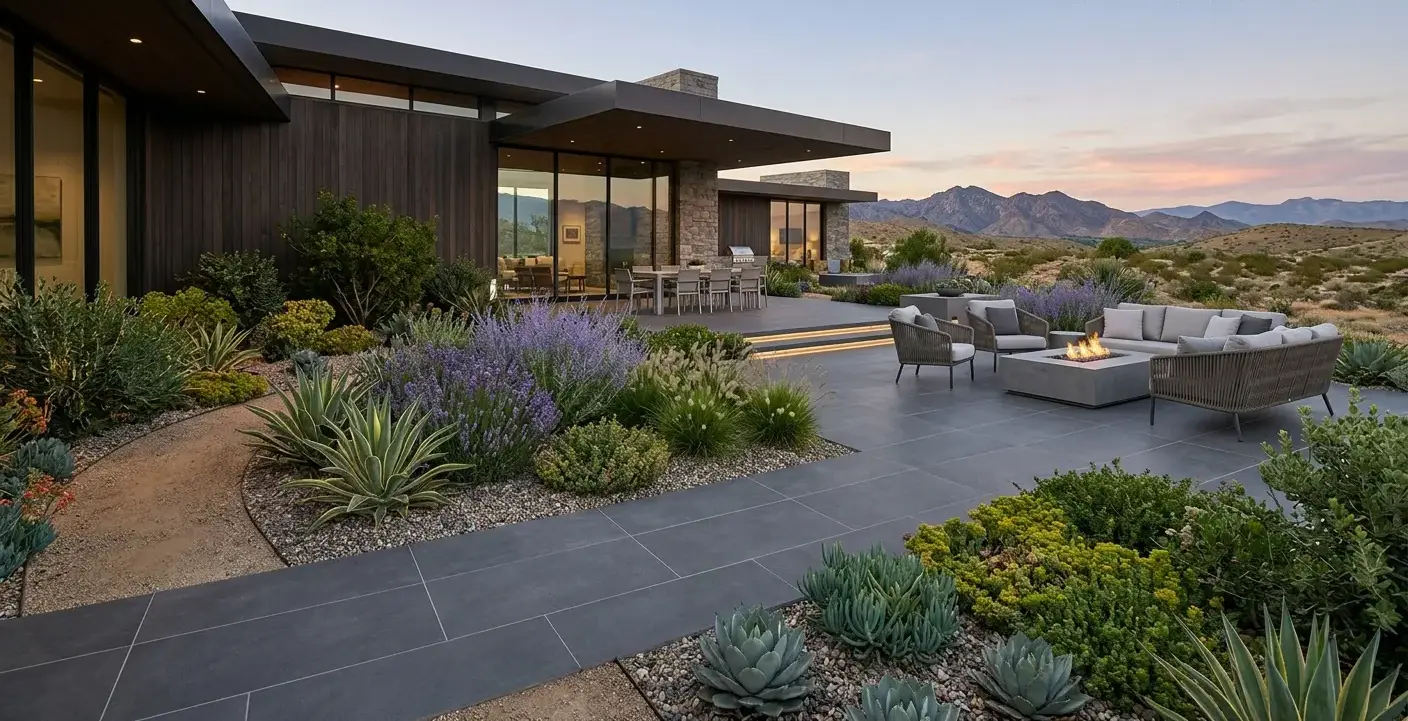 Conceptual rendering
Regional conditions matter too. Yards around Reno, Fernley, Minden and Sacramento face dry summers, and colder winter nights in parts of Northern Nevada can influence material choice.
Key advantages of a lower-lawn yard include:
- Lower irrigation demand: Stone and mulched zones typically need less water than turf, though nearby plants still need attention.
- Reduced weekly upkeep: Mowing and edging drop, although stone still benefits from occasional cleaning.
- More usable seasons: Patios and paths stay available when grass would be dormant or worn.
- Defined outdoor rooms: Dining, lounging and walking areas become clearly organized.
- Wide material range: Granite, quartzite, travertine and porcelain are outdoor-suitable options.
- Lasting appearance: Durable materials hold their look well, but proper sealing and care still matter.
Hardscape also gives outdoor living areas a clear structure, which makes yards easier to use for dining, entertaining and quiet evenings outside. Results depend on site conditions, material choice and care habits, so match each material to its zone before finalizing a layout.
Best Water-Wise Hardscape Ideas for Reducing Lawn Care
These design directions turn open lawn into functional zones. Each idea pairs a layout with materials suited to outdoor use and strong sun.
Stone Patios and Seating Areas
A patio near the house replaces the most heavily used lawn area. Porcelain and granite slabs suit seating zones, and textured finishes add traction when surfaces get wet. Large-format slabs can create fewer visual breaks, which suits modern layouts and open seating areas. Shade from a pergola or tree canopy helps stone stay comfortable underfoot during peak afternoon heat.
Walkways and Stepping Paths
Stepping slabs of granite or quartzite connect entries, gates and gardens without needing grass. Spacing the stones leaves room for low-water groundcover. Wider spacing suits a relaxed garden feel, while tighter spacing supports easier walking along everyday routes.
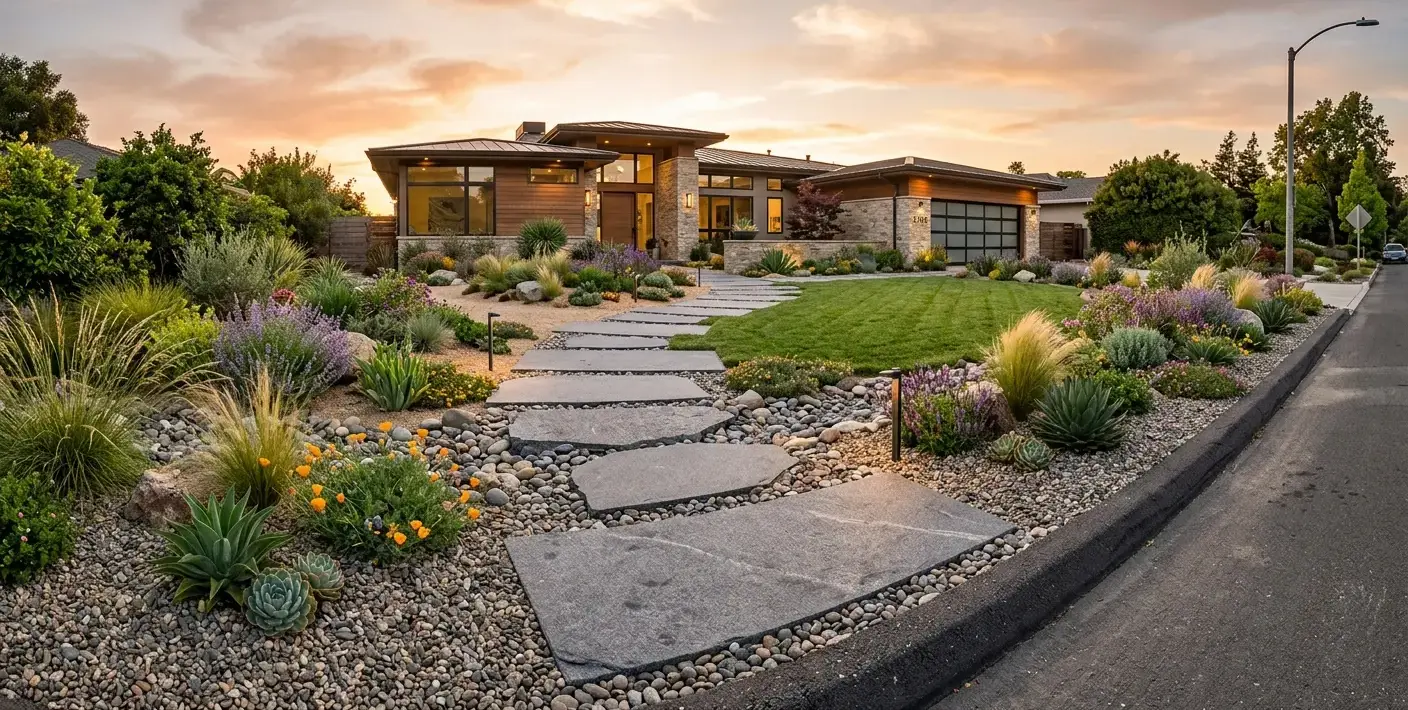 Conceptual rendering
Dry Garden Beds and Stone Borders
Stone borders define planting beds and keep mulch in place. Drought-tolerant plants paired with granite or quartzite edging add structure while keeping watering needs modest. Group plants by water need so irrigation stays focused. A smaller, well-defined lawn patch can remain where grass serves a real purpose.
Colors and Textures for Hot Sites
Neutral stone tones pair well with silver-green, drought-tolerant plants and typically reflect more light than darker surfaces. Final color should still be confirmed in person. Texture adds depth too. A leathered or textured finish often softens glare compared with polished surfaces, depending on the product.
Steps, Water Features and Wet Areas
Wet zones need extra care. Polished finishes get slippery when wet, so textured surfaces suit steps, water features and spots near irrigation spray. Flamed, bush-hammered and similar finishes are available in several outdoor-suitable materials, so ask a consultant which products offer the most grip.
Hardscape Ideas for Dry Climates: Sun and Heat
Strong sun changes material choice. Granite, quartzite and porcelain are UV-resistant outdoor options. Travertine is outdoor-approved but sits outside Nova's general UV-resistant group, so verify the exact product's UV rating before full-sun use. Stone surfaces can feel warm in direct sun. Lighter tones and nearby shade generally help, though surface temperature still varies by product and exposure.
Dry climates also bring dust. Rinsing off debris periodically helps any outdoor stone keep its appearance, and non-abrasive cleaners are the safer choice. The Natural Stone Institute's stone care guide explains which cleaners suit different stone types. For vertical accents such as seat walls, this stone veneer guide outlines common styles. Confirm outdoor exposure ratings with a Nova consultant first.
Outdoor Stone Comparison
Browse available slabs online to compare these materials before a showroom visit.
Material | Outdoor Use | Sun Note | Sealing | Best Fit |
Granite | Outdoor-suitable | UV-resistant | Needs sealing | Patios, steps, paths |
Quartzite | Outdoor-suitable | UV-resistant | Needs sealing | Seating zones, paths |
Porcelain | Outdoor-suitable | UV-resistant | Typically none; confirm product guidance | Patios, paths, accent walls |
Marble, Dolomite | Better reserved for indoor spaces |
Not advised for exterior use
| Needs sealing | Walkways, patio areas |
Quartz | Better reserved for indoor spaces | Not advised for exterior use | Typically none; confirm product guidance | Indoor spaces |
Travertine | Outdoor-suitable | Verify product UV rating | Needs sealing | Walkways, patio areas |
Finish choice interacts with this table. Polished surfaces look refined but are slipperier when wet, while textured finishes, such as flamed or bush-hammered, typically add grip outdoors.
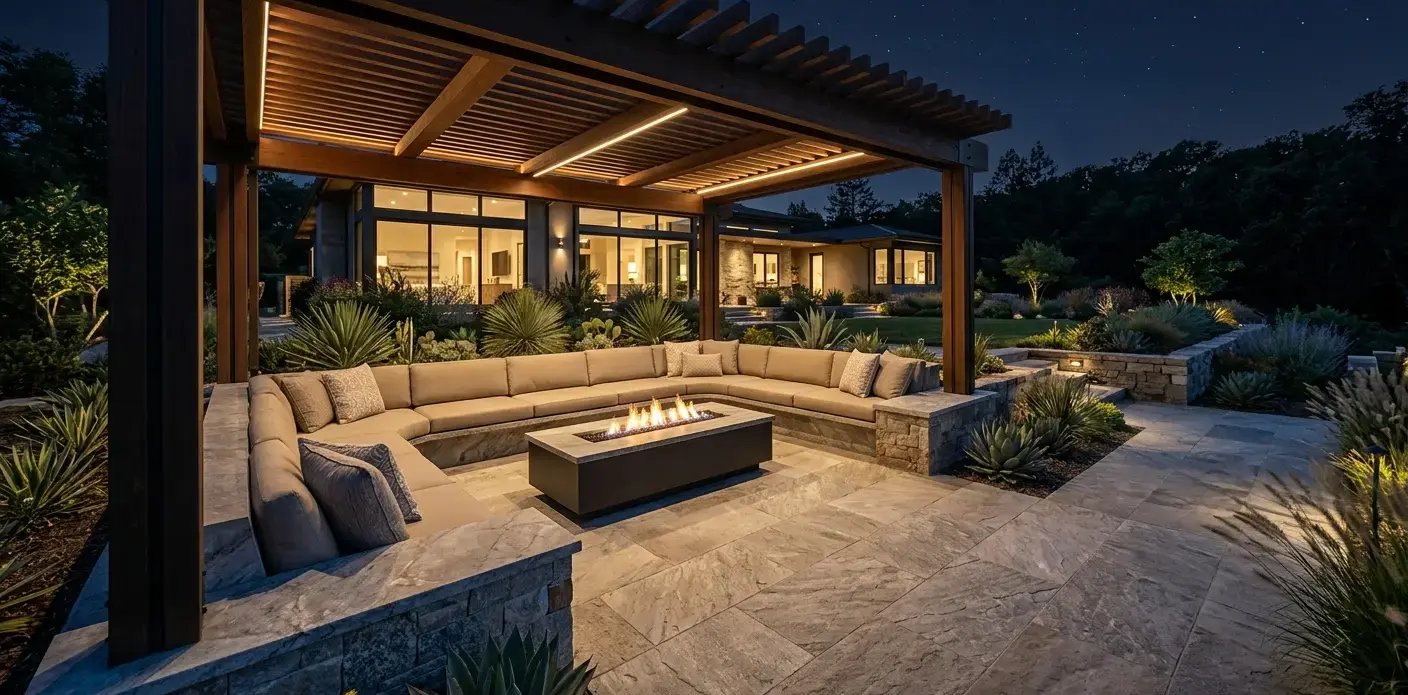 Conceptual rendering
Advantages and Disadvantages of Less Lawn
Weigh both sides before removing turf.
Advantages
- Less mowing, edging and watering through the season
- Clearly defined spaces for dining, lounging and walking
- Broad choice of finishes and outdoor-suitable materials
Disadvantages
- Stone can feel warm in direct sun without shade
- Sealing and cleaning still apply to some materials
- Less soft surface for play than grass
Many yards combine a modest lawn area with stone zones, which balances comfort with lower upkeep. Deciding where grass stays is an important early step in the plan.
Note: Some images on this page may be conceptual renderings created to illustrate design possibilities and may not depict actual installations.
Five Steps to Plan a Lower-Lawn Yard
- Map sun, shade, slopes and spots where water collects after rain.
- Decide which areas truly need grass, such as play space.
- Assign patio, path and seating zones to specific materials.
- Choose textured finishes for wet or sloped areas.
- Review slab options with a design consultant before finalizing.

Conclusion
Water-wise hardscape gives dry-climate yards a practical way to reduce lawn care, provided materials, finishes and layouts match real site conditions and everyday use. Pairing granite, quartzite, travertine or porcelain with the right finish and sealing helps outdoor stone keep its look, though regular care still applies. Talk with Nova stone experts to turn these ideas into a material plan that fits the property, its sun exposure and the way the space is used.
Schedule a free consultation now! Start planning a lower-maintenance yard with less lawn today.
Frequently Asked Questions
Most layouts combine stone patios and paths with mulched planting beds and a smaller lawn area, if any. The exact mix depends on sun exposure, slope, and how the space is used day to day.
Granite, quartzite and porcelain are UV-resistant and outdoor-suitable. Travertine is outdoor-approved but sits outside the general UV-resistant group, so verify the exact product's UV rating. Marble and dolomite are better reserved for indoor spaces.
Granite, quartzite and travertine generally need sealing, while porcelain slabs typically do not. Requirements vary by product, so confirm manufacturer guidance, clean spills promptly, and avoid abrasive cleaners.
Polished finishes become slippery when wet,
so textured finishes, such as flamed or bush-hammered, are the better choice for steps and wet areas. Compare finish options in person before deciding, and ask a consultant which products offer the most grip.
No. Hardscape can reduce mowing and watering, but plants, borders and stone surfaces still need occasional attention. Regular cleaning and resealing where needed help surfaces keep their appearance over time.