Travertine vs. Limestone: Choosing Stone for Humid Climates
Travertine is a type of limestone, and dense, properly sealed travertine can handle damp exteriors well. Limestone varies widely by quarry, so absorption data matters more than the stone name. For homeowners across Northern Nevada and Northern California weighing travertine vs limestone, humidity resistance and sealing needs often decide the winner. Nova Tile and Stone's slab reference confirms travertine as an approved outdoor natural stone, while limestone is not currently part of the stocked slab lineup.
Humid climate stone selection affects everything from patio longevity to poolside safety. Moisture that lingers on a surface can accelerate staining, efflorescence, and slippery conditions if the wrong material or finish gets chosen. This guide walks through benefits, applications, and design considerations for anyone researching the best exterior stone slabs for humid climates. It covers how each stone handles sustained moisture, sun exposure, and foot traffic.
Homeowners and designers in Fernley, Reno, Minden, and Sacramento deal with irrigation overspray, pool splash, and winter moisture. Stone that tolerates repeated wetting without constant upkeep tends to hold up better on patios, courtyards, and covered outdoor kitchens.
Key Benefits of Travertine for Humid Exteriors
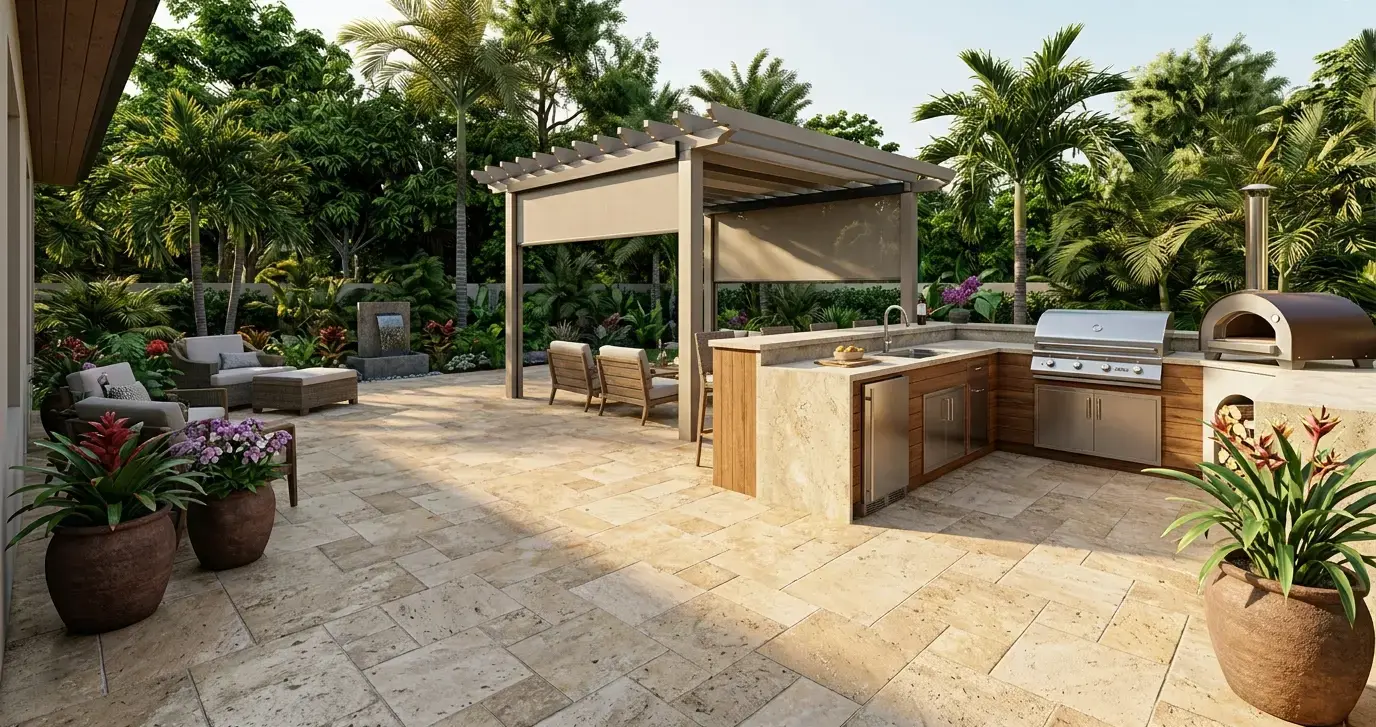 Conceptual rendering
Travertine brings a naturally textured surface that performs well across confirmed outdoor applications, including floors, walls, and fireplace surrounds. Sealing keeps the porous surface protected from prolonged moisture exposure common during humid seasons across the region.
Limestone, by contrast, tends to absorb more moisture over time, which can lead to visible staining or gradual surface breakdown in climates with persistent humidity, consistent with widely documented sedimentary stone behavior. Browse the slab collection to compare finish options side by side.
Qualifiers matter here. Travertine resists humidity better than limestone in most exterior scenarios, but no natural stone is maintenance-free. Routine sealing, prompt spill cleanup, and avoiding abrasive cleaners all help preserve appearance over time regardless of which humid climate stone gets chosen.
Benefits of choosing travertine for humid climates:
- Approved for outdoor floors, walls, and fireplace surrounds per Nova's slab reference
- Available in polished, honed, leathered, and specialty finishes for varied design styles
- Honed and leathered finishes typically offer more grip than polished when wet
- Requires routine sealing rather than constant daily upkeep
- Suitability for shower floors requires product-specific slip-resistance confirmation (DCOF/ANSI A326.3)
Applications and Design for Humid Climate Stone
Design plans for patios, pool decks, and outdoor kitchens often start with matching stone type to how much moisture a space will encounter throughout the year. Finish selection matters as much as the base material itself, since the same stone can behave very differently once polished versus honed.
Surface innovation coverage from industry publications, including this product innovation report, continues tracking advances shaping exterior stone and tile choices across humid and temperate regions alike. Staying current on those shifts helps design plans age well.
Patios and Walkways
Honed or specialty-finish travertine reduces slip risk on frequently wet patios and walkways, since polished surfaces turn slipperier once damp. Limestone's softer surface can wear unevenly under similar repeated moisture cycles over time.
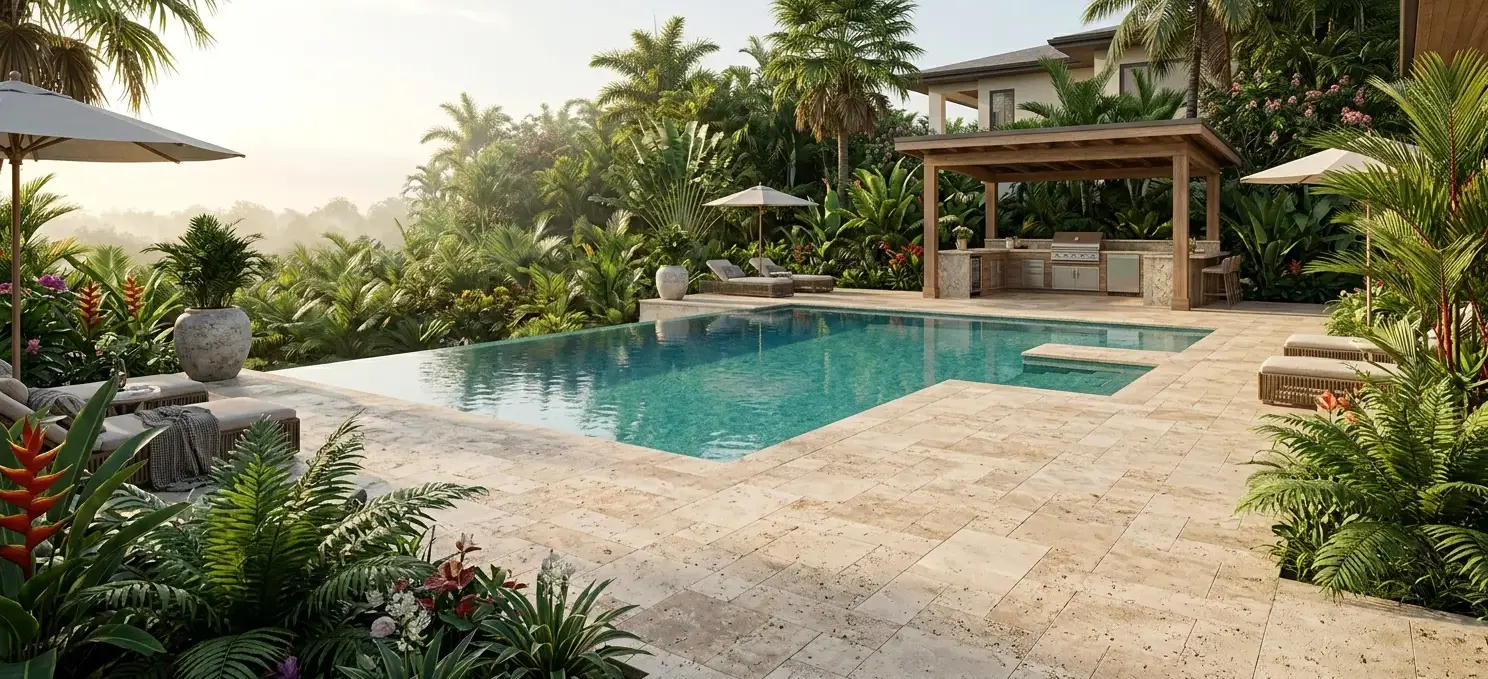 Conceptual rendering
Pool Decks and Outdoor Kitchens
Travertine appears in Nova's reference as suitable for outdoor use, though full sun exposure performance varies by specific slab. A specialist should confirm the manufacturer's sun rating before specifying it for uncovered pool decks. Sealing remains necessary regardless of chosen finish.
Broader ANSI surface standards help frame how slip resistance gets evaluated industry-wide, though exact ratings still depend on the specific slab and finish selected. Reviewing those benchmarks alongside Nova's own slab reference gives a fuller picture before finalizing a pool deck plan.
Note: Some images on this page may be conceptual renderings created to illustrate design possibilities and may not depict actual installations.
Fireplace Surrounds and Outdoor Walls
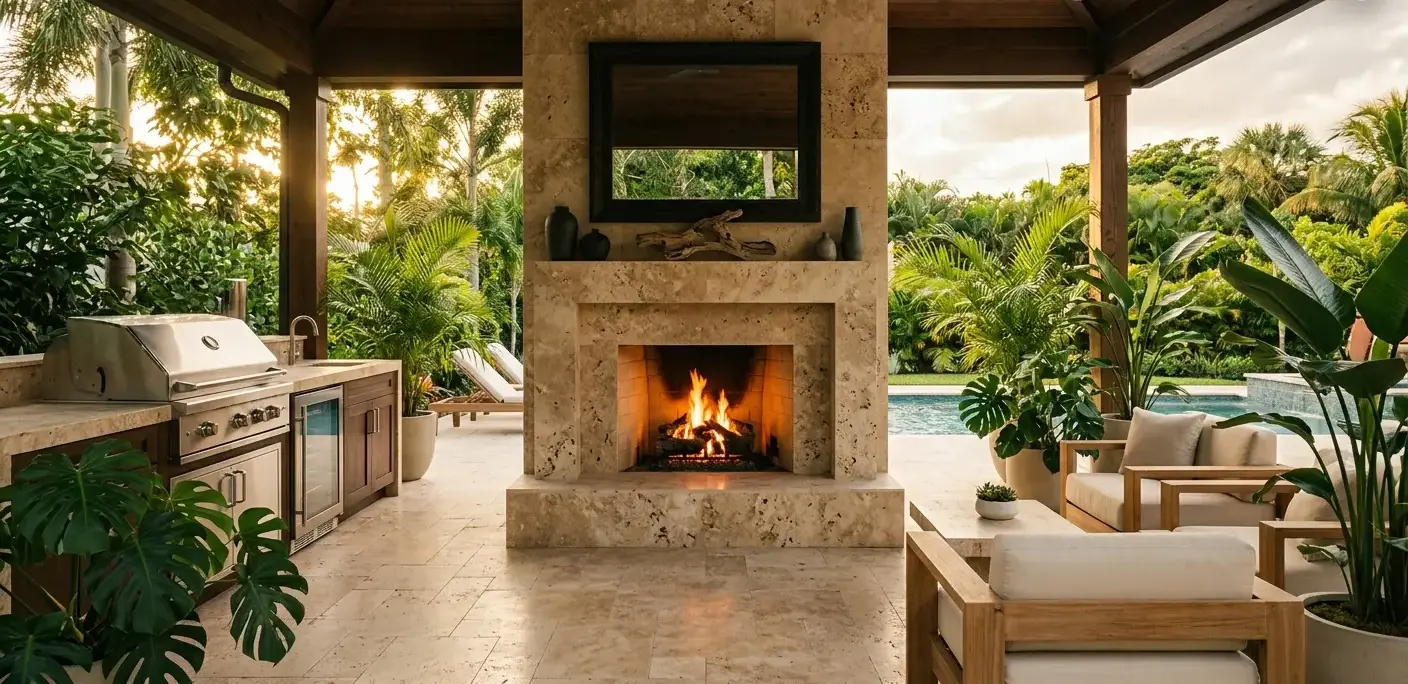
Travertine's approval for fireplace surrounds and wall applications makes it a flexible choice for outdoor living areas that combine seating, cooking, and fire features within one humid climate footprint.
Exterior design coverage, including current design trends from recent industry events, continues favoring natural texture over uniform surfaces in outdoor living spaces. That texture preference lines up well with travertine's naturally pitted look.
Shower Rooms and Semi-Exposed Areas
Travertine is approved for indoor/outdoor use, but suitability for shower floors specifically requires product-specific DCOF/ANSI A326.3 slip-resistance data. Ask a specialist before specifying it for a shower floor.
Travertine and Limestone at a Glance
Attribute | Travertine | Limestone |
Stone category | Natural stone (sedimentary, a limestone variety) | Natural stone (sedimentary) |
Porosity | Naturally pitted, moderate porosity | Generally higher porosity |
Sealing needs | Required | Typically required, often more frequent |
Available finishes | Polished, honed, leathered, specialty | Varies by outside supplier |
Humidity performance | Handles humid climates when properly sealed | More prone to staining under persistent humidity |
UV exposure notes | Verify manufacturer sun rating before full-sun use | Varies widely by quarry source |
 Conceptual rendering
Advantages and Considerations
Advantages of travertine for humid exteriors:
- Confirmed outdoor approval across Nova's slab reference
- Wide finish range suited to different humidity-prone applications
- Naturally textured surface that assists with surface water dispersal
Considerations before choosing:
- Regular sealing required to maintain moisture resistance over time
- Full-sun UV performance should be confirmed per specific slab
- Not part of Nova's designated countertop or backsplash category
A Simple Evaluation Guide
- Assess local humidity patterns. Determine how much sustained moisture the project site experiences across the seasons.
- Compare porosity and sealing needs. Match expected sealing frequency to the stone's natural porosity level.
- Match finish to the application. Choose honed or specialty finishes for wet zones, since polished surfaces turn slipperier when damp.
- Confirm UV and sun exposure ratings. Ask a specialist to verify the exact slab's manufacturer sun rating before full-sun placement.
- Move forward with a shortlist. Request a slab quote once the right stone and finish combination is clear.
Getting Expert Guidance from Nova Tile and Stone
Nova Tile and Stone's specialists help match travertine's confirmed outdoor properties to each project's climate and design goals, offering guidance beyond what any spec sheet alone can capture.
Specialists can also walk through finish options in person, compare polished versus honed textures, and explain sealing schedules suited to a specific patio, courtyard, or pool deck plan before an order gets placed.
Visit the Fernley showroom to see travertine finishes in person. The Reno location stocks a similar range for side-by-side comparison. Explore the Minden showroom for additional finish options nearby. The Sacramento showroom extends the same expert guidance across Northern California.
Reach out to Nova's team to talk through which stone type fits a specific humid climate project best.
Conclusion
Travertine is a limestone variety, and the travertine vs limestone choice often comes down to density and absorption. Dense, sealed travertine suits wet or irrigated exteriors across Fernley, Reno, Minden, and Sacramento. Matching finish to application, confirming sun ratings, and keeping up with sealing help any stone choice last. Book your free consultation today!
Frequently Asked Questions
Often, yes. Travertine is a limestone variety, and dense, sealed travertine tends to handle damp exteriors well. Limestone varies by quarry, so absorption data matters more than the stone name. Nova offers travertine for outdoor use. Limestone is not part of the current slab selection.
Yes, travertine requires routine sealing to protect its naturally porous surface from moisture common in humid climate stone applications.
Travertine is approved for outdoor floors and wall applications, though a specialist should confirm the specific slab's sun exposure rating before specifying it for uncovered pool decks or outdoor kitchens.
Granite, quartzite, travertine, and porcelain are generally approved for outdoor use in humid climates, with travertine offering a naturally textured surface well suited to patios, walkways, and fireplace surrounds.
It depends on the quarry. Denser limestone grades can work outdoors with sealing, while softer, more absorbent types may stain or wear unevenly in wet conditions. Ask for the supplier’s absorption data before choosing limestone for a patio.
Visit our Showrooms Now!
Book your free consultation to plan the right stone choice for a humid climate exterior today!
FERNLEY
1855 US Highway 95A North, Fernley, NV 89408
 Google Maps
Store hours this week:
- Mon. - Fri.: 7:30 am - 4:00 pm
- Sat. - Sun.: Closed
RENO
12835 Old Virginia Rd Suite 24, Reno, NV 89521
Store hours this week:
- Mon. - Fri.: 7:30 am - 6:00 pm
- Sat.: 9:00 am - 3:00 pm
- Sun.: Closed
MINDEN
2548 Business Pkwy, Minden, NV 89423
Store hours this week:
- Mon. - Fri.: 7:30 am - 6:00 pm
- Sat.: 9:00 am - 3:00 pm
- Sun.: Closed
SACRAMENTO
6100 Warehouse Way, Sacramento, CA 95826
Store hours this week:
- Mon. - Fri.: 7:30 am - 5:00 pm
- Sat. - Sun.: Closed