The best paver layout patterns for modern homes are grid and large-format stacked layouts, linear patterns, running bond, and simplified herringbone. These patterns rely on clean lines and simple geometry that complement contemporary architecture. Large-format stacked layouts help patios feel larger and more open, running bond suits narrow walkways, and herringbone works well for driveways.
A paver layout pattern is the way individual pavers are arranged across an outdoor surface such as a patio, walkway, pool deck, or driveway. The pattern affects how the space looks, how weight is distributed across the surface, and how people move through the area.
Here is a quick guide to matching common paver layout patterns with their typical uses:
- Grid and stacked layouts: open, calm patios with fewer visible joints
- Linear: pool edges and patios that lead toward a focal point like a fire pit
- Running bond: garden paths, side yards, and narrow walkways
- Herringbone: driveways and high-traffic patios that need interlocking strength
- Framed and floating layouts: defining outdoor rooms and blending hardscape with landscaping
Outdoor spaces now function as an extension of the home, so the layout deserves as much attention as the material. The guide below starts with the cleanest modern layouts, moves into staggered and interlocking patterns, and finishes with edge and landscape treatments, followed by tips for choosing the right one for your space.
Grid and Large-Format Stacked Layouts for Contemporary Homes
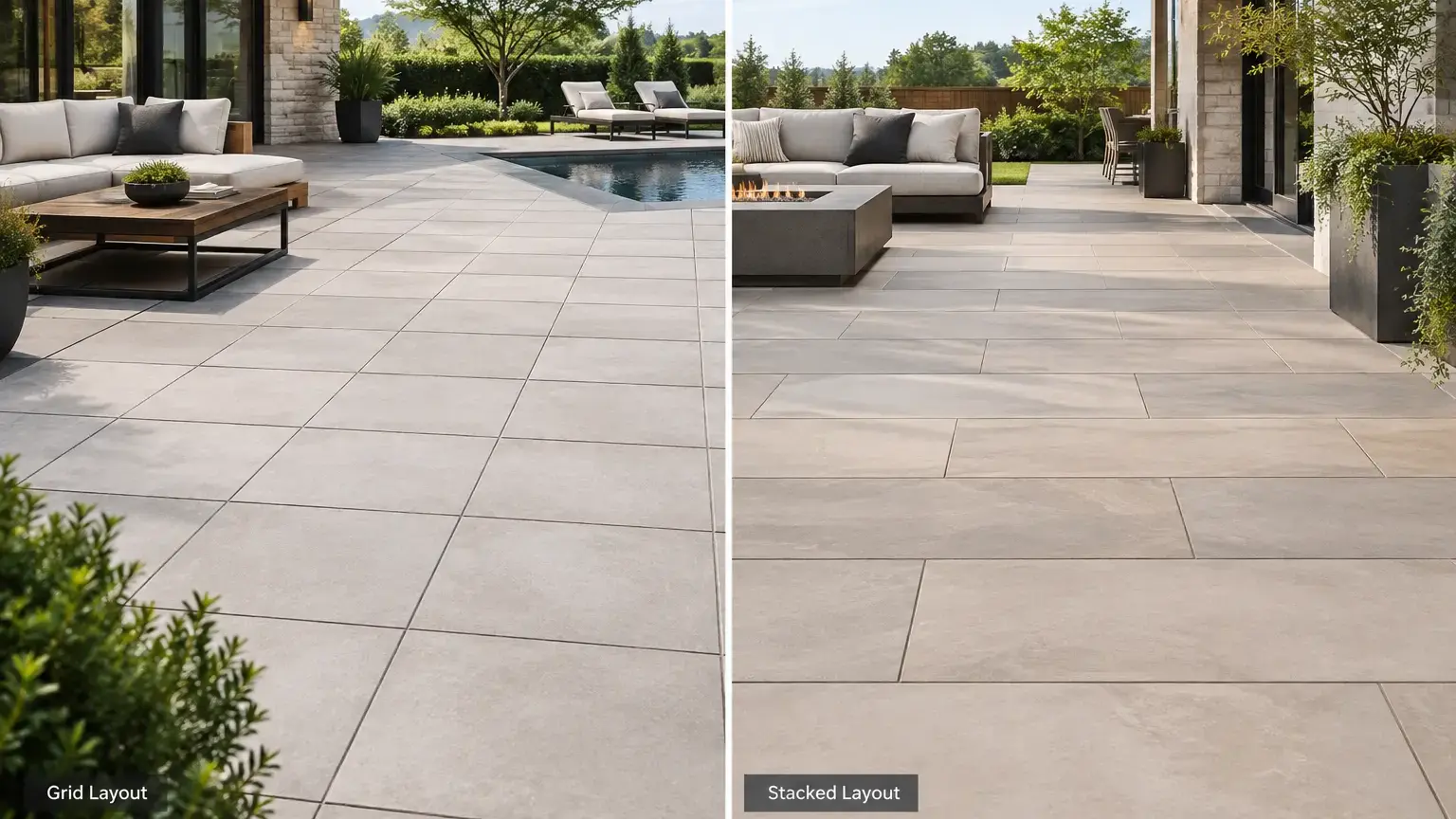
The simplest modern layouts keep every joint in line. A grid layout sets square pavers in straight rows so the joints align in both directions, creating a clean, orderly surface. A stacked layout, also called stack bond, uses the same aligned joints with large rectangular pavers instead of squares.
Large-format pavers now play a bigger role in residential landscapes, and stacked layouts show them off well. Designers select this pattern when they want the patio surface to feel wide and calm. With fewer joints, there are fewer visual breaks, and long horizontal lines draw the eye across the yard. Porcelain slabs and limestone pavers are common choices for this layout.
Since aligned joints offer little interlock, grid and stacked layouts are best kept to patios, pool decks, and walkways rather than surfaces that carry vehicles.
Linear Patterns That Emphasize Architectural Lines
Where stacked layouts spread the eye across the whole surface, linear patterns point it in one direction. A linear layout uses long rectangular pavers set in repeating rows. It can cover an entire patio or run parallel to a pool edge or walkway. Designers often turn to linear patterns when they want the patio to lead people toward a focal point, like a fire pit or seating area.
A linear layout also complements modern architecture, since both rely on bold horizontal and vertical lines. Porcelain planks and elongated limestone pavers are popular for this style.
Running Bond Patterns That Balance Structure and Movement
Offsetting those straight rows turns a linear layout into a running bond pattern. In this pattern, each row of pavers shifts by half the length of the row before it. The layout is borrowed from brickwork and adds gentle movement to a patio without creating visual clutter.
Running bond works well with rectangular patio pavers. The staggered joints break up long rows and give the surface more interlock than a grid or stacked layout. Because the joints still run continuously in one direction, running bond is best suited to patios and walkways with foot traffic rather than driveways. Modern homes often combine this pattern with porcelain or concrete pavers in neutral tones for a look that feels familiar yet organized.
Running bond is a strong fit for tight areas like garden paths and side yard walkways. It is also easy to lay, with minimal cutting when it runs in the direction of travel.
Herringbone Patterns for Strength and Texture
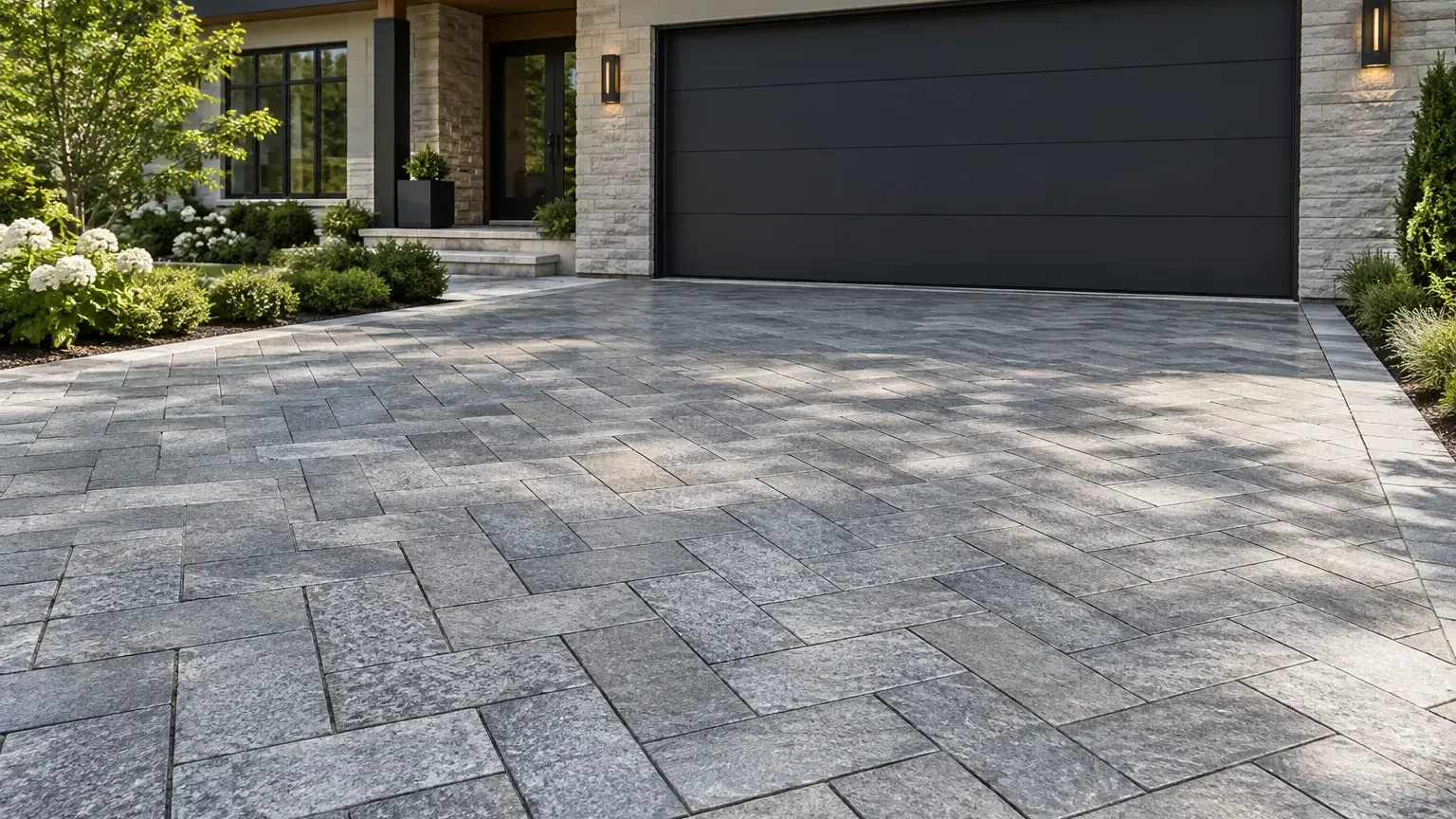
For surfaces that need more strength than running bond can offer, herringbone locks pavers together in more than one direction. This layout sets rectangular pavers at 45 or 90 degrees in a repeating zigzag design. The arrangement spreads weight in several directions and resists lateral movement, which is why herringbone is widely recommended for driveways and other areas with vehicle traffic.
Modern homes frequently use larger pavers in a simplified herringbone layout. The bigger units cut down on visual complexity while keeping the interlocking design intact, giving the patio surface subtle movement.
Basketweave Patterns That Deliver Classic Structure
Basketweave also alternates the direction of its pavers, but in pairs rather than a zigzag. This pattern sets two pavers side by side in one direction, then rotates the next pair 90 degrees, producing a woven look. It is common in traditional architecture, yet it still fits modern landscapes when applied with restraint.
Basketweave requires rectangular pavers with a length twice their width so the pairs fit together evenly. Because its bond is weaker than herringbone's, it is typically used for courtyard patios, garden paths, and other areas with foot traffic. Paired with natural stone colors, it comes across as calm rather than ornamental.
Mixed-Size Modular Patterns That Build Visual Depth
The patterns above each use a single paver size. Modular layouts mix several sizes in a repeating sequence. For example, a pattern might blend three stone sizes in a geometric arrangement that repeats across the patio.
Older modular patterns could sometimes look cluttered. Modern designs streamline the sequence and use fewer size variations. Homeowners often choose a modular layout when they want a natural stone patio with understated variation but prefer not to mix multiple materials. Materials like travertine or limestone work well for these layouts. The choice of stone can further shape the finished look, from the softer character of limestone to the warmer, more textured appearance of travertine. To compare available styles and find a material that works with the overall patio design, shop local.
Diagonal Layout Patterns That Open Up Visual Space
Many of these patterns can also be rotated. A diagonal layout turns the pattern at a 45-degree angle across the patio. Because the eye follows the angled lines, a diagonal layout can make a patio, especially a square one, look wider than it is. Many homeowners pair diagonal patterns with rectangular pavers or traditional brick units.
Keep in mind that diagonal layouts require more angled cuts along the edges, which can increase material waste.
Framed Layout Patterns That Define Outdoor Rooms
Once the main pattern is chosen, the edges deserve attention too. Borders are a common and essential element of modern hardscape design. A framed layout uses a clear contrast in paver color or size along the patio edge, creating a defined line between the patio and the surrounding lawn.
The interior can follow a grid, stacked, or running bond layout. Homeowners value framed layouts because they add design interest without adding complexity. One popular approach is pairing darker pavers for the border with lighter shades for the main surface.
Floating Paver Layouts That Merge Hardscape and Landscape
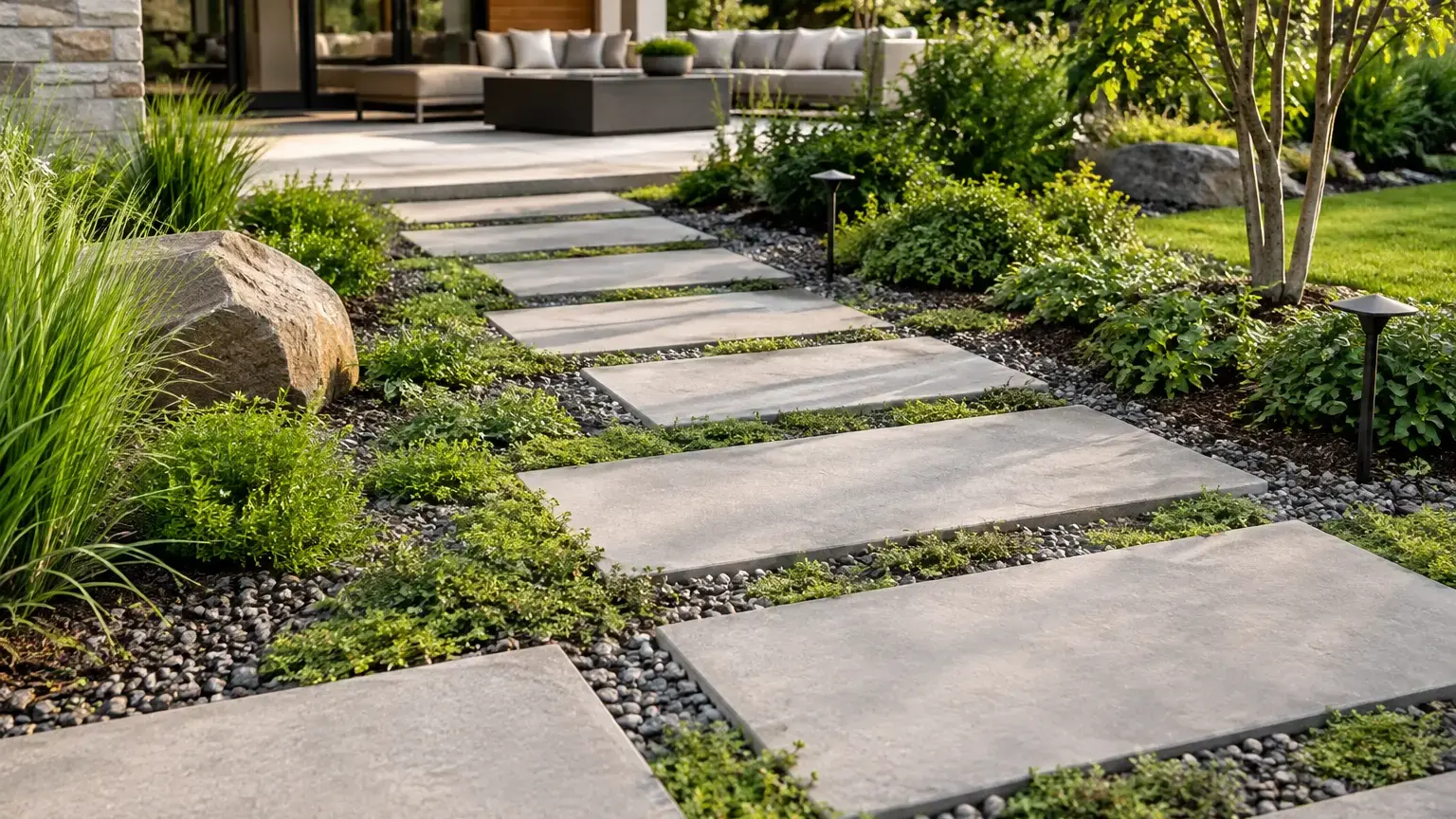
Where a framed layout draws a firm edge, a floating layout blurs it. Rather than using tight joints, installers leave gaps between large pavers and fill them with gravel, turf, or low ground cover. This softens the transition between stone surfaces and planted areas.
The open gaps can also support drainage by letting rainwater soak into the gravel and soil below. How well water drains depends on the gap width, the fill material, and the base beneath the pavers. Many modern homes use this design for pathways linking patios to gardens.
How to Choose the Right Paver Layout Pattern for Your Home
With the main options laid out, the right choice for your modern or contemporary home comes down to a few factors.
Architecture of the home
The pattern you choose should align with your home's architecture. Modern houses pair well with grid or stacked layouts.
Outdoor space size
Larger patios work well with simple patterns and bigger pavers.
Material selection
Natural stone, porcelain, and concrete pavers each lend themselves to different layout approaches.
Function of the area
Driveways call for structurally strong patterns like herringbone, while patios and walkways with foot traffic have more flexibility.
Working with a knowledgeable natural stone supplier can make it easier to match the material and layout to the home's design and intended use. For project planning, homeowners can request a slab quote or book an appointment to discuss available options.
Conclusion
Paver layout patterns do more than decorate an outdoor surface. They shape how a patio, walkway, pool deck, or driveway looks, functions, and holds up over the years. For modern homes, layouts built on clean geometry create a sense of order while supporting durable construction, and matching the right pattern with the right material helps the space feel balanced for the long term.
If you are exploring natural stone or porcelain options for your next outdoor project, visit any of Nova Tile and Stone's four showrooms in Reno, Minden, Fernley, and Sacramento. You can see materials in person and talk through how different options pair with the layout you have in mind. Free design consultations are available to help you compare materials for your space.
Frequently Asked Questions
There is no single best option, but patterns with clean lines and simple geometry, such as grid, stacked, linear, and running bond layouts, tend to suit modern homes. Your choice should depend on your home's architecture, the size of the space, and how the area will be used.
Herringbone is the pattern most often recommended for driveways. Its interlocking design helps pavers resist shifting under the braking and turning of vehicles. Industry guidance for vehicle traffic also calls for a border course along the edges and stable edge restraints.
Yes, they can. Larger units mean fewer joints across the surface, so the patio reads as one continuous plane. Stacked and linear layouts with large pavers are especially effective for this.
Porcelain, concrete, limestone, and travertine are common choices for modern outdoor layouts. Porcelain planks and large slabs suit linear and stacked patterns, while travertine and limestone work well in modular layouts. Always confirm that the material you select is rated for outdoor use, since some natural stones, like marble, are better suited to indoor applications.
Some layouts can help. Patterns with open gaps filled with gravel or turf let water pass through the surface rather than pooling on top. Results depend on the gap width, fill material, and base preparation, and proper slope matters for drainage with any pattern.
Note: Some images on this page may be conceptual renderings created to illustrate design possibilities and may not depict actual installations.