AT A GLANCE
- Hide dirt best: Warm tan, earthy brown, medium gray, multi-color blends, and speckled salt-and-pepper granite.
- Show dirt most: Bright white, cream, and solid black or charcoal.
- Dark concrete pavers: They show efflorescence, a white mineral haze, more than lighter colors.
- Finish matters: Tumbled, flamed, and split face finishes hide stains better than smooth honed stone.
- Variation helps: Flecks, veining, and color shifts disguise spots better than a single flat color.
- Match your yard: Choose a shade based on your soil, trees, pets, and how each area is used.
IN THIS POST
- Why do some hardscape colors show dirt more than others?
- Which hardscape colors hide dirt and stains best?
- Which hardscape colors show dirt the most?
- Do finish and texture matter as much as color?
- How do you choose the right hardscape color for your space?
- Conclusion
- Frequently Asked Questions
- Sources
The best hardscape colors for hiding dirt and stains are warm tan, earthy brown, medium gray, multi-color blends, and speckled salt-and-pepper granite. These mid-tone shades closely match the color of soil, dust, pollen, and dried leaves, so everyday grime blends into the surface instead of standing out. Bright white, cream, and solid black or charcoal show dirt the most, and dark concrete pavers also show efflorescence, a white mineral haze, more than lighter colors.
Finish matters almost as much as color. Textured finishes such as tumbled, flamed, and split face hide stains better than smooth honed stone. Natural variation in materials like full-color bluestone and travertine also helps disguise spots on patios, walkways, driveways, and pool decks. Below, we explain why some hardscape colors show dirt more than others and how to choose the right shade for your outdoor space.
Why do some hardscape colors show dirt more than others?
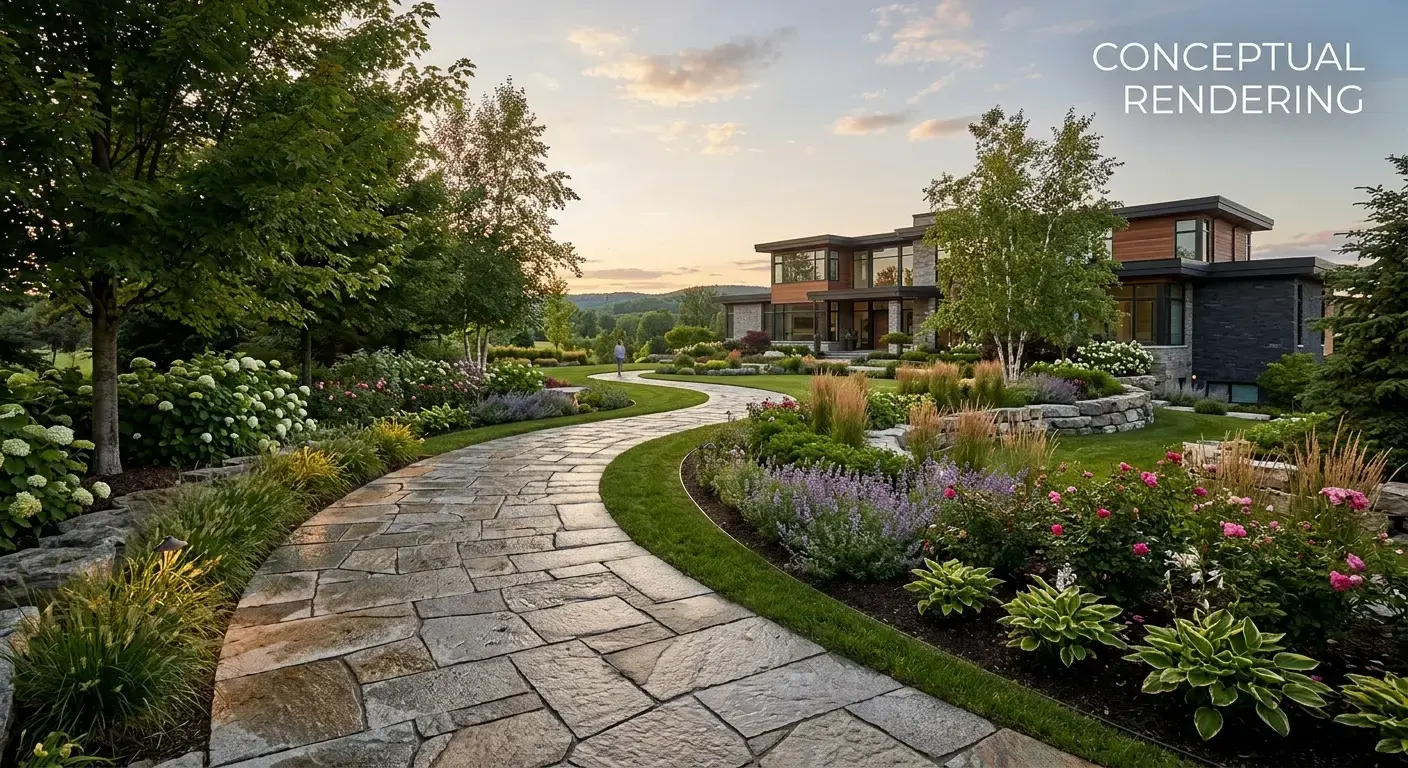
Hardscape colors show dirt based on contrast. When the color of the grime is very different from the color of the stone, your eye catches it right away. When the two are close, the dirt blends in and the surface reads as clean.
Most outdoor dirt falls into a narrow color range. Soil, dust, and pollen are usually tan, brown, or yellowish. Dried leaves and tree debris leave brown or orange marks. Rust from patio furniture and planters shows up as orange-red. Water spots and mineral deposits dry white or gray. A hardscape color that lives somewhere in the middle of that range will hide more of it than one sitting at either extreme.
That is why very light and very dark surfaces are the hardest to keep looking tidy. A cream travertine paver makes muddy paw prints obvious. A charcoal paver makes pale dust, footprints, and dried water marks easy to spot.
Dark concrete pavers have one more issue to know about. Guidance from the Interlocking Concrete Pavement Institute (ICPI), now part of the Concrete Masonry & Hardscapes Association (CMHA), notes that dark-colored pavers show efflorescence more than lighter ones. Efflorescence is a white, powdery haze that forms when water carries salts to the surface. It is cosmetic and doesn’t damage the paver, but on a dark surface it can make the color look washed out until it weathers away or is cleaned.
Two other factors play into how dirty a surface looks:
- Surface variation. Stone with flecks, veining, or shifts in color gives dirt places to hide. A single flat color offers nowhere for a stain to disappear.
- Texture. Rough or tumbled surfaces scatter light and break up the outline of a spot. Smooth surfaces show every mark in full.
Which hardscape colors hide dirt and stains best?
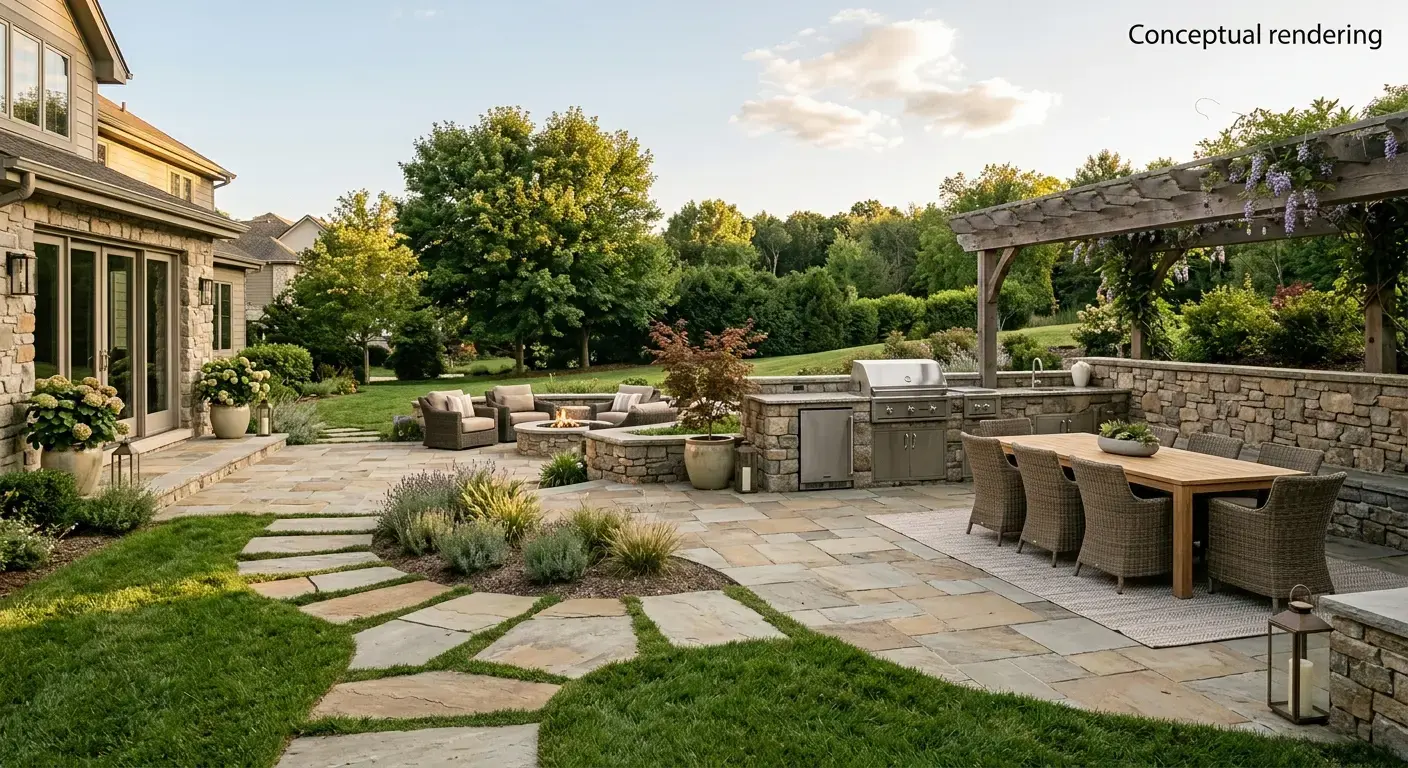
The five hardscape colors that hide dirt and stains best are warm tan blends, earthy browns, medium gray, multi-color blends, and speckled salt-and-pepper stone. Each one sits close to the color of everyday outdoor grime or has enough variation to break it up. Seeing them in person at one of our showrooms makes it easier to compare each shade and finish up close.
1. Warm tan and beige blends
Warm tan is one of the most forgiving hardscape colors because it is close to the color of dust and dry soil. Sand tracked in from a garden bed or a dusty breeze across the patio barely registers on a tan surface. That makes tan well suited to hot, dry climates where dust is constant.
Look for tan that has some movement in it, such as a blend of sand, honey, and light brown tones. Western Interlock, a paving stone manufacturer, lists desert tan among the lighter colors that show efflorescence less than darker shades, so tan also sidesteps much of the white-haze problem. Tan and gold travertine, tan sandstone, and tan concrete paver blends all fall into this family.
2. Earthy browns
Mid-tone browns hide soil, mud, and leaf stains well because those stains are brown to begin with. A walkway under a tree or a path next to a vegetable garden is a natural fit for this color. Brown also pairs easily with wood fences, decking, and planting beds.
Brown concrete pavers come with one caution. Western Interlock lists earth brown, along with red and charcoal, among the darker colors that show efflorescence more easily, and the deeper the brown, the more pale dust and haze will show. Natural stone such as walnut or noce travertine, or a brown blend with lighter flecks, often hides both soil and pale dust.
3. Medium gray
Medium gray works well because it splits the difference between light and dark. It hides most dust, light dirt, and the light water marks that sprinklers and rain leave behind. It also suits modern and transitional homes.
Stay in the middle of the gray range. Pale silver shows mud and leaf stains, and dark charcoal shows dust and efflorescence. A pewter or mid-gray, especially one with subtle tonal shifts, is easier to live with than either extreme. Western Interlock also includes pewter among the lighter colors that show efflorescence less than darker shades.
4. Multi-color blends
Multi-color blends are often the most effective option for hiding dirt. When a surface already mixes several tones, a small stain looks like part of the pattern instead of a mistake. Full-color bluestone, which can mix blue-gray, lilac, rust, and tan, is a common example. Irregular flagstone and many concrete paver blends that combine two or three shades work the same way.
Blends are a good fit for busy areas like the path from the driveway to the back door, around an outdoor kitchen, or anywhere kids and pets run through.
5. Speckled salt-and-pepper stone
Speckled stone hides dirt through pattern rather than shade alone. Granite cobbles and pavers with black, white, and gray flecks disguise crumbs, small spills, and scattered dirt because the eye reads all of it as more speckles. Most granite is also dense, with lower absorption than softer stones like sandstone and limestone, which helps it resist staining.
Salt-and-pepper granite works well for driveways, entry paths, and borders where a busy pattern is welcome.
Which hardscape colors show dirt the most?
The hardscape colors that show dirt the most are bright white, cream, and solid black or charcoal. These shades sit at the far ends of the color range, so almost any stain creates strong contrast.
White and cream. Light hardscape stays cooler underfoot in the sun, which helps around pools. The trade-off is that it shows mud, leaf tannins, rust, grill grease, and red wine clearly. If you love a light look, choose an off-white or ivory with some natural variation rather than a pure, uniform white.
Black and charcoal. Dark hardscape hides oil and tire marks, which suits driveways. It shows pale dust, pollen, footprints, dried water spots, and efflorescence easily, though. Dark surfaces also absorb more heat, so they can get uncomfortable for bare feet in summer.
Solid single colors in any shade. Even a mid-tone color shows more dirt when it is perfectly uniform. A flat, even surface gives the eye a clean background to notice every spot.
None of this means you should rule out light or dark hardscape. It just means those colors ask for more regular sweeping and rinsing, so they suit low-traffic areas or homeowners who don’t mind the upkeep. If you’re a contractor or designer guiding clients through these trade-offs, you can apply for a trade account for trade pricing and job-site delivery.
Do finish and texture matter as much as color?
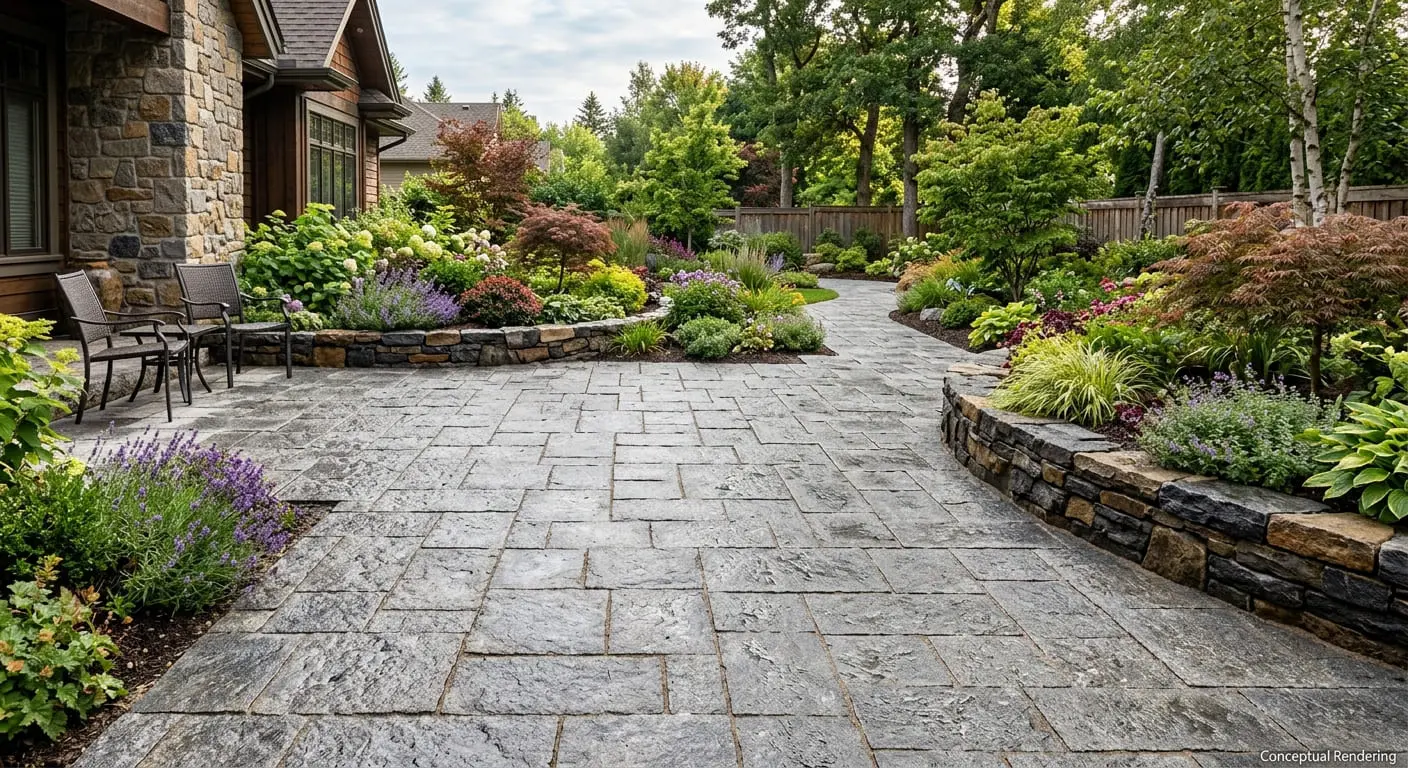
Finish and texture matter almost as much as color when it comes to hiding dirt. A textured hardscape surface breaks up light and shadow, so small stains and scuffs lose their outline. A smooth surface shows marks in full.
Western Interlock also points out that smooth-surface stones have no surface irregularities to hide blemishes. Here is how common exterior finishes compare:
Finish | How it looks | How well it hides dirt |
| Tumbled | Softened edges, worn, aged surface | Very well |
| Flamed | Rough, textured surface, common on granite and bluestone | Very well |
| Split face | Rugged, natural cleft surface | Very well, mostly used on walls |
| Sandblasted or brushed | Fine, even texture | Moderately well |
| Honed | Smooth, matte surface | Less well |
Textured finishes also tend to offer better grip when wet, which is a plus for pool decks, steps, and walkways. When you browse our pavers and exterior stone, look at the finish as closely as the color, since the two work together. Keep in mind that deep texture can hold onto fine dirt in its low spots, so an occasional scrub with a stiff brush keeps it looking fresh.
Sealing can help too. ICPI guidance notes that sealers can keep dirt from lodging in the surface of concrete pavers. Many sealers also deepen or enhance the color, so it is worth testing on a spare piece first to see how the final shade changes.
How do you choose the right hardscape color for your space?
The right hardscape color is the one that matches the kind of dirt your yard actually produces. Start by looking at what ends up on your current patio or walkway, then pick a shade that blends with it.
- Look at your soil. Red clay, brown loam, and tan decomposed granite all leave different colored dust. Note the color of the soil in your yard and compare it with the stone colors you’re considering.
- Check your trees. Oaks, maples, and fruit trees drop leaves and debris that can leave brown or dark stains. Earthy browns and multi-color blends handle this well.
- Think about pets and kids. Muddy paws and dropped snacks call for a blend or a speckled stone that keeps small messes from standing out.
- Consider sun and heat. Light colors stay cooler, while dark colors absorb more heat. A mid-tone tan or gray is often a comfortable middle ground for pool decks and play areas.
- Match the use. Driveways deal with oil and tires, outdoor kitchens see grease and spills, and front walks collect tracked-in dirt. Choose the color for the job each area does.
- Think about the light. Stone looks different in full sun, in shade, and when wet. Photos of your yard taken at different times of day can help you picture how a color will read in your space, and they’re useful to bring to a free design consultation.
It also helps to coordinate with your home’s exterior. A dirt-hiding color that also suits your siding, roof, and trim ties the outdoor space to the house while keeping upkeep low. If you’re working within a tighter budget, our overstock sale is also worth a look for discounted materials.
Conclusion
The best hardscape colors for hiding dirt and stains are the ones that live in the middle of the color range and carry some natural variation. Warm tans, earthy browns, medium grays, multi-color blends, and speckled granite all keep everyday dust, soil, and leaf stains from standing out. Pair one of those shades with a textured finish, and your patio, walkway, or pool deck will look cleaner between washes with less effort.
To compare these colors side by side, visit us in Sacramento, Reno or Minden, where our team can walk you through pavers, exterior stone, finishes, and color options during a design consultation. Bring a photo of your yard and a sense of how you use the space, and we’ll help you find a hardscape color that fits your home and your routine.
Frequently Asked Questions
Mid-tone, multi-color pavers hide dirt the best. Warm tan blends, earthy browns, medium gray, and speckled granite all sit close to the color of common outdoor dirt, so dust, soil, and leaf stains blend in rather than standing out.
Neither extreme is easiest. Light pavers show mud, rust, and leaf stains, while dark pavers show dust, water spots, and efflorescence. Mid-tone colors in the middle of the range are usually the easiest to keep looking clean.
Yes. Guidance from the Interlocking Concrete Pavement Institute, now part of the Concrete Masonry & Hardscapes Association, notes that dark-colored pavers show efflorescence more than lighter ones. Efflorescence is a white, powdery haze left when water carries salts to the surface. It is cosmetic and often fades with weathering or can be removed with a paver-safe cleaner.
Yes. Textured finishes like tumbled, flamed, and split face break up light and shadow, which makes small stains and scuffs harder to see. Smooth finishes like honed stone show marks more clearly.
A light to mid-tone tan, beige, or soft gray is a good choice for a pool deck. These colors stay cooler underfoot than dark stone while still hiding dust and everyday dirt better than bright white. A textured, slip-resistant finish adds grip around wet areas.
Sources
- Concrete Masonry & Hardscapes Association (formerly ICPI). Tech Note PAV-TEC-005: Cleaning, Sealing and Joint Sand Stabilization of Interlocking Concrete Pavement. https://www.cmha.org/resource/pav-tec-005/
- Mutual Materials. Maintenance Guidelines for Concrete Paving Products (based on ICPI Tech Spec guidance). https://www.mutualmaterials.com/wp-content/uploads/2018/05/Paver-Maintenance-and-Care.pdf
- Western Interlock. How to Effectively Remove Efflorescence from Your Paving Stones. https://westerninterlock.com/wp-content/uploads/2019/08/How-to-Effectively-Remove-Efflorescence-from-Your-Paving-Stones.pdf
- Stone Center. Full Color Bluestone Irregular Flagstone. https://stonecenters.com/stones/full-color-bluestone-irregular