Paver Designs for Modern Outdoor Spaces
Paver designs turn ordinary driveways, walkways, and garden paths into structured outdoor features built from natural stone or porcelain units. Homeowners across Northern Nevada and Northern California choose paver layouts for their pattern flexibility, texture variety, and ability to define distinct zones across a property.
In short, this approach is a planned arrangement of individual stone or porcelain units, set in a repeating pattern, that replaces a single poured surface with a more customizable, segmented one that can be adjusted section by section over time.
Selecting the right layout starts with matching material to location, since a driveway built for vehicle traffic has different demands than a garden path meant mainly for foot traffic and visual appeal. Granite, travertine, and porcelain units are commonly specified for exterior paver work because each is generally suited to outdoor conditions, though exact performance still depends on the specific product line, so confirming details with a specialist is worthwhile before ordering.
Color, finish, and pattern each play a role in how a layout reads once it is set in place. This guide covers popular layouts, a material comparison, and a short planning checklist for anyone weighing exterior stone options for a driveway, walkway, or garden.
Why Do Paver Layouts Add Long-Term Curb Appeal?
A well-planned paver layout does more than fill the space between a driveway and a front door. Pattern choice, color contrast, and material selection each shape how a property reads from the street, and small layout decisions tend to compound into a noticeably more finished exterior over time. Even a modest walkway can shift how a whole front yard is perceived once the pattern and border are set.
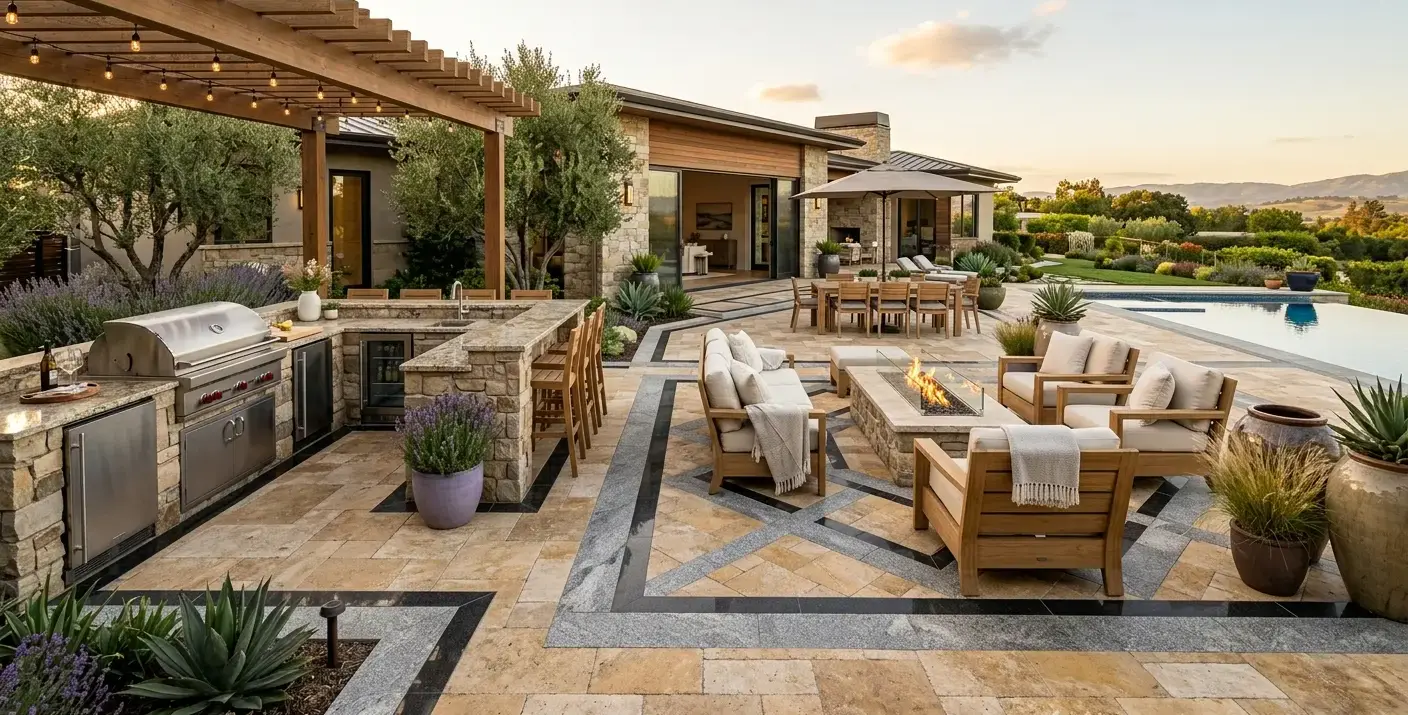 Conceptual rendering
Paver layouts also give homeowners more control over scale and proportion than a single poured surface typically allows. Borders, insets, and transition strips can visually separate a driveway from a walkway or a garden bed without adding new structures, which is part of why modern paver ideas continue to shape exterior renovation projects across the region. Mixing two complementary materials within one layout is another way homeowners are adding depth to otherwise flat surfaces.
Benefits worth weighing before choosing a layout include:
- Pattern flexibility, from herringbone driveways to running-bond walkways
- A range of natural stone and porcelain material options
- Distinct color and texture combinations for zoning outdoor areas
- Durability suited to exterior conditions, though proper care preserves appearance over time
- Visual continuity between a home's exterior and its surrounding landscaping
- Layout options that scale from a single walkway to a full driveway
The table below lines up the three material families most often specified for exterior paver work, so the trade-offs are easier to compare at a glance.
Paver Material Comparison
Material | Style & Color | Maintenance | Outdoor Suitability |
Granite Pavers | Bold, speckled natural patterns | Periodic sealing recommended | Commonly used outdoors; confirm product test data with a specialist |
Travertine Pavers | Warm, earthy tones with natural texture | Regular sealing recommended | Commonly used outdoors; confirm freeze-thaw and de-icing suitability with a specialist |
Porcelain Pavers | Wide, consistent color and pattern range | Sealing typically not required | Commonly used outdoors; confirm exterior and freeze-thaw suitability for the specific product |
Where Paver Layouts Work Best: Applications and Style Ideas
Paver applications vary by traffic load, sun exposure, and the look a homeowner wants to achieve, so the right approach often shifts from a driveway to a walkway to a garden path even on the same property. Many homeowners researching modern paver designs for curb appeal start by comparing a few layout styles before narrowing material choices, since the pattern and border often matter as much as the material itself. The breakdown below covers common approaches by area, along with a short list of advantages and considerations to weigh first.
Advantages and Considerations
- Advantage: Individual units can be replaced without disturbing the full surface
- Advantage: Pattern and border combinations support a range of architectural styles
- Consideration: Material choice should match sun exposure and expected traffic load
- Consideration: Sealing needs vary by stone type and are worth confirming with a specialist
Driveway Paver Layouts
Driveway layouts generally favor larger-format units set in running-bond or herringbone patterns, since these patterns distribute vehicle weight evenly across the surface. Granite and porcelain units are frequently specified for driveways, since both are commonly used outdoors, though thickness and base requirements should be confirmed for vehicle traffic.
A contrasting soldier-course border is a common way to frame a driveway edge without adding a separate structure, and a darker accent tone can help hide everyday tire marks and road dust between cleanings.
Granite dimension stone is covered by ASTM C615, which sets physical requirements for absorption, density, abrasion resistance, and strength, so product test data is worth requesting before a driveway order.. Drivers comparing options in person can explore the Fernley showroom to view granite and porcelain driveway samples firsthand.
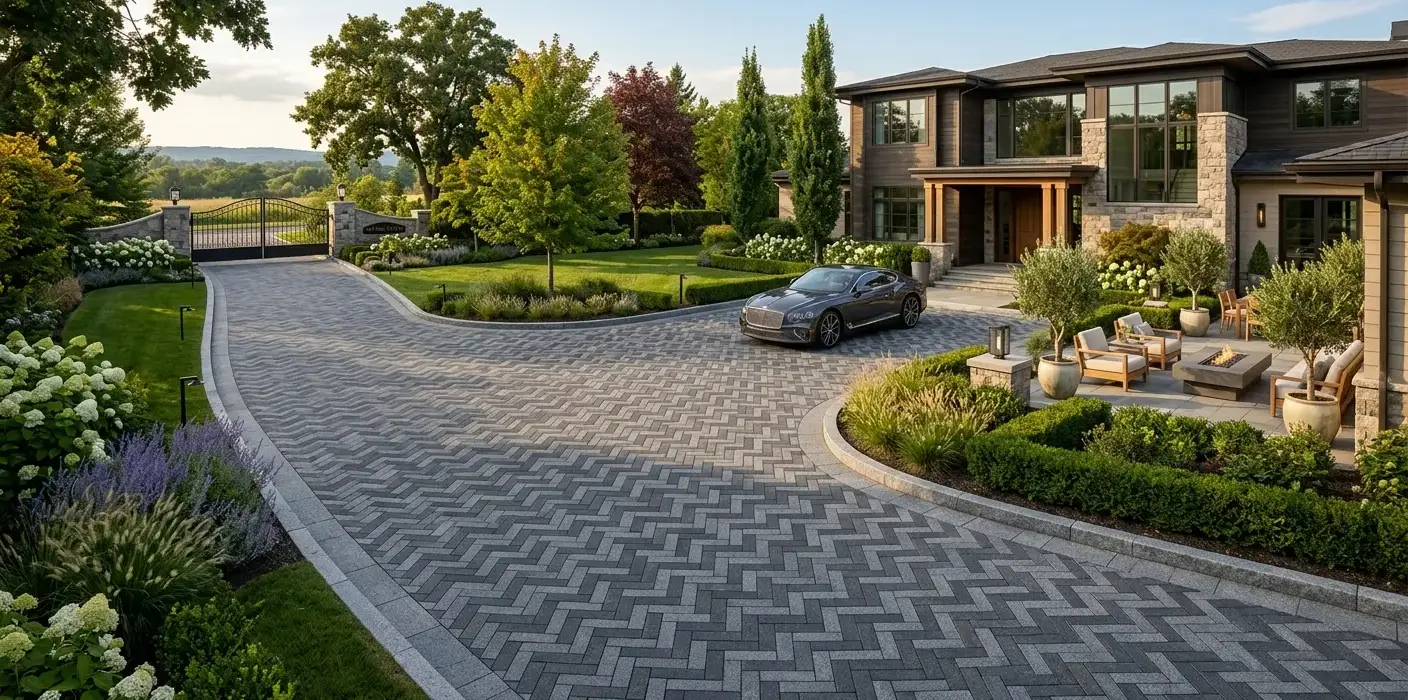 Conceptual rendering
Walkway Paver Layouts
Walkway layouts favor smaller-format units and tighter patterns, such as basketweave or running bond, since the scale reads better on a narrower surface. A stepping-stone style layout, spaced with planting between units, works well for a garden entry path rather than a main walkway.
Travertine is a popular choice for walkway work, since it is generally suited to outdoor use with a warm, textured surface, though confirming a specific product's outdoor suitability with a specialist is still recommended before final selection. A textured or matte finish is worth prioritizing on any walkway, since a smoother polished surface tends to feel more slippery once wet.
Shoppers near the area can visit the Reno showroom to see travertine and granite walkway samples in person. Travertine is covered by ASTM C1527, which sets physical requirements for absorption, density, abrasion resistance, and strength. For broader technical background, the Natural Stone Institute publishes a Dimension Stone Design Manualwith chapters on granite, travertine, and horizontal paving surfaces.
Garden and Patio Paver Layouts
Garden paths and patio layouts tend to favor irregular or modular patterns that echo natural stone quarrying, paired with wider joints for planting. Mixed-material borders, such as a granite edge around a travertine field, are a common way to add contrast without overwhelming a smaller space.
Raised planting beds and low seating walls built from matching stone can tie a patio layout back into the surrounding garden. Current exterior trends, including ideas featured in this recent design events roundup, continue to influence how modular stone layouts appear in residential gardens.
Homeowners near the Minden service area can explore the Minden showroom to compare material samples in person. Sacramento-area shoppers can browse the Sacramento location page for regional availability before finalizing a garden layout.
Planning a Paver Layout: A Quick-Start Guide
- Measure the driveway, walkway, or garden area to confirm total coverage needed.
- Compare granite, travertine, and porcelain options for the specific exposure and traffic level.
- Select a base pattern, such as herringbone, running bond, or a modular mix.
- Choose a border or accent color that complements the home's existing exterior.
- Confirm sealing needs and finish details with a Nova design specialist before ordering.
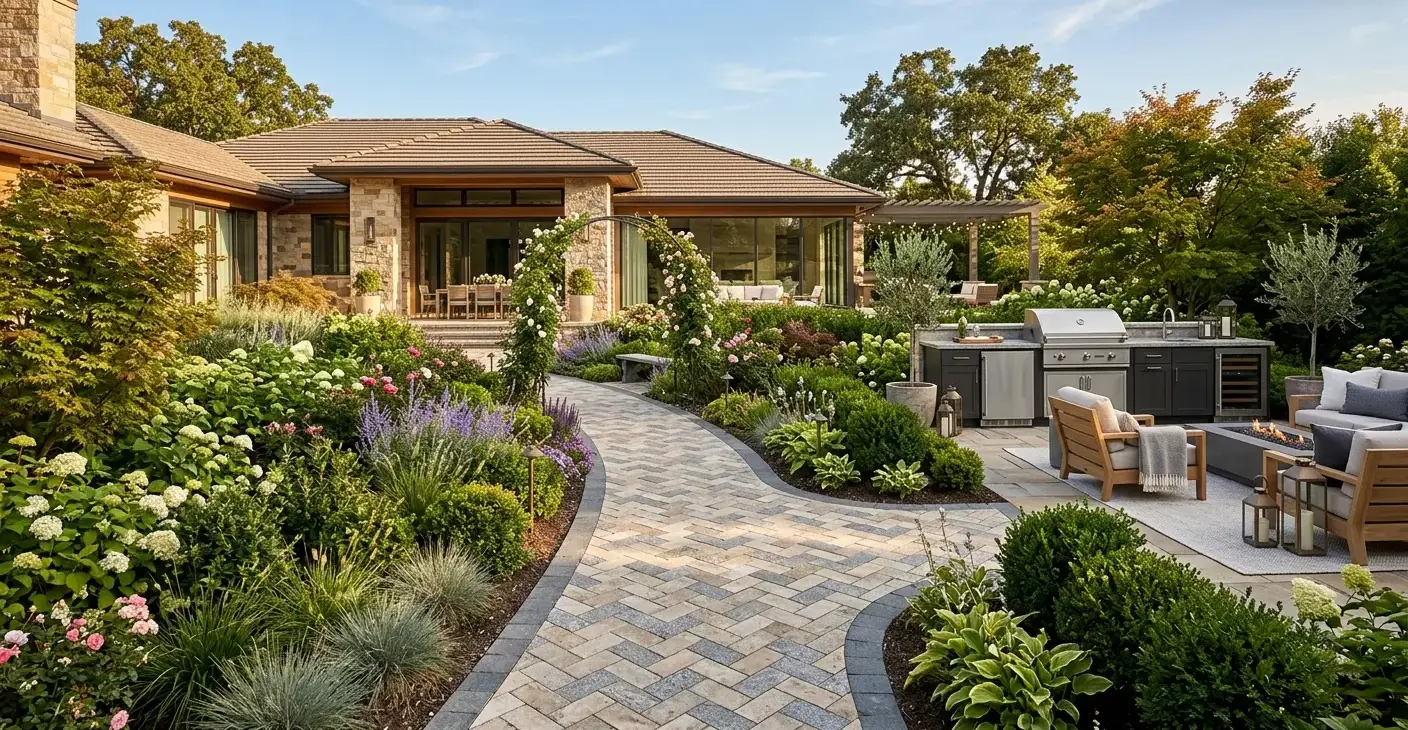 Conceptual rendering
Note: Some images on this page may be conceptual renderings created to illustrate design possibilities and may not depict actual installations.
Nova Tile and Stone: Expert Guidance for Exterior Paver Projects
Choosing between granite, travertine, and porcelain paver options is easier with an experienced material specialist involved early in the planning process. Nova Tile and Stone showrooms stocks a range of exterior-rated stone and porcelain units suited to driveway, walkway, and garden applications, backed by specialist guidance on pattern, color, and sealing needs for each material and finish.
Orders placed through Nova Tile and Stone also include shipping arrangement to supported service areas, which helps simplify sourcing for larger driveway or patio projects. A specialist can also help compare finish options side by side, since a polished, honed, or textured surface changes both the look and the slip resistance of a finished layout. Shoppers ready to compare options in person can schedule a free consultation with a design specialist before finalizing a layout.
Conclusion
Paver designs offer a flexible way to upgrade a driveway, walkway, or garden path with materials suited to outdoor conditions and a range of design styles. From pattern selection to material comparison, the right layout depends on traffic, exposure, and personal style. Shoppers can browse slab options online to compare additional exterior-ready materials before starting a project.
Frequently Asked Questions
Herringbone and running-bond patterns are common driveway choices, often set in granite or porcelain since both are generally suited to vehicle traffic and outdoor exposure. A contrasting border is a common finishing touch on either pattern.
A single pattern can sometimes carry across a property, though walkways typically use tighter joints while garden paths often use wider, planted joints for a softer, less formal look overall.
Sealing needs vary by material. Granite and travertine generally benefit from periodic sealing, while porcelain typically does not require it, so confirming specifics with a specialist is recommended before ordering.
Natural stone units, such as granite or travertine, offer unique veining and texture that varies piece to piece, while porcelain units offer more consistent color and pattern repetition across a project.
Planning typically starts with measuring the space, reviewing material options suited to outdoor use, and comparing patterns before scheduling a consultation with a design specialist to confirm final details.
Visit our Showrooms Now!
Book your free consultation today!
FERNLEY
1855 US Highway 95A North, Fernley, NV 89408
 Google Maps
Store hours this week:
- Mon. - Fri.: 7:30 am - 4:00 pm
- Sat. - Sun.: Closed
RENO
12835 Old Virginia Rd Suite 24, Reno, NV 89521
Store hours this week:
- Mon. - Fri.: 7:30 am - 6:00 pm
- Sat.: 9:00 am - 3:00 pm
- Sun.: Closed
MINDEN
2548 Business Pkwy, Minden, NV 89423
Store hours this week:
- Mon. - Fri.: 7:30 am - 6:00 pm
- Sat.: 9:00 am - 3:00 pm
- Sun.: Closed
SACRAMENTO
6100 Warehouse Way, Sacramento, CA 95826
Store hours this week:
- Mon. - Fri.: 7:30 am - 5:00 pm
- Sat. - Sun.: Closed