At a Glance
- Best for: adding texture and visual weight to the lower third of a facade
- Common height: often 3 to 4 feet, adjusted to the home's proportions
- Outdoor-approved stone categories: granite, quartzite, travertine and porcelain
- Care: natural stone generally needs sealing, while porcelain typically does not
- Next step: confirm the exact product's exterior rating with a design consultant
In This Guide
- Key benefits of exterior stone wainscoting
- Design ideas for entries, garages and column bases
- Color, texture and climate planning
- A stone category comparison table
- Advantages and trade-offs to weigh
- A four-step planning guide
- How Nova supports your stone selection
Stacked Stone Wainscoting for Home Exteriors
Stacked stone wainscoting is a band of layered stone along the lower section of an exterior wall. It adds texture, depth and a grounded look to a plain facade.
Homeowners often ask how to add stacked stone wainscoting to a home exterior. The short answer is to settle three things first: wall height, stone profile and outdoor suitability.
Height matters because a band that sits too low looks like an afterthought, while one that climbs too high can overpower the windows above it.
Stone choice matters just as much. Outdoor-approved categories at Nova include granite, quartzite, travertine and porcelain, while marble and dolomite are better reserved for indoor spaces.
Exposure plays a role too, since sun, snow and sprinkler spray reach the lower wall first. Confirming the exact product's exterior rating early helps prevent surprises later.
This guide covers the benefits of exterior stone wainscoting, design ideas by area, a stone comparison and a four-step planning checklist. Nova serves Reno, Sacramento, Fernley and Minden.
Key Benefits of Exterior Stone Wainscoting
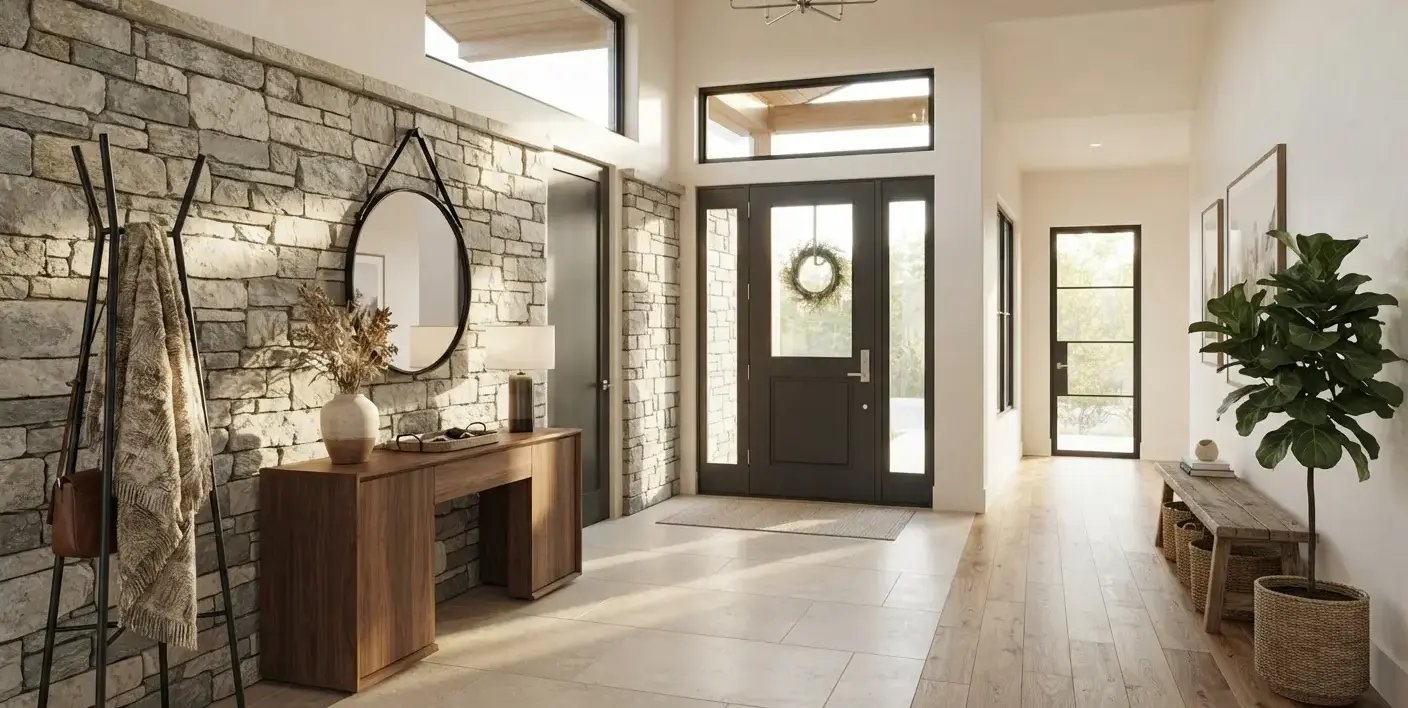
Texture is the main draw. Stacked stone creates irregular shadow lines that shift through the day, giving flat siding or stucco a layered, dimensional look.
Wainscoting also anchors the home visually. A stone base can tie the structure to its landscape and balance heavy rooflines, especially on single-story and ranch-style homes.
Natural stone can perform well outdoors, but results depend on the product, exposure and upkeep. Sealing is generally recommended for granite, quartzite and travertine, and stone care guidance explains what to expect from a sealer.
 Conceptual rendering
The main advantages include:
- Dimensional texture that adds depth to stucco, siding or smooth panels
- A visual base that grounds tall or narrow facades
- Natural color variation that suits desert and mountain landscapes
- A durable surface in many exterior settings, with product confirmation and proper care
- Flexible placement on entries, garages, porches and column bases
Exterior Stone Wainscoting Design Ideas by Area
Placement and proportion shape the result more than any single product choice. Color, grain and surface finish are also standard stone selection criteria for building projects.
Entryways and Porches
Entry walls draw the most attention, so a stone band here makes a strong first impression. Pair it with a contrasting door color and warm lighting for added depth.
Porch walls and steps look best with a consistent stone tone. Favor textured finishes near walkways, since polished surfaces become slippery when wet.
 Conceptual rendering
Garages and Side Walls
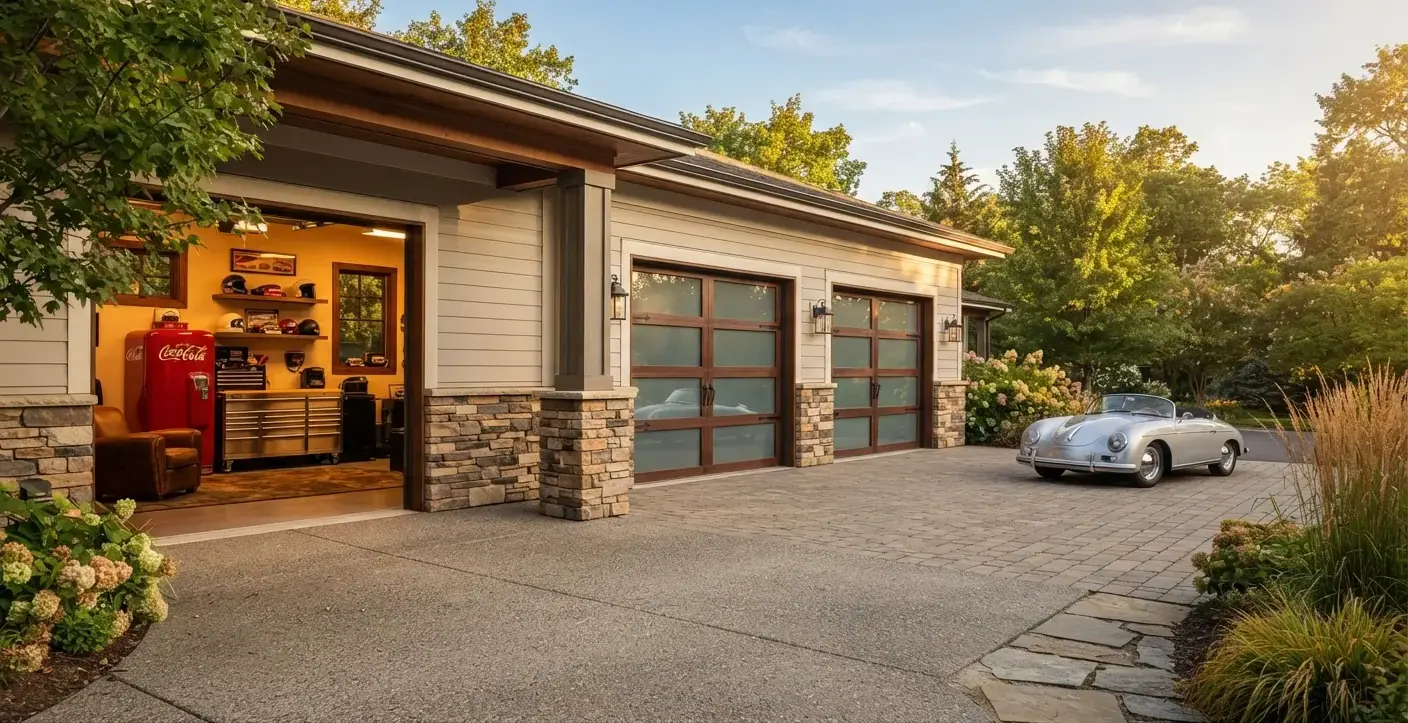
Garage fronts are wide and plain, which makes them strong candidates for a lower stone band. The texture breaks up the expanse and visually grounds the door line.
Side walls and rear patios can carry the same wainscoting, creating continuity as the eye moves around the home.
Column Bases and Planter Walls
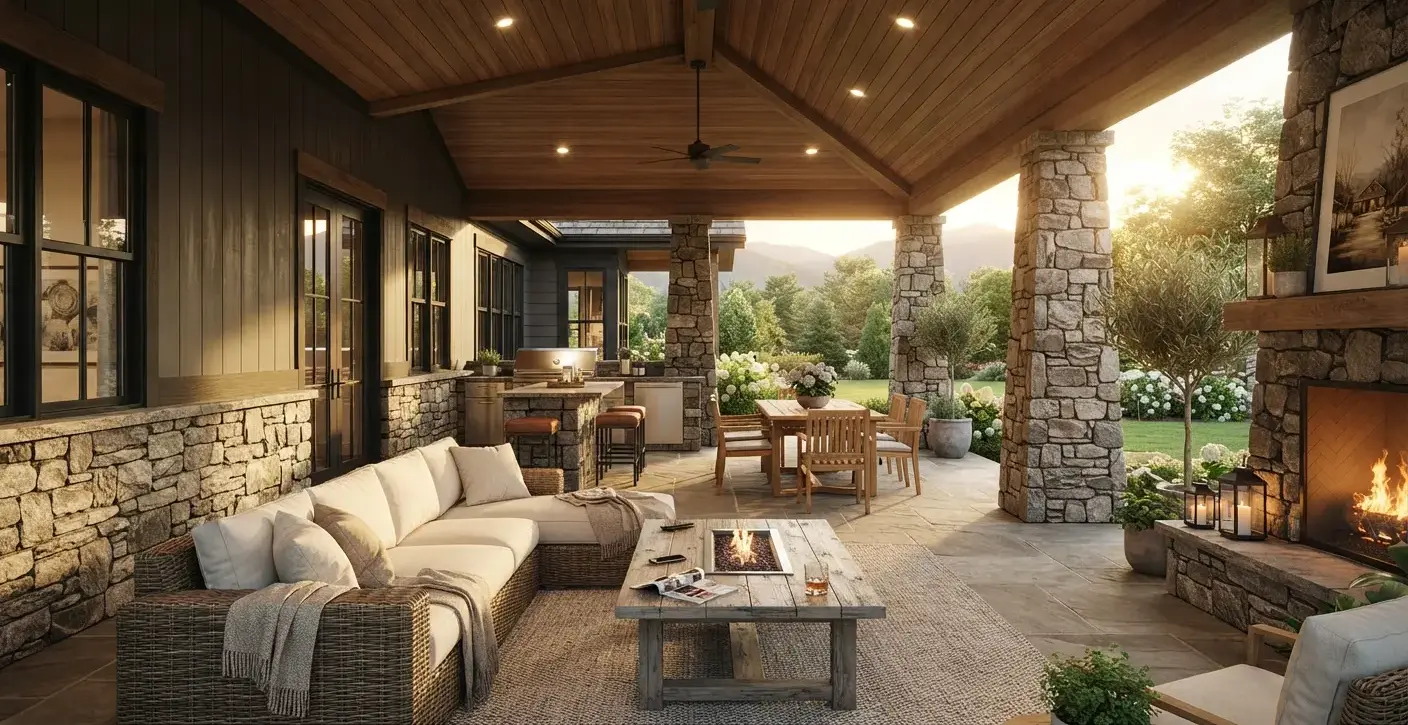
Stone-clad column bases add structure to porches and pergolas, while low planter walls extend the material into the landscape. Repeating one stone keeps the design cohesive.
Wall bases also take the most splash and snowmelt, so building-science guidance on drainage at the bottom of exterior walls is worth reviewing with your project team.
Choosing Color and Texture
Warm-toned stone pairs well with cream stucco and wood accents, while cooler grays suit charcoal trim and modern rooflines. Compare pieces in daylight, since color shifts through the day.
Rougher, deeply stacked textures read as rustic, while tighter, flatter profiles feel more contemporary. Match the profile to the architecture of the home rather than a passing trend.
Planning for Climate and Exposure
Northern Nevada and Northern California homes can face strong sun, winter freezes and wide temperature swings. Ask for the product's freeze-thaw performance and UV details, since exposure ratings vary by product.
Sprinklers and snow piles also leave moisture at the wall base. Directing spray away from the stone and clearing drifts promptly can help limit staining.
Comparing Outdoor-Approved Stone Categories
Browse outdoor stone options online, then compare categories using the table below. Stacked profiles vary by product, so verify the exact product's UV rating and manufacturer sun exposure approval before ordering.
Stone Category | Outdoor Use | UV Note | Sealing | Look |
Granite | Outdoor approved | UV-resistant category; confirm product rating | Generally recommended | Crystalline, speckled grain |
Quartzite | Outdoor approved | UV-resistant category; confirm product rating | Generally recommended | Soft veining in cool or warm tones |
Travertine | Outdoor approved | Not in the general UV-resistant category; verify product rating | Generally recommended | Warm, earthy tones with natural texture |
Porcelain | Outdoor approved | UV-resistant category; confirm product rating | Typically not required; follow product guidance | Consistent, stone-look patterns |
Advantages and Trade-Offs
Every material choice involves balance. This summary weighs the strengths of stone wainscoting against the points that need planning.
Advantages
- Adds depth and texture that flat finishes cannot
- Visually anchors the home and ties it to the landscape
- Offers wide color variety across natural stone categories
- Suits both modern and traditional architecture
Trade-Offs
- Natural stone generally needs periodic sealing
- Color and texture vary between pieces, so expect natural variation
- Lower walls take splash, so occasional rinsing may be needed
- Exposure ratings differ by product and must be confirmed
How to Add Stone Wainscoting to a Home Exterior in 4 Steps
 Conceptual rendering
- Set the height. Measure the wall and mark a band near one-third of its height, then adjust for window sills, rooflines and entry proportions.
- Choose profile and tone. Match the stone color to roofing, trim and landscape, and view several pieces together rather than one at a time.
- Confirm exterior suitability. Ask for the product's outdoor rating, freeze-thaw performance and UV details for your exposure before selecting.
- Plan the details. Decide how caps, corners and transitions to siding or stucco should look, then book a free consultation to finalize the selection.
How Nova Tile and Stone Supports Your Project
Nova Tile and Stone is a direct-import natural stone and tile supplier. Commission-free design consultants help match stone to exposure, style and wall height.
Visit the Reno showroom to compare stone tones under natural light. The Sacramento showroom offers the same guidance for Northern California homeowners.
Homeowners near Fernley can stop by the Fernley showroom for local support. The Minden showroom rounds out regional coverage, and arranged delivery assistance can help coordinate materials arriving at the project site.
Ready to narrow your options? Request a free design consultation to review stone categories, exposure ratings and delivery assistance.
Key Takeaways
- Wainscoting works best when height, profile and exposure are planned together
- Granite, quartzite, travertine and porcelain are outdoor-approved categories, while marble and dolomite suit indoor spaces
- UV performance is product-dependent, so verify the exact product's rating and manufacturer sun exposure approval
- Natural stone generally needs sealing, while porcelain typically does not, though guidance varies
- Textured finishes suit walkways and other wet-prone areas
Note: Some images on this page may be conceptual renderings created to illustrate design possibilities and may not depict actual installations.
Plan Your Wainscoting With Expert Guidance
Choosing stone for the lower third of your home should feel clear, not overwhelming. A free consultation with Nova's commission-free design consultants helps you compare outdoor-approved stone categories, confirm exposure details and match tones to your roofline and landscape.

Sacramento
6100 Warehouse Way, Sacramento, CA 95826
- Mon–Fri: 7:30am – 6:00pm
- Sat: Closed
- Sun: Closed

BOOK NOW
Minden
2548 Business Pkwy, Minden, NV 89423
- Mon–Fri: 7:30am – 6:00pm
- Sat: 9:00am – 3:00pm
- Sun: Closed

BOOK NOW
Reno
12835 Old Virginia Rd, Suite 24 Reno, NV 89521
- Mon–Fri: 7:30am – 6:00pm
- Sat: 9:00am – 3:00pm
- Sun: Closed

BOOK NOW
Frequently Asked Questions
Exterior stone wainscoting is a band of layered stone covering the lower portion of an exterior wall. It adds texture and visual weight, often reaching 3 to 4 feet in height. Suitability depends on the specific product, so confirm its exterior rating before choosing.
A common starting point is about one-third of the wall height, often 3 to 4 feet on single-story homes. Adjust for window sills, rooflines and entry proportions so the band looks intentional. A design consultant can review photos of your home and suggest a balanced height.
Granite, quartzite, travertine and porcelain are outdoor-approved categories at Nova, while marble and dolomite are better reserved for indoor spaces. Granite, quartzite and porcelain are UV-resistant categories. Travertine is not in that general category, so verify the exact product's UV rating and manufacturer sun exposure approval.
Granite, quartzite and travertine generally need sealing, while porcelain typically does not, though guidance varies by product. Sealing can help resist staining, but it does not make stone immune to damage. Rinse splash zones near the base periodically and clean spills promptly with non-abrasive products.
Nova serves Fernley, Reno, Minden and Sacramento, with a showroom in each location. Visit a showroom to compare stone tones in person, and ask a commission-free design consultant about arranged delivery assistance. Appointments are free to book and can be scheduled in advance.
Sources
- Stone care guidance from the Natural Stone Institute
- Stone selection criteria from the U.S. Geological Survey
- Building-science guidance from the Building America Solution Center