AT A GLANCE
- Natural stacked stone generally ages with less visible change than brick, because its color comes from the stone itself rather than a coating.
- Clay brick usually shows age first at the mortar joints, which crack and erode over time and eventually need repointing.
- Manufactured stacked stone is colored with pigments and can fade in strong sun or show gray concrete when chipped.
- Some iron-bearing natural stones can develop warmer, rust-toned spots over time, and painted brick needs periodic repainting.
- Climate, sun exposure, and moisture affect how both materials age, and many homes combine stacked stone and brick.
IN THIS POST
- How does stacked stone age on a house?
- How does brick age on a house?
- Does natural stacked stone age differently than manufactured stone?
- Which holds its color better over time?
- How does climate affect aging?
- Which one needs more upkeep as it ages?
- Which one fits the style of your home long term?
- Conclusion
- Frequently Asked Questions
- Sources
Natural stacked stone generally ages better than brick on a house exterior, with less visible change and less long-term maintenance. Natural stacked stone gets its color from the stone itself, so it does not peel, and most varieties change very little over decades apart from slight weathering on softer stones and rust-toned spots on some iron-bearing stones. Clay brick is also a well-established exterior material, but brick walls age through their mortar joints, which crack and erode over time and eventually need repointing.
The comparison depends on which type of stacked stone you mean. Manufactured stacked stone, a cast concrete product colored with pigments, can fade in strong sun and show gray concrete when chipped, so it tends to show its age sooner than natural stone or unpainted brick. Painted brick also needs periodic repainting. Climate, sun exposure, and moisture affect how both materials age, and many homes use stacked stone and brick together.
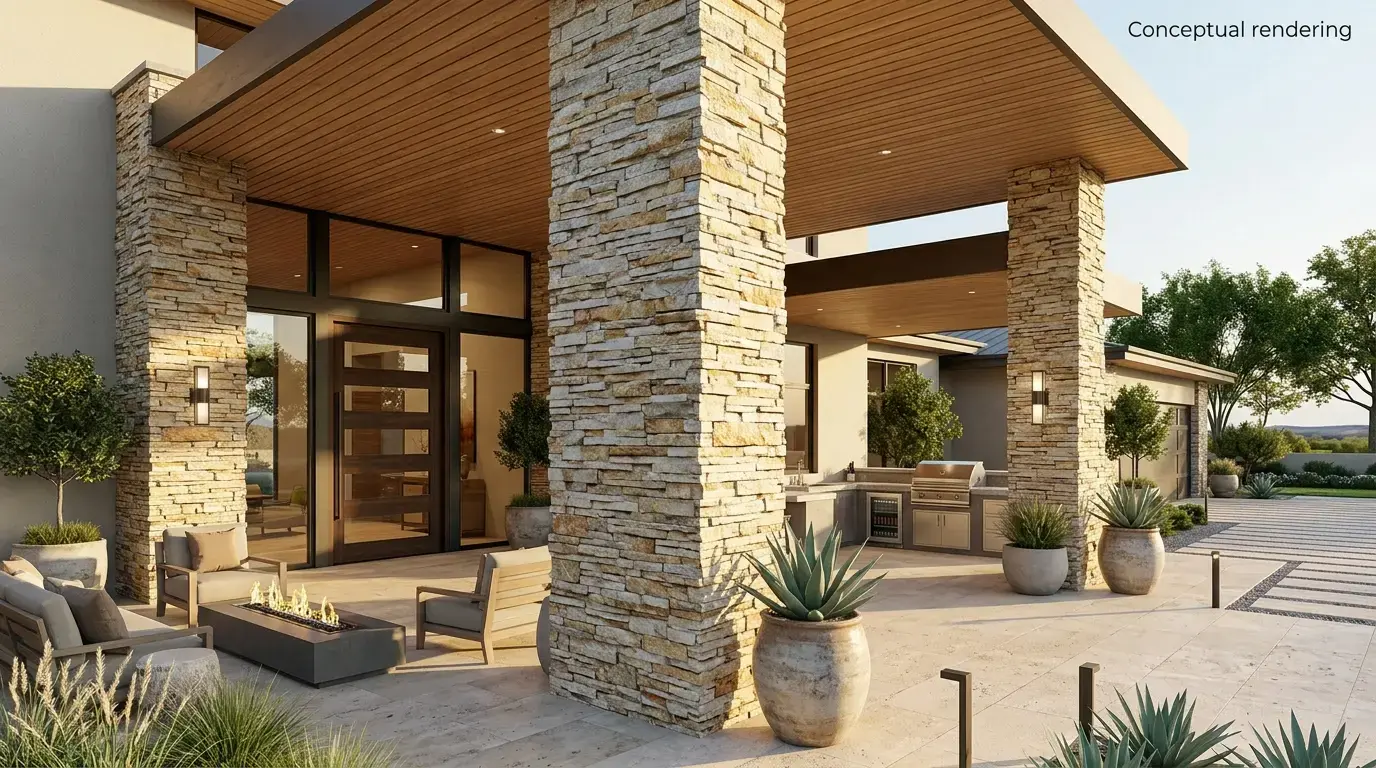
How does stacked stone age on a house?
Natural stacked stone ages gradually. The panels and ledgers are cut from quarried stone such as quartzite, slate, limestone, sandstone, and granite, so the color and texture you see on day one is the same material all the way through. Sun, rain, and temperature swings can soften the surface over many years, but they do not peel or wear away a finish, because there is no applied finish to lose.
What you will notice over time is mostly subtle. Some stones, especially softer limestones and sandstones, may weather slightly and take on a more muted tone. Dense stones like quartzite and granite tend to change very little, although stones that contain iron-bearing minerals can slowly develop warmer, rust-toned spots or streaks as the iron oxidizes. Dirt, pollen, and organic growth can also collect in the deeper shadow lines of a split-face or ledgestone profile, particularly on shaded north-facing walls, though a gentle rinse usually brings the face back. If you are comparing options in our exterior stone selection, which includes stacked stone alongside pavers and pool coping, it is worth asking which stones are prone to color change before you choose.
Some homeowners prefer how natural stacked stone looks after a few seasons, once small variations in tone blend together and the wall reads as part of the house rather than a recent addition.
How does brick age on a house?
Clay brick has a long track record on homes, and well-fired brick holds up to weather well. In most cases, the bricks themselves are not what shows age first. The mortar joints are.
Mortar is softer than the brick around it by design, so it takes most of the wear from rain, freeze-thaw cycles, and movement in the wall. Over the decades, joints can crack, erode, or recede from the face of the brick. When that happens, a mason repoints the wall by removing the worn mortar and replacing it. This is a normal part of owning a brick home, not a sign that something has gone wrong.
Brick can also show age through:
- Spalling, where the face of a brick flakes or pops off, usually from trapped moisture that freezes and expands, salt buildup, or replacement mortar that is harder than the brick.
- Staining from runoff, metal fixtures, or landscape irrigation hitting the wall.
- Fading or peeling on painted brick, which needs periodic repainting. Estimates range widely, from a few years to 15 or more, depending on the paint, the prep, and sun exposure. Unpainted brick keeps its fired color much longer.
One point in brick’s favor: an older brick wall with weathered joints and a slightly softened face is a look some homeowners seek out on purpose. Brick tends to age into “established” rather than “worn out.”
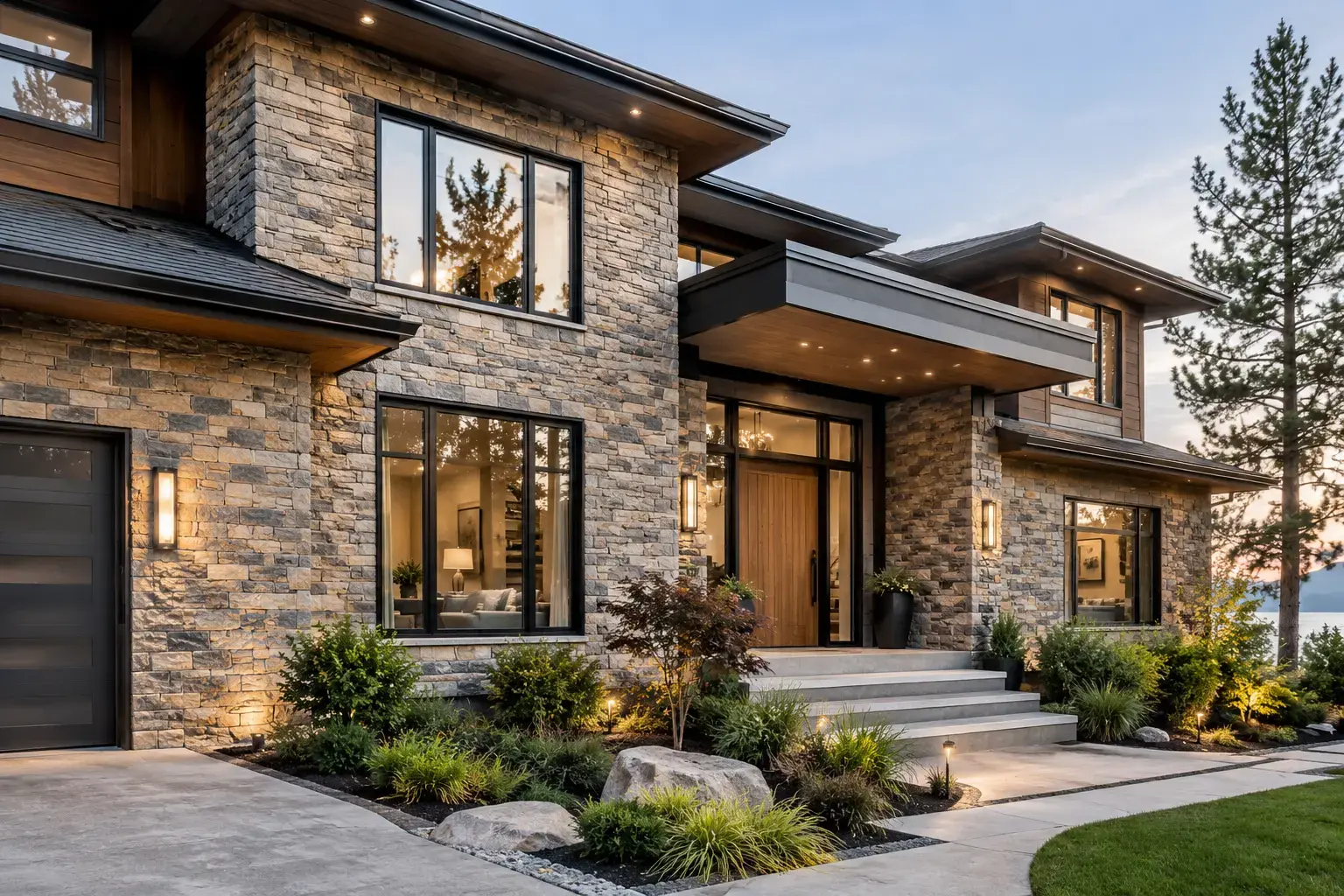
Does natural stacked stone age differently than manufactured stone?
Yes, and this is one of the most important distinctions in this comparison. When people say stacked stone, they may mean natural stone panels or manufactured stone veneer, which is a cast product made to look like stone.
Manufactured stone gets its color from pigments added during production. Depending on the product and the exposure, that color can fade or shift over years of direct sun, especially on south- and west-facing walls. Many manufacturers use UV-resistant iron oxide pigments to limit this, and some note that the color can lighten slightly as the product cures, so results vary by brand. A chip or crack can also expose the plain gray concrete underneath, which does not match the colored surface. Natural stacked stone avoids both issues, because the color is the stone.
If long-term appearance is your top priority, natural stacked stone is the fairer comparison to brick, since both get their color from natural minerals. Manufactured stone can still be a reasonable choice for other reasons, such as lighter weight or lower cost, but it ages on its own timeline. If cost is the main concern, our overstock sale is also worth checking for discounted materials.
Which holds its color better over time?
Natural stacked stone and unpainted clay brick both hold their color well, because their color comes from minerals rather than coatings. Brick’s color comes from the clay and the firing process. Stacked stone’s color comes from the stone itself.
The practical difference is in how each wall reads as a whole. A brick wall is two materials, brick and mortar, and the mortar may darken, lighten, or get patched in a slightly different shade over the years. A natural stacked stone wall with a dry-stack look has fewer visible joints, so its overall color tends to stay more consistent.
The products most likely to change color noticeably are painted brick and some manufactured stone. Among natural stones, iron-rich varieties and some slates are the most likely to shift in tone over time. If color stability matters to you, ask how a specific product gets its color before you choose, or book a free design consultation to talk through options with our team.
How does climate affect aging?
Climate is one of the biggest factors in how both materials age.
- Freeze-thaw climates: Water that gets into masonry and then freezes is one of the main threats to both brick and stone. Dense stones like granite and quartzite resist this well. Softer, more porous stones and brick not rated for severe weathering are more vulnerable to spalling.
- Hot, sunny climates: Strong UV mostly matters for manufactured stone and painted brick. Natural stone and unpainted brick handle sun with little change.
- Wet or shaded areas: Moss, algae, and efflorescence show up more often on walls that stay damp. This affects brick and stone alike, and good drainage and gutters help both.
Across Northern California and Northern Nevada, homes see everything from hot, dry summers to mountain freezes. That range is a good reason to choose a dense, low-absorption material for exposed walls and to keep irrigation spray off the base of any masonry wall. We can help you compare stone options for your climate at any of our local showrooms.
Which one needs more upkeep as it ages?
Over the long term, natural stacked stone generally needs less upkeep. A periodic rinse, an occasional check for loose pieces, and keeping water and soil away from the base of the wall covers most of it. Some homeowners choose to apply a breathable penetrating sealer to porous stone, though many dense stones do fine without one.
Brick’s main long-term task is mortar care. Plan on inspecting joints every few years and budgeting for repointing at some point in the life of the house. Estimates for how long mortar joints last before they need repointing vary widely, often from about 20 years to 50 or more, depending on exposure and workmanship. Painted brick adds repainting to that list.
| Aging factor | Natural stacked stone | Clay brick |
| Where color comes from | The stone itself | The clay and firing |
| What shows age first | Surface weathering, dirt in shadow lines | Mortar joints |
| Main long-term upkeep | Rinsing, optional sealing | Joint inspection and repointing |
| Common issues | Efflorescence, organic growth, iron staining in some stones | Efflorescence, spalling, mortar erosion |
| Painted version needs repainting? | Not applicable | Yes |
Which one fits the style of your home long term?
Aging well is not only about materials holding up. It is also about whether the look still suits the house years from now.
Brick has deep roots in Colonial, Georgian, Tudor, and other traditional styles, and it reads as classic on those homes. Craftsman homes often combine the two, with brick or stone on porch piers and chimneys. Stacked stone fits naturally on Mountain, Rustic, Contemporary, and Modern Farmhouse designs, and its clean horizontal lines suit many newer homes.
Many houses mix the two materials. A common approach is brick or siding on the main walls with stacked stone on columns, the chimney, a wainscot band, or the front entry. Combining materials lets each one do what it does best and can keep an exterior from looking dated as trends shift. Builders, designers, and contractors planning mixed-material exteriors can apply for a trade account for trade pricing and job-site delivery.
Conclusion
For most homes, natural stacked stone ages with less visible change and less routine upkeep, because its color is part of the stone and it has fewer exposed mortar joints to wear. Clay brick also ages well, but it ages through its mortar, so plan on joint care over the life of the house. Manufactured stone and painted brick are the two options most likely to show their age in color first.
The right answer for your house also depends on its style, your climate, and how the wall will be exposed to sun and water. Many exteriors combine both materials, using each where it fits best.
We would be glad to help you explore the exterior stone options we carry and see how different colors and textures look in person. Stop by any of our showrooms in Sacramento, Reno, Minden, or Fernley, and our team can talk through what will suit your home and climate.
Note: Some images on this page may be conceptual renderings created to illustrate design possibilities and may not depict actual installations.
Frequently Asked Questions
Natural stacked stone and clay brick can both last for the life of a house when they are well chosen for the climate and kept dry at the base. The bigger difference is how they age, not how long they last. Brick needs periodic mortar care, while natural stacked stone mostly needs occasional cleaning.
Natural stacked stone generally does not fade in a noticeable way, because its color comes from the minerals in the stone. Some iron-bearing stones can warm in tone or show rust spots over time, which is a mineral change rather than fading. Manufactured stacked stone can fade over time in strong sun, since its color is added with pigments during production, though how much depends on the product.
That white, powdery residue is usually efflorescence. It forms when water moves through masonry, dissolves natural salts, and leaves them on the surface as it evaporates. It can appear on both brick and stone, and reducing moisture at the source is the long-term fix.
Yes. Many homes pair brick or siding on the main walls with stacked stone on columns, chimneys, wainscot bands, or entry areas. Choosing stone tones that relate to the brick color helps the two materials look intentional together.
Usually not. Natural stacked stone typically needs an occasional rinse and a check for loose pieces, with sealing as an option for more porous stones. Brick needs periodic mortar inspection and eventual repointing, plus repainting if it has been painted.
SOURCES
- National Park Service, Preservation Brief 2: Repointing Mortar Joints in Historic Masonry Buildings - https://www.nps.gov/orgs/1739/upload/preservation-brief-02-repointing.pdf
- Brick Industry Association, Technical Note 23A: Efflorescence, Causes and Prevention - https://www.gobrick.com/media/file/23a-tn23a.pdf
- National Slate Association, Slate Colors and Characteristics - https://www.slateassociation.org/slates/slate-colors/
- ASTM International, ASTM C216: Standard Specification for Facing Brick - https://store.astm.org/c0216-26a.html