Stacked stone is a natural or manufactured stone veneer made of thin, rectangular strips set in tight horizontal layers to add texture and depth to walls. On home exteriors, it is most often used on front facades, entry columns, chimneys, garage surrounds, and outdoor kitchens. The main styles are ledgestone, split face, dry stack, 3D, and honed, and common stone types include quartzite, slate, sandstone, limestone, and travertine. Colors generally fall into four families: warm tones like gold and rust, cool tones like gray and charcoal, light neutrals like white and ivory, and multi-tone blends. The best choice depends on your home's architecture, your roof and siding colors, and how well the stone handles your local climate.
Natural vs. Manufactured Stacked Stone
Most stacked stone for homes comes in one of two forms, and the difference affects weight, color consistency, and how the material performs outdoors.
Natural stacked stone panels are made from real quarried stone such as quartzite, slate, or sandstone. Individual strips are bonded together into panels, and many use a stepped or Z-shaped edge so they interlock and hide vertical seams. Matching L-shaped corner pieces wrap outside corners, so the stone looks continuous as it turns. Since every strip comes from the earth, you can expect natural variation in color and texture from one panel to the next.
Manufactured stone veneer is cast from a blend of cement, lightweight aggregates, and iron oxide pigments, using molds taken from real stone. It is usually lighter than full-thickness natural stone and more consistent in color, although that color comes from pigments added during production rather than from the stone's own minerals.
Both work on exteriors, so the decision comes down to the look you want, your climate, and the surface you plan to cover. It also helps to plan stacked stone together with the tile, pavers, and natural stone going on nearby surfaces, so the whole exterior reads as one cohesive design.
Stacked Stone Styles for Home Exteriors
Ledgestone
Ledgestone is one of the most widely used stacked stone styles. Its long, thin strips have rough, natural edges that cast deep shadow lines across the wall. The result feels rugged and layered, a natural match for mountain, craftsman, and rustic homes.
Split Face
Split-face stacked stone has a flatter profile. Because the stone is split rather than sawn, the surface stays textured but more even. This refined look suits contemporary and transitional exteriors, especially on entry walls and columns where you want texture without heavy relief.
Dry Stack
Dry-stack profiles are designed to look as if the stones were fitted without mortar. The pieces sit tightly together with minimal visible joints, giving a clean, cohesive finish that works well on full-height accent walls, chimneys, and garden walls.
3D and Rough-Cut
In 3D panels, the strips are set at varying depths, so some pieces project farther from the wall than others. That extra dimension creates strong texture and shifting shadows in direct sunlight. These panels are a popular choice for outdoor fireplace surrounds and feature walls near seating areas, where people can appreciate the texture up close.
Honed or Smooth
Honed stacked stone uses strips with a smooth, sawn face, so the texture comes mostly from the layered pattern rather than the stone surface. It pairs well with minimalist and modern architecture, smooth stucco, and large glass openings.
Common Stone Types and How They Perform Outdoors
Not every stone behaves the same way outside. Exterior walls deal with sun, rain, wind, and in many areas, freezing temperatures. Here is how the most common stacked stone materials compare.
Quartzite is dense and hard, with lower water absorption than many other stones. It holds its color well in sunlight, which makes it a strong choice for exterior walls, chimneys, and outdoor kitchens. Many quartzites have a subtle sparkle from their quartz crystals and come in golds, whites, grays, and multi-tone blends.
Slate has a layered, fine-grained texture and deep tones such as charcoal, rust, and green-gray. Quality varies by source, so ask whether a specific slate is rated for exterior use and freeze-thaw exposure.
Sandstone brings warm, earthy colors like tan, buff, and red. It is generally more porous than quartzite and can absorb more moisture. Where freezing is frequent, choosing a dense sandstone rated for exterior use matters most, and a breathable sealer may help reduce water absorption.
Limestone offers a soft, uniform look in creams, beiges, and grays. Like sandstone, it tends to be porous, and some varieties handle exterior exposure better than others. Comparing absorption ratings is the easiest way to narrow the field.
Granite is less common as stacked stone, but its density and weather resistance make it a good fit for hard-wearing surfaces such as retaining wall veneers.
Travertine and marble can be used outdoors, but acidic rain affects them more, and their surfaces may weather or change texture over time. Some homeowners enjoy that aged character, while others prefer a stone that stays closer to its original finish.
Before you decide, ask for technical data such as water absorption, which is tested under ASTM C97 for natural stone, and, for manufactured veneer, compliance with ASTM C1670, which covers freeze-thaw performance. These numbers say more about outdoor performance than appearance alone, and a visit to one of our local showrooms lets you see texture and color variation up close.
Choosing Stacked Stone Colors for Your Exterior
Stacked stone often covers a large, highly visible area, so color is one of the biggest decisions you will make. Start with the fixed elements of your home: the roof, siding, trim, windows, and existing hardscape. Because these are costly to change, the stone should work with them rather than compete.
Warm Tones
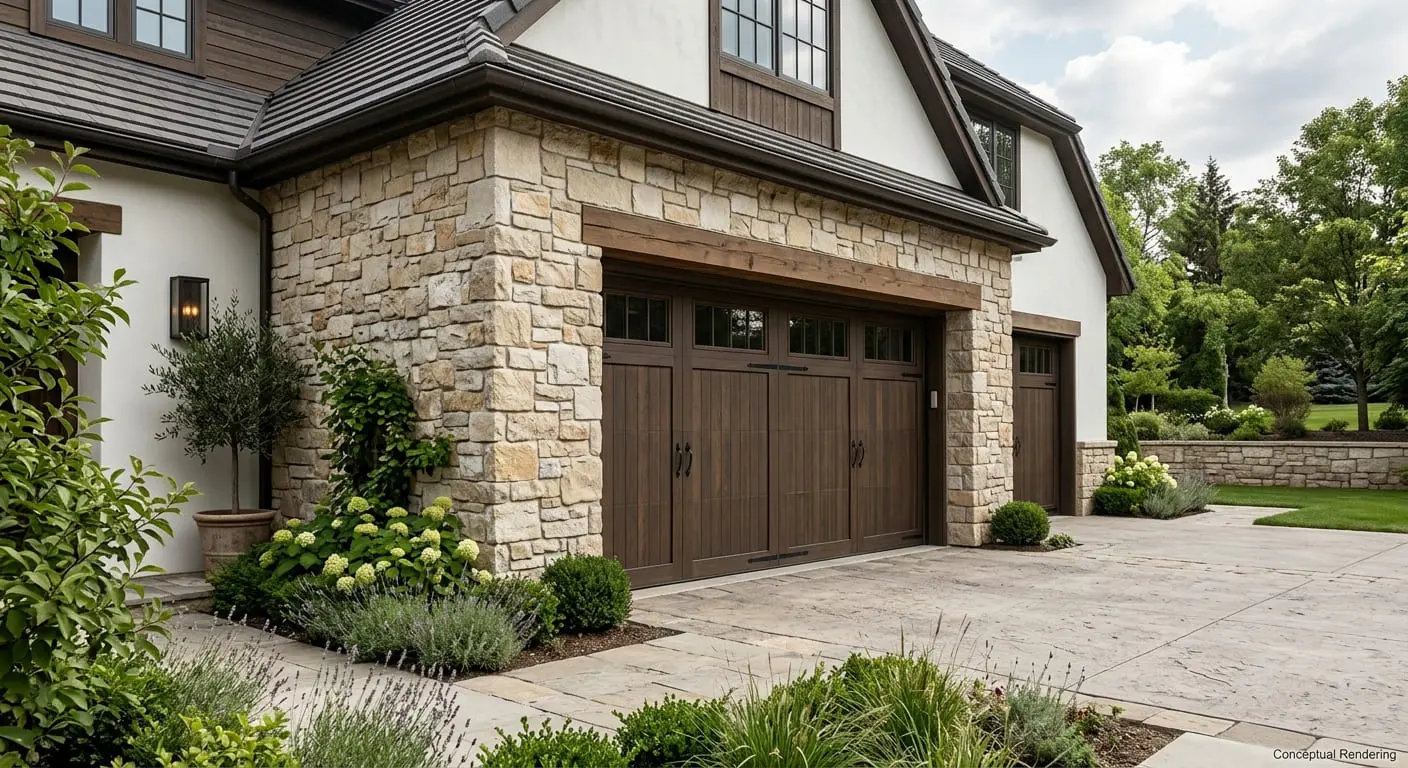
Gold, honey, rust, and tan stacked stone warm up an exterior. These shades pair well with brown or bronze roofing, cream or beige stucco, and natural wood details like cedar beams or wood-look garage doors.
Cool Tones
Gray, charcoal, blue-gray, and silver stacked stone lean modern. They look at home next to white, black, or gray siding, metal roofing, and black window frames. On a chimney or entry wall, charcoal stone creates clear contrast against light-colored siding.
Neutral and Light Tones
White, ivory, and light beige stacked stone brighten a facade and reflect more sunlight, which can help keep wall surfaces cooler in hot climates. These tones suit farmhouse, coastal, and contemporary exteriors, although they can show dirt and staining sooner in splash zones near the ground.
Multi-Tone Blends
Blends combine several colors in one panel, such as gray with rust or gold with white. They hide dirt well and help tie different exterior materials together. If your roof and siding fall into different color families, a blend can bridge the gap.
One practical tip: look at stone options outdoors, in natural light, at different times of day. A color that looks warm indoors can read cooler in morning shade or brighter under midday sun. If you are torn between two color families, a free design consultation is a helpful way to compare options, especially if you bring photos of your roof and siding.
Where to Use Stacked Stone on the Exterior of Your Home
Front Facade Accents and Wainscoting
A stone wainscot along the lower portion of the front facade is one of the most common uses. It adds visual weight at the base of the house and helps anchor it to the landscape. Covering only part of the facade also keeps the look balanced and material costs in check.
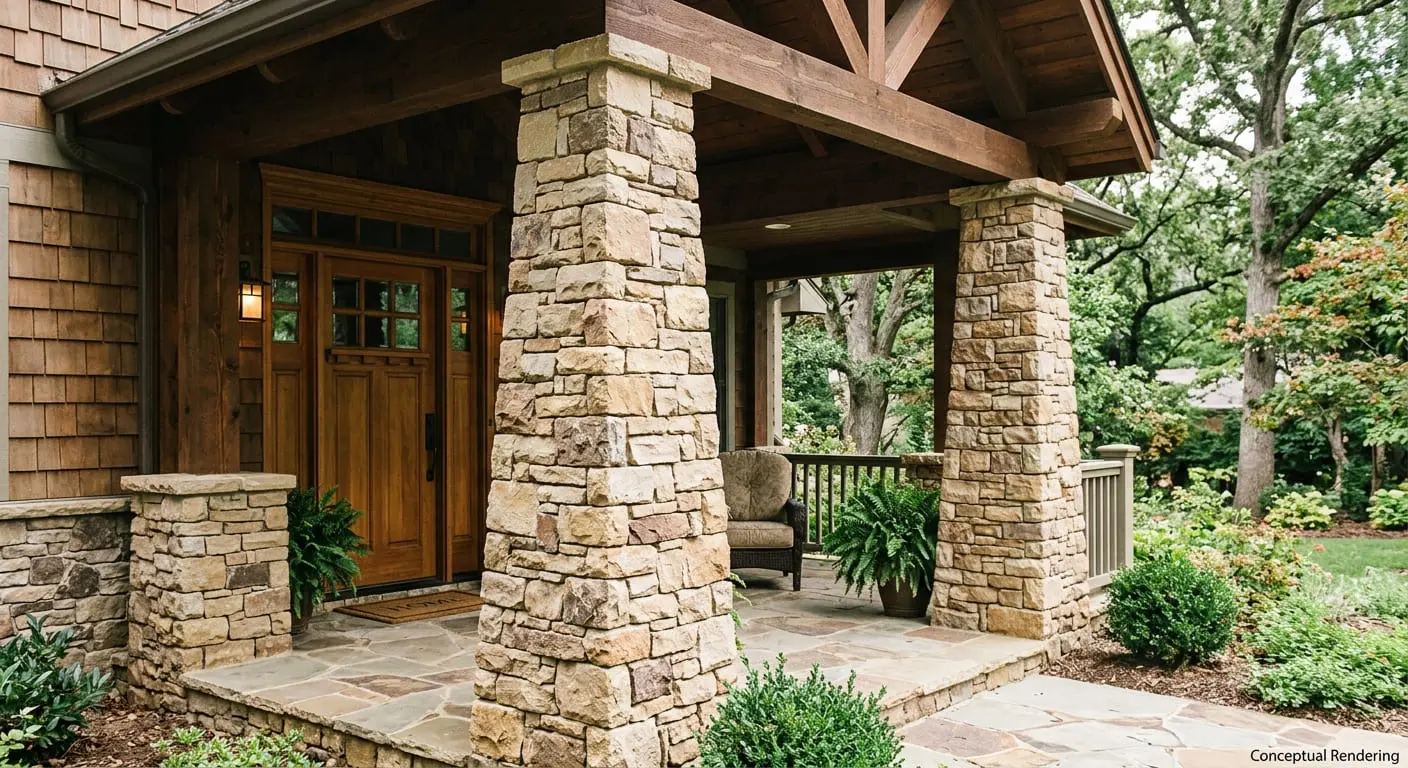
Entry Columns and Porch Pillars
Stacked stone on porch columns or pillar bases draws the eye to the front door. It covers a relatively small area but makes a big visual difference.
Chimneys
A chimney wrapped in stacked stone becomes a vertical focal point along the roofline. Ledgestone and dry-stack profiles are both popular choices here.
Garage Surrounds
Stone around garage doors, or on the wall sections between them, breaks up large flat surfaces and adds curb appeal to the part of the home most visible from the street.
Outdoor Kitchens and Bar Bases
Stacked stone is a natural fit for cladding the base of an outdoor kitchen island or bar, and it pairs easily with stone or porcelain countertops. Grill manufacturers set clearance and insulation requirements for enclosures, so check those specifications before finalizing materials around built-in appliances.
Outdoor Fireplaces and Fire Pits
Rough-cut and 3D stacked stone bring strong texture to outdoor fireplaces, where firelight deepens the shadows between the strips. Be sure to choose a stone and backing rated for the heat involved.
Garden and Retaining Wall Veneers
Stacked stone veneer can dress up concrete block retaining walls, raised planters, and garden walls, giving them the look of traditional dry-stacked stone.
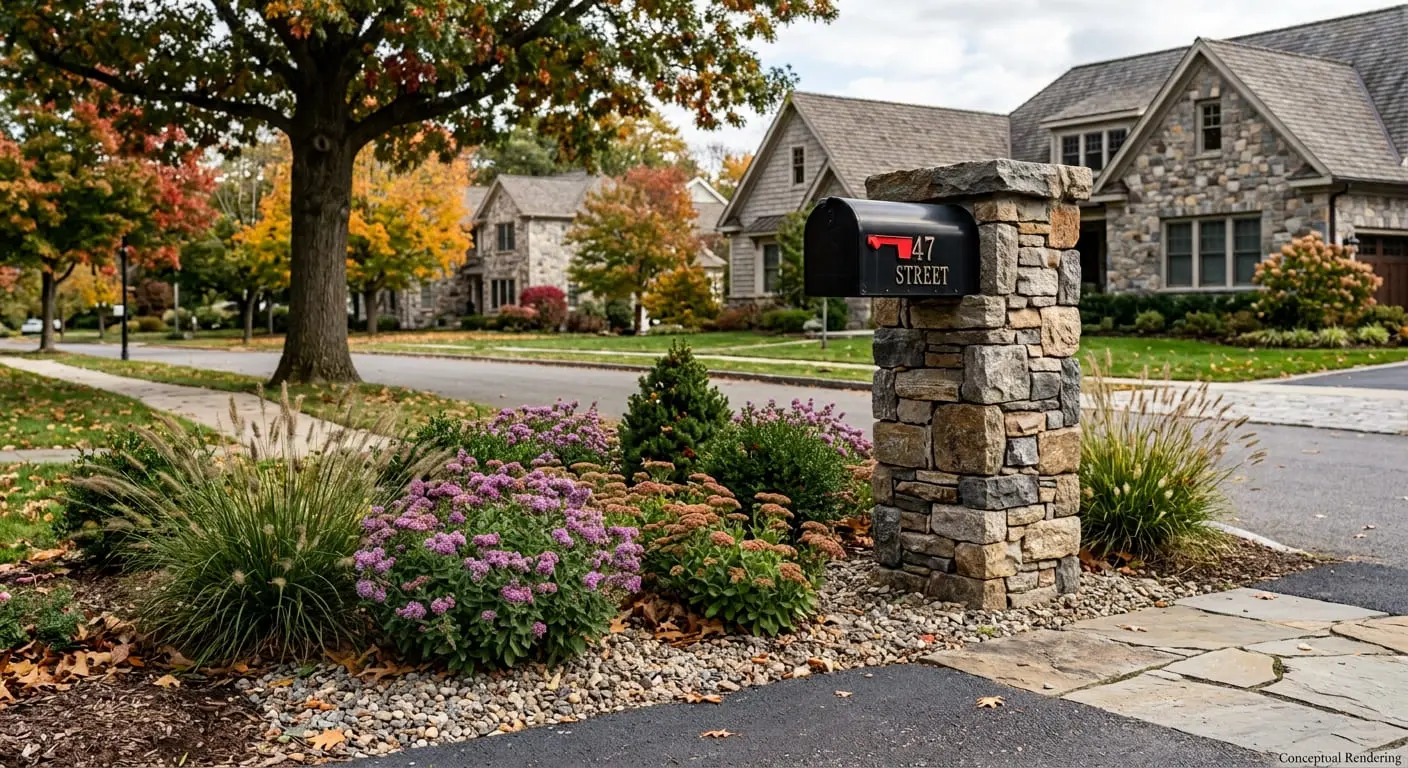
Mailbox Posts, Water Features, and Planters
Smaller features are an easy way to carry the stone from your facade into the yard. They also need less material, which makes them a good fit for budget-conscious projects, and the closeout materials in our overstock sale are worth a look.
Practical Considerations Before You Choose
Climate exposure. In regions with hot summers and freezing winters, stone goes through repeated expansion, contraction, and freeze-thaw cycles. Denser stones with lower absorption generally handle these conditions best.
Sun and fading. Most natural stone gets its color from its minerals and keeps its tone well in direct sun, although iron-rich stones such as some sandstones and slates can develop rust-colored tones as they weather. Manufactured veneers rely on pigments, which may fade after many years of intense UV exposure.
Weight and substrate. Full-thickness natural stacked stone is much heavier than manufactured veneer, while thin natural panels can be closer in weight. Either way, exterior applications need proper moisture management behind the stone, including a water-resistive barrier and drainage. Follow the manufacturer's specifications and consult a qualified professional to confirm the wall can support the material you choose. If you are a contractor or builder handling this kind of work for clients, you can apply for a trade account with us.
Sealing and maintenance. Many stacked stones do not need sealing, but a breathable, penetrating sealer can reduce staining and moisture absorption on more porous stones. An occasional rinse with water and a soft brush clears dust, pollen, and cobwebs from the recesses. Skip high-pressure washing, which can damage joints and softer stone faces.
Conclusion
Stacked stone gives a home's exterior texture, depth, and a real connection to natural materials. Choosing well comes down to three decisions: a style that suits your architecture, a color that works with your roof and siding, and a stone type that fits your climate. Whether you are adding a wainscot to the front facade, wrapping a chimney, or cladding an outdoor kitchen, taking the time to compare options in natural light will lead you to a result you enjoy for years.
Our Ledger Panel collection includes natural stacked stone panels in stepped and corner profiles, with options suited to exterior applications like facades and outdoor kitchen bases. Our team can help you compare styles, stone types, and colors, and walk through each product's specifications for exterior use. Stop by our Sacramento showroom, Reno showroom, Minden showroom, or Fernley showroom to compare ledger panels side by side.
Note: Some images on this page may be conceptual renderings created to illustrate design possibilities and may not depict actual installations.
Frequently Asked Questions
Yes. Stacked stone is widely used on exterior walls, facades, columns, and chimneys. Dense stones like quartzite and granite handle sun, rain, and freeze-thaw cycles well. More porous stones such as sandstone and limestone can also work outdoors if you choose varieties rated for exterior use.
Natural stacked stone is cut from quarried stone and gets its color from its minerals, so each panel varies slightly. Manufactured stone veneer is cast from cement, aggregates, and pigments in molds made from real stone. It is lighter and more uniform in color, but its pigments may fade over time in strong sun.
Not always. Dense stones like quartzite often perform well without sealing. More porous stones, including sandstone and limestone, can benefit from a breathable, penetrating sealer that reduces staining and moisture absorption. Check the stone manufacturer's recommendations before applying any product.
Cool tones like charcoal, gray, and blue-gray pair naturally with gray or white siding and black window frames. For more contrast and warmth, a multi-tone blend that mixes gray with gold or rust adds depth while still fitting a cool exterior palette.
Yes. Stacked stone is a common choice for outdoor fireplace surrounds and outdoor kitchen bases. Make sure both the stone and its backing are rated for the heat in that location, and follow the grill manufacturer's clearance and insulation requirements for built-in appliances.