AT A GLANCE
- Stacked stone walls use layered stone, dry-stacked, mortar-set or as veneer.
- Granite and quartzite are outdoor-approved and UV-resistant.
- Travertine suits warm-toned beds; check its UV rating.
- According to ANSI A137.1, porcelain absorbs 0.5% water or less.
- Porcelain typically needs no sealing.
- Granite, quartzite and travertine are commonly sealed.
- Marble and dolomite are better kept indoors.
IN THIS POST
- What Is a Stacked Stone Garden Wall?
- Why Use Stacked Stone?
- Stacked Stone Garden Wall and Planter Box Ideas
- How Do You Maintain a Stacked Stone Garden Wall?
- What Is the Best Stone for a Garden Wall?
- What Are the Pros and Cons of Stacked Stone Garden Walls?
- How Do You Plan a Stacked Stone Planter Box?
- Where Can You See Stacked Stone Garden Wall Options in Person?
- Book a Free Design Consultation for Your Stacked Stone Project
- Frequently Asked Questions
- Sources
What Is a Stacked Stone Garden Wall?
A stacked stone garden wall is an outdoor wall built from layered pieces of stone, whether dry-stacked, mortar-set or applied as stone veneer, that edges beds, frames patios and defines a yard. Stacked stone planter boxes use the same layered look to turn plain beds into raised focal points. The best results come from pairing the right stone with the right exposure. Outdoor-approved choices include granite, quartzite, travertine and porcelain, each with different care needs.
Northern Nevada and Northern California yards face strong sun, dry heat and winter cold, so confirming each product’s freeze-thaw and sun exposure ratings is a smart first step. This guide covers garden wall and planter box design ideas, stone options, planning steps and care basics, so choices feel clear before a showroom visit.
Every stone behaves differently outdoors, and results depend on exposure, drainage, sealing and wall height. Taller walls may need local approval or engineering review. Design consultants at Nova Tile and Stone can help match stone colors and textures to each outdoor plan. A clear plan for purpose, scale and exposure keeps a garden wall attractive for years, provided the stone is sealed and cleaned as the product guidance recommends.
Why Use Stacked Stone?
Stacked stone adds natural texture, defined edges and a layered look that blends with plants, gravel and timber. Its varied surfaces create shadow lines that soften large garden edges. Many outdoor-approved stones handle weather well, though results depend on the product, exposure and care. Checking manufacturer ratings before purchase prevents mismatched expectations. Garden walls also shape how a yard feels. Low planters soften hard paving, while longer runs guide foot traffic and frame views toward focal plantings or seating areas.
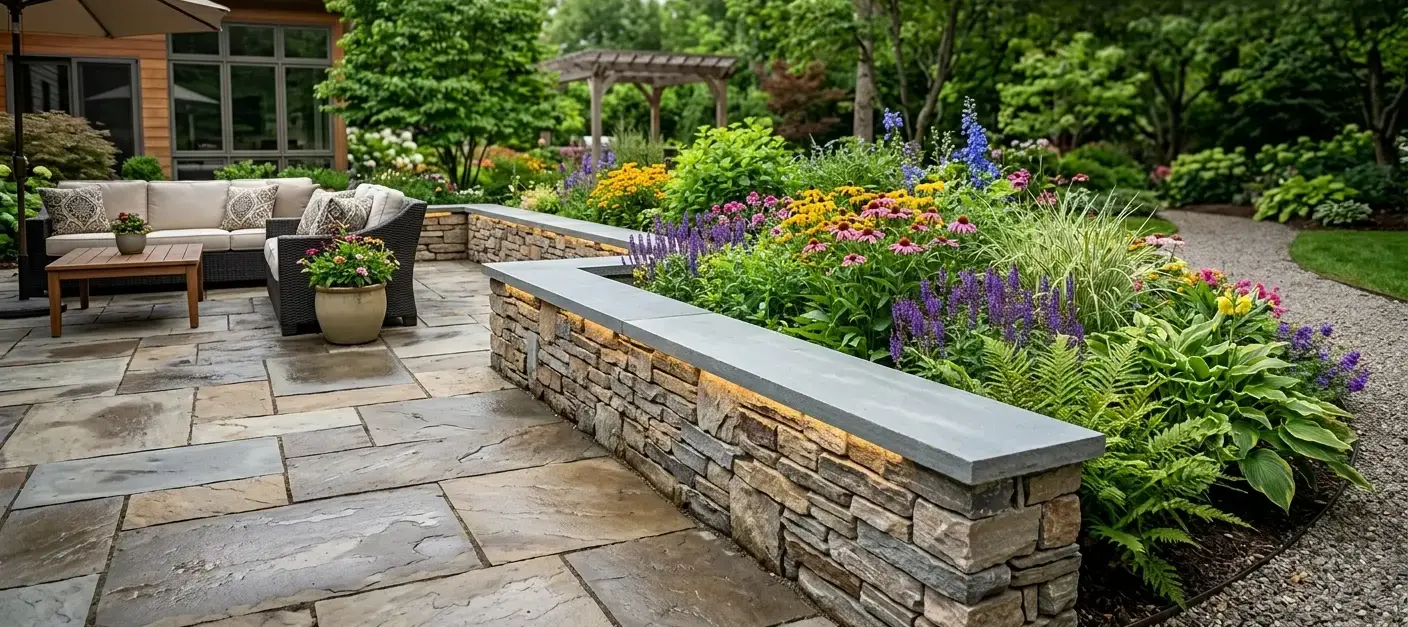 Conceptual rendering
- Natural texture: Split faces and varied tones add depth, so no two walls look identical.
- Weather performance: Outdoor-approved stone tolerates seasonal swings, but verify each product's freeze-thaw rating.
- UV tolerance: Granite, quartzite and porcelain are generally UV-resistant. For travertine and any specific product, confirm sun exposure approval.
- Longevity: Durable, but proper sealing and gentle cleaning preserve appearance over time.
- Versatile scale: Suits low borders, raised beds, seating walls and terraced slopes.
- Style range: Neutral and warm palettes support modern, rustic or Mediterranean yards.
Stone also pairs well with drought-tolerant plants, gravel and timber accents, which suits the dry summers common across Northern Nevada and Northern California. For background reading, review these stone veneer facts, then compare options against local climate and wall purpose.
Stacked Stone Garden Wall and Planter Box Ideas
Popular stacked stone ideas include raised planter boxes, low boundary walls, seating walls and terraced beds, finished with colors and plantings that suit the yard. Design choices shape how a wall looks and performs. These ideas cover common garden layouts, along with stone, finish and exposure considerations for outdoor use.
Raised Planter Boxes
Raised planter boxes bring plants to a comfortable height and define growing areas. Plan drainage so moisture does not linger behind the stone. Depth matters for root growth, so decide on the crops or flowers first. Deeper beds suit vegetables and shrubs, while shallow boxes suit herbs and seasonal color. Natural stone often needs sealing, which helps resist staining from soil and fertilizer. Porcelain generally does not require sealing, though product guidance should be checked.
Low Garden Boundary Walls
Low walls separate lawns, gravel and flower beds with a clean, tactile edge. Heights under local permit limits are simpler, but municipal rules should be checked first. Curved layouts feel relaxed and organic, while straight runs look formal. Either shape works along walkways, driveways and lawn edges when proportions suit the property. Finish the top edge with natural stone slabs as cap pieces for a polished, cohesive look.
Seating Walls and Terraced Beds
Wide walls double as casual seating, while terraced beds manage gentle slopes. Taller or retaining walls may need engineering review, so confirm local requirements early. Terracing also helps manage runoff on sloped yards, since each level slows water and creates flat planting space for shrubs, flowers or kitchen herbs. Gravity and interlocking pieces hold dry-laid walls together, as these dry stack wall basics explain.
Color and Texture Pairings
Warm sandy tones suit desert-style plantings, while cool grays pair with modern metal planters and crisp lines. Rougher faces catch light differently than smoother faces. Mixing two complementary tones within one wall creates movement without clutter. Compare combinations in natural daylight, since morning and afternoon light change how stone reads. Evening lighting adds another layer of appeal. Low-voltage fixtures along wall tops or planter edges highlight texture after dark and make paths feel safer.
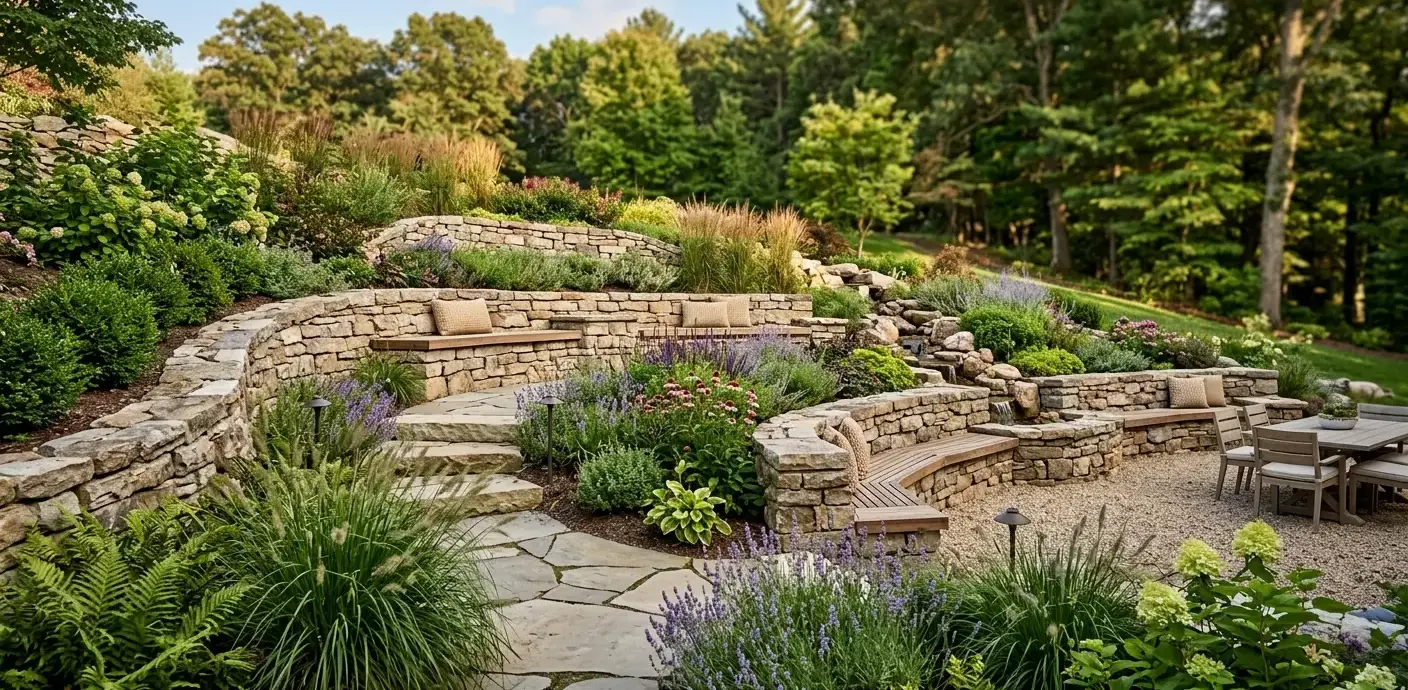 Conceptual rendering
Planting Choices Near Stone
Leave breathing room between foliage and wall faces so air can circulate. Drip irrigation limits splashing, which reduces soil staining on lighter stone surfaces. Trailing plants soften hard edges along wall tops, while upright grasses add height behind low borders. Choose species suited to the local climate and sun exposure.
How Do You Maintain a Stacked Stone Garden Wall?
Stacked stone garden walls stay attractive with prompt spill cleanup, gentle, stone-safe cleaners and, for natural stone, sealing where the supplier recommends it. Sealing improves stain resistance but does not make stone stain proof, and the right schedule depends on the stone, exposure and sealer used, so follow the sealer manufacturer’s guidance for reapplication timing. Clean surfaces with a neutral cleaner or mild soap and water. Abrasive powders and creams can scratch some stones, so soft brushes are safer for routine rinsing.
What Is the Best Stone for a Garden Wall?
Granite and quartzite are well suited to stacked stone garden walls and planter boxes, since both are outdoor-approved and UV-resistant. Travertine works well for warm-toned beds, porcelain suits low-care planters, and marble and dolomite are better kept indoors.
Stone | Outdoor Use | Sealing | UV Note | Best Fit |
Granite | Outdoor-approved | Commonly sealed | UV-resistant | Borders and caps |
Quartzite | Outdoor-approved | Commonly sealed | UV-resistant | Borders and caps |
Travertine | Generally outdoor-approved | Commonly sealed | Not in UV-resistant group; verify product rating | Warm-toned beds |
Porcelain | Outdoor-approved | Typically none needed | UV-resistant; verify product | Low-care planters |
What Are the Pros and Cons of Stacked Stone Garden Walls?
The main advantages are natural character, dependable outdoor performance when product ratings are verified, and a look that fits many garden styles. The main drawbacks are periodic sealing for natural stone, heavy pieces that need careful base and drainage planning, and possible permits for taller walls. Every material has trade-offs, so weigh these points against the site, climate and maintenance preferences before selecting stone.
Every material has trade-offs, so weigh these points against the site, climate and maintenance preferences before selecting stone.
Disadvantages
- Natural stone needs periodic sealing and gentle cleaning.
- Heavy pieces call for careful base and drainage planning.
- Taller walls may require permits or engineering review.
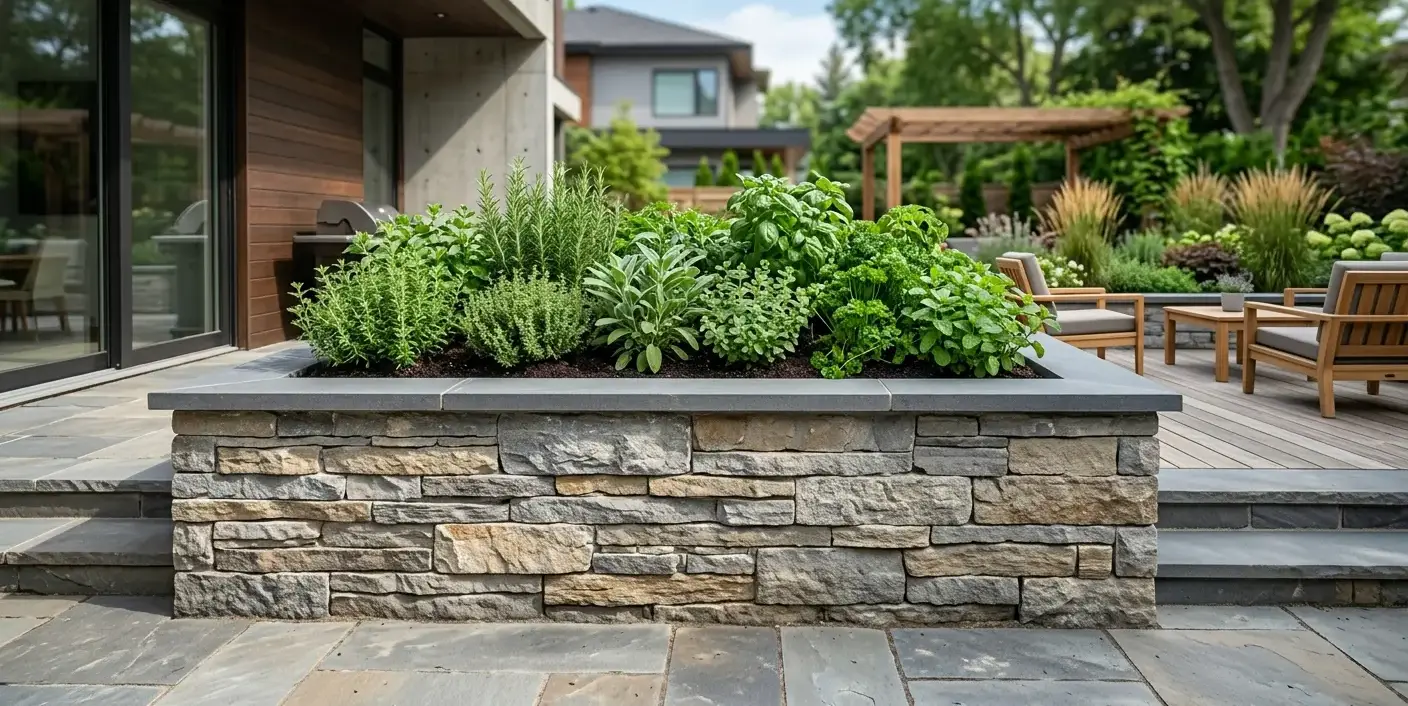 Conceptual rendering
Advantages
- Natural variation adds character to every wall.
- Outdoor-approved options handle weather when product ratings are verified.
- Works across modern, rustic and traditional garden styles.
How Do You Plan a Stacked Stone Planter Box?
Planning a stacked stone planter box comes down to five steps: define its purpose, measure the space, pick an outdoor-approved stone, choose color and texture, and review the plan with a design consultant. A short checklist keeps decisions organized and helps design consultants give accurate guidance during a showroom visit.
Define the purpose, such as edible beds, ornamental plants or seating.
Measure the footprint and note sun exposure and drainage.
Select an outdoor-approved stone and confirm freeze-thaw and sun ratings.
Choose texture and color that suit the home and landscape.
Review plans with a design consultant before ordering materials.




Book a Free Design Consultation for Your Stacked Stone Project
A well-planned stacked stone garden wall or planter box adds structure, texture and lasting character to outdoor spaces. Choosing outdoor-approved stone, confirming freeze-thaw and sun ratings, and planning drainage keep results dependable over many seasons. Browse natural stone and tile to compare finishes, colors and textures before deciding.
Ready to shape a garden that feels cohesive from entry to patio, with details that reflect the home and surrounding landscape? Nova’s design consultants can guide stone choices, outdoor ratings and layout ideas. Book your free consultation today!
Note: Some images on this page may be conceptual renderings created to illustrate design possibilities and may not depict actual installations.
Frequently Asked Questions
Granite, quartzite, travertine and porcelain are outdoor-approved options. Marble and dolomite are better reserved for indoor spaces. Always confirm freeze-thaw and sun exposure ratings for the exact product before purchase, since performance varies between products and climates.
Granite, quartzite and travertine are commonly sealed to help them resist staining and moisture, though sealing improves stain resistance rather than making stone stain proof. Porcelain typically does not require sealing, though product guidance should be confirmed. Clean spills promptly, avoid abrasive cleaners, and follow the sealer manufacturer’s guidance for reapplication timing.
Granite, quartzite and porcelain belong to the UV-resistant category. Travertine is generally outdoor-approved, but sun tolerance is product-dependent, so confirm manufacturer sun exposure approval and verify the exact product's UV rating.
Limits vary by city and county, and taller or retaining walls may require permits or engineering review. Check local building rules early and consult qualified professionals before finalizing any wall plan, especially for slopes, retaining walls or walls near property lines.
Match undertones to the home exterior, paving and plants. Warm tones suit desert-style gardens, while cool grays suit modern spaces. Visit a showroom to view full-size pieces in natural light, and compare them against paving, siding and nearby plantings.
Sources
- Natural Stone Institute: Care and Cleaning of Natural Stone | https://www.naturalstoneinstitute.org/consumers/care/
- Natural Stone Institute: ASTM International Standards for Natural Stone | https://naturalstoneinstitute.org/stoneprofessionals/astm
- American National Standards Institute: ANSI A137.1 Definition of Porcelain Tile | https://blog.ansi.org/ansi/porcelain-ceramic-tile-ansi-a137-1-astm-definition/
- Dry Stone Conservancy: History of Dry Stone Construction | https://www.drystone.org/historyofdrystoneconstruction