What Is This Stone Facade Style?
A stacked stone facade arranges individual stone pieces in coursed or irregular patterns, creating shadow lines and tactile depth across an exterior wall instead of relying on one continuous slab. This layered format suits contemporary facades where clean surfaces such as stucco, metal siding or glass benefit from a grounding natural element. Northern Nevada and Northern California homeowners often select the panels for entry walls, chimney surrounds and full elevation accents.
Because the panels are cut from real granite, quartzite or travertine rather than poured concrete, the finished wall keeps genuine mineral variation while meeting standard construction dimensions. Homeowners researching contemporary facades in the region can compare stone types, coursing patterns and finish textures before choosing a look that pairs with existing rooflines, window trim and hardscape.
Climate is worth factoring into an early design conversation. High desert sun around Fernley and Reno, cooler Sierra-adjacent conditions near Minden, and the milder Sacramento Valley climate can all influence which finish and sealing schedule make sense for a given elevation. None of these regional differences rule out any of the outdoor-approved stone types, but they are useful context when comparing options. The sections below cover core benefits, exterior applications, a material comparison and next steps for shortlisting this cladding style.
Why Stacked Stone Panels Suit Contemporary Facades
Layered stone panels bring several practical and visual advantages to a modern exterior, though every benefit still depends on the specific stone type and finish chosen.
 Conceptual rendering
- Adds dimensional texture and shadow contrast to otherwise flat exterior walls
- Pairs well with metal panel siding, large glass expanses and smooth stucco
- Available in outdoor-approved natural stone and engineered options, including granite, quartzite, travertine and porcelain
- Distributes visual weight around entries, columns, chimney surrounds and low garden walls
- Natural stone types generally benefit from periodic sealing to help maintain appearance over time
Homeowners comparing exterior stone options often start by reviewing finishes and stone types side by side. Browse the slab collection to see grading, veining and finish options across the outdoor-approved materials suited to this panel style.
Panel weight and coursing pattern also affect how a facade reads from the street. Wider, irregular coursing creates a rustic-contemporary look, while tighter, uniform coursing reads as more refined and linear, an effect worth reviewing against a home's existing trim and window proportions. Color blending between pieces is another variable worth reviewing in person, since natural variation between individual stones can shift the overall tone of a wall more than a single sample chip suggests.
Where These Panels Elevate Exterior Design
Stacked stone panels for bold exterior facades show up across several distinct zones of a home's exterior, each with its own design considerations.
Entryways and Portico Accents
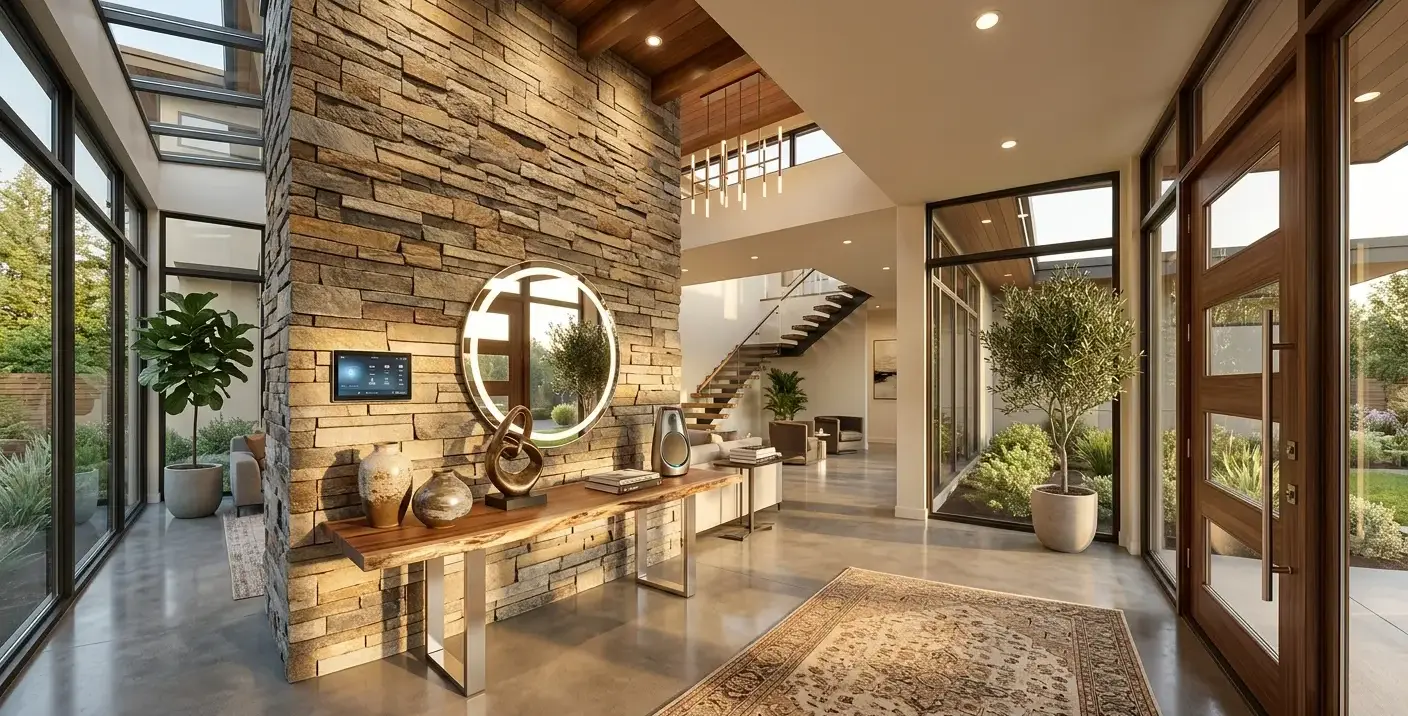
A textured stone accent around a front door or portico creates a natural focal point without requiring changes to the surrounding stucco or siding. Homeowners in the Fernley showroom service area frequently pair this application with matte finishes to complement adjacent walkway paving. Extending the same panel a few feet past the doorframe onto an adjoining wall section is a common way to make the accent read as intentional rather than isolated.
 Conceptual rendering
Chimney Surrounds and Fire Features
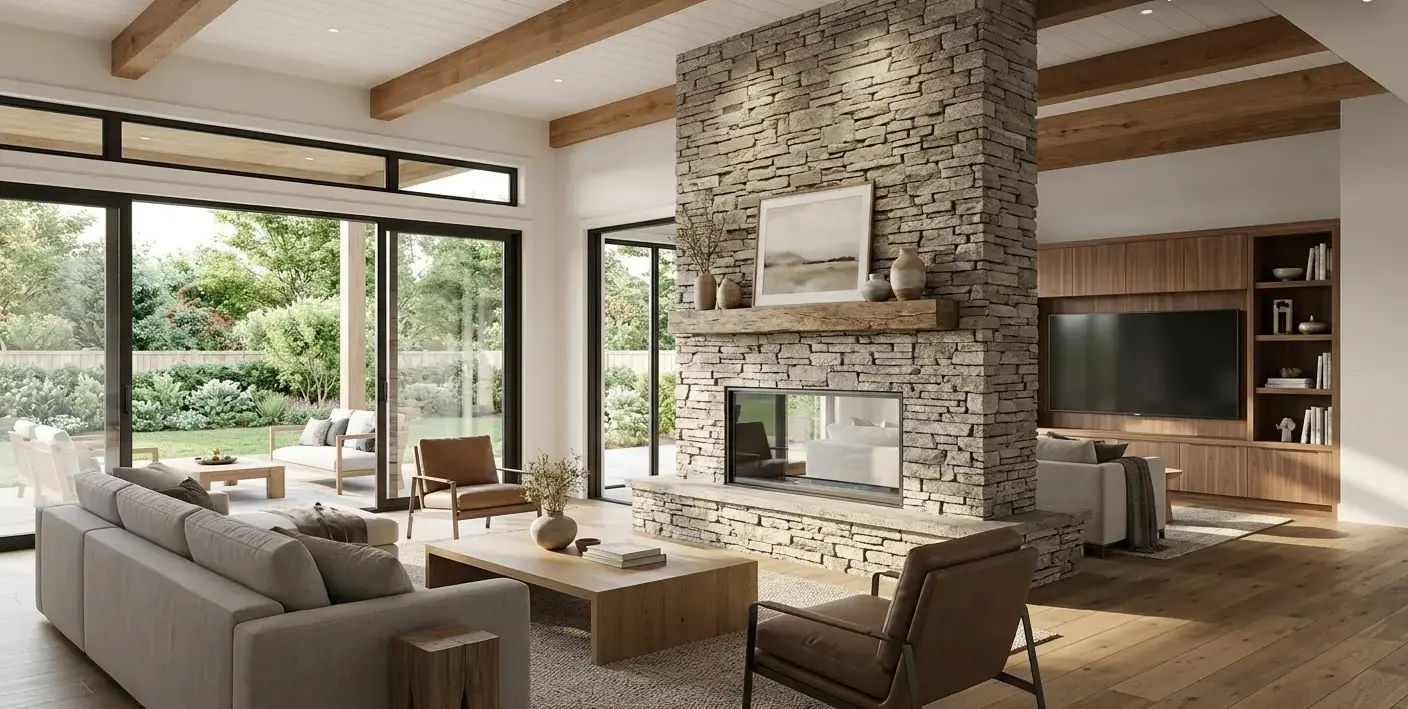
Full-height chimney surrounds benefit from the shadow depth that coursed stone provides, especially on taller elevations where a flat material can look uniform from a distance. Granite and quartzite are common picks here given their outdoor and fire-adjacent suitability, though exact fire feature clearance and product ratings should still be confirmed for each project. A single stone type carried from a chimney down to a lower garden wall or planter box can also help tie separate parts of a facade together visually.
Privacy Walls and Garden Features
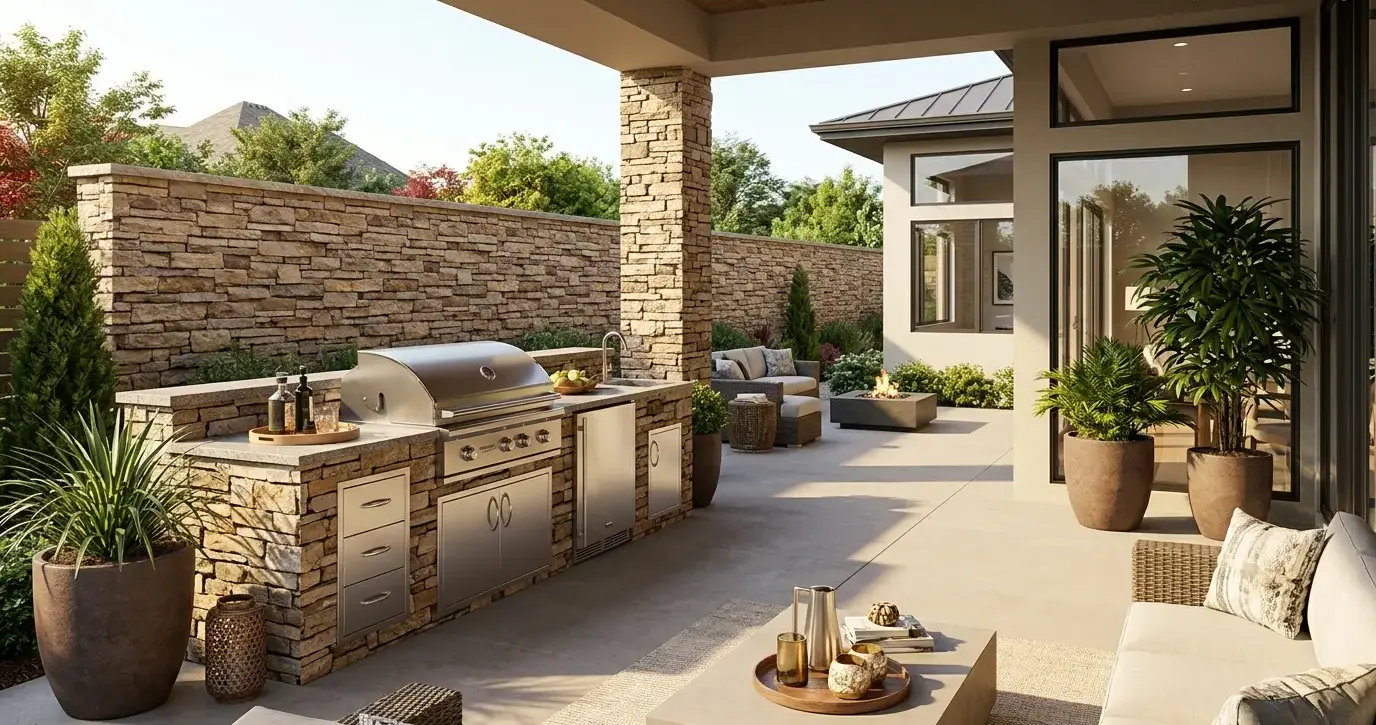
Layered stone accents for bold exterior facades also work well on shorter garden walls, mailbox surrounds and low privacy screens, where the material introduces texture without overwhelming a smaller structure. According to guidance published in the TCNA handbook, material selection for exterior applications should account for regional freeze-thaw exposure and moisture patterns, a useful reference point when comparing stone types for a given climate. Shorter wall sections also make a reasonable place to test an unfamiliar coursing pattern before committing to a full elevation.
Comparing Exterior Stone Panel Options
The table below lines up the outdoor-approved stone types side by side, since classification, sealing needs and sun exposure category can each affect which option best fits a specific elevation and orientation.
Stone Type | Classification | Outdoor Suitable | Sealing Needed | Sun Exposure Category |
Granite | Natural Stone | Yes | Yes | Generally UV-resistant* |
Quartzite | Natural Stone | Yes | Yes | Generally UV-resistant* |
Travertine | Natural Stone | Yes | Yes | Confirm product rating |
Porcelain | Engineered | Yes | Typically not required* | Generally UV-resistant* |
*Exact sun exposure and sealing needs vary by product; confirming the manufacturer's rating before selecting a stone type for a south-facing wall is recommended.
Homeowners in Sacramento planning larger elevation projects can review the same material categories through the Sacramento showroom before narrowing a shortlist.
Advantages and Planning Considerations
 Conceptual rendering
Planning Considerations
- Natural stone types generally need periodic sealing to help preserve appearance
- Coursing pattern and joint width affect the overall visual scale of a wall
- Sun exposure ratings should be confirmed per product, particularly on south-facing elevations
Advantages
- Adds texture and shadow depth without altering a wall's structural footprint
- Available across several outdoor-approved stone types and finishes
- Works with a wide range of contemporary and transitional architectural styles
A Simple Path to Shortlisting a Panel Style
Working through these steps in order tends to narrow a shortlist faster than comparing every stone type and pattern at once.
- Define the general architectural direction, such as modern, transitional or rustic-contemporary
- Narrow the stone type to outdoor-approved options: granite, quartzite, travertine or porcelain
- Compare coursing patterns and finish textures side by side
- Review physical samples against existing trim, roofline and hardscape colors
- Schedule a consultation to confirm sizing, quantities and layout for the chosen elevation
Exploring Options With Nova Tile and Stone
Nova Tile and Stone showrooms across Fernley, Reno, Minden and Sacramento carry granite, quartzite, travertine and porcelain panels suited to coursed exterior applications. Expert guidance is available at each location to help match stone type, finish and coursing pattern to a home's existing roofline, trim and hardscape palette. Orders ship to any of Nova's four Northern Nevada and Northern California service areas, which makes it straightforward to plan a project even when a build site is some distance from the closest physical location.
Bringing a few reference photos of a home's existing rooflines, trim color and hardscape to a showroom visit tends to speed up the comparison process considerably. Expert staff can hold sample boards against those references directly, which is generally a faster way to judge coursing scale and color blend than working from small chips alone.
Design teams tracking exterior trends often reference industry showcases such as the International Surface Event, where new panel formats and finish technologies are previewed each year. Broader design coverage, like Dezeen's annual events guide, also tracks architecture and material trends each season.
The Reno showroom carries sample boards for in-person comparison. The Minden showroom offers the same panel selection for nearby homeowners. A short consultation can help confirm which stone type, finish and coursing pattern best fits a specific elevation before finalizing a material list.
Conclusion
Stacked stone facades give contemporary homes a textured, dimensional exterior without changing a structure's footprint, and the outdoor-approved material list, granite, quartzite, travertine and porcelain, covers a range of finishes and design preferences suited to Northern Nevada and Northern California properties. Comparing stone types, coursing patterns and sun exposure ratings early helps narrow a shortlist before finalizing a design. Book a consultation to review physical samples and confirm the right combination for a specific home and elevation.
Note: Some images on this page may be conceptual renderings created to illustrate design possibilities and may not depict actual installations.
Frequently Asked Questions
This panel style typically uses granite, quartzite, travertine or porcelain shaped into individual pieces and set in coursed or irregular patterns. Marble and dolomite are generally reserved for indoor use, so exterior panels come from outdoor-approved materials only.
Sun tolerance depends on the specific stone and finish selected. Granite, quartzite and porcelain generally fall into an outdoor UV-resistant category, though confirming the exact product's sun exposure rating before choosing a stone for a south-facing wall is recommended.
Natural stone options such as granite, quartzite and travertine generally require periodic sealing to help maintain appearance, while porcelain typically does not need sealing, though checking the specific product specification is still advised.
Yes, these panels are frequently paired with stucco, metal siding, wood accents or large glass sections to create contrast between smooth and textured surfaces across contemporary facades.
Comparing coursing patterns, stone types and finish textures against a home's existing roofline and trim is a useful starting point, and scheduling a consultation can help confirm sizing and layout before finalizing a design.
Visit our Showrooms Now!
Book your free consultation to explore options today.
FERNLEY
1855 US Highway 95A North, Fernley, NV 89408
 Google Maps
Store hours this week:
- Mon. - Fri.: 7:30 am - 4:00 pm
- Sat. - Sun.: Closed
RENO
12835 Old Virginia Rd Suite 24, Reno, NV 89521
Store hours this week:
- Mon. - Fri.: 7:30 am - 6:00 pm
- Sat.: 9:00 am - 3:00 pm
- Sun.: Closed
MINDEN
2548 Business Pkwy, Minden, NV 89423
Store hours this week:
- Mon. - Fri.: 7:30 am - 6:00 pm
- Sat.: 9:00 am - 3:00 pm
- Sun.: Closed
SACRAMENTO
6100 Warehouse Way, Sacramento, CA 95826
Store hours this week:
- Mon. - Fri.: 7:30 am - 5:00 pm
- Sat. - Sun.: Closed