Granite, quartzite, and travertine are the three natural stones sold as stacked stone panels at Nova Tile and Stone, and only one of them carries a rating for resisting fade in direct sun. That single fact answers the real question most buyers are actually asking: does stacked stone hold up over time? The honest answer depends on which stone is behind the panel, not on the format itself.
Stacked stone panels are cut from real natural stone, not molded to resemble it. Individual pieces are trimmed and bonded onto a backing to form a modular panel, typically sized as 6 by 24 inch flats with matching L-shaped corner pieces for outside corners, and at Nova Tile and Stone that panel comes in the same three stones found across our natural stone slab collection. Because it is quarried rather than manufactured, understanding how a natural stone product is sourced and labeled helps set realistic expectations for how a specific stone will perform before it goes on the wall.
Each stone brings its own strengths to an outdoor wall, a facade, or a fireplace surround. Knowing the difference before buying prevents a common mismatch: picking a stone for its color, then finding out later it wasn't the right fit for a sun-exposed wall or a busy outdoor kitchen.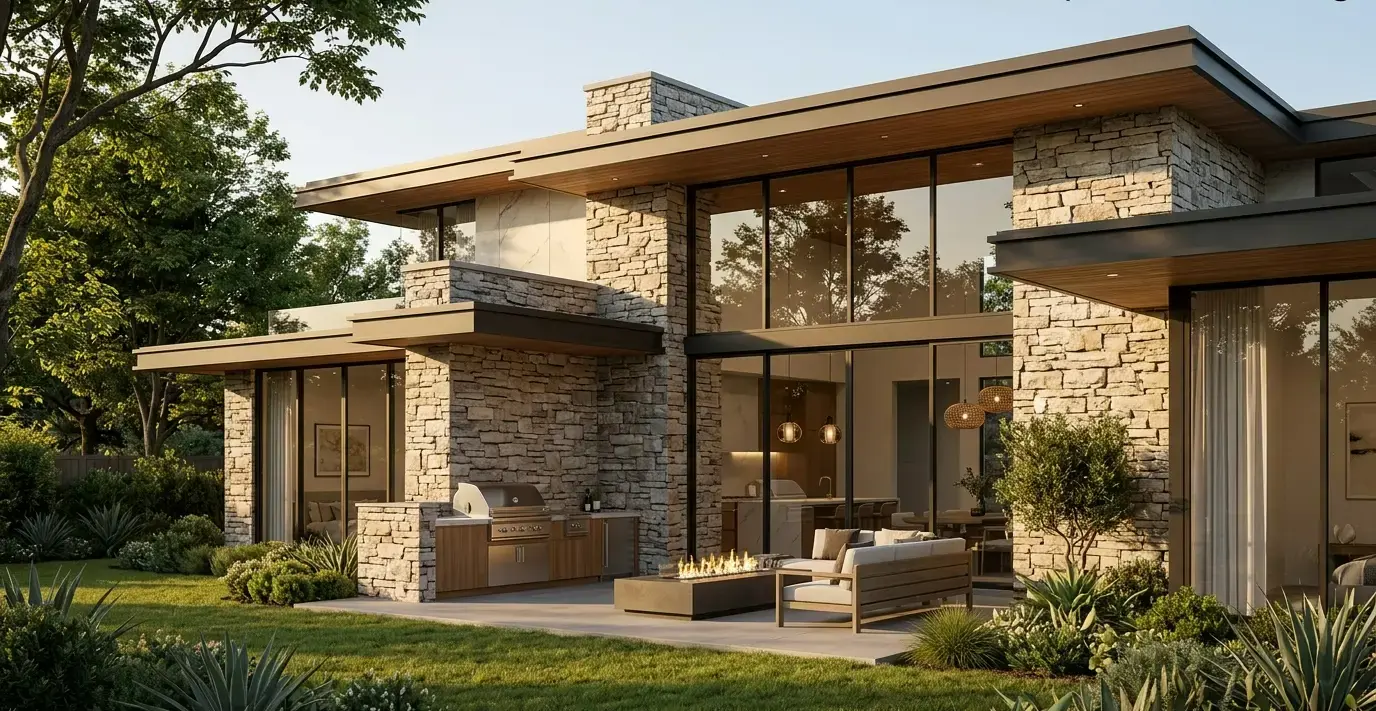
Which Stacked Stone Holds Up Best in Full Sun?
Quartzite and granite are both very hard stones. Quartzite is composed almost entirely of quartz and typically rates around 7 on the Mohs hardness scale, while granite is a mix of quartz and feldspar that typically rates 6 to 7, so quartzite is usually the slightly harder of the two, not the softer one. Travertine sits well below both, generally in the 3 to 5 range, which makes it the more porous, easier-to-scratch stone of the three.
Hardness is not the same property as fade resistance, though, and this is where the three stones actually split apart for an outdoor buyer. Granite is the only one of the three rated to resist fading under years of direct sun. The material is UV resistant, but performance may vary by color and finish, so a lighter granite in full sun will read differently over time than a darker one.
Quartzite and travertine are both well suited to outdoor use and hold up well as wall panels, but neither carries that same fade-resistant rating, regardless of how hard or scratch resistant they are. That does not make them a poor choice. It means a shaded wall, a covered patio, or a north-facing facade suits them better than a wall that sits in full sun for most of the day.
It is easy to assume stacked stone behaves as one material since it is displayed and sold under a single product name. In practice, choosing stacked stone means choosing among three separate natural stones, each with a different track record outdoors, and treating them as interchangeable is where most buyer disappointment starts.
For a buyer set on full, unbroken sun exposure, granite is the more dependable stacked stone choice. For a shaded courtyard wall or a covered outdoor kitchen, quartzite or travertine works just as well and often reads warmer in tone.
Fading typically shows up as a shift toward a chalky, washed-out tone after years of constant direct sun, most noticeable on darker colors. A wall that only gets a few hours of direct light a day is far less likely to show this regardless of which stone is chosen, which is why the wall's orientation matters almost as much as the stone itself.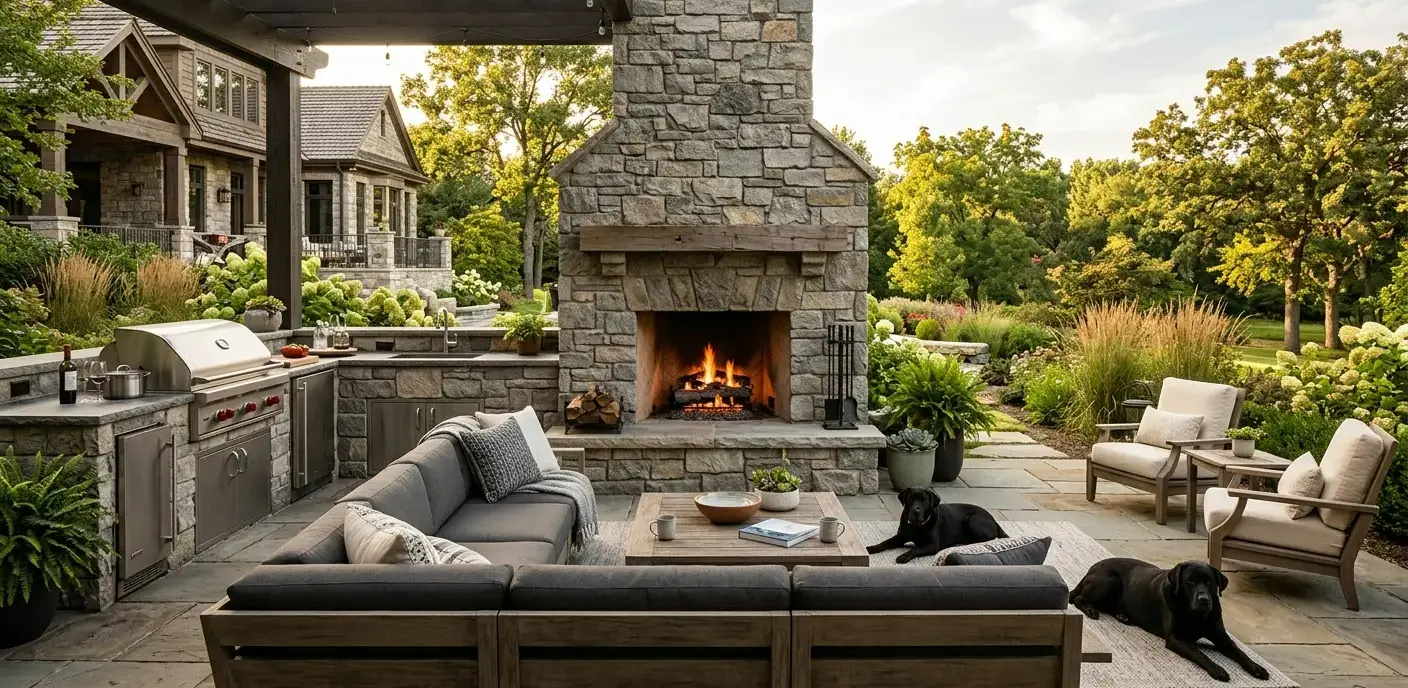
Fireplaces and Full-Sun Walls Are Where That Gap Actually Shows
A stacked stone fireplace surround is one of the more demanding uses for the material, since it combines direct heat with years of daily handling. Granite, quartzite, and travertine are all suited to fireplace applications, and each is built for lasting use, but a surround should still be evaluated individually based on the fireplace's size, clearance, and daily use, points covered well in this rundown of outdoor fireplace types before settling on a stone and layout.
A granite surround combines the two qualities that matter most for this use, fireplace suitability and fade resistance, which makes it a strong fit for full afternoon sun. Quartzite or travertine make more sense for a fireplace under a covered patio roof or on a mostly shaded side of a home, where sun exposure isn't really part of the equation.
Exterior accent walls near a pool or an outdoor kitchen face a similar test, just with more consistent moisture instead of concentrated heat. All three stones are rated for outdoor wall use, so the choice again comes down to how much direct sun that specific wall gets rather than whether the material can handle being outside at all.
Buyers weighing a full-sun fireplace wall against a shaded outdoor kitchen often find it easier to compare in person. Our Reno showroom and Sacramento showroom both carry granite, quartzite, and travertine stacked stone panels side by side, which makes the sun-versus-shade decision more concrete than photos alone.
Finish Changes How Much That Gap Shows
Granite, quartzite, and travertine stacked stone are each available in polished, honed, or leathered finishes, and the choice affects more than looks. A polished finish on an exterior wall shows water spots, dust, and mineral buildup more visibly than a matte one, simply because a reflective surface draws the eye to anything sitting on top of it.
Honed and leathered finishes tend to mask everyday residue better outdoors, which is one reason they show up more often on exterior stacked stone than polished finishes do. That does not rule out polished for an outdoor wall. It just means more frequent cleaning becomes part of the trade-off for that higher-shine look.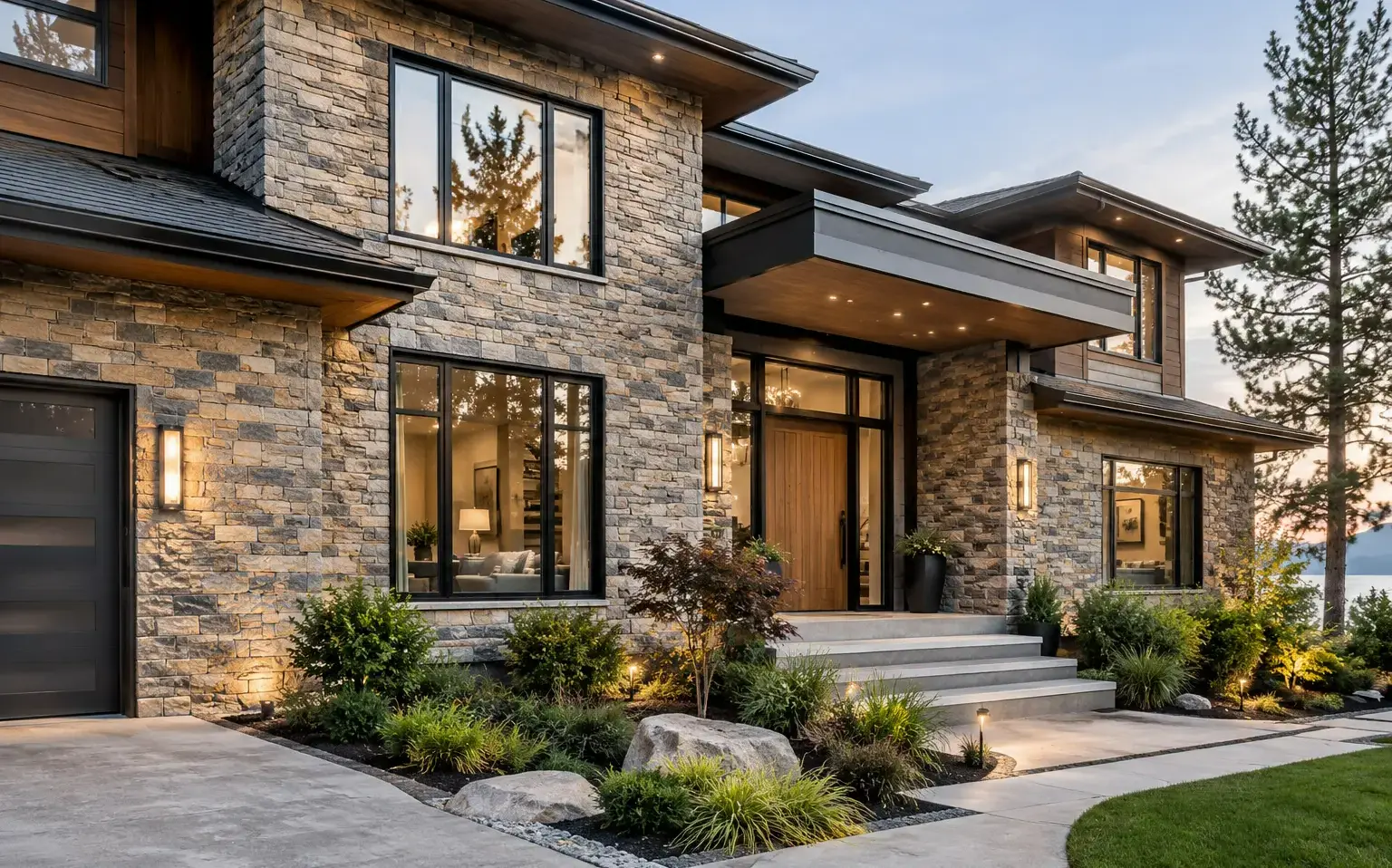
Long-Term Care Depends on the Stone and Where It Lives
Regular cleaning and periodic sealing are what help each of the three stones hold their look years after the panel goes up. The material is easy to maintain, but harsh cleaners should be avoided, since anything acidic can dull granite's polish or etch the surface of quartzite and travertine over time.
As a general industry range, granite typically holds a seal for 1 to 3 years, quartzite performs comparably and sometimes a little longer thanks to its lower porosity, and travertine's higher porosity usually calls for closer to annual attention rather than a multi-year gap. Outdoor stacked stone tends to sit at the shorter end of each range, since rain, sun, and temperature swings wear through a sealer faster than an indoor wall ever would.
Sealing needs still shift by finish and by the individual slab, which is why the Natural Stone Institute's care guidance recommends testing a specific stone rather than resealing on a fixed calendar.
Homeowners near our Minden showroom dealing with Sierra winters in particular should ask about sealing frequency for an exterior application, since freeze-thaw cycling adds a variable a warmer climate wall does not face.
Indoor stacked stone accent walls, by comparison, mainly need dusting and an occasional wipe down, since they are never exposed to rain, direct sun, or freeze-thaw cycling. That gap in upkeep is one more reason the same stone can perform very differently depending on where it ends up in a home.
Walls near a pool face an added factor: chlorine and mineral splash-back left sitting against the surface can leave residue that a quick rinse alone won't fully lift. Rinsing more often than a shaded courtyard wall would need is a small habit that protects the finish either way.
Conclusion
Photos flatten texture and tone, and stacked stone is a textured, dimensional product that reads very differently in person. Comparing granite, quartzite, and travertine panels next to each other, under real light, is the most reliable way to judge which one actually fits a specific wall. That comparison is easiest across our four showrooms, where every stone and finish sits side by side rather than scattered across separate pages online.
Visiting one of our showrooms makes that comparison straightforward, and our Fernley location carries the full range of stacked stone options alongside the natural stone slabs used elsewhere in a project, which helps when matching a wall to an existing countertop or floor. Because each piece is cut from natural stone, color and veining also shift somewhat within the same panel and between different panel runs, another reason a showroom comparison beats a photo.
Once a stone and a wall are matched, requesting a slab quote is the practical next step, since it accounts for the actual dimensions of the project rather than a general estimate. For buyers still narrowing down a stone, booking a free design consultation is a good way to walk through granite, quartzite, and travertine stacked stone side by side with someone who can speak to how each one performs in a specific application.
Current overstock selections are also worth checking for buyers open to whatever stock happens to be available that week, since inventory shifts often. Stacked stone is just one part of what is available across our full natural stone and tile lineup, and matching the right stone to the right wall is what actually determines whether it holds up for years to come.
Note: Some images on this page may be conceptual renderings created to illustrate design possibilities and may not depict actual installations.
Frequently Asked Questions
Since stacked stone panels are cut from the same natural stone used for slabs, just trimmed into smaller pieces and bonded onto a backing, durability comes from the stone itself rather than the panel format. Granite, quartzite, and travertine all perform well as wall material, though the backing and installation still affect long-term performance.
Sealing needs depend on the specific stone and finish chosen, and exterior applications generally need more frequent attention than interior ones due to weather exposure. The material is easy to maintain, but harsh cleaners should be avoided, and checking a sealing schedule with a design consultant is the simplest way to keep a specific stone protected.
Granite is the only one of the three rated for resisting fade, making it the more dependable choice for a wall that sits in direct sun most of the day. Quartzite and travertine are still suited to outdoor use, but they perform better on shaded or covered walls.
Yes, granite, quartzite, and travertine are all suited to fireplace applications. Each is built for lasting use, but the surround should still be evaluated individually based on the fireplace's size and clearance requirements.
Photos flatten texture and tone, so seeing the panels in person is the most reliable way to judge the differences. Visiting one of our showrooms or requesting a slab quote are both practical ways to compare options before committing to one.