At a Glance
- Best for: walls, columns, and entry features with stacked stone outside corners
- Key choices: return length, edge profile, and color blend
- Seam control: consistent thickness, texture, and tone across flat and corner pieces
- Exterior note: confirm freeze-thaw and water absorption data for the exact product
- Next step: bring corner heights to a design consultant
In This Guide
- Why corner pieces create cleaner outside corners
- Stone types compared for outside corners
- Advantages and limitations of pre-shaped corners
- Design ideas and a four-step planning checklist
- How Nova supports corner planning
- Key takeaways and frequently asked questions
Why Stacked Stone Corner Pieces Shape the Whole Wall
Stacked stone corner pieces are L-shaped units that wrap an outside corner so the stone face continues around the bend. Matching their thickness, color, and texture to the flat pieces usually gives the cleanest result, though natural variation always remains.
Outside corners are the most visible part of a stone wall. A visible joint, a color jump, or a mismatched return can distract from otherwise strong work, especially in raking afternoon light, when every joint line shows.
This guide shows how to hide seams on stacked stone corners through smart selection and planning. It covers profiles, tone blending, stone types, and the exterior performance questions to confirm before ordering.
Nova Tile and Stone supplies materials for projects in Reno, Fernley, Minden, and Sacramento. Commission-free design consultants can review corner options with you at any of four showrooms.
Each section adds a new layer: why corners matter, how stone types compare, which design choices help, and what to bring to a consultation.
Why Corner Pieces Create Cleaner Outside Corners
Key benefits of corner pieces:
- Visual continuity: the stone face wraps the corner without an obvious cut edge.
- Crisper lines: shaped returns help the corner stay straight and defined.
- Natural variation: tone shifts read as part of the stone rather than as a seam.
- Planning clarity: separate corner counts make quantity discussions easier.
- Pattern flexibility: long and short returns can alternate for an interlocking look.
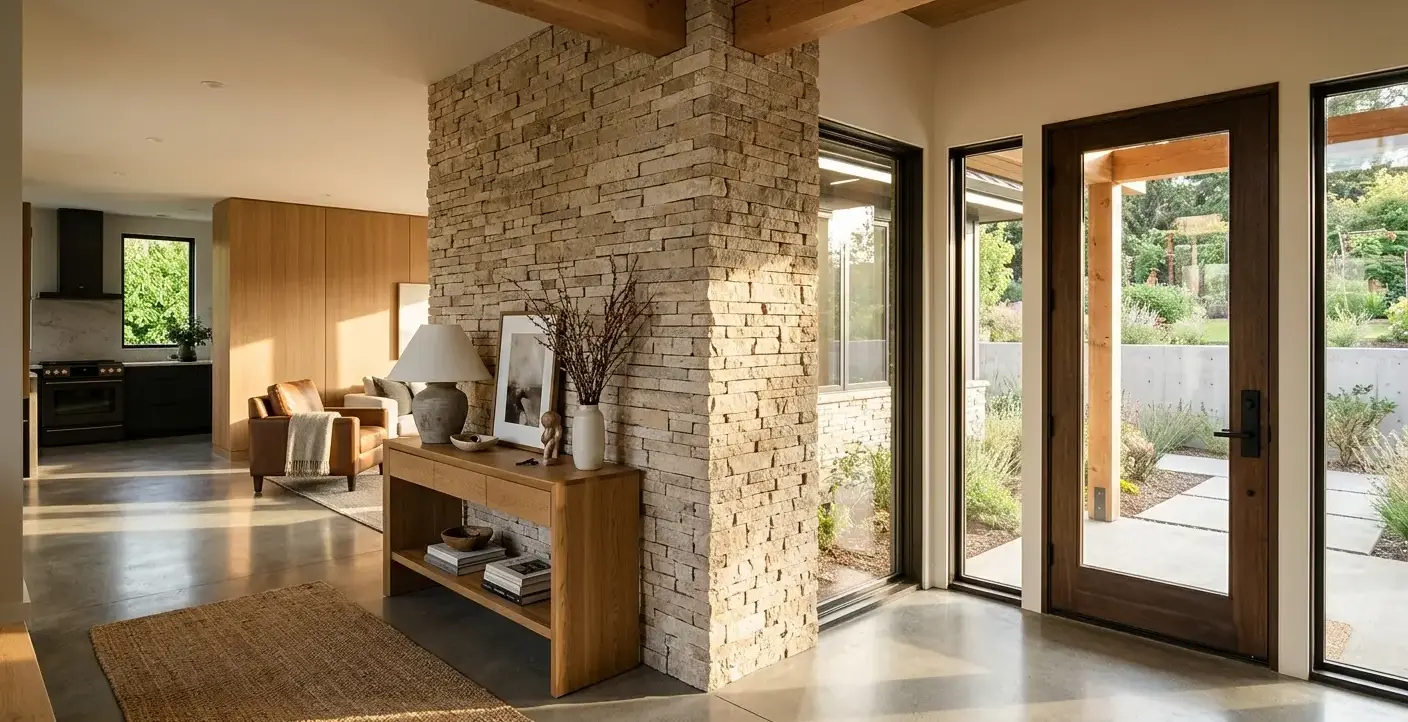 Conceptual rendering
A corner piece carries the stone face and the side return on a single unit. The eye follows one continuous surface around the corner instead of stopping at a cut edge.
Because the return is shaped as part of the product, an outside corner usually reads as solid stone rather than two panels meeting. Texture and edge character stay consistent from face to side.
Corner pieces also simplify ordering. One masonry trade article notes that thin stone is typically sold as flat and corner pieces, with corners measured separately in linear feet.
Stone Types Compared for Outside Corners
Stone type influences how a corner performs outdoors. The table summarizes general behavior for common natural stones, and stacked stone products vary, so each product needs verification.
Stone Type | Outdoor Use | Sealing | UV and Sun Exposure | Corner Look |
Quartzite | Outdoor-suitable | Sealing recommended | UV-resistant category | Banded or veined tones that reward careful return matching |
Granite | Outdoor-suitable | Sealing recommended | UV-resistant category | Crystalline speckle with a fairly even tone |
Travertine | Generally outdoor-approved | Sealing recommended | Not in Nova's UV-resistant category; confirm manufacturer sun exposure approval | Warm, textured surface with natural pitting |
Marble | Better reserved for indoor spaces | Sealing recommended | Indoor corners only | Soft veining that needs careful return matching |
Exposure ratings differ from one stacked stone product to the next, so ask a design consultant to confirm freeze-thaw and sun exposure approval for the exact piece.
Advantages and Limitations of Pre-Shaped Corners
Weighing both sides early prevents surprises once pieces arrive. A short review of each list helps set realistic expectations before ordering.
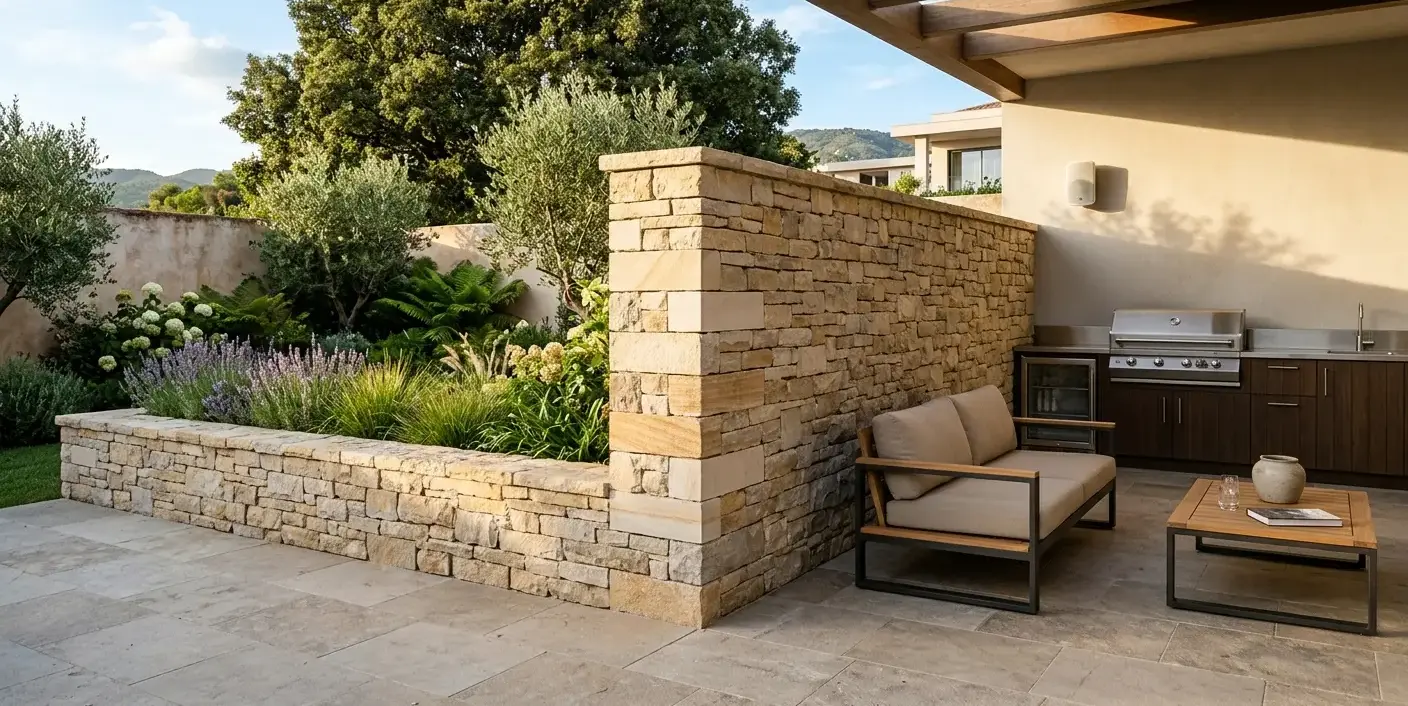 Conceptual rendering
Limitations
- Return sizes are fixed, so unusual corner dimensions need planning
- Natural color shifts can still appear between boxes
- Corner pieces are not offered in every product line
- Exterior suitability depends on the specific product
Advantages
- Continuous stone face around the corner
- Fewer visible cut edges
- Corner counts planned separately from flat coverage
- Pattern options through alternating returns
Design Ideas for Clean Stacked Stone Outside Corners
Small design decisions determine whether a corner feels intentional. These ideas focus on the return, the blend, and the finish before an order is placed.
Match Return Length to Course Height
Return lengths that echo the height of the flat pieces tend to make the corner feel like part of the wall. Alternating long and short returns also keeps vertical lines from stacking.
Photographing each wall elevation and marking the corners helps a design consultant suggest a return pattern that suits the style, whether ledgestone, ashlar, or fieldstone.
Blend Tone Across Flat and Corner Pieces
Natural stone varies from box to box, and corners are no exception. Reviewing flat and corner pieces together in daylight helps spread tone changes so no single corner looks darker than the wall.
Browse stone slab collections online for caps or sills that echo the corner palette without repeating the same texture.
How to Hide Seams on Stacked Stone Corners
To hide seams on stacked stone corners, keep thickness, texture, and edge shape consistent between flat and return pieces. Consistent edges let shadow lines read as natural stone joints.
Ordering corners from the same product line as the flats matters, because mixed lines can differ in thickness and finish. Tolerance and selection guidance appears in the Dimension Stone Design Manual from the Natural Stone Institute.
Plan for Light and Shadow
Outdoor corners catch low, raking light, which can exaggerate joint lines. Stone with varied texture usually forgives small tone shifts better than very uniform surfaces.
Viewing pieces near a window or outdoors at different times of day gives a more realistic read of tone and texture than showroom lighting alone.
Four-Step Corner Planning Checklist
- Measure corner heights. Record each outside corner's height in feet so corner quantities can be estimated separately.
- Choose the profile. Select return lengths and edge character that suit the flat pieces.
- Review tone and texture. Compare flat and corner pieces together in natural light before approving.
- Confirm exterior data. Ask for freeze-thaw and water absorption results for the exact product, and review moisture management strategies with the project team.
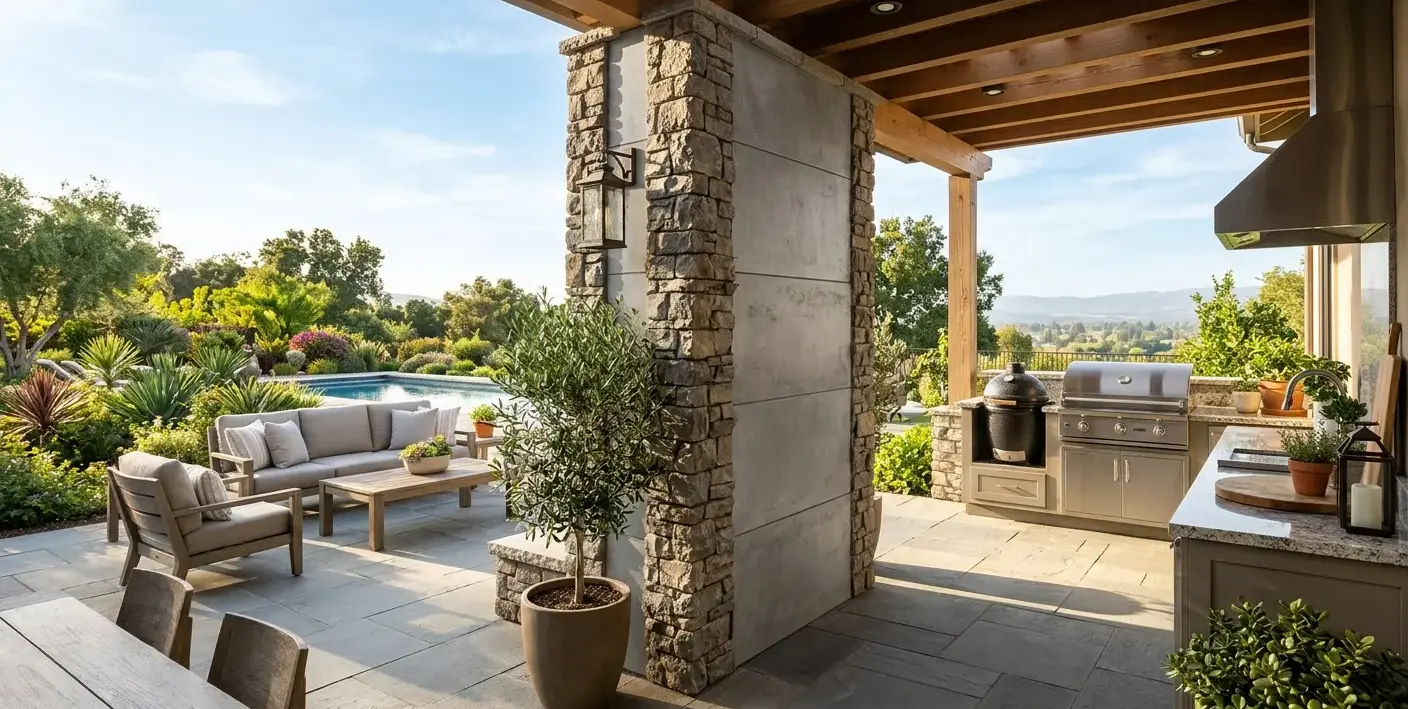 Conceptual rendering
How Nova Tile and Stone Supports Your Corner Planning
Nova Tile and Stone supplies stone and tile materials. Design consultants, who work without commission, walk through corner profiles, tones, and textures so choices feel considered. Winter nights in northern Nevada often drop below freezing, so ask about freeze-thaw data for the exact product.
Visit the Reno showroom to compare corner returns beside flat pieces in natural light. The Fernley showroom serves nearby Nevada projects.
The Minden showroom welcomes design conversations as well. Northern California customers can visit the Sacramento showroom too.
Key Takeaways
- Stacked stone corner pieces wrap the outside corner so the stone face reads as continuous.
- To hide seams on stacked stone corners, match thickness, texture, and tone across flat and return pieces.
- Corner quantities are usually planned separately, so measure the height of each corner.
- Granite and quartzite are outdoor-suitable stones, and travertine is generally outdoor-approved, but confirm sun exposure for the exact product.
- Confirm freeze-thaw and water absorption data before choosing any stacked stone for exterior walls.
- Marble and dolomite are better reserved for indoor spaces.
Plan Your Corners With a Design Consultant
Clean corners start with a few measurements and a conversation. A design consultant can review your corner heights, compare return profiles beside flat pieces, and flag exterior performance questions before anything is ordered.
SACRAMENTO SHOWROOM
6100 Warehouse Way, Sacramento, CA 95826
 Google Maps
Store hours this week:
- Mon. - Fri.: 7:30 am - 5:00 pm
- Sat. - Sun.: Closed
MINDEN SHOWROOM
2548 Business Pkwy, Minden, NV 89423
Store hours this week:
- Mon. - Fri.: 7:30 am - 6:00 pm
- Sat.: 9:00 am - 3:00 pm
- Sun.: Closed
RENO SHOWROOM
12835 Old Virginia Rd Suite 24, Reno, NV 89521
Store hours this week:
- Mon. - Fri.: 7:30 am - 6:00 pm
- Sat.: 9:00 am - 3:00 pm
- Sun.: Closed
FERNLEY SHOWROOM
1855 US Highway 95A North, Fernley, NV 89408
Store hours this week:
- Mon. - Fri.: 7:30 am - 4:00 pm
- Sat. - Sun.: Closed
The visit is free, the guidance is commission-free, and the result is a clearer plan for stacked stone outside corners that look intentional. Bring photos and rough dimensions to make the most of the time. Book your free consultation today!
Frequently Asked Questions
They are L-shaped units shaped to wrap an outside wall corner, so the stone face continues around the bend. Paired with flat panels in the same color and texture, they help the corner read as solid stone instead of two surfaces meeting. Availability and sizes vary by product.
Keep thickness, texture, and edge shape consistent between flat and return pieces. Compare tones together in natural light, and review pieces from several boxes before approving an order. Natural color shifts can still appear, so a design consultant can help judge what level of variation suits the look you want.
Suitability depends on the specific product. Ask for freeze-thaw performance and water absorption data, plus any manufacturer sun exposure approval. Stones such as granite and quartzite are generally outdoor-suitable, but stacked stone products vary, so a design consultant should confirm the exact piece before it is specified for an exterior.
Corner pieces are commonly estimated in linear feet. Measure the full height of every outside corner, total those figures, and share the number with a design consultant. Final quantities depend on the product's return length and coverage, so confirm details with the supplier before ordering.
Natural stones such as quartzite, granite, and travertine generally benefit from sealing, though recommendations vary by product. Confirm the guidance for the exact piece, and clean with mild, non-abrasive products. Regular care helps preserve appearance, but no stone is entirely care-free.
Sources
Hambleton, J. (2008). Natural thin stone veneers. MASONRY Design. https://masonrydesignmagazine.com/natural-thin-stone-veneers/
Natural Stone Institute. (2024). Dimension stone design manual (2024 ed.). https://naturalstoneinstitute.org/resources/dimension-stone-design-manual/
National Institute of Building Sciences. (n.d.). Moisture management strategies. Whole Building Design Guide. https://www.wbdg.org/node/288