At A Glance
- Natural stone is cut from real rock, so its color runs all the way through.
- Manufactured stone is cast from cement and pigments.
- Natural stone holds its color longer.
- Manufactured panels are lighter and more uniform.
- Granite and quartzite resist UV, and travertine should be verified.
- Natural stone needs sealing, while manufactured stone needs periodic washing.
- Chips in manufactured stone may show a different base color.
In This Post
- Natural vs manufactured: the short answer
- Durability of natural vs manufactured stacked stone
- Exterior applications and design ideas for stone veneer
- Stone durability comparison at a glance
- Advantages and limitations of each option
- Design pairings for exterior walls
- Maintenance and long-term appearance
- Climate considerations in Northern Nevada and Sacramento
- How to choose in five steps
- How Nova Tile and Stone supports your selection
- Frequently Asked Questions
Natural vs Manufactured: The Short Answer
Natural stacked stone generally keeps its color and texture longer, while manufactured versions are typically lighter and more uniform. Performance depends on climate, exposure, and care, so the best choice varies by project and by the wall being covered.
Exterior walls face sun, moisture, and temperature swings, and each material responds differently. This stone durability comparison covers material behavior, design uses, and a simple decision process for homeowners and builders. Natural veneer is built from real cut stone, so color runs through each piece. Manufactured veneer is cast from cement-based mixes and pigments, then molded to resemble quarried stone.
Neither option is immune to weathering or wear. Sealing, cleaning habits, and realistic expectations shape how either one looks after several seasons outdoors, especially in regions with strong sun and cold winter nights. Nova Tile and Stone supplies natural stone and tile to Fernley, Reno, Minden, and Sacramento. Material properties here are general, so confirm exact ratings for any specific product before purchase.
Durability of Natural vs Manufactured Stacked Stone
Natural panels can be cut from stones such as granite, quartzite, or travertine, and each parent rock behaves differently. Granite and quartzite generally hold their color well in strong sun. Travertine is generally approved for outdoor use, but its sun resistance varies more by product, so verify the exact product’s UV rating.
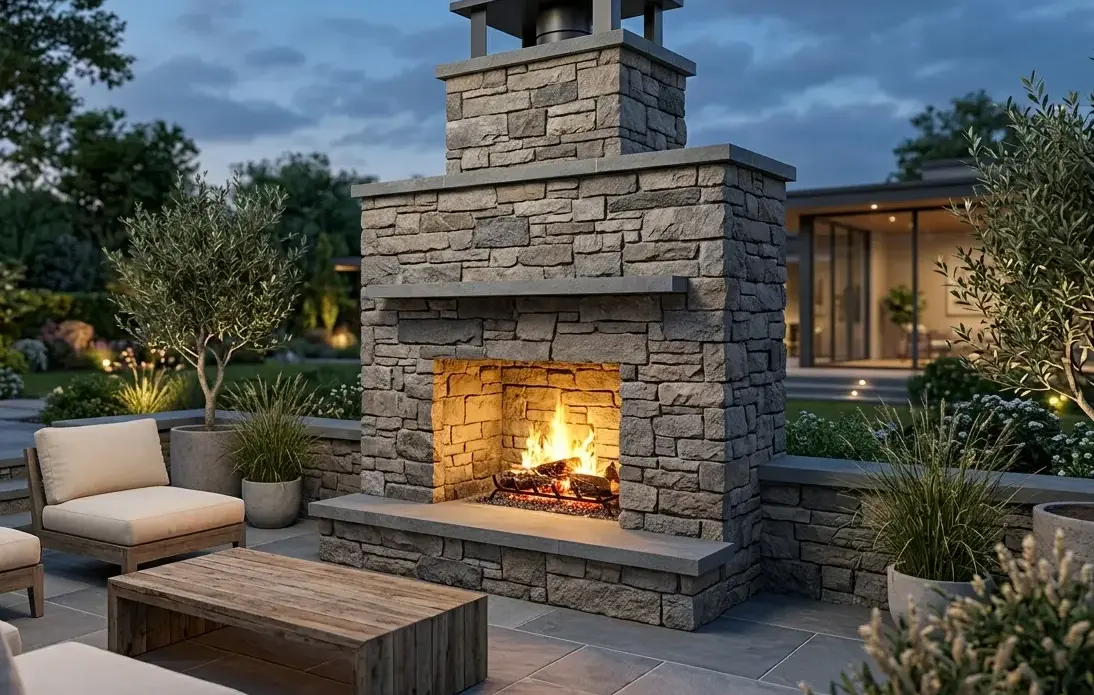 Conceptual rendering
Manufactured panels rely on cast cement mixes and pigments. Many perform well outdoors, yet freeze-thaw testing, color stability, and warranty terms vary by maker. Requesting the product data sheet clarifies what each line has been tested for, which makes side-by-side comparison far more reliable.
The durability of natural vs manufactured stacked stone also depends on local weather. High desert sun and cold nights, common near Reno and Minden, stress any exterior surface over time. For added background, review these veneer material facts.
Each option brings distinct strengths to an exterior wall:
- Color depth: In natural stone, color runs through each piece, so small chips tend to blend in.
- Natural character: No two natural pieces match exactly, which gives walls a one-of-a-kind look.
- Fireplace suitability: Granite, quartzite, and travertine suit fireplace surrounds, though each product's rating should be confirmed.
- Lighter panels: Manufactured panels are often lighter per square foot, which can simplify wall planning.
- Consistent appearance: Molded profiles deliver more uniform color and sizing from piece to piece.
- Broad style range: Both options come in ledger, rustic, and modern profiles for varied architectural styles.
Exterior Applications and Design Ideas for Stone Veneer
Stone veneer suits entry walls, fireplaces, columns, and outdoor kitchen backdrops. This stone veneer guide offers broader background, while the sections below focus on material behavior and design fit.
Stone Durability Comparison at a Glance
This table summarizes general tendencies. Individual products differ, so confirm specifications before choosing a material for any exterior surface.
Factor | Natural Stone Veneer | Manufactured Stone Veneer |
Material | Cut from quarried rock | Cast from cement-based mixes and pigments |
Color | Runs through the piece and varies naturally | Pigment is integral or surface applied, depending on the product |
UV and sun | Granite and quartzite are UV-resistant; verify travertine | Gradual color change is possible in strong sun; check the warranty |
Freeze-thaw | Depends on the stone's water absorption | Depends on manufacturer testing; request the data |
Surface care | Granite, quartzite, and travertine generally need sealing; avoid abrasive cleaners | Periodic washing; follow the maker's care guidance |
Weight | Typically heavier | Often lighter |
Fire features | Granite, quartzite, and travertine suit fireplaces | Confirm the product's fire rating |
Variation | Wide shifts in tone and texture | More consistent from piece to piece |
Chip appearance | Chips usually match the surface color | Chips may reveal a different base tone |
Water absorption drives much of the freeze-thaw story. Lower-absorption stones generally handle repeated freezing better, which matters during colder Northern Nevada winters. Ask suppliers for absorption data on any natural product.
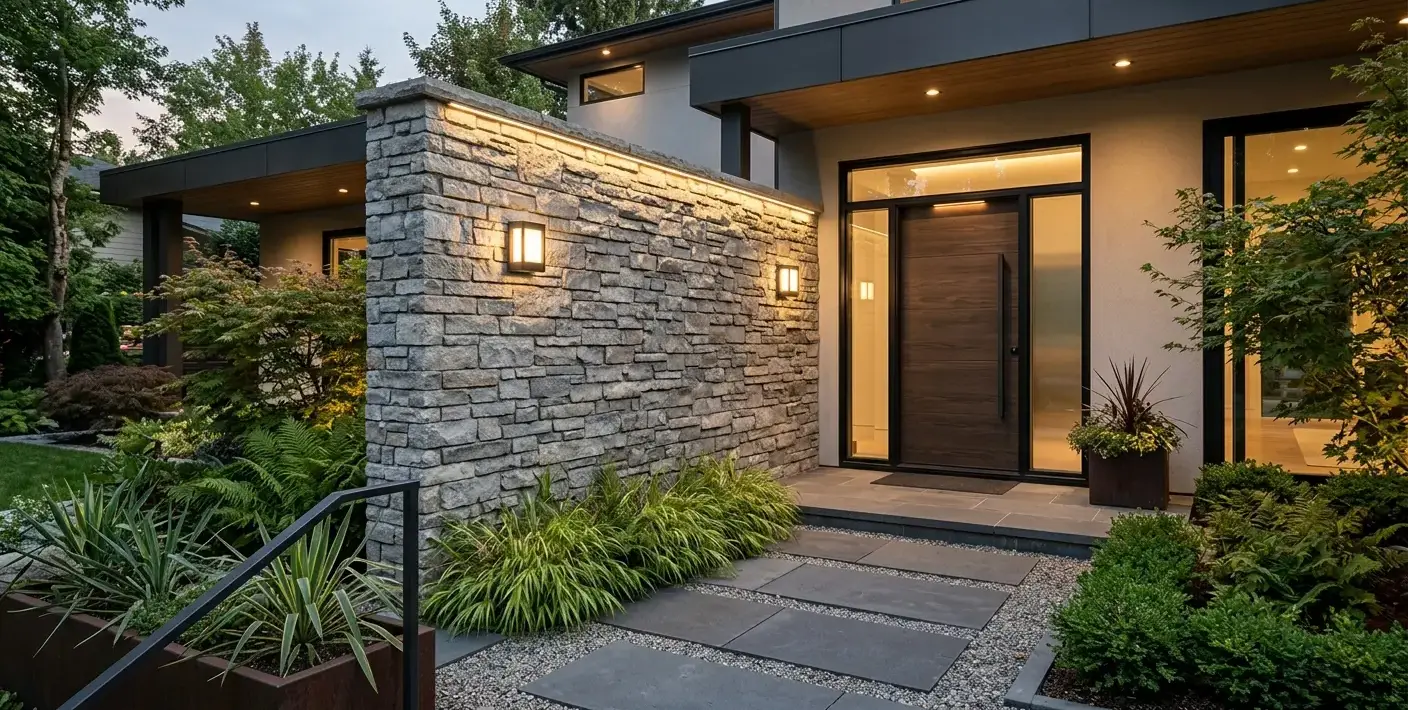 Conceptual rendering
Advantages and Limitations of Each Option
Natural stone veneer
- Advantage: Authentic texture and depth of color that develops character with age.
- Advantage: Strong performance potential with low-absorption stones, subject to product test data.
- Limitation: Heavier panels and more batch-to-batch variation in tone.
- Limitation: Sealing and gentle cleaning are needed to preserve appearance.
Manufactured stone veneer
- Advantage: Lighter, more uniform panels that suit large, consistent wall surfaces.
- Advantage: A wide range of molded profiles and color families.
- Limitation: Color may shift under intense sun on some products.
- Limitation: Chips can expose a base tone that differs from the surface.
Neither list declares a winner. The better option is the one whose limitations the project can comfortably manage.
Design Pairings for Exterior Walls
Natural veneer pairs well with granite or quartzite surfaces nearby, such as outdoor kitchen counters. Browse natural stone slabs online to coordinate tones between wall cladding and work surfaces. Darker, cooler tones suit modern homes with clean lines, while warm earth tones soften rustic and Mediterranean exteriors.
Texture matters too, since deeper shadow lines create stronger visual depth in afternoon light. Lighting also shifts perception, so view stone in both morning and late-day conditions when possible. Manufactured panels suit large walls where uniform color is a priority. Mixed layouts, such as a natural fireplace with a manufactured accent wall, work when tones are coordinated carefully.
Maintenance and Long-Term Appearance
Natural stone benefits from a sealer suited to its type, applied on the schedule the supplier recommends. Mild cleaners protect the surface, while abrasive products can dull texture and wear away sealer. Cleaning spills promptly makes staining less likely.
Manufactured panels typically need periodic washing to remove dust and debris, and some makers recommend sealers. Following the written care guidance helps color stay even over time and helps protect warranty coverage.
Climate Considerations in Northern Nevada and Sacramento
Reno, Minden, and Fernley see strong sun, dry air, and freezing winter nights, a mix that tests both UV behavior and freeze-thaw response. Prioritize products with documented absorption and fade information from the supplier.
Sacramento brings long, hot summers with less frequent freezing, so sun exposure and heat tolerance often matter more than winter performance. Request exposure details that match the orientation of the wall.
How to Choose in Five Steps
Work through these steps in order to keep the decision practical:
- Define exposure. Note sun, moisture, and winter temperature swings at the wall location.
- Request product data. Ask for water absorption, freeze-thaw results, and UV or fade information.
- Compare in person. Visit a showroom to judge texture, color range, and scale together.
- Weigh upkeep. Decide whether periodic sealing and gentle cleaning fit your routine.
- Confirm structure. Ask a builder or designer to review wall load and local code needs.
Industry groups also share professional background, and this trade association overview is one starting point.
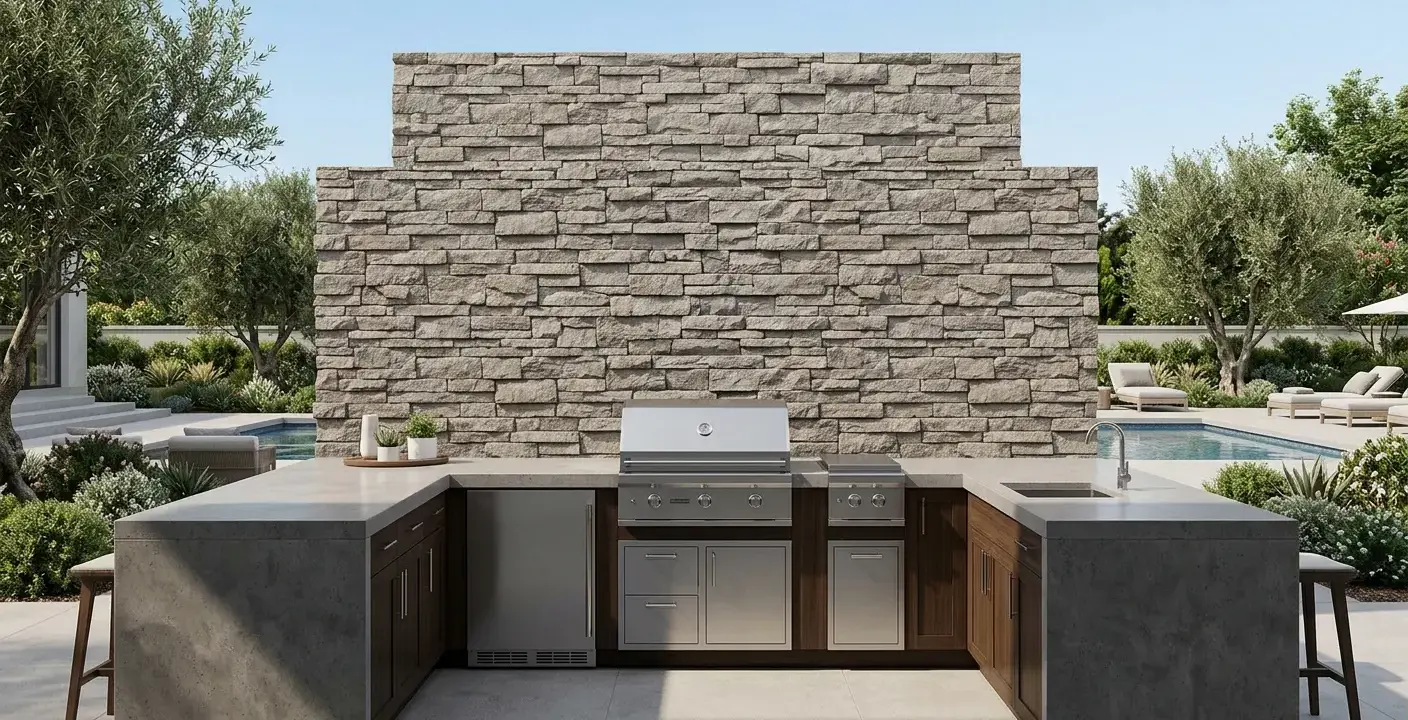 Conceptual rendering
How Nova Tile and Stone Supports Your Selection
Nova supplies natural stone and tile, and its commission-free design consultants help compare options by exposure, style, and maintenance habits. Guidance centers on material selection, so each recommendation reflects how the stone will be used, from a single entry wall to a full facade.
Arranged delivery assistance can be coordinated for orders, and consultants can review product data sheets alongside you. Seeing stone in person makes texture, color range, and scale easier to judge. Consultants can also coordinate natural stone with tile, slabs, and hardscape materials so wall, floor, and countertop finishes feel connected across a property.
RENO SHOWROOM
12835 Old Virginia Rd Suite 24, Reno, NV 89521
 Google Maps
Store hours this week:
- Mon. - Fri.: 7:30 am - 6:00 pm
- Sat.: 9:00 am - 3:00 pm
- Sun.: Closed
MINDEN SHOWROOM
2548 Business Pkwy, Minden, NV 89423
Store hours this week:
- Mon. - Fri.: 7:30 am - 6:00 pm
- Sat.: 9:00 am - 3:00 pm
- Sun.: Closed
SACRAMENTO SHOWROOM
6100 Warehouse Way, Sacramento, CA 95826
Store hours this week:
- Mon. - Fri.: 7:30 am - 5:00 pm
- Sat. - Sun.: Closed
Visit a showroom near you to view stone in natural light:
- Visit the Reno showroom to review exterior stone options with a design consultant.
- Visit the Fernley showroom to compare textures and tones side by side.
- Visit the Minden showroom to talk through wall, fireplace, and column ideas.
- Visit the Sacramento showroom to match stone to Northern California exteriors.
Ready to narrow the choice? You can book a free consultation to review exposure, style, and upkeep with a design consultant.
FERNLEY SHOWROOM
1855 US Highway 95A North, Fernley, NV 89408
Store hours this week:
- Mon. - Fri.: 7:30 am - 4:00 pm
- Sat. - Sun.: Closed
Note: Some images on this page may be conceptual renderings created to illustrate design possibilities and may not depict actual installations.
Conclusion
Choosing between natural and manufactured stacked stone comes down to exposure, appearance, and upkeep. Natural stone offers depth and variation, while manufactured panels offer lighter, more uniform options. Both perform best when matched to the site, and the five steps above keep the decision grounded. Review Nova's stone collections to see how materials coordinate.
Questions about exposure ratings, color matching, or upkeep are welcome. A design consultant can help narrow the options with product data in hand and the wall's exposure in mind. Book your free consultation today.
Frequently Asked Questions
Natural stone often keeps its color and texture longer because its color is part of the stone, though results depend on the specific stone and care. Manufactured products vary by maker, so request test data, care instructions, and warranty terms before choosing.
Some manufactured products may show gradual color change under intense sun, depending on pigment type and finish. Ask for fade or UV information and review the warranty. Granite and quartzite generally hold their color well in sun, while travertine varies more by product, so verify any specific product’s UV rating.
Granite, quartzite, and travertine generally need sealing to help resist stains and moisture. Sealer type and schedule depend on the stone and exposure, so follow supplier guidance. Avoid abrasive cleaners, clean spills promptly, and ask the supplier which sealer suits the product.
Granite, quartzite, and travertine suit fireplace surrounds. For manufactured panels, confirm the product's fire rating and clearance guidance with the manufacturer, since requirements vary by product and local code. Keep combustible clearances in mind when planning.
Natural stone is typically heavier and varies more from piece to piece. Manufactured panels are often lighter and more uniform. Weight can affect wall planning, so a builder or designer should review the project before materials are ordered, since load limits differ by wall.