AT A GLANCE
- Stacked stone is layered stone veneer for walls.
- Quartzite and granite generally suit sunny outdoor walls.
- Travertine can work outdoors; confirm freeze-thaw suitability.
- Marble and dolomite are best kept indoors.
- Granite, quartzite, and travertine may need sealing.
IN THIS POST
- What Is a Stacked Stone Accent Wall?
- What Are the Benefits of a Stacked Stone Accent Wall?
- Where Can You Use Stacked Stone Accent Walls?
- Which Stone Types Work Best Outdoors?
- How Do You Choose Stacked Stone?
- Explore Outdoor Stone Options
- Plan Your Stacked Stone Accent Wall With Nova Tile and Stone
- Frequently Asked Questions
- Sources
What Is a Stacked Stone Accent Wall?
A stacked stone accent wall is a feature wall finished with narrow, layered stone veneer pieces that create a textured, dimensional surface. In courtyards and entryways, it adds depth, shadow, and natural color to outdoor focal points when the product suits exterior exposure. The layered profile catches changing daylight, so plain stucco or block surfaces gain handcrafted character. Results vary with stone type, color blend, and how much sun and weather the wall receives.
Courtyards benefit from a backdrop that frames plants, water features, and seating. Entryways benefit from a welcoming first impression that signals quality before the front door opens. Not every stone performs the same outdoors. Freeze-thaw cycles, intense sun, and moisture affect products differently, so confirming the exact product rating matters before a final selection.
Because veneer is a vertical surface treatment, it works best on walls, columns, and entry features rather than floors. Background on how stacked stone veneer is used explains why the category is typically applied to vertical surfaces. This guide covers benefits, stone types, courtyard and entry layouts, a planning checklist, and answers to common questions.
What Are the Benefits of a Stacked Stone Accent Wall?
A stacked stone accent wall adds layered texture, natural color variation, and a defined focal point to courtyards and entryways. Natural stone is also generally durable outdoors when the product suits the climate. Each wall reads as unique, because individual pieces differ in tone, edge, and grain. Appropriate sealing and periodic cleaning help preserve appearance, though no stone is immune to weather and wear.
Key advantages property owners often look for include:
- Visual depth: layered edges create shadow lines that shift from morning to evening light.
- Natural color range: quartzite, granite, and travertine veneers often span warm, cool, and neutral palettes.
- Durability: natural stone is generally durable outdoors, but performance depends on the specific product and exposure.
- Design flexibility: the textured surface pairs well with wood doors, metal gates, plantings, and pavers.
- Defined focal point: a single feature wall can anchor a courtyard or entry without crowding the space.
- Care expectations: granite, quartzite, and travertine may need sealing, and prompt cleanup of spills and debris helps protect the finish.
 Conceptual rendering
Seasonal changes in light and surrounding plantings also alter how the stone reads, which keeps the wall visually interesting through the year. Layered stone also lends a sense of permanence to entry areas, since masonry has long defined outdoor construction. Modern veneer formats bring that look to feature walls without the visual bulk of full masonry.
Browse natural stone slabs online to compare coordinating colors for nearby benches, thresholds, or entry surfaces. Exterior suitability varies by stone, so confirm each choice before ordering.
Where Can You Use Stacked Stone Accent Walls in Courtyards and Entryways?
Stacked stone accent walls work well as courtyard feature walls, seat walls, planter surrounds, entry walls, and columns beside the front door. Placement, scale, and exposure shape how the textured wall looks and performs in each location.
Courtyard Feature Walls
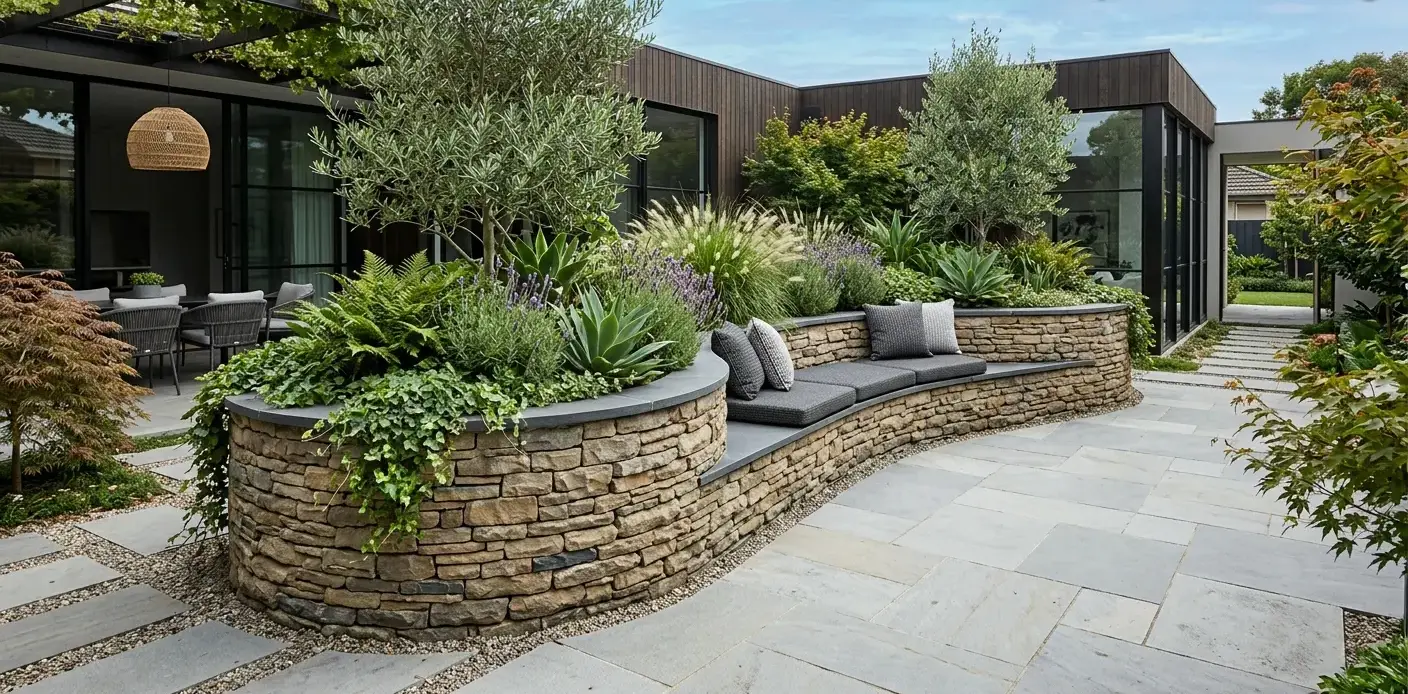
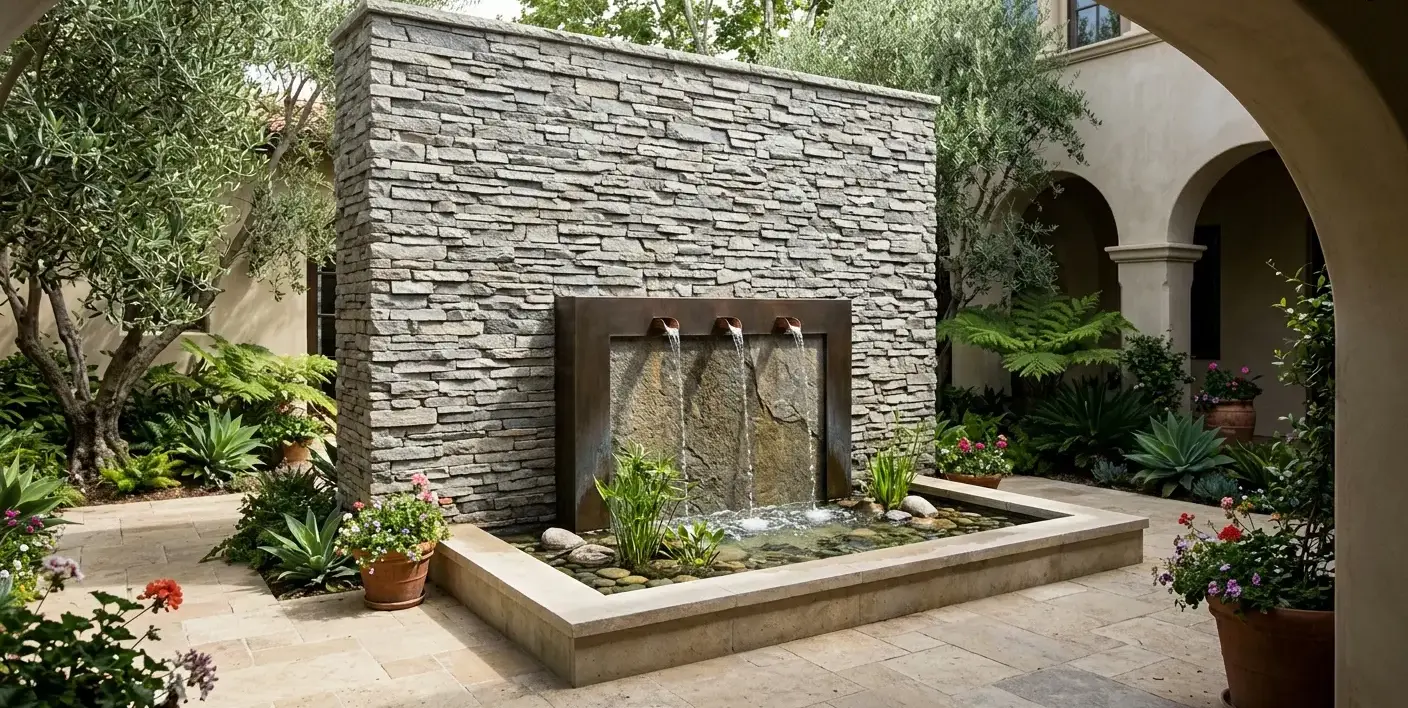
A full-height feature wall behind a fountain or seating group turns a courtyard into a defined outdoor room. Water features add moisture, so confirm the stone suits splash exposure. Low seat walls and planter surrounds offer a softer use of the same stone. Accent walls for courtyards and entryways work best when texture is balanced against smooth neighboring surfaces.
Corner placements and gently staggered sections add movement to a relaxed garden layout. Straight runs suit formal courtyards, where clean lines support a more symmetrical plan.
Entryway Accent Walls
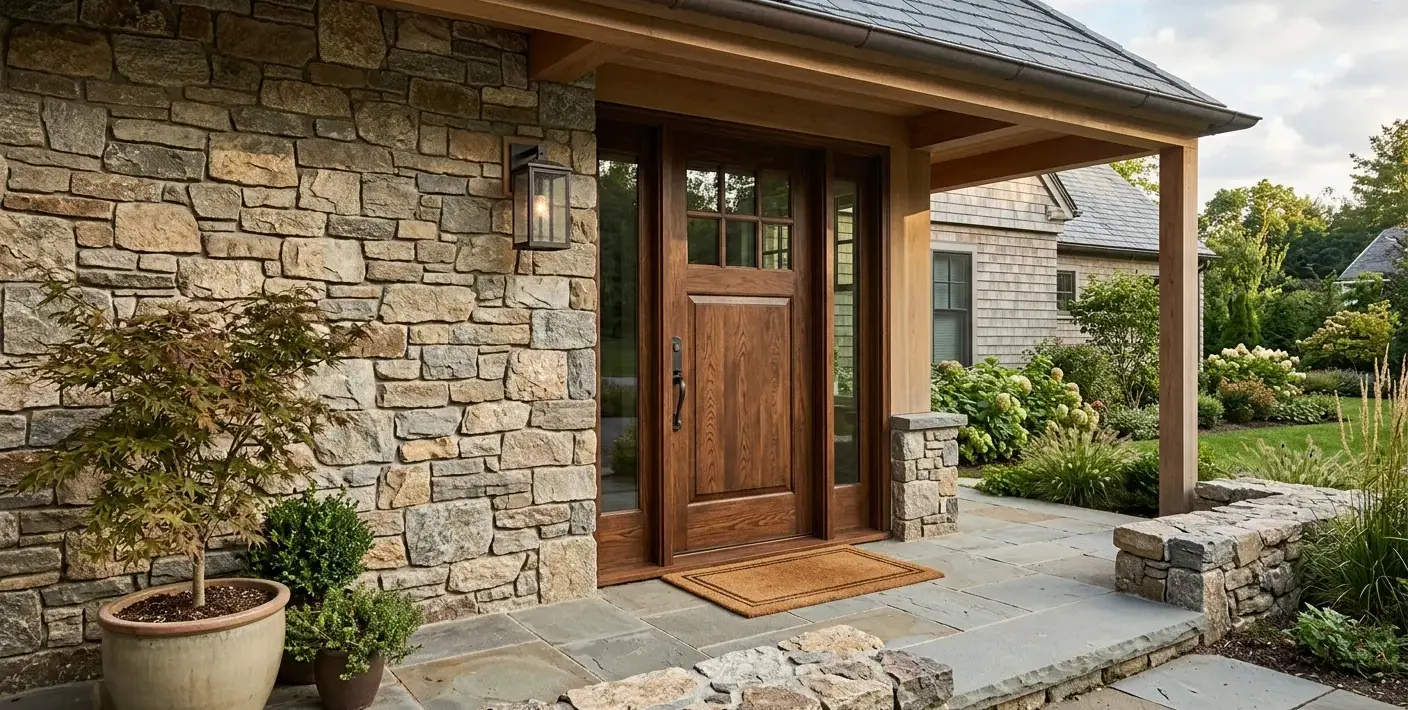
Flanking the front door with stone columns or a short entry wall frames the approach. Warm travertine or earthy quartzite tones often complement wood doors and dark metal fixtures. House numbers, wall sconces, and plantings gain contrast against layered stone. Shallow lighting angles emphasize texture, but very strong effects can look busy in a compact entry.
Consider sightlines from the street and from inside the home. A wall visible from a window or gate becomes part of daily views, not only a first impression.
Finishing Touches That Complete The Look
Plantings soften the hard edges of layered stone. Ornamental grasses and low shrubs contrast well with the texture, while trimming foliage back helps limit trapped moisture and debris. Metal accents such as black gates, bronze lanterns, or steel planters add contrast. Pavers or gravel in a coordinating tone tie the wall to the ground and complete the courtyard.
Climate And Exposure Considerations
Northern Nevada properties often see winter freeze-thaw cycles, wide temperature swings, and strong sun. Stone products should be matched to those conditions rather than chosen on appearance alone. Sacramento courtyards typically face long, hot summers and intense sun, so UV information matters. Irrigation overspray can also reach nearby wall sections.
Shaded walls and sun-exposed walls can weather differently, so note how each wall location is used throughout the day. Asking about frost exposure early helps narrow the stone type, finish, and sealing plan before design details are set.
 Conceptual rendering
Which Stone Types Work Best for Outdoor Stacked Stone Accent Walls?
Quartzite and granite are common exterior choices for stacked stone walls. Travertine is generally outdoor-approved, though exterior and sun-exposure approval for the exact product should be confirmed. Marble and dolomite are better reserved for indoor spaces. The table compares stone types commonly used for layered veneer walls.
Stone Type | Exterior Suitability | Sun Exposure Note | Typical Look |
Quartzite | Generally outdoor-suitable | Ask whether the product uses resin or adhesive and is approved for full sun | Crisp layers in gray, white, and gold tones |
Granite | Generally outdoor-suitable | Ask whether the product uses resin or adhesive and is approved for full sun | Speckled, crystalline texture in neutral tones |
Travertine | Generally outdoor-approved | Ask whether the product uses resin or adhesive and is approved for full sun | Warm, earthy tones with natural surface variation |
Marble or Dolomite | Better reserved for indoor spaces | Better kept out of full exterior exposure | Soft veining in light and neutral tones |
Granite, quartzite, travertine, marble, and dolomite generally need sealing, depending on the product. Marble and dolomite suit spaces such as an enclosed foyer better than exposed exterior walls. For any exterior wall, confirm freeze-thaw performance and manufacturer sun exposure approval for the exact product before selecting a stone.
What Are the Pros and Cons of Stacked Stone Veneer Walls?
A balanced view helps set realistic expectations before choosing a stone for an exterior accent wall.
 Conceptual rendering
Pros
- Adds texture and depth that flat finishes rarely provide.
- Natural color variation gives each wall a distinct look.
- Suits courtyards and entryways when the product is exterior-rated.
- Pairs well with wood, metal, plants, and pavers.
Cons
- Exterior suitability varies by product, so ratings need confirmation.
- Natural stone generally needs sealing and periodic cleaning.
- Deep texture can collect dust and debris on ledges.
- Color and pattern vary piece to piece, so appearance differs between sections.
How Do You Choose Stacked Stone for a Courtyard or Entryway Wall?
Choosing stacked stone for an outdoor wall starts with the wall’s role and exposure, then moves to verified product ratings and a palette that suits the home. These five steps keep appearance and exterior suitability in the same decision.
- Define the wall's role. Decide whether it is a focal point, privacy backdrop, or entry frame, and note its approximate size.
- Record exposure. Note direct sun, shade, irrigation, snow, and freeze-thaw conditions at the exact wall location.
- Verify ratings. Ask for exterior suitability, freeze-thaw, and UV information, then review the ASTM standards for dimension stone to see how stone properties are specified.
- Match the palette. Compare stone color and texture against the home exterior, door finishes, and nearby surfaces.
- Confirm with an expert. Meet a design consultant to review product fit, finish, sealing needs, and delivery planning.
Independent resources also outline stacked stone veneer cost factors, such as wall area and unit size, that are worth reviewing alongside these steps.
Note: Some images on this page may be conceptual renderings created to illustrate design possibilities and may not depict actual installations.
Explore Outdoor Stone Options
Nova Tile and Stone is a natural stone and tile supplier with design consultants who offer free consultations. Their guidance focuses on matching stone type, finish, and exposure to how a space is used. Nova Tile and Stone supplies materials and expert guidance, so stone selection stays organized from first idea to final choice.
FERNLEY SHOWROOM
1855 US Highway 95A North, Fernley, NV 89408
 Google Maps
Store hours this week:
- Mon. - Fri.: 7:30 am - 4:00 pm
- Sat. - Sun.: Closed
RENO SHOWROOM
12835 Old Virginia Rd Suite 24, Reno, NV 89521
Store hours this week:
- Mon. - Fri.: 7:30 am - 6:00 pm
- Sat.: 9:00 am - 3:00 pm
- Sun.: Closed
MINDEN SHOWROOM
2548 Business Pkwy, Minden, NV 89423
Store hours this week:
- Mon. - Fri.: 7:30 am - 6:00 pm
- Sat.: 9:00 am - 3:00 pm
- Sun.: Closed
SACRAMENTO SHOWROOM
6100 Warehouse Way, Sacramento, CA 95826
Store hours this week:
- Mon. - Fri.: 7:30 am - 5:00 pm
- Sat. - Sun.: Closed
Nova Tile and Stone serves Northern Nevada and Northern California, including Fernley, Reno, Minden, and Sacramento. Visit the Reno showroom to compare textures and tones under natural light. Nearby property owners can visit the Minden showroom for the same guidance. The Fernley showroom serves properties that may face strong wind and winter freeze-thaw cycles.
Visit the Sacramento showroom to discuss stone choices for warm, sunny courtyards and entryways.
Photos of the space, rough wall dimensions, and notes on sun exposure help consultants narrow stone options quickly. Anyone planning an accent wall can book a free consultation to review location, exposure, and stone options with a design consultant.
Plan Your Stacked Stone Accent Wall With Nova Tile and Stone
Stacked stone brings texture, depth, and natural color to courtyards and entryways when the product matches the exposure. Thoughtful stone selection and regular care help preserve its appearance over time. Browse the Nova Tile and Stone collection online to see how layered walls, columns, and entry features can fit a project.
Whether the goal is a welcoming entry or a defined courtyard, expert guidance makes each decision clearer. Design consultants can review exposure, stone type, and finish in one conversation. Book your free consultation today!
Frequently Asked Questions
It is a feature wall finished with narrow, layered stone veneer pieces that create a textured surface. Property owners often use it as a focal point in courtyards and entryways.
Many stone veneer products suit exterior walls, but suitability depends on the specific product. Confirm freeze-thaw performance, sun exposure approval, and moisture tolerance with a design consultant before choosing a stone.
Quartzite and granite are common exterior choices. Travertine is generally outdoor-approved, though exterior and sun-exposure approval for the exact product should be confirmed. Marble and dolomite are better reserved for indoor spaces.
Granite, quartzite, travertine, marble, and dolomite generally need sealing. Routine rinsing, prompt spill cleanup, and avoiding abrasive cleaners help preserve appearance. Care needs vary by product and exposure, so ask for product-specific guidance.
Nova’s design consultants provide expert guidance on stone selection, exposure, and design. Nova serves Fernley, Reno, Minden, and Sacramento. Book a free consultation to start planning.
Sources
- Natural Stone Institute, Stone Care | https://www.naturalstoneinstitute.org/stonecare
- Natural Stone Institute, ASTM Standards for Dimension Stone | https://www.naturalstoneinstitute.org/stoneprofessionals/astm
- Natural Stone Institute, Dimension Stone Design Manual | https://pubs.naturalstoneinstitute.org/pubview/6841ADCF-1866-DAAC-99FB-A3BA6D835C05