AT A GLANCE
- Texture, wet ratings, and upkeep drive slip resistance.
- Honed, leathered, and textured finishes grip better.
- Polished stone gets slippery when wet.
- Wet DCOF is the main traction rating.
- 0.42 wet DCOF is an indoor tile benchmark.
- Outdoor areas need product-specific ratings.
- Steps and slopes need higher traction.
- Shade and frost make stone stay damp longer.
- Keep surfaces clean of algae, moss, and grit.
IN THIS POST
- What Makes Outdoor Stone Slip Resistant?
- Why Choose Textured Outdoor Stone?
- Where to Use Slip-Resistant Stone
- See Outdoor Stone Finishes in Person
- Conclusion
- Frequently Asked Questions
- Sources
What Makes Outdoor Stone Slip Resistant?
Outdoor stone is slip resistant when it combines surface texture, documented wet traction ratings, and consistent upkeep. Honed, leathered, and textured finishes generally grip better than polished ones. Slip-resistant stone is not a single product category. Traction varies by material, finish, and weather, so ratings and real-world conditions both deserve attention.
Wet dynamic coefficient of friction, or DCOF, is the number most often used to compare walking surfaces. The NFSI B101.3 wet DCOF test method describes how hard surface walkways are measured in laboratories and in the field. Ratings compare products under controlled conditions. They guide planning well, but they do not promise that a slip will never happen.
This guide covers texture choices, rating benchmarks, and slip resistance standards for outdoor walkways and paths, so material decisions feel clearer before a project begins. Granite, quartzite, travertine, and porcelain are generally approved for exterior use, while marble and dolomite are better reserved for indoor spaces. Each section below adds practical detail for patios, paths, steps, and entries across Northern Nevada and Sacramento.
Why Choose Textured Outdoor Stone?
Textured stone with documented wet ratings gives outdoor hardscape better grip in wet conditions, a clearer basis for comparing products, and a natural look that suits garden settings. The benefits below apply when material, finish, and conditions are matched carefully.
- Better wet grip: honed, leathered, and textured finishes typically offer more traction than polished faces, though results vary by product.
- Clearer comparisons: documented wet DCOF values let buyers compare surfaces on one test basis, without treating any number as a guarantee.
- Durable character: granite and quartzite perform well outdoors, but proper sealing and care preserve their appearance.
- Sun performance: granite, quartzite, and porcelain sit in the UV-resistant category, while travertine needs a product-level rating check.
- Seasonal confidence: products with confirmed frost approval suit freezing mornings in Reno, Minden, and Fernley, and UV-rated products suit summer sun in Sacramento.
- Design range: natural veining, leathered faces, and honed tones fit modern, rustic, and traditional exteriors.
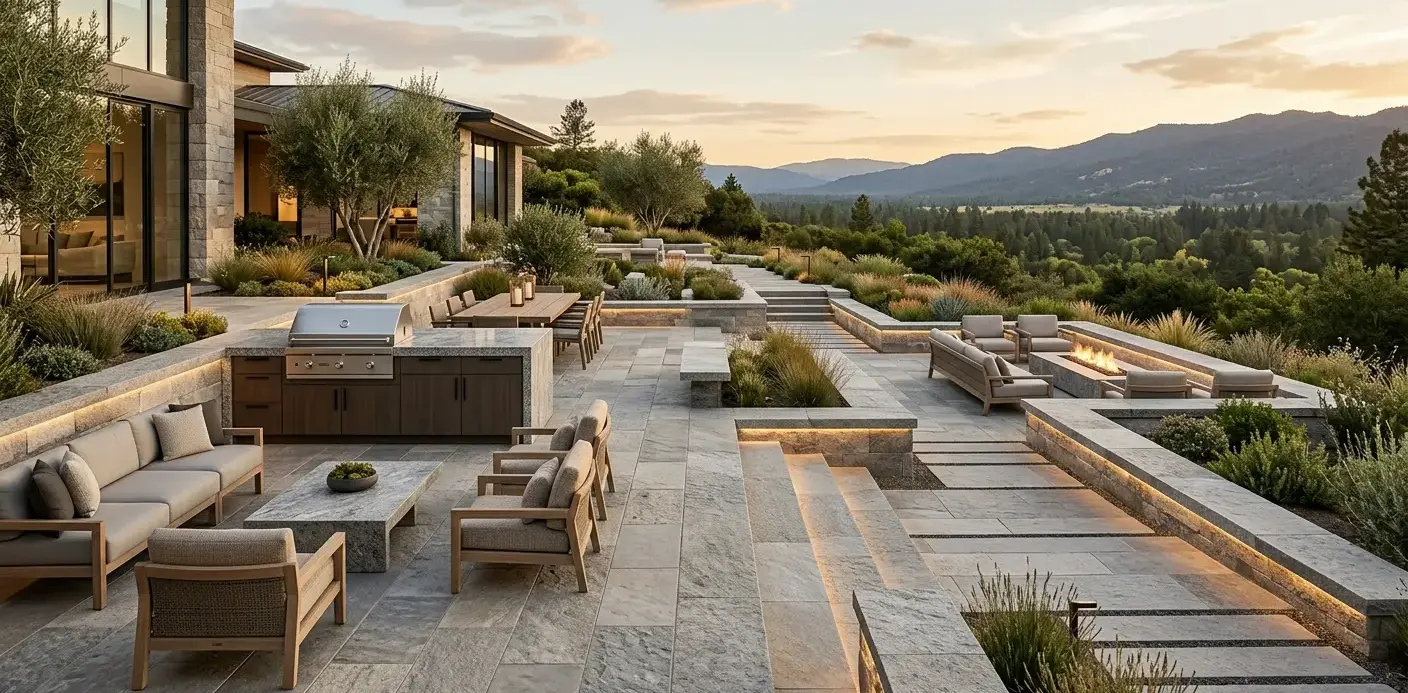 Conceptual rendering
Ratings alone rarely tell the whole story. Surface wear, debris, standing water, and footwear all influence real-world traction, which is why texture and routine care belong in the same conversation. Polished surfaces can become slipperier when wet, so matte or textured finishes are generally the better starting point for rain, irrigation overspray, and winter melt.
Where to Use Slip-Resistant Stone
Slip-resistant stone works on walkways, paths, steps, patios, and entry areas when the finish and its documented traction suit each zone. Each exterior zone carries different moisture, slope, and foot traffic demands. Matching finish and rating to the zone keeps the design attractive and the footing more predictable.
Walkways and Paths
Slip resistance standards for outdoor walkways and paths focus on wet traction, since rain, sprinklers, and melting frost are the most common hazards. Level walkways and sloped paths call for different targets. Width, lighting, and slope matter as much as the stone itself. Clear sightlines and consistent surface texture along a route reduce surprises underfoot.
Tile-industry specifications call for a wet DCOF of 0.42 or higher on level interior surfaces walked on when wet, so that figure is not a set target for outdoor walkways. According to the NFSI B101.3 standard, values of 0.45 or higher on level surfaces and 0.50 or higher on ramps need no immediate action. For exterior use, ask for the manufacturer’s documented wet DCOF and recommended use for the exact product. Documented values should reference the exact finish, because a honed and a leathered face of the same stone can behave differently.
Steps, Slopes, and Transitions
Steps and inclined paths raise the traction stakes because footing shifts with every stride. Textured treads and clear edge definition support steadier movement, though project-specific guidance is wise. Transitions between shaded and sunlit stone also deserve attention, since moisture lingers longer in shade and can encourage algae.
Moisture, Shade, and Seasonal Change
Shaded areas stay damp longer, and morning frost can leave a thin film of moisture on exposed stone. Textured finishes give shoes more to grip when these conditions overlap. Sprinkler overspray is another common culprit near planting beds. Adjusting irrigation patterns and rinsing debris from edges help keep walking surfaces cleaner and more predictable. Seasonal checks also help. A quick review each spring and fall can reveal worn texture, algae growth, or uneven areas that deserve a closer look from a stone professional.
Patios and Entry Areas
Patios collect irrigation spray, rain, and leaf litter. Honed quartzite and leathered granite or travertine add underfoot texture while keeping a refined look. Algae, moss, and grit can reduce traction over time, so routine rinsing and following these stone care guidelines help. Mild, non-acidic cleaners are generally preferred, and abrasive scouring products are best avoided because they may scratch certain stones.
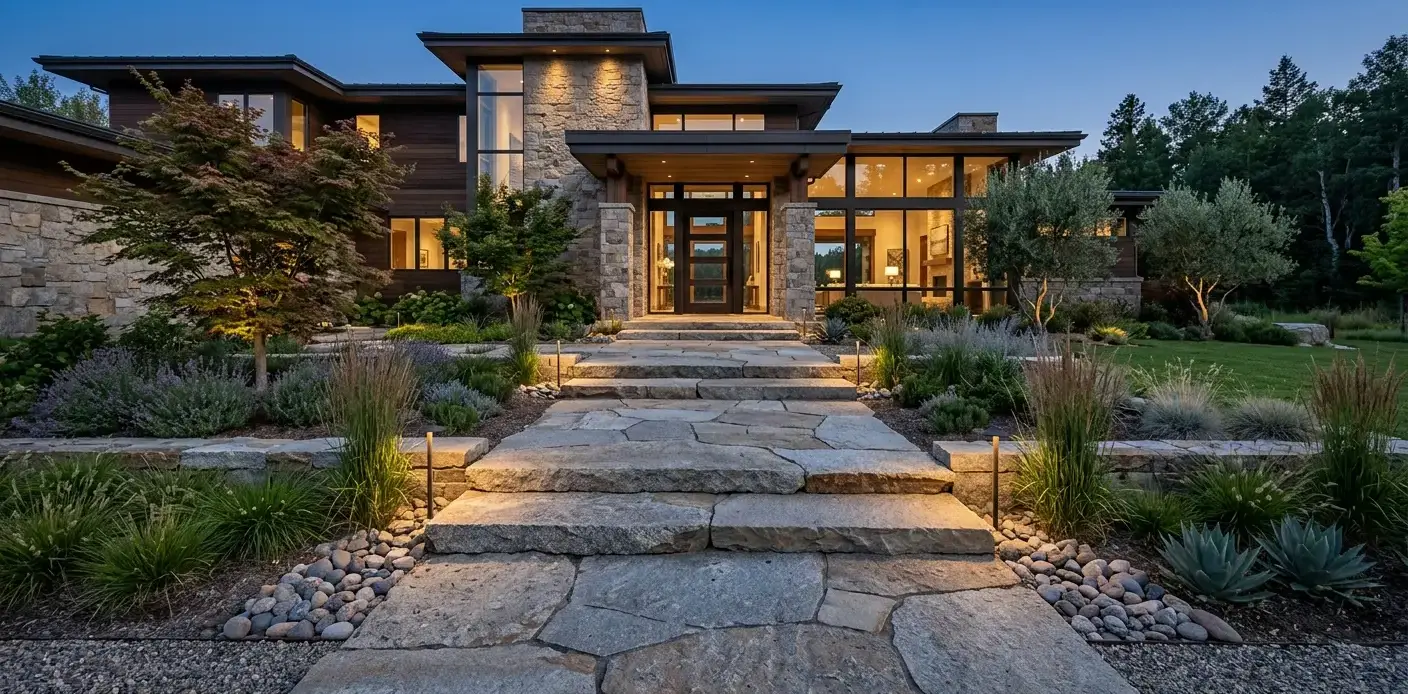 Conceptual rendering
Aged and Natural Design Looks
Leathered and textured stone suits weathered garden styles, from cobble-inspired paths to old-world walls. Design inspiration such as aged hardscape ideas shows how stone creates a sense of permanence.
Natural color variation also helps patios and paths blend into existing landscaping, whether the style is modern, rustic, or traditional. Textured faces also read as natural in garden settings where glossy surfaces can look out of place.
Comparing Outdoor-Approved Materials
The table below summarizes outdoor-friendly finishes, sun notes, and sealing needs for each approved material.
Material | Outdoor-Friendly Finishes | Sun Exposure Note | Sealing |
Granite | Leathered or specialty textures | UV-resistant category | Typically sealed |
Quartzite | Honed or specialty textures | UV-resistant category | Typically sealed |
Travertine | Honed, leathered, or specialty | Verify the exact product's UV rating | Typically sealed |
Porcelain | Honed or specialty textures | UV-resistant category | Typically no sealing |
Marble and dolomite are better reserved for indoor spaces. For every product, confirm the documented wet DCOF for the exact finish.
Textured Finish Advantages and Trade-offs
Advantages
- More underfoot grip than polished faces in wet conditions
- A natural matte look that suits garden settings
- Often reduced glare in strong summer sun
- Wide choice across granite, quartzite, travertine, and porcelain
Trade-offs
- Textured surfaces can collect grit and debris, so routine cleaning matters
- Rougher faces may feel less smooth on bare feet
- Sealing needs and finish availability vary by material
- Documented wet DCOF data may not exist for every finish, so verify before assuming
Five Steps to Verify Traction Before You Buy
- Match the finish to the zone. Choose honed, leathered, or textured faces for wet-prone areas instead of polished ones.
- Request wet DCOF data. Ask for documented results on the exact product and finish, and treat missing data as unconfirmed.
- Confirm sun and frost approvals. Travertine needs a product-level UV rating check.
- Plan sealing and cleaning. Granite, quartzite, and travertine typically need sealing, and routine rinsing keeps texture clear.
- Review the plan with a consultant. Share slope, shade, and traffic details so material and finish recommendations fit the real site.
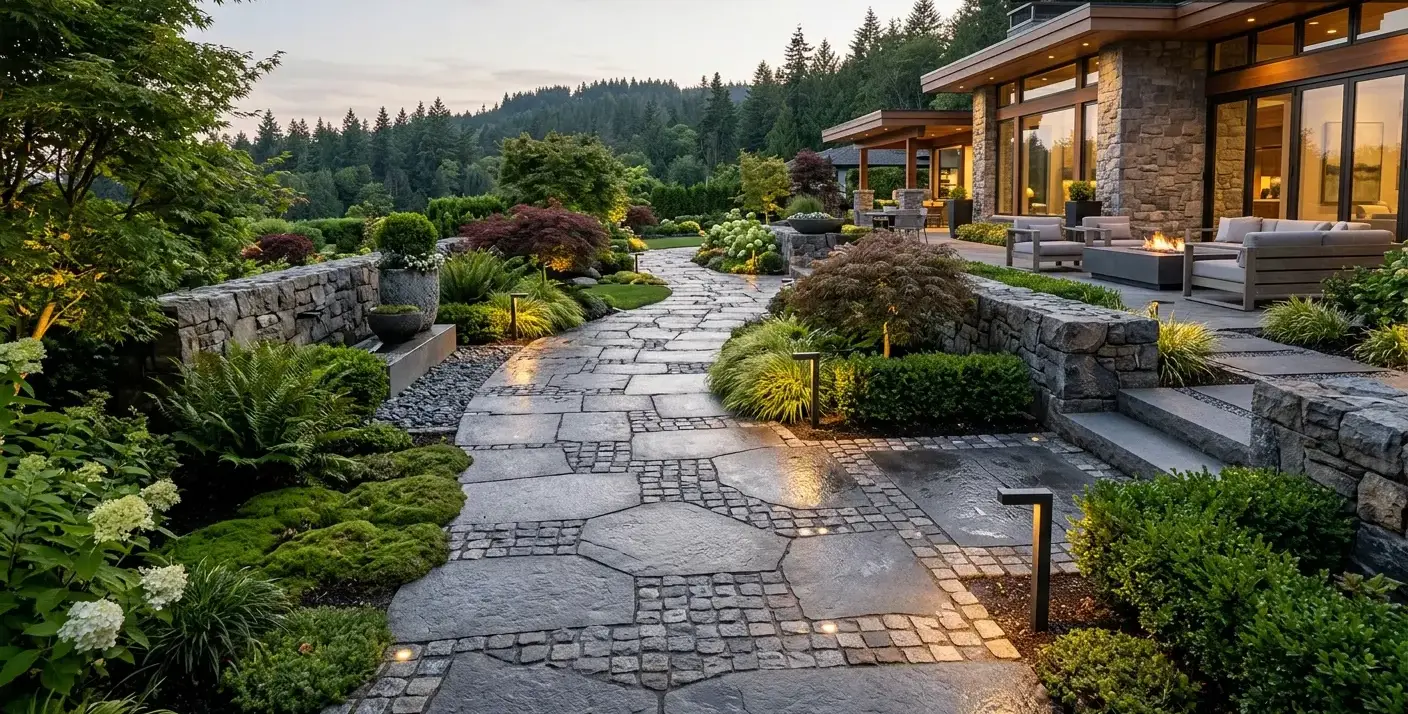 Conceptual rendering
See Outdoor Stone Finishes in Person
You can compare slip-resistant outdoor stone finishes in person at Nova Tile and Stone showrooms in Reno, Minden, Fernley, and Sacramento, with free consultations to review textures and ratings. Nova Tile and Stone offers free design consultations to help match texture, finish, and rating documentation to each walkway, patio, or entry. Visit the Reno showroom to compare honed, leathered, and textured finishes underfoot. The Fernley showroom helps customers review outdoor-approved materials alongside documented ratings.
The Minden showroom can address frost and sun approval questions for specific products. Visitors to the Sacramento showroom can ask which slabs suit summer heat and winter rain. Consultation topics often include slope, shade, sprinkler exposure, and expected foot traffic. Bringing photos and measurements helps narrow finish and material options more quickly.
MINDEN SHOWROOM
2548 Business Pkwy, Minden, NV 89423
 Google Maps
Store hours this week:
- Mon. - Fri.: 7:30 am - 6:00 pm
- Sat.: 9:00 am - 3:00 pm
- Sun.: Closed
RENO SHOWROOM
12835 Old Virginia Rd Suite 24, Reno, NV 89521
Store hours this week:
- Mon. - Fri.: 7:30 am - 6:00 pm
- Sat.: 9:00 am - 3:00 pm
- Sun.: Closed
FERNLEY SHOWROOM
1855 US Highway 95A North, Fernley, NV 89408
Store hours this week:
- Mon. - Fri.: 7:30 am - 4:00 pm
- Sat. - Sun.: Closed
SACRAMENTO SHOWROOM
6100 Warehouse Way, Sacramento, CA 95826
Store hours this week:
- Mon. - Fri.: 7:30 am - 5:00 pm
- Sat. - Sun.: Closed
Arranged delivery assistance helps large slabs reach the project address, and Nova Tile and Stone supplies stone materials only. Ready to narrow your options? Schedule your free consultation to review textures, ratings, and delivery assistance for your walkways, patios, and paths.
Conclusion
Choosing slip-resistant stone for outdoor hardscape comes down to texture, documented wet ratings, and routine care. Matching each finish to its exposure keeps patios and paths attractive and more predictable underfoot, even through wet seasons.
Browse the Nova Tile and Stone slab selection to compare granite, quartzite, travertine, and porcelain for exterior use, then confirm sun and frost approvals for the exact product. Documented ratings and sensible care routines support that choice through changing seasons.
Schedule your free consultation now to plan surfaces that balance refined looks with practical, traction-minded choices and sensible long-term care.
Note: Some images on this page may be conceptual renderings created to illustrate design possibilities and may not depict actual installations.
Frequently Asked Questions
Most guidance relies on wet dynamic coefficient of friction testing, such as the NFSI B101.3 method. Higher wet DCOF values generally indicate more traction, but results compare products and do not guarantee a slip will never occur. The often-quoted 0.42 figure applies to level interior floors, so outdoor surfaces call for the manufacturer’s product-specific rating.
Honed, leathered, and textured specialty finishes usually offer more grip than polished surfaces, which become slipperier when wet. Availability depends on the material, so confirm the exact finish and its documented wet rating before choosing.
Granite, quartzite, travertine, and porcelain are generally approved for outdoor use, while marble and dolomite are better reserved for indoor spaces. Always confirm sun and frost approval for the exact product.
Sealing mainly helps stone resist stains, and it does not make stone stain proof. Ask the supplier whether a specific sealer affects traction on your chosen finish before applying it to walkways or patios.
Travertine is generally approved for outdoor use, but sun tolerance is product-dependent. Verify the exact product’s UV rating or manufacturer sun exposure approval, since the UV-resistant category covers granite, quartzite, and porcelain.
Sources
- NFSI B101.3-2022: Testing Wet DCOF of Hard Surface Walkways | https://blog.ansi.org/ansi/nfsi-b101-3-2022-wet-dcof-of-hard-surface-walkways/
- The Importance of Testing When Specifying Natural Stone | https://continuingeducation.bnpmedia.com/architect/courses/natural-stone-institute/the-importance-of-testing-when-specifying-natural-stone/5
- ANSI A326.3 Product Use Categories for Hard Surface Flooring | https://whytile.com/2022/03/a-significant-step-forward-to-reduce-slip-and-fall-incidents/
- Care & Cleaning of Natural Stone | https://www.naturalstoneinstitute.org/consumers/care/