At a Glance
- Match the cleaner to the stain type and to the exact stone.
- Settling often traces back to drainage, base movement or lost joint sand.
- Pressure washing can strip joint sand, so moderate pressure is safer.
- Granite, quartzite, travertine and porcelain are outdoor-suitable paver materials.
- Most natural stone benefits from sealing, while porcelain typically needs none.
In This Guide
- Why early paver care protects your patio
- Cleaning marks and correcting low spots
- Choosing replacement stone for outdoor patios
- Nova guidance, key takeaways and FAQs
Fixing Stained Pavers and Sunken Patio Stones
Stained pavers usually respond to a cleaner matched to the stain type, while settled pavers point to a drainage or base problem beneath the surface. Cleaning handles surface marks, but sunken areas generally need a hardscape professional to correct the cause.
The two problems often appear together. Water that pools in a low spot carries dirt, algae and mineral deposits across the stone, so a dark patch can mark where settling began.
This guide covers safe cleaning methods, a short plan for how to repair settled pavers on a patio, and replacement stone options suited to Northern Nevada and Northern California conditions.
Early action helps. A small stain or slightly low corner is easier to address than widespread movement, and a quick look after rain can reveal trouble before it spreads.
Local conditions matter too. Freeze-thaw cycles, irrigation overspray and downspout runoff can all affect patio stone, so the right fix depends on what is happening around and beneath the surface.
Why Early Paver Care Protects Your Patio
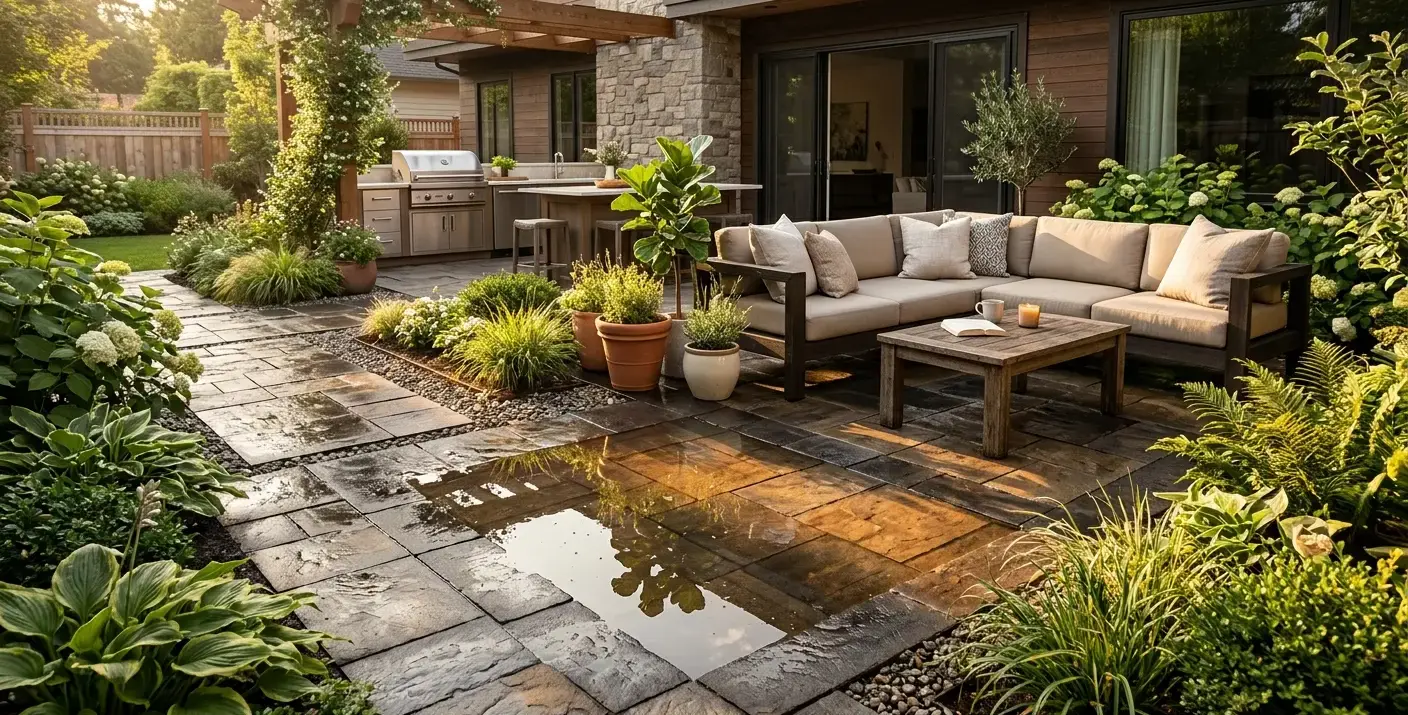 Conceptual rendering
Addressing a stain or low spot early generally limits how far damage spreads. Fresh spills are easier to lift, and shallow depressions are simpler to correct than widespread movement.
A hardscape association's maintenance inspection guidance for concrete pavers recommends checking surfaces in spring and fall, ideally during or after rain, when settlement and ponding are easier to spot.
Pooled water can also freeze on cold mornings and stress loose edges, a seasonal concern for Reno homeowners.
Stains that keep returning in the same spot can signal a saturated layer below the stone. In that case the mark is a clue to settling, not only a cosmetic issue.
Benefits of early attention include:
- Slower stain absorption, since fresh spills sit nearer the surface and typically lift more easily.
- Safer walking surfaces once uneven edges are corrected, though results depend on the underlying cause.
- More consistent appearance when replacement pieces blend with surrounding stone.
- Better joint protection, because standing water can wash out joint sand over time.
Cleaning Marks and Correcting Low Spots
Cleaning and leveling solve different problems. Decide first whether a mark is a surface stain or a symptom of settling, then work through the fixes below in order. Both tasks suit spring and fall, when mild weather makes inspection after rain easy.
How to Clean Stained Pavers Safely
Identify the stain before choosing a cleaner. Oil-based, organic, metal and biological marks respond to different treatments, according to Natural Stone Institute guidance. Surface marks may lift with a suitable cleaner, while deep-seated stains can need a poultice or professional help.
Outdoors, organic marks from leaves or bird droppings may lighten with sun and rain once the source is removed. Rust marks from metal planters or furniture are harder to lift and often need a poultice or a professional.
Blot spills rather than wiping, flush with water and mild soap, and rinse several times. Avoid abrasive cleaners. Do not mix bleach with ammonia, which creates toxic gas.
Remove spot stains before washing the whole surface, as concrete paver cleaning guidance suggests. Pressure washing can strip joint sand and loosen edges, so keep pressure moderate and confirm any cleaner suits the exact stone, since acids can etch some natural surfaces.
How to Repair Settled Pavers on a Patio
Settling rarely starts at the surface. Depressions typically trace to a shifted base, saturated soil, washed-out joint sand or loose edging, so a hardscape professional usually corrects the cause beneath the stone.
Use this planning sequence:
- Check after rain. Mark spots where water pools, photograph them, and note any raised edge above about 1/8 inch before winter.
- Trace the water. Look for downspouts, irrigation overspray or grading that directs runoff toward the patio.
- Request a professional assessment. A qualified hardscape professional can lift the affected area, correct the base and relevel the stone.
- Match the stone. Reuse sound pieces where possible and blend any replacements among existing stone to soften color differences.
- Re-check after heavy rain. A properly corrected area typically drains evenly, though results depend on site conditions.
Areas near the patio edge deserve extra attention. Loose edging lets pavers drift apart, so widening joints at the perimeter is a visible clue worth mentioning to a professional.
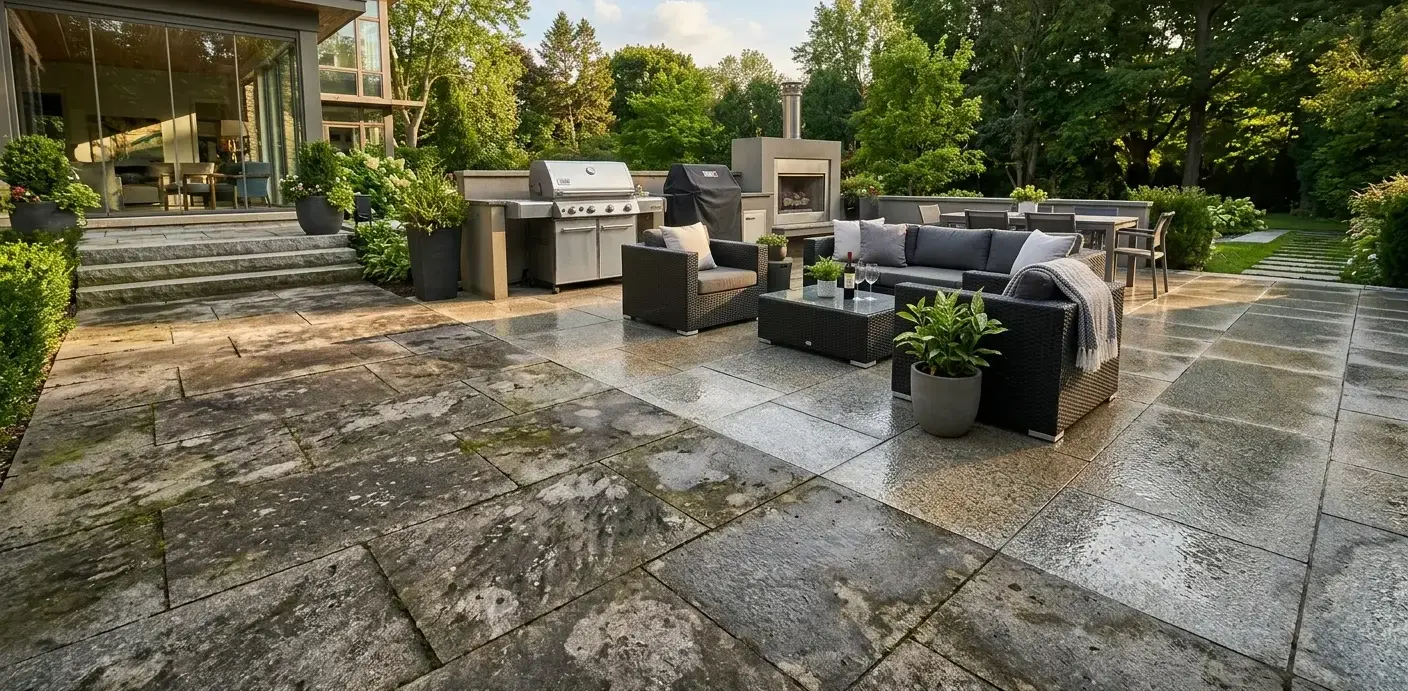 Conceptual rendering
Choosing Replacement Stone for Outdoor Patios
When stubborn stains or cracked pieces cannot be restored, replacement stone may be simpler than repeated treatment. Outdoor suitability varies by material, so compare options before choosing.
Material | Outdoor Suitability | Sealing | Sun and Finish Notes |
Granite | Outdoor-suitable | Sealing recommended | UV-resistant category; verify the exact product's UV rating |
Quartzite | Outdoor-suitable | Sealing recommended | UV-resistant category; verify the exact product's UV rating |
Travertine | Generally outdoor-approved | Sealing recommended | Not in the UV-resistant category; confirm manufacturer sun exposure approval |
Porcelain | Outdoor-suitable | Typically none required | UV-resistant category; verify the exact product's UV rating |
Spare pieces from the same lot help future repairs blend. Placing replacements among existing stone, rather than in one block, softens visible color shifts as weathered and new pieces sit together.
Polished finishes are slipperier when wet, so textured, flamed or bush-hammered surfaces suit wet areas. Color and veining vary naturally, so confirm the exact product first. Browse natural stone slabs online to compare options.
Advantages and Drawbacks of Sealing Pavers
Sealing after cleaning slows stain absorption, but it involves trade-offs.
Advantages
- Slows liquid absorption, which can make later cleaning easier.
- Helps protect against oily spills, though it does not prevent every stain.
Drawbacks
- Needs periodic reapplication as weather and wear reduce protection.
- Must suit the specific stone, and sealing over dirt can trap it.
Nova Tile and Stone Guidance for Outdoor Patios
The Nova Tile and Stone team supplies stone and tile materials, backed by commission-free design consultants who help match material, finish and color to an existing patio.
Material guidance is available to homeowners in Reno, Fernley, Minden and Sacramento. Visit the Fernley showroom to compare outdoor-suitable stone. Minden homeowners can stop by the Minden showroom. Sacramento homeowners can also visit the Sacramento showroom.
Showroom visits make it easier to judge color, texture and finish in natural light, which matters when new stone must sit beside weathered pieces.
A design consultant can review patio photos and suggest suitable materials during a free consultation. Bringing a photo and rough measurements helps the consultant suggest finishes for wet or sunny areas. Delivery assistance can be arranged for stone purchases.
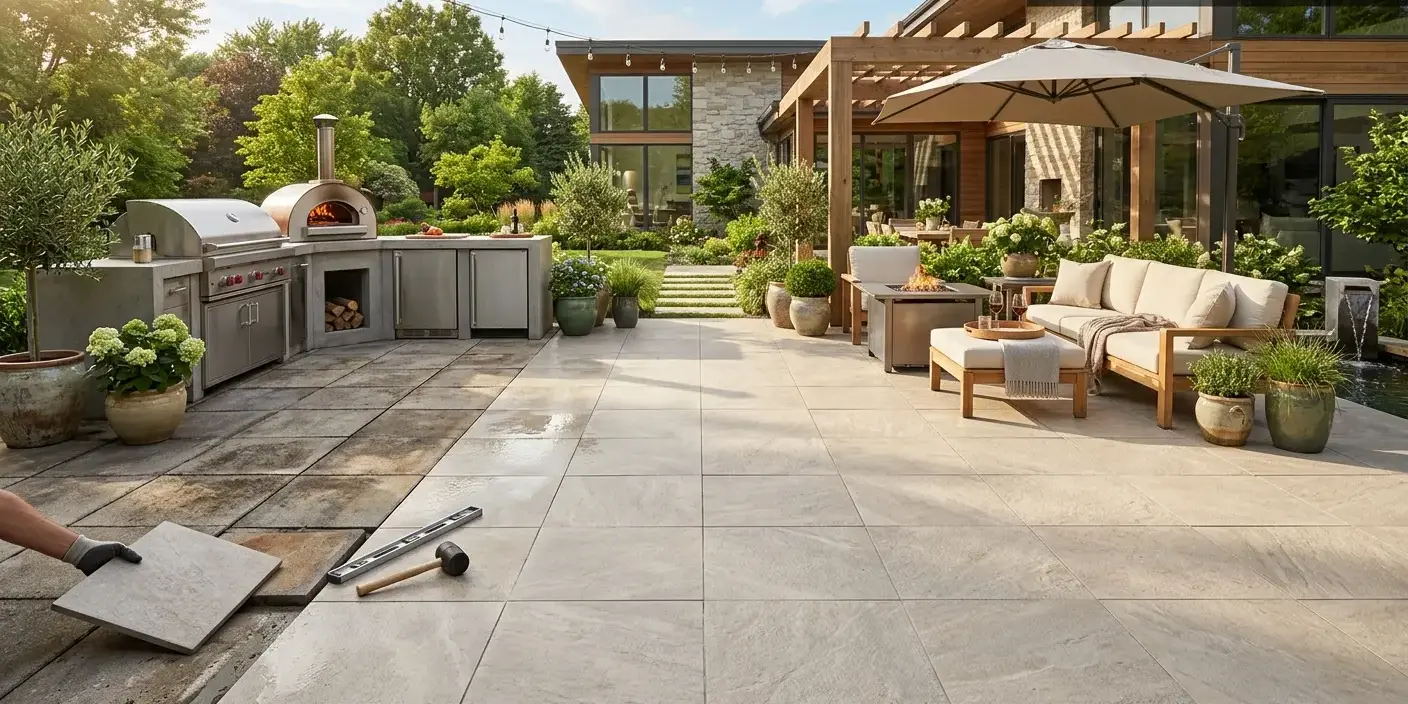 Conceptual rendering
Key Takeaways
- Identify the stain first, then match the cleaner to the stone.
- Knowing how to repair settled pavers on a patio starts with tracing the water source.
- Moderate pressure protects joint sand during cleaning.
- Outdoor-suitable options include granite, quartzite, travertine and porcelain.
- Sealing helps most natural stone, but it needs periodic attention.
Plan Your Patio Refresh With an Expert
Bring photos of the stained or sunken areas and the patio layout. A commission-free design consultant can help narrow outdoor-suitable stone, finishes and colors that blend with existing pieces, so planned repairs look cohesive. Delivery assistance can be arranged once materials are chosen. Book your free consultation today!
MINDEN SHOWROOM
2548 Business Pkwy, Minden, NV 89423
 Google Maps
Store hours this week:
- Mon. - Fri.: 7:30 am - 6:00 pm
- Sat.: 9:00 am - 3:00 pm
- Sun.: Closed
FERNLEY SHOWROOM
1855 US Highway 95A North, Fernley, NV 89408
Store hours this week:
- Mon. - Fri.: 7:30 am - 4:00 pm
- Sat. - Sun.: Closed
SACRAMENTO SHOWROOM
6100 Warehouse Way, Sacramento, CA 95826
Store hours this week:
- Mon. - Fri.: 7:30 am - 5:00 pm
- Sat. - Sun.: Closed
RENO SHOWROOM
12835 Old Virginia Rd Suite 24, Reno, NV 89521
Store hours this week:
- Mon. - Fri.: 7:30 am - 6:00 pm
- Sat.: 9:00 am - 3:00 pm
- Sun.: Closed
Frequently Asked Questions
Settling usually traces to the layers beneath the stone. Common causes include a base that shifted or was poorly compacted, saturated soil, washed-out joint sand and loose edging. Drainage problems often speed up movement, so a professional assessment helps identify the cause before any stone is corrected.
Often, yes. Sound pieces can frequently be lifted, the base corrected and the stone reset, which keeps the original pattern and color. Cracked or heavily stained pieces may need replacement. The right approach depends on the cause of settling and the condition of the stone, so a professional assessment is worthwhile.
Moderate pressure can remove surface dirt, but high pressure may strip joint sand, loosen edges or roughen some natural stone. Test a small, hidden area first, keep the nozzle moving and replace lost joint sand afterward. Check the exact stone's care guidance before washing the whole surface.
Granite, quartzite and travertine generally need sealing, while porcelain typically does not. Sealing slows absorption but does not prevent every stain, and it needs periodic reapplication as weather and wear take their toll. Confirm the right sealer for the exact product and finish before applying it.
Granite, quartzite, travertine and porcelain are outdoor-suitable options. Travertine is generally outdoor-approved, but it is not in the UV-resistant category, so confirm manufacturer sun exposure approval for the exact product. Textured, flamed or bush-hammered finishes suit wet areas because polished surfaces become slippery when wet.
Sources
- Natural Stone Institute, Stain Removal: https://www.naturalstoneinstitute.org/consumers/stains/
- Concrete Masonry & Hardscapes Association, Cleaning, Sealing and Joint Sand Stabilization: https://www.cmha.org/resource/pav-tec-005/
- Concrete Masonry & Hardscapes Association, Operation and Maintenance Guide: https://www.cmha.org/resource/pav-tec-006/