Quartzite pavers are used outdoors on patios, walkways, and pool decks because they absorb very little water, resist scratching, and do not etch from acidic rain or spills. Under ASTM C616, the standard for quartz-based dimension stone, true quartzite contains at least 95% silica, absorbs no more than 1% water by weight, and rates about 7 on the Mohs hardness scale.
Those properties help quartzite pavers handle freeze-thaw cycles, heavy foot traffic, and constant moisture. Outdoor performance still depends on choosing true quartzite rather than mislabeled stone, a textured finish for wet areas, good drainage, and a penetrating sealer when the stone absorbs water.
From Sandstone to Interlocked Quartz
Quartzite begins as quartz-rich sandstone. Heat and pressure deep in the earth recrystallize the sand grains and fuse them into a tight mosaic of quartz. When true quartzite breaks, the fracture runs through the grains rather than around them, because the grains and the bond between them are the same mineral.
Not all stone sold as quartzite is equally dense. Stone that meets the ASTM C616 standard for quartzite absorbs no more than 1% water by weight. Stone closer to sandstone in composition can absorb several times more, which affects how it handles freezing weather, stains, and wear outdoors.
Water Absorption and Freeze-Thaw Cycles
Water expands by roughly 9% when it freezes. In a porous paver, that expansion pushes against the walls of the pores. Repeated over many winter nights, the pressure can cause surface flaking, called spalling, or cracks that start small and widen.
Quartzite's absorption limit of 1% or less restricts how much water can enter the stone, and many dense quartzites test well below that figure. Less water inside the stone means less internal pressure when temperatures drop below freezing.
Absorption varies by quarry and even by block, so the quartzite label is a starting point rather than a guarantee. When a project will see regular freezing, ask for absorption test results for the specific material.
A few other factors affect winter performance:
- Drainage. Water pooling on a surface or sitting in the base below it raises freeze risk for any stone.
- Joints and setting materials. Mortar, grout, and joint sand can absorb more water than the quartzite itself.
- Deicers. Some chloride-based deicing salts can damage joint materials and sealers, so check deicer labels for compatibility with natural stone.
Hardness, Abrasion, and Everyday Wear
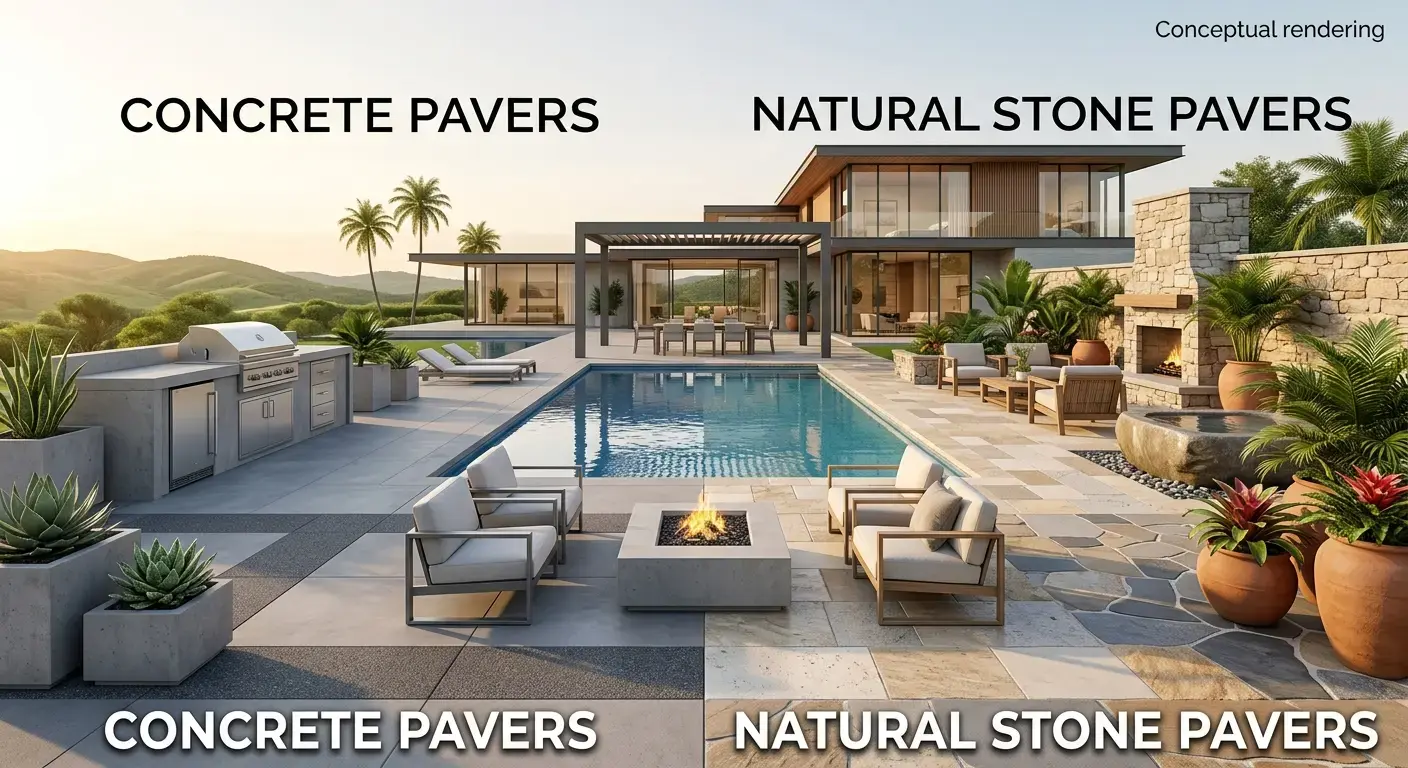
Outdoor surfaces collect sand, grit, and small gravel tracked in on shoes. Each step grinds those particles against the paver. Grit harder than the stone acts like sandpaper and gradually wears the surface, while grit no harder than the stone causes much less wear.
Quartz rates 7 on the Mohs scale, and common sand is made largely of quartz. That is why quartzite pavers tend to hold their surface texture under foot traffic. For comparison, marble, limestone, and travertine rate around 3 to 4, and granite rates around 6 to 7.
Hardness is not the same as impact resistance. A heavy object dropped on an edge or corner can still chip any natural stone, including quartzite.
Surface Finish and Slip Resistance
Surface finish affects traction outdoors more than stone type does. The same quartzite can feel very different underfoot depending on how its face was processed.
Common exterior finishes for quartzite pavers include:
- Natural cleft. Some quartzites split along natural layers, leaving an uneven, textured face that adds grip.
- Flamed or thermal. A high-temperature flame causes surface crystals to pop off, leaving a rough texture.
- Sandblasted. Abrasive blasting creates a uniform, matte texture.
- Brushed. Wire or abrasive brushes soften the surface while keeping some texture. Leathered finishes are made in a similar way and keep a soft, low sheen.
- Tumbled. Pavers are rolled with abrasives to round the edges and soften the face.
- Honed. A smooth, matte surface with less texture than the options above.
Polished quartzite is generally not recommended for outdoor floors and walkways that get wet. A polished face has almost no surface texture, so it offers little grip when wet.
Slip resistance can be measured with a wet traction test, reported as a DCOF rating. Industry guidelines recommend a higher wet rating for exterior areas and barefoot pool decks than for indoor floors. No rating guarantees a surface won't be slippery, so finish, slope, drainage, and upkeep still matter outdoors.
When comparing options, ask whether DCOF test data is available for the specific finish. Looking at samples while wet also gives a clearer sense of how the surface will feel after rain or a swim. A free design consultation at one of our showrooms gives you time to compare finishes and ask about outdoor use.
Sun Exposure, Surface Heat, and Color
Quartzite gets its color from natural minerals rather than added pigments or coatings, and sun exposure generally does not fade those minerals.
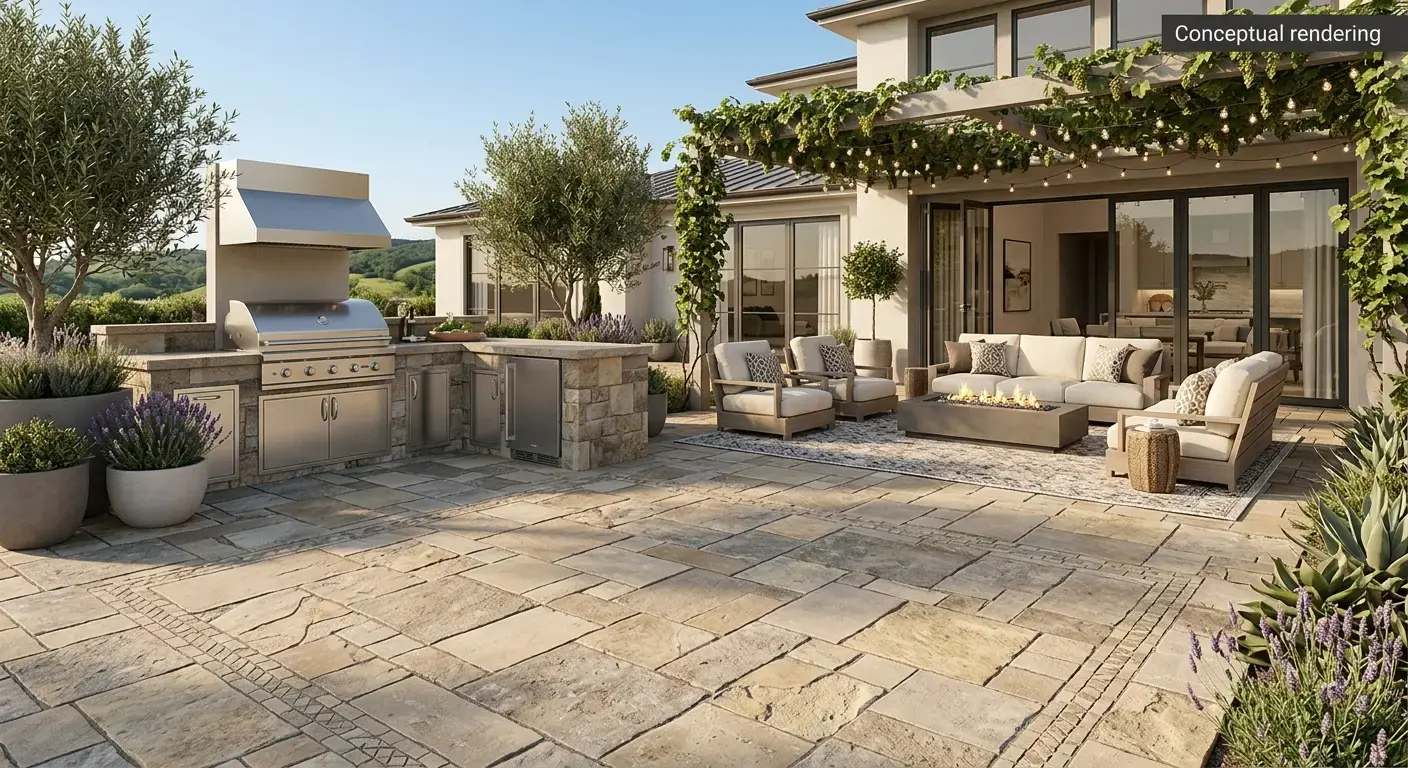
Some quartzites contain iron-bearing minerals. Over time, moisture and air can oxidize these minerals and produce rust-colored spots or streaks. This is a natural process, and it varies widely by quarry. If a uniform color matters for your project, ask whether the material has a history of iron staining outdoors. Metal furniture and lawn products that contain iron can also leave rust marks on any stone surface. Seeing stone in person at our local showrooms also helps when judging color, since natural tones vary from piece to piece.
Surface temperature in direct sun depends mostly on color and finish:
- Lighter colors such as white, cream, and pale gray reflect more sunlight.
- Darker colors such as charcoal, deep gold, and brown absorb more heat.
- Textured finishes can feel slightly different underfoot than smooth ones at the same temperature.
No natural stone stays cool in full summer sun, so pool decks and play areas still benefit from lighter tones and some shade. Dense quartzite generally handles daily swings between hot afternoons and cool nights well, which suits climates with wide temperature ranges.
Soft Quartzite and Mislabeled Stone
Not every stone sold as quartzite meets the ASTM C616 definition. Trade names are not regulated, and some materials labeled quartzite are actually marble, dolomite, or quartzitic sandstone. Suppliers sometimes call these "soft quartzite."
The distinction matters outdoors. Marble and dolomite are carbonate stones. Acidic rain, citrus juice, wine, and some pool chemicals can etch their surfaces, leaving dull spots. They are also softer, so grit wears them faster.
Two simple checks help identify true quartzite on a sample or offcut:
- Glass scratch test. Quartzite scratches glass, which rates about 5.5 on the Mohs scale. Press a corner firmly across a glass tile. A scratch that will not wipe away suggests quartz-level hardness. Marble will not scratch glass.
- Acid test. Place a few drops of lemon juice or vinegar on the stone, wait a few minutes, and wipe it off. Marble usually shows a dull etch mark where the acid sat. Dolomite reacts more slowly and may show little change, so pair this check with the glass test. True quartzite shows no etching.
For a more complete picture, ask whether absorption and density test data is available for the material. Test results from the quarry or distributor are more reliable than a product name.
Where Quartzite Pavers Fit in an Outdoor Plan
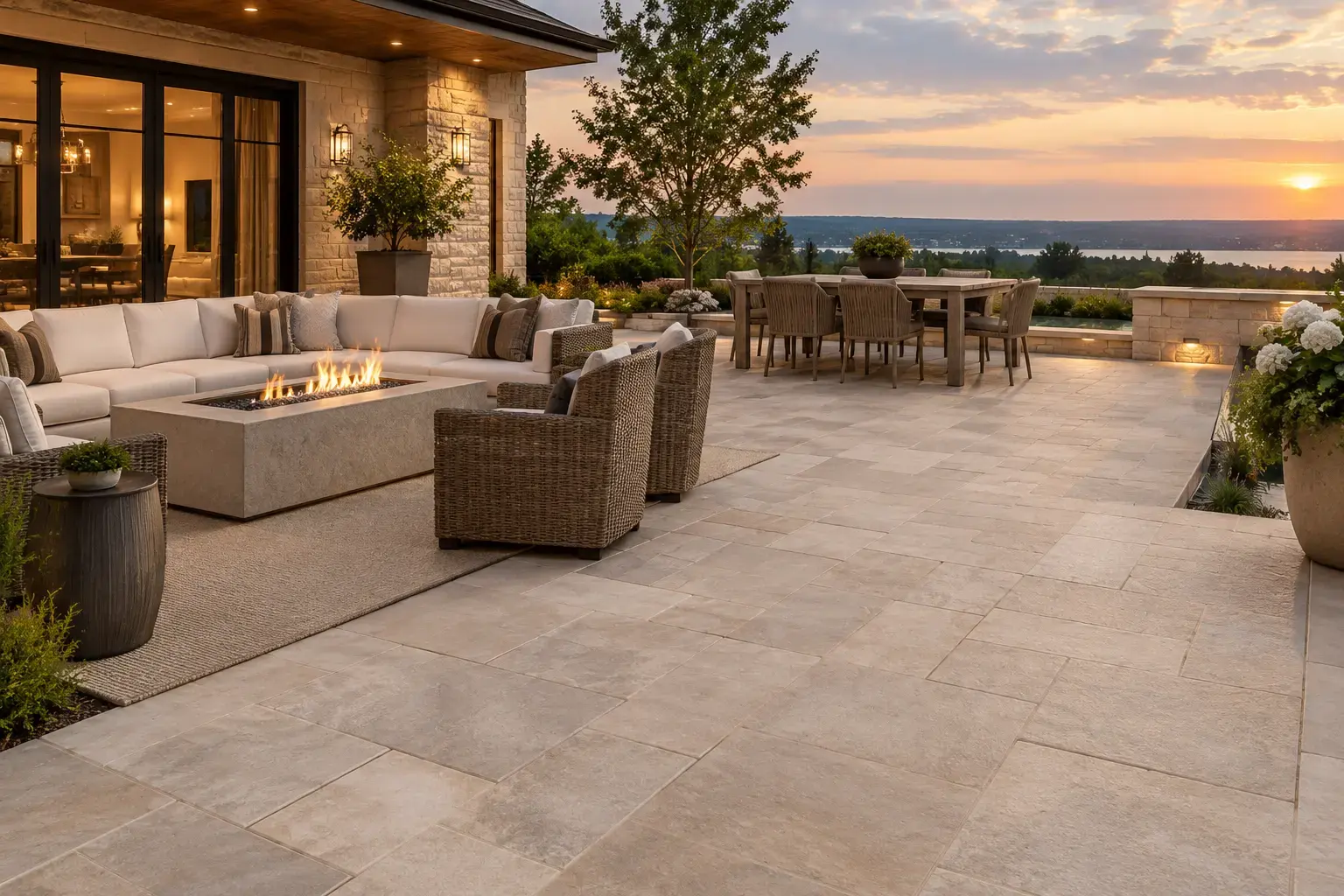
Quartzite's low absorption and hardness suit it to most outdoor walking surfaces, and pavers can be coordinated with interior tile and stone to carry a consistent look from indoors to out. Each application has its own points to consider.
Patios and seating areas. Furniture, grills, and planters move across patios regularly. Quartzite's hardness helps the surface hold up to that movement, and a natural cleft or flamed finish adds grip. Larger patios use more material, so browsing our overstock sale can help with budget planning.
Walkways and garden paths. Paths carry the most grit from surrounding soil and mulch. Irregular quartzite flagstone suits informal paths, while cut rectangles and squares suit more structured layouts.
Pool decks and coping. Pool areas combine constant moisture, bare feet, and chemical exposure. Choose a textured finish, consider lighter colors for surface heat, and confirm the stone's absorption data. Saltwater pools can deposit salt in any stone over time, so sealing and regular rinsing matter here.
Outdoor kitchen and dining floors. Grease, sauces, and acidic marinades are common spills. Quartzite resists acid etching, though a sealer helps keep oils from soaking in.
Driveways. Vehicle loads need thicker pavers and a base designed for that weight. Confirm that the paver thickness is rated for vehicle traffic before choosing quartzite for a driveway. Contractors and designers sourcing material for driveways and other larger hardscape jobs can apply for a trade account.
Sealing and Routine Care
Whether quartzite pavers need sealing depends on the specific stone. Dense quartzites with very low absorption may resist staining well on their own. Others, especially those closer to quartzitic sandstone, benefit from a sealer.
A water drop test gives a quick answer. Place a few drops of water on the surface and wait about 15 minutes. If the stone darkens where the water sits, it is absorbing moisture and a sealer will help.
For outdoor stone, penetrating or impregnating sealers are the usual choice. They soak into the stone and reduce absorption without forming a surface film. Topical coatings that sit on top of the stone can trap moisture underneath and may make the surface slippery when wet.
Resealing frequency varies with the sealer, sun exposure, and traffic. Repeating the water drop test once or twice a year shows when the sealer has worn.
Routine care includes:
- Sweep or blow off grit and leaves regularly.
- Rinse with water and use a pH-neutral cleaner made for natural stone.
- Wipe up oil and grease spills promptly, before they soak in.
- Use a pressure washer only at moderate pressure, held at a distance, to avoid eroding joints.
- Avoid acidic cleaners. They can etch mortar and grout, and in some stones they can trigger rust-colored staining from iron minerals.
Conclusion
Quartzite's outdoor performance comes down to measurable properties: absorption of 1% or less and hardness near 7 on the Mohs scale. Those numbers support low water uptake in freezing weather, resistance to wear from grit and furniture, and protection from acid etching. Finish, color, drainage, and sealing then shape how the surface feels and looks day to day.
Before choosing, confirm that the stone is true quartzite. Ask for test data, try the glass and acid checks on a sample, and look at the finish wet as well as dry.
We carry exterior stone and pavers, and our team at our showrooms in Sacramento, Reno, Minden, and Fernley can walk you through the options and answer questions about how different materials suit your patio, pool deck, or walkway. We also offer free design consultations to help you plan your outdoor space and narrow down your material choices.
Note: Some images on this page may be conceptual renderings created to illustrate design possibilities and may not depict actual installations.
Frequently Asked Questions
Slip resistance depends mainly on the surface finish. Natural cleft, flamed, sandblasted, and tumbled quartzite pavers provide texture that helps with grip when wet. Polished quartzite is generally not recommended for outdoor walking surfaces because it offers little traction when wet.
It depends on the stone. Dense quartzite with very low absorption may resist staining without a sealer, while more porous material benefits from one. A water drop test shows whether the surface is absorbing moisture, and a penetrating sealer is the usual choice for outdoor stone.
Yes, quartzite pavers are used around both chlorine and saltwater pools. Salt can build up in any natural stone over time, so a penetrating sealer and regular rinsing with fresh water help limit buildup. A textured finish and lighter color also help with traction and surface heat.
True quartzite scratches glass and shows no etching from lemon juice or vinegar. Marble will not scratch glass, and acid usually leaves a dull etch mark on its surface. Test data showing absorption of 1% or less offers further confirmation.
Quartzite is harder, rating about 7 on the Mohs scale compared with about 3 to 4 for travertine. Quartzite is silica-based and resists acid etching, while travertine is a carbonate stone that can etch from acidic spills and rain. Travertine typically has natural surface voids and higher absorption than dense quartzite.