Quartzite pavers are commonly used for patios, pool decks, and pool coping because dense quartzite is hard, low in water absorption, and resistant to the acid etching that affects limestone, travertine, and marble. Quartzite is a metamorphic rock that forms when quartz-rich sandstone recrystallizes under intense heat and pressure, and it typically rates around 7 on the Mohs hardness scale, making it generally harder than granite. For wet areas, textured finishes such as natural cleft, flamed, brushed, and sandblasted offer the best slip resistance, while lighter colors like white, silver, and pale gold stay more comfortable underfoot in direct sun. Density and quality vary by quarry, so confirm a stone's classification and technical data before you buy.
What Are Quartzite Pavers?
Quartzite starts as sandstone. Over geologic time, heat and pressure cause the individual quartz grains to recrystallize and interlock, turning the stone into a tightly bonded, crystalline rock. This interlocking structure is what gives quartzite its hardness and low porosity.
Quartzite pavers are cut from quarried blocks into squares and rectangles sized for outdoor use. Some quartzite also splits naturally along layers to create irregular flagstone pieces. Paving-grade quartzite usually has a textured face rather than a smooth one, which makes it better suited to wet outdoor conditions than the polished quartzite slabs often used for kitchen countertops. Not all quartzite forms the same way, though. Some of what is sold as quartzite is sedimentary "orthoquartzite," sandstone cemented by silica rather than recrystallized by heat and pressure, and it can be less dense than metamorphic quartzite.
Quartzite is quarried in several parts of the world, including Brazil, India, China, and parts of Europe. Origin influences color, grain, density, and how the stone splits, so quartzite pavers from different quarries can look and perform quite differently.
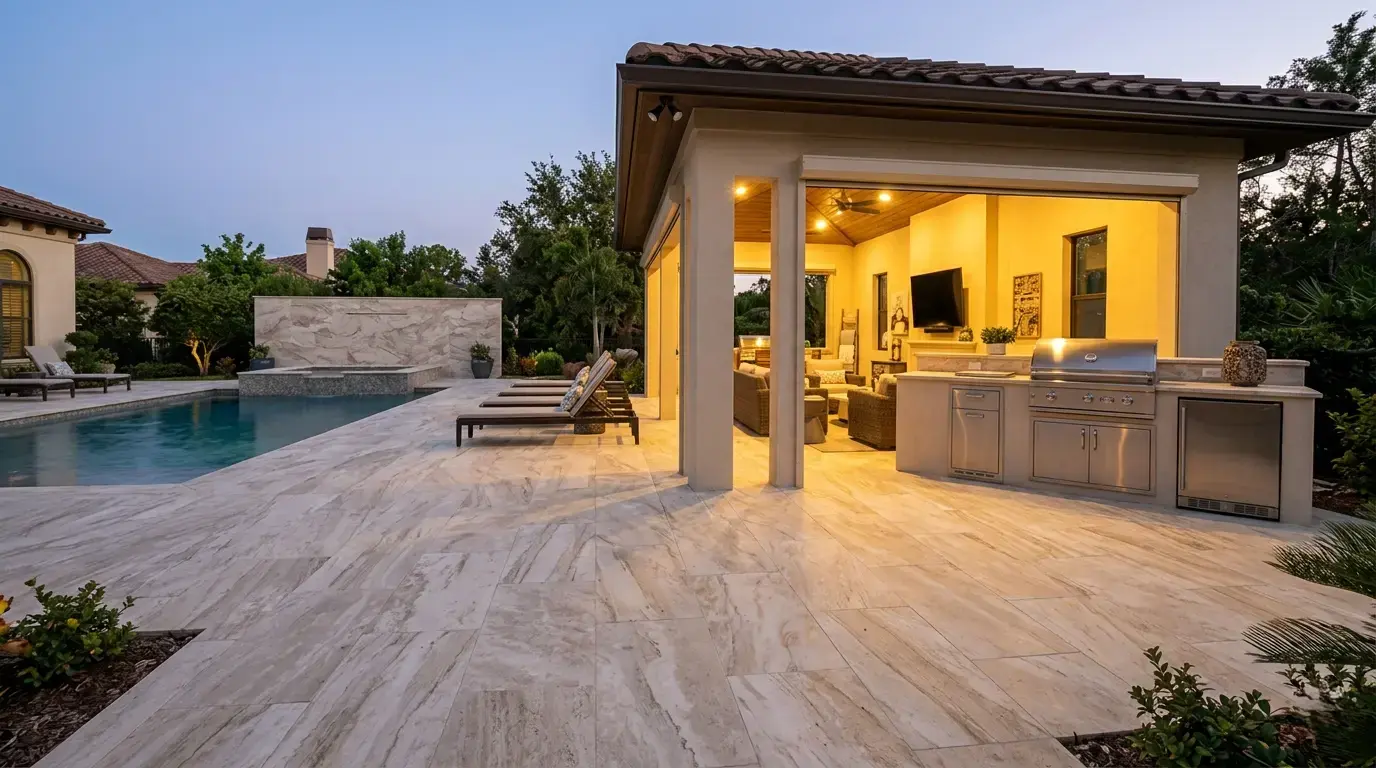
Why Quartzite Works Well Around Pools
Pool areas ask a lot from a paving material. The surface gets wet constantly, sees bare feet daily, and is exposed to pool chemicals, sunscreen, and direct sun. Quartzite handles these conditions better than softer, more porous natural stones.
Low water absorption. Dense quartzite has very low porosity. Less absorbed water means less risk of staining, efflorescence, and damage from freezing and thawing. Less dense stones, such as the orthoquartzite described above, can absorb more water, so ask for technical data on the specific stone before you commit.
Resistance to pool chemistry. Quartzite is made primarily of quartz, which does not react with acids the way calcium-based stones do. Limestone, travertine, and marble contain calcite, which can etch or pit in acidic conditions. Quartzite is generally more tolerant of chlorinated water and saltwater splash-out, though rinsing the deck periodically is still a good habit with any stone.
Hardness underfoot. Pool decks see traffic from bare feet, lounge chairs, and outdoor furniture. Quartzite's hardness helps it resist scratching and surface wear better than softer stones.
Freeze-thaw performance. In regions with cold winters, water that soaks into porous stone can freeze, expand, and cause cracking or spalling. Dense quartzite absorbs little water, so it tends to perform well in climates with both hot summers and freezing nights, a combination common across Northern California foothill communities and northern Nevada.
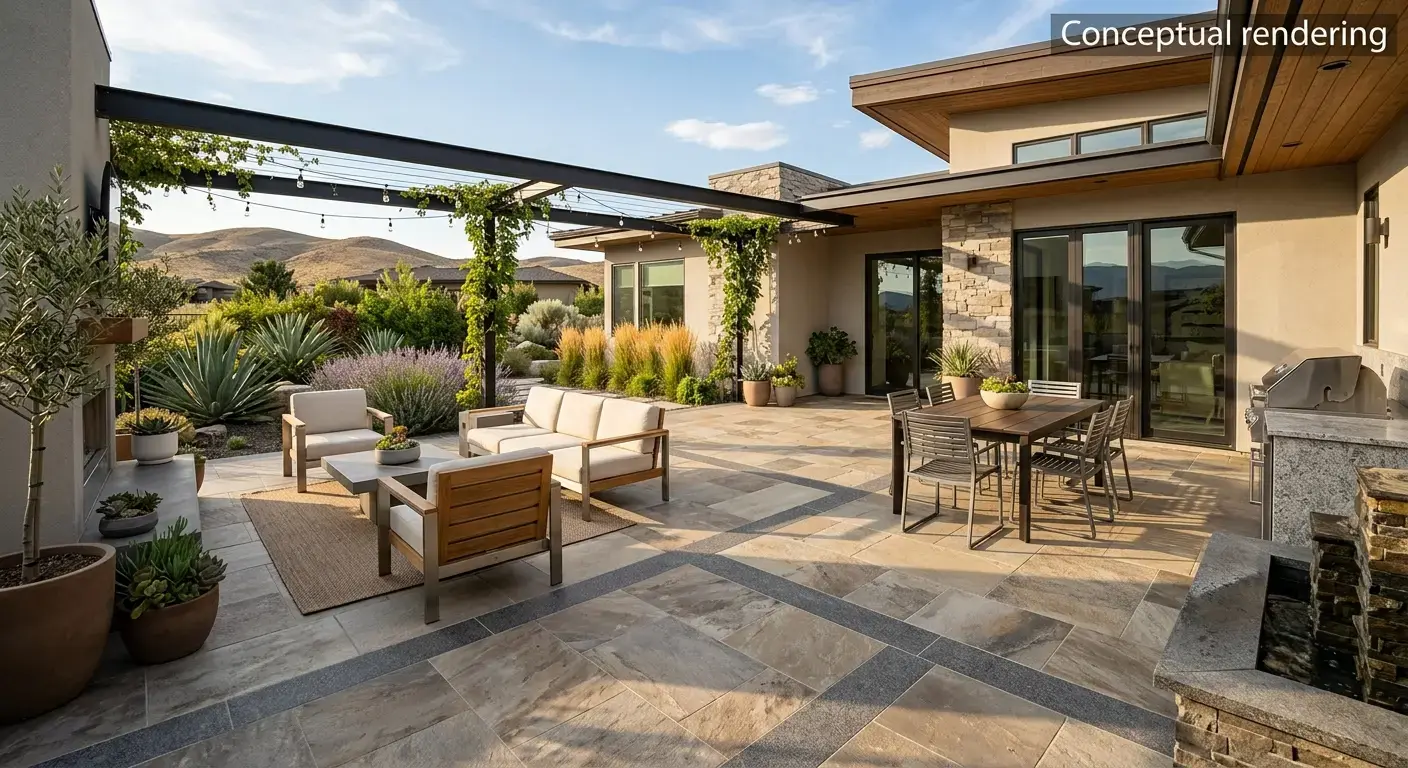
Choosing the Right Finish for Wet Areas
Finish matters as much as the stone itself on patios and pool decks. A polished surface that works indoors can become slippery when wet, so outdoor paving calls for textured finishes that add grip.
Natural cleft. This finish comes from splitting the stone along its natural layers. The uneven, textured surface provides good traction and suits natural landscapes and garden patios.
Flamed. High heat is applied to the surface, causing the top layer of crystals to fracture. This creates a rough texture with good slip resistance. Flamed stone often looks slightly lighter and more muted than the same stone with a smooth finish.
Brushed. Abrasive brushes soften the surface while leaving a gentle texture. Brushed quartzite feels comfortable under bare feet while still offering grip.
Sandblasted. Pressurized abrasive roughens the surface evenly, producing a matte texture with consistent traction.
Tumbled. Tumbling rounds the edges and gives the surface a weathered look. It is much more common on softer stones such as travertine, so tumbled quartzite is less widely available.
Honed. A honed finish is smooth and matte. It can work on covered patios or areas that stay mostly dry, but it offers less grip when wet, so it is usually not the first choice for pool decks.
When comparing finishes, ask whether slip resistance test data is available, and try to see or feel a sample when it is wet. A free design consultation lets you compare textured finishes side by side.
Colors and Surface Heat
Quartzite pavers come in white, silver, gold, gray, tan, rust, and multicolored blends. Color affects more than appearance. It also influences how hot the surface feels under direct sun.
Lighter colors reflect more sunlight and generally stay cooler to the touch than darker colors. For pool decks where people walk barefoot on summer afternoons, white, cream, silver, and pale gold quartzite are usually more comfortable than charcoal or deep brown options. Any stone in full sun will warm up, so color is one of the most useful factors to weigh for comfort.
Also consider how the paver color works with your home's exterior, your pool's interior finish, and your landscaping. Silver and white quartzite pair well with blue pool water and contemporary architecture. Gold and warm-toned quartzite complement Mediterranean, Spanish, and ranch-style homes. Gray blends suit modern landscapes with drought-tolerant plantings and gravel accents. These pairings are easier to judge in person, so it helps to compare stone colors at one of our local showrooms.
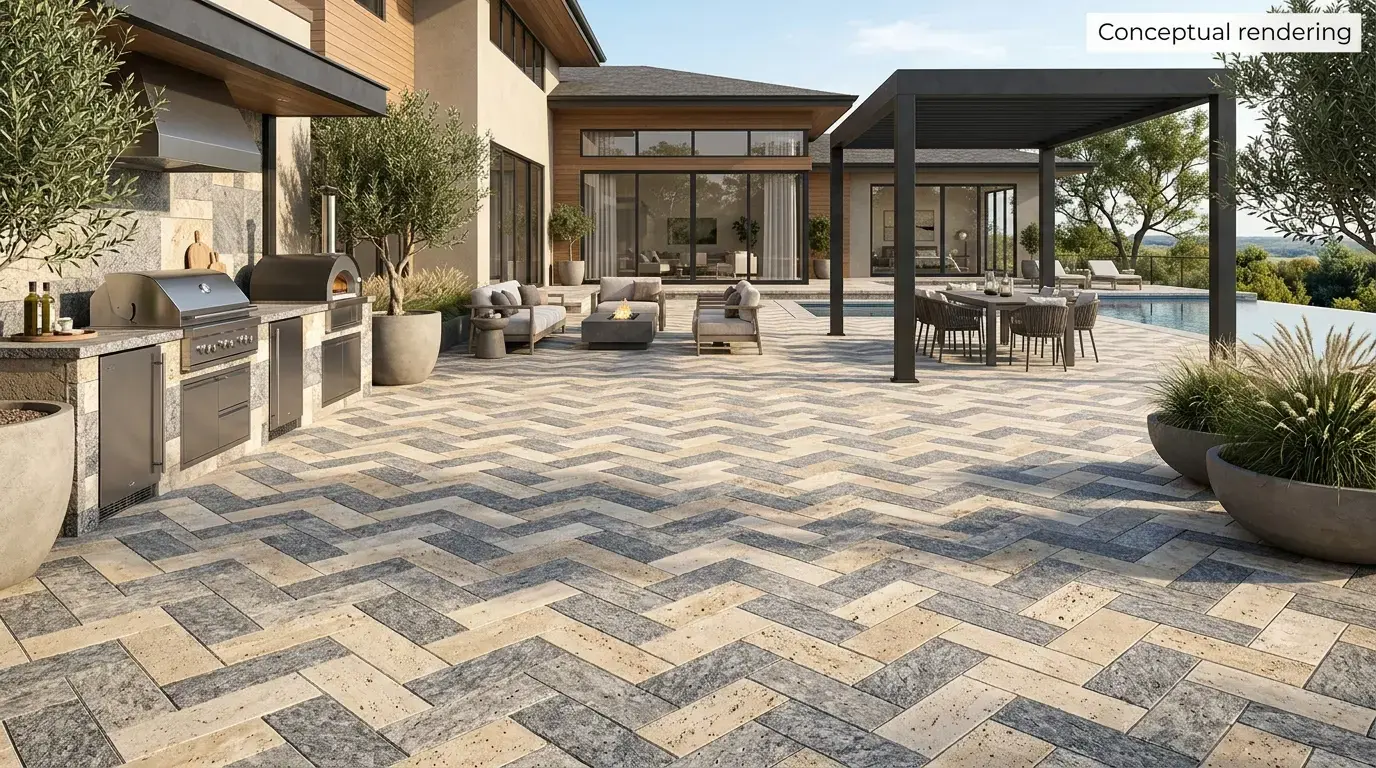
Formats: Pavers, Coping, and Flagstone
Quartzite for outdoor use comes in several formats, and many projects combine more than one.
Rectangular and square pavers. These are the most common format for patios and pool decks. They create clean lines and can be laid in running bond, herringbone, or multi-size French pattern layouts.
Pool coping. Coping caps the top of the pool wall. Quartzite coping is often available with a bullnose edge, an eased edge, or a drop-face edge that gives the look of a thicker stone. Matching coping to the deck creates a continuous look, while a contrasting color outlines the pool shape.
Irregular flagstone. Split quartzite flagstone has natural, uneven edges. It suits informal patios, garden paths, and stepping stones, with gravel, grass, or ground cover between pieces.
Pattern sets. Some quartzite is sold in pre-sized sets that combine several paver dimensions into a repeating layout.
Many outdoor projects also bring in stacked stone and other exterior stone and pavers to tie patios, walls, and pool edges together. Paver thickness and setting method depend on the application and site conditions, so your contractor or landscape professional is the right person to advise on base preparation for your project. Contractors and landscape designers sourcing materials for clients can also set up a trade account for trade pricing and job-site delivery.
How Quartzite Compares to Other Paving Materials
Quartzite vs. travertine. Travertine is a popular pool deck stone, known for light colors that stay relatively comfortable underfoot. However, it is calcium-based, more porous, and more vulnerable to acid etching and salt exposure. Quartzite is harder and less reactive, though it often costs more.
Quartzite vs. limestone. Limestone offers soft, uniform color but shares travertine's sensitivity to acids and is typically softer. Quartzite generally holds up better in high-traffic, chemically exposed areas.
Quartzite vs. porcelain pavers. Porcelain pavers are manufactured, very low in absorption, and highly consistent in color and size. Quartzite offers natural variation in color and texture. Both are commonly used around pools.
Quartzite vs. concrete pavers. Concrete pavers are generally less expensive and come in many shapes. Their pigmented color can fade or wear over time, and they tend to be more porous than dense quartzite. If budget is steering you toward concrete, browse our overstock sale first, since inventory changes over time.
How to Tell True Quartzite
Not every stone sold as quartzite is true quartzite. Some softer stones, including certain marbles and dolomites, are occasionally marketed as quartzite because of their appearance. For outdoor use, that distinction matters, since calcium-based stones behave differently around water and pool chemicals.
A glass scratch test is a helpful first check: press a sharp edge of the stone firmly across a piece of glass, then wipe the spot. True quartzite leaves a real scratch, while marble and dolomite generally leave only a powdery mark that wipes away. With the seller's permission, you can also place a drop of vinegar or lemon juice on an inconspicuous spot of a sample. True quartzite should show no change, while marble may fizz or leave a dull etch mark. Dolomite may react only faintly, so the scratch test is often more telling. Asking for the stone's geological classification adds another layer of confirmation.
Caring for Quartzite Pavers
Quartzite pavers are relatively low-maintenance. Sweep or blow debris off the surface regularly, since leaves and organic matter can stain stone if left in place. Rinse pool decks with fresh water periodically to wash away chlorine, salt, and sunscreen residue. For deeper cleaning, use a pH-neutral cleaner made for natural stone. Quartzite itself tolerates acids well, but harsh acidic or highly alkaline products can damage joint materials, setting beds, and nearby surfaces.
Some quartzites contain iron-bearing minerals that can oxidize and create rust-colored spots over time, especially with frequent wetting. Asking about mineral content before you buy can help you avoid surprises.
Sealing is optional for many dense quartzites, but a penetrating sealer can add protection against oil stains, food spills near outdoor kitchens, and mineral deposits. Penetrating sealers work below the surface and generally preserve texture and grip, though some can slightly darken the stone. Testing on a spare paver first is a good idea. Follow the sealer manufacturer's guidance on application and resealing intervals.
Conclusion
Quartzite pavers combine hardness, low water absorption, and natural texture, which makes them well suited to patios, pool decks, and coping that face sun, water, and changing seasons. A textured finish, a color that stays comfortable underfoot, and a true quartzite with verified density will help you choose a paver that fits how you use the space. If you are comparing quartzite with travertine, limestone, or porcelain pavers, it helps to see materials side by side, both dry and wet. Our team can talk through the exterior stone options that fit your home, climate, and landscape. Visit any of our showrooms in Sacramento, Reno, Minden, or Fernley to see our paver and outdoor stone selections in person and start planning your patio or pool area.
Note: Some images on this page may be conceptual renderings created to illustrate design possibilities and may not depict actual installations.
Frequently Asked Questions
It depends on the finish. Textured finishes such as natural cleft, flamed, brushed, and sandblasted provide good traction on wet surfaces and suit pool decks. Polished and honed quartzite are smoother and can become slippery when wet, so they are better for covered or dry areas.
Any paving material warms up in direct sun. Lighter-colored quartzite, such as white, silver, and pale gold, reflects more sunlight and generally stays more comfortable underfoot than dark stone. For pool decks, lighter shades are usually the more comfortable choice.
Dense quartzite is generally well suited to saltwater pools because it is quartz-based rather than calcite-based, which makes it far less vulnerable to the etching that affects limestone, travertine, and marble. Its low absorption also limits how much salt water enters the stone. Rinsing the deck with fresh water periodically helps prevent salt residue from building up.
Sealing is often optional for dense quartzite. A penetrating sealer can add protection against oil, food stains, and mineral deposits, especially near outdoor kitchens and grills. Penetrating sealers generally preserve surface texture and grip, though some may slightly darken the stone, so test on a spare piece first.
Both are hard natural stones that perform well outdoors. Quartzite is composed mostly of interlocking quartz grains and is generally harder than granite. Granite typically has a speckled, grainy look, while quartzite often shows softer color movement, subtle veining, or a crystalline sparkle. Water absorption varies by specific stone for both, so compare technical data for the specific stones you are considering.