At A Glance
- Main cause: water moving dissolved salts to the surface before it evaporates
- Helpful steps: moisture control, low-absorption materials, and a breathable penetrating sealer
- First response: dry brushing, rather than acids or high-pressure washing
- Timing: new surfaces may show deposits early, then fade gradually
In This Guide
- Why efflorescence appears
- Advantages of controlling it
- Moisture sources, materials, sealing, and cleaning
- How Nova supports outdoor stone projects
- Key takeaways and FAQs
What Causes Efflorescence On Outdoor Pavers?
Efflorescence is a white, powdery salt deposit left behind when water carries dissolved minerals to the surface and then evaporates. Three things must be present: moisture, soluble salts, and a path for water. Reducing any one of them lowers the risk.
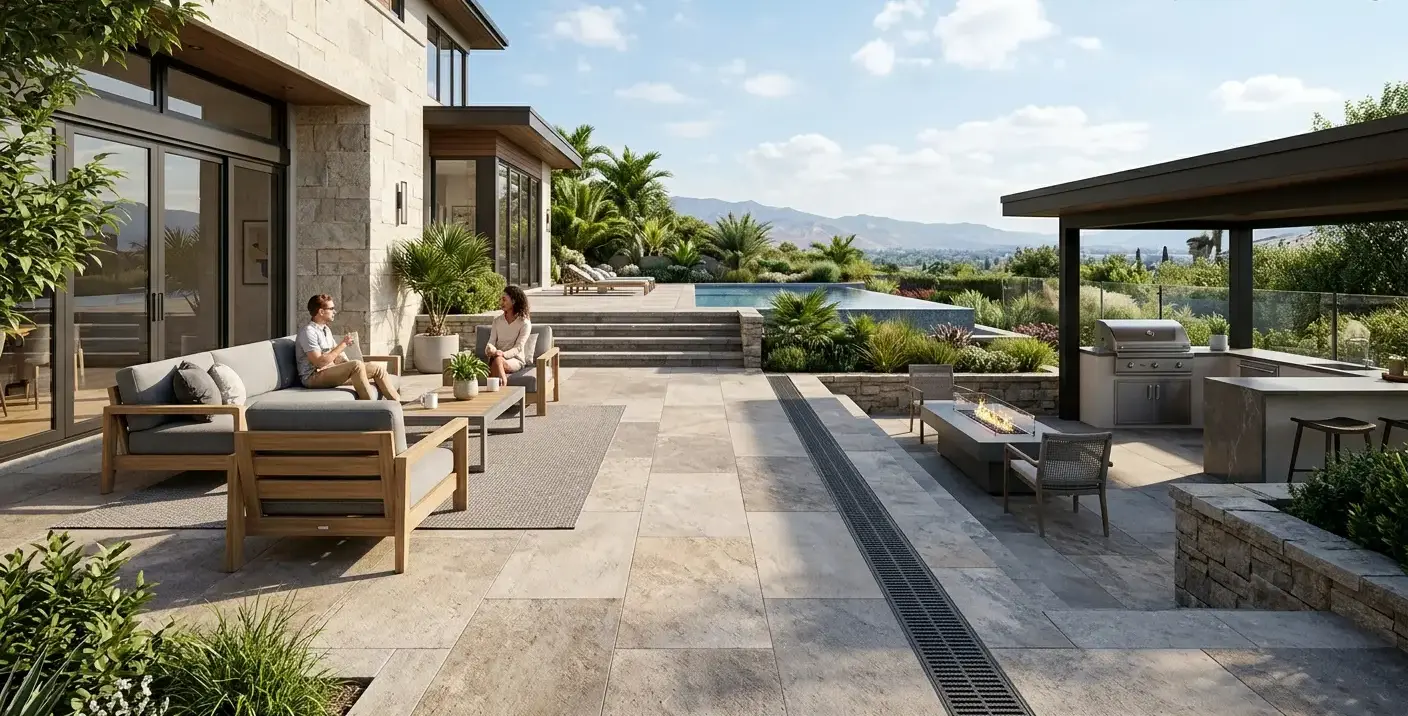
Exterior Stone and Pavers face this issue more often than indoor surfaces because rain, irrigation, and soil moisture reach them constantly. Understanding the process makes prevention far more practical.
So what causes efflorescence on outdoor pavers? Cement-based products release calcium compounds as they cure, and groundwater, mortar, or base materials can add more salts over time.
Natural stone can show similar deposits when mineral-rich water moves through porous areas. Dense, low-absorption materials generally give salts fewer routes, though no surface is completely immune.
The deposit is usually cosmetic and often fades with weathering. Even so, it signals that moisture is moving through the surface, which deserves attention.
This guide covers causes, material choices, sealing, routine care, and professional support, so outdoor surfaces can stay cleaner for longer.
 Conceptual rendering
Key Advantages Of Efflorescence Control For Exterior Stone And Pavers
Controlling moisture and salts helps patios, walkways, and walls keep a consistent look. Clean surfaces let natural tones and patterns read as intended, though results vary by material.
Prevention also supports exterior stone maintenance by reducing how often deposits need attention. Fewer visible deposits can mean simpler routine care over the years.
Outdoor spaces in Northern Nevada and Northern California deal with freeze-thaw cycles, irrigation, and seasonal moisture. Choosing materials with those conditions in mind can lessen how often salts reach the surface.
- Cleaner appearance: fewer white deposits may keep color looking richer and more even
- Lower upkeep: managing moisture early can reduce repeat cleaning cycles
- Earlier warning: recurring deposits can point to drainage or moisture issues worth reviewing
- Better material fit: matching absorption levels to site conditions can improve long-term performance
- Easier stain response: a suitable penetrating sealer may help stains clean up more easily, though it is not stain proof
Seeing materials in person makes these comparisons easier. Visit the Fernley showroom to compare finishes, tones, and textures in natural light.
Planning Outdoor Surfaces To Reduce Salt Deposits
Knowing what causes efflorescence on outdoor pavers shows where water travels and which materials absorb it. The sections below cover moisture sources, materials, sealing, and routine care.
Moisture Sources And Local Conditions
Masonry efflorescence guidance notes that cool, damp, or shaded areas dry slowly, giving salts more time to dissolve and travel. Irrigation overspray, downspout discharge, and standing water have the same effect.
Mineral-rich irrigation water can also leave its own deposits as it dries. Ask a qualified hardscape professional to review drainage and grading before selecting materials.
These hardscape maintenance tips from an industry association highlight extended downspouts and sloped grades as basic water-management steps.
Material Choices That Resist Salt Migration
Dense, low-absorption surfaces generally give salts fewer pathways. Granite, quartzite, and porcelain are outdoor-suitable choices, and travertine is generally outdoor-approved when sealing and care are kept up.
Confirm each product's water absorption, freeze-thaw approval, and finish before outdoor use. Textured, flamed, or bush-hammered finishes generally suit wet areas better, since polished surfaces can become slippery when wet.
Browse stone slab options online to compare materials by type and finish. Visit the Reno showroom to see surfaces in person.
Material comparison for moisture and salt behavior
Material | Type | Sealing Guidance | Salt Deposit Considerations |
Granite | Natural stone | Needs sealing | Generally dense; confirm the specific stone's absorption |
Quartzite | Natural stone | Needs sealing | Generally dense; absorption varies by stone |
Travertine | Natural stone | Needs sealing | Naturally porous; deposits may show more readily |
Porcelain | Manufactured tile | Typically not required | Dense body; confirm the product's absorption rating |
Design Notes For Lighter And Darker Tones
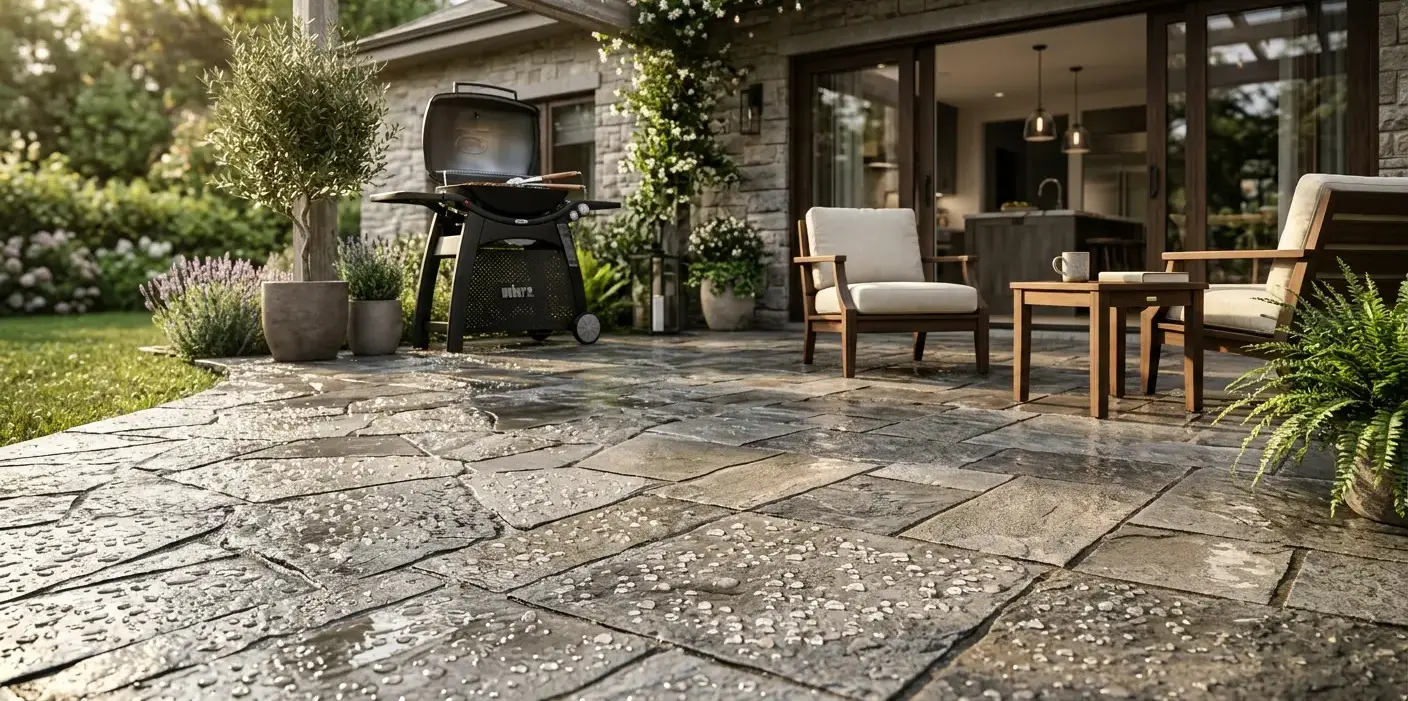
Deep charcoal and rich brown tones tend to show white deposits more than lighter blends. Variegated or textured surfaces can help mask faint haze, though results vary by product and finish.
Lighter, warm-toned travertine and porcelain with subtle movement often blend faint deposits better than uniform dark finishes, though the exact product and finish decide the result.
 Conceptual rendering
Sealing And Surface Care
Penetrating sealers repel water rather than fully sealing stone. As the Natural Stone Institute explains, sealing improves stain resistance but does not make stone stain proof.
Clean and dry the surface before sealing, since sealing over active deposits can lock in moisture problems. Guidance for new concrete-based pavers suggests waiting several months first, so confirm timing with the manufacturer.
Routine checks help catch problems early. Sweep debris, clear leaves, and watch for damp spots after storms, since lingering moisture is a common starting point for deposits.
Advantages And Limitations Of Sealing
Advantages
- May reduce water absorption and surface staining
- Can make routine cleaning easier
- Helps slow moisture entry from above
Limitations
- Needs periodic reapplication, with timing varying by product
- Unsuitable products can trap moisture or cloud the surface
- Does not stop moisture rising from below
- May slightly darken some stones
Five Steps To Reduce Efflorescence Risk
- Confirm the deposit. A dry white powder that fades when wet is often efflorescence; film that stays put may be something else.
- Dry brush first. A soft-bristle brush or dry mop lifts loose salts, while water alone may only dissolve them temporarily.
- Check moisture sources. Look for irrigation spray, downspouts, or standing water near the surface.
- Choose gentle products. Select cleaners made for the stone type, and avoid acids on calcareous stone such as travertine.
- Seal when ready. Pick a breathable penetrating sealer for clean, dry stone and follow the manufacturer's directions.
 Conceptual rendering
How Nova Tile And Stone Supports Your Outdoor Project
Choosing Exterior Stone and Pavers is easier with commission-free design consultants who can discuss absorption, finishes, and sealing needs for each material. Their guidance helps match surfaces to the way a space will be used.
Nova supplies materials only, so questions about site drainage and surface care are best shared with a qualified local professional. Arranged delivery assistance helps materials reach the project location.
Nova serves customers in Fernley, Reno, Minden, and Sacramento. Visit the Minden showroom for outdoor stone options. Customers in California can also visit the Sacramento showroom.
Consultations can cover finish choices, sealing needs, and care routines for patios, walkways, and wall surfaces, so questions get answered before materials are selected.
For personalized material guidance, book a free consultation today with a design consultant.
Key Takeaways
- Efflorescence needs moisture, soluble salts, and a pathway, so removing any one lowers the risk
- Dense, low-absorption materials generally resist salt migration better, though no surface is immune
- Breathable penetrating sealers can help, but they are not stain proof and need periodic reapplication
- Dry brushing and gentle, stone-safe cleaners are the safest first response
- Persistent deposits often signal a moisture problem worth reviewing with a professional
Plan Your Outdoor Stone With Confidence
Ready to choose outdoor surfaces that are easier to care for? A commission-free design consultant can help you compare materials, finishes, and sealing needs, then point you toward options that suit your site conditions.
SACRAMENTO SHOWROOM
6100 Warehouse Way, Sacramento, CA 95826
 Google Maps
Store hours this week:
- Mon. - Fri.: 7:30 am - 5:00 pm
- Sat. - Sun.: Closed
MINDEN SHOWROOM
2548 Business Pkwy, Minden, NV 89423
Store hours this week:
- Mon. - Fri.: 7:30 am - 6:00 pm
- Sat.: 9:00 am - 3:00 pm
- Sun.: Closed
RENO SHOWROOM
12835 Old Virginia Rd Suite 24, Reno, NV 89521
Store hours this week:
- Mon. - Fri.: 7:30 am - 6:00 pm
- Sat.: 9:00 am - 3:00 pm
- Sun.: Closed
FERNLEY SHOWROOM
1855 US Highway 95A North, Fernley, NV 89408
Store hours this week:
- Mon. - Fri.: 7:30 am - 4:00 pm
- Sat. - Sun.: Closed
Bring your questions and ideas, and expect practical answers on absorption, finishes, and care. Book your free consultation today!
Frequently Asked Questions
Efflorescence forms when water dissolves salts from cement, mortar, soil, or base materials and carries them to the surface. When the water evaporates, a white powder remains. Cool, damp, or shaded areas dry slowly, so deposits may appear more often there. Dense materials and good drainage generally reduce the risk.
Efflorescence is usually cosmetic and does not typically damage stone on its own. However, it signals that moisture is moving through the material, and repeated wet and dry cycles can contribute to surface wear over time. Persistent or heavy deposits are worth reviewing with a qualified stone or hardscape professional.
Sealing can reduce water absorption, but it cannot guarantee deposits will not return, especially when moisture rises from below. A breathable penetrating sealer is generally preferred, and unsuitable products may trap moisture. Confirm compatibility with the specific stone and follow the manufacturer's directions.
Start with a dry soft-bristle brush or dry mop to lift loose powder. Water alone may only dissolve salts temporarily, so avoid heavy washing. Skip acid-based cleaners on calcareous stone such as travertine, and avoid high-pressure sprays. If deposits persist, ask a stone care professional about a suitable cleaner.
Travertine is generally outdoor-approved, but its natural porosity makes sealing and routine care important. It is not part of Nova's general UV-resistant category, so verify the exact product's UV rating before full-sun use. Moisture control and breathable sealing help limit deposits.
Sources
Concrete Masonry & Hardscapes Association. (2025, November 14). Tips to maintain the investment and beauty of your hardscape project. https://www.cmha.org/news-and-insights/tips-to-maintain-the-investment-and-beauty-of-your-hardscape-project/
Mason Contractors Association of America. (n.d.). Efflorescence: Understanding efflorescence. https://masoncontractors.org/understanding-efflorescence/
Natural Stone Institute. (n.d.). Care & cleaning of natural stone. https://www.naturalstoneinstitute.org/consumers/care/