Porcelain pavers suit outdoor living spaces that need low upkeep and consistent color, while natural stone pavers suit spaces that favor one-of-a-kind character. Porcelain is defined by water absorption of 0.5% or less under ASTM C373, and granite, quartzite, and travertine are the natural stones suited to exterior flooring.
A patio is only as good as the surface underfoot. In Reno, Minden, Fernley, and Sacramento, outdoor flooring faces intense sun, winter freeze cycles, and constant foot traffic, so the choice between porcelain and stone shapes how outdoor living areas perform for years.
How Do Pavers Shape Outdoor Living Spaces?
Pavers define where outdoor living happens. They form the patio for dinner, the walkway across a yard, and the deck around a pool. Each zone depends on outdoor flooring that stays stable, safe underfoot, and attractive through every season.
Two material families lead the category. Porcelain pavers are engineered from refined clays fired at high temperatures, while natural stone pavers are cut from quarried granite, quartzite, or travertine. Nova Tile and Stone carries both, including porcelain and stone slabs for larger surfaces.
As a direct importer with commission-free design consultants, Nova Tile and Stone bases material recommendations on project needs, climate exposure, and layout rather than sales targets.
Outdoor Living Paver Comparison: Porcelain vs. Natural Stone
A fair outdoor living paver comparison starts with measurable performance and ends with appearance. The sections below cover each material family, then place the key differences side by side for quick reference.
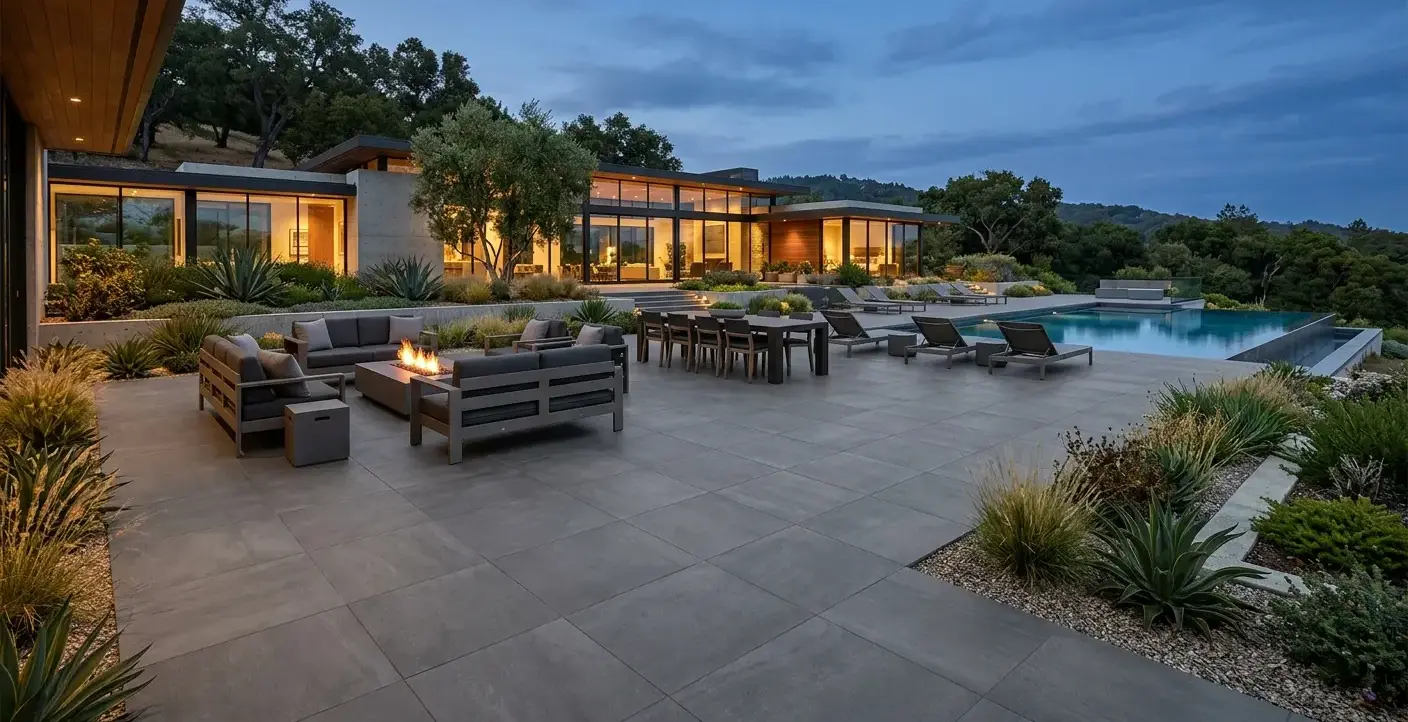
Porcelain Pavers for Outdoor Flooring
Porcelain is an impervious ceramic with water absorption of 0.5% or less, measured by ASTM C373. The Tile Council of North America explains this definition and its porcelain tile certification program, which helps buyers confirm a product is truly porcelain.
For frost exposure, ask for ASTM C1026 freeze-thaw results on the exact product. Fired porcelain is generally treated as UV-resistant, yet the manufacturer's sun exposure approval should still be confirmed before specifying any product for full-sun areas.
- Water absorption of 0.5% or less under ASTM C373
- Consistent color and pattern across large outdoor flooring areas
- Generally no sealing required, subject to manufacturer guidance
- Matte and textured finishes for wet zones
- Suited to patios, walls, fireplaces, and countertops
 Conceptual rendering
Natural Stone Pavers for Outdoor Flooring
Granite, quartzite, and travertine are the natural stones suited to exterior use. Granite and quartzite are covered by ASTM C615 and ASTM C616 specifications and fall in the UV-resistant category, while travertine follows ASTM C1527 and is generally outdoor-approved.
Travertine sits outside that UV-resistant category, so verify the exact product's UV rating or manufacturer sun exposure approval for full-sun areas. Marble and dolomite are better reserved for indoor spaces and are not recommended for patios.
No two natural stone pavers look identical, which gives a patio character that engineered surfaces can only approximate. In exchange, granite, quartzite, and travertine all benefit from sealing to improve stain resistance.
Porcelain vs. Natural Stone Pavers at a Glance
Outdoor Flooring Factor | Porcelain Pavers | Natural Stone Pavers |
Material type | Engineered | Natural (granite, quartzite, travertine) |
Appearance | Consistent, repeatable patterns | Unique veining and variation |
Water absorption | 0.5% or less (ASTM C373) | Varies by stone and product |
Sealing | Generally not required | Recommended |
Sun exposure | UV-resistant category; verify product approval | Granite and quartzite UV-resistant; verify travertine |
Wet-area traction | Matte or textured; confirm wet DCOF data | Non-polished finish; confirm test data |
Outdoor kitchen counters | Suited | Granite and quartzite suited |
Which Outdoor Flooring Holds Up in Nevada and California Climates?
Local weather should drive the decision. A regional outdoor living paver comparison must weigh Northern Nevada freeze cycles, strong summer sun, and the sustained heat of the Sacramento Valley.
Freeze-Thaw and Winter Moisture
Frost exposure is where porcelain data is easiest to verify. Water absorption of 0.5% or less, or a passing ASTM C1026 result, supports outdoor use. A design consultant at the Reno showroom can review that data with you. Natural stone holds up better with proper sealing and a well-drained base, since standing water stresses any paving material. Granite, quartzite, and travertine all suit exterior flooring when specified for the exposure.
Sun, Heat, and UV Exposure
Full-sun patios in Sacramento and the high desert deserve extra scrutiny. Lighter tones generally stay more comfortable underfoot than dark surfaces, and UV performance is product-dependent. The Sacramento showroom can help confirm ratings before purchase.
Wet Zones and Pool Decks
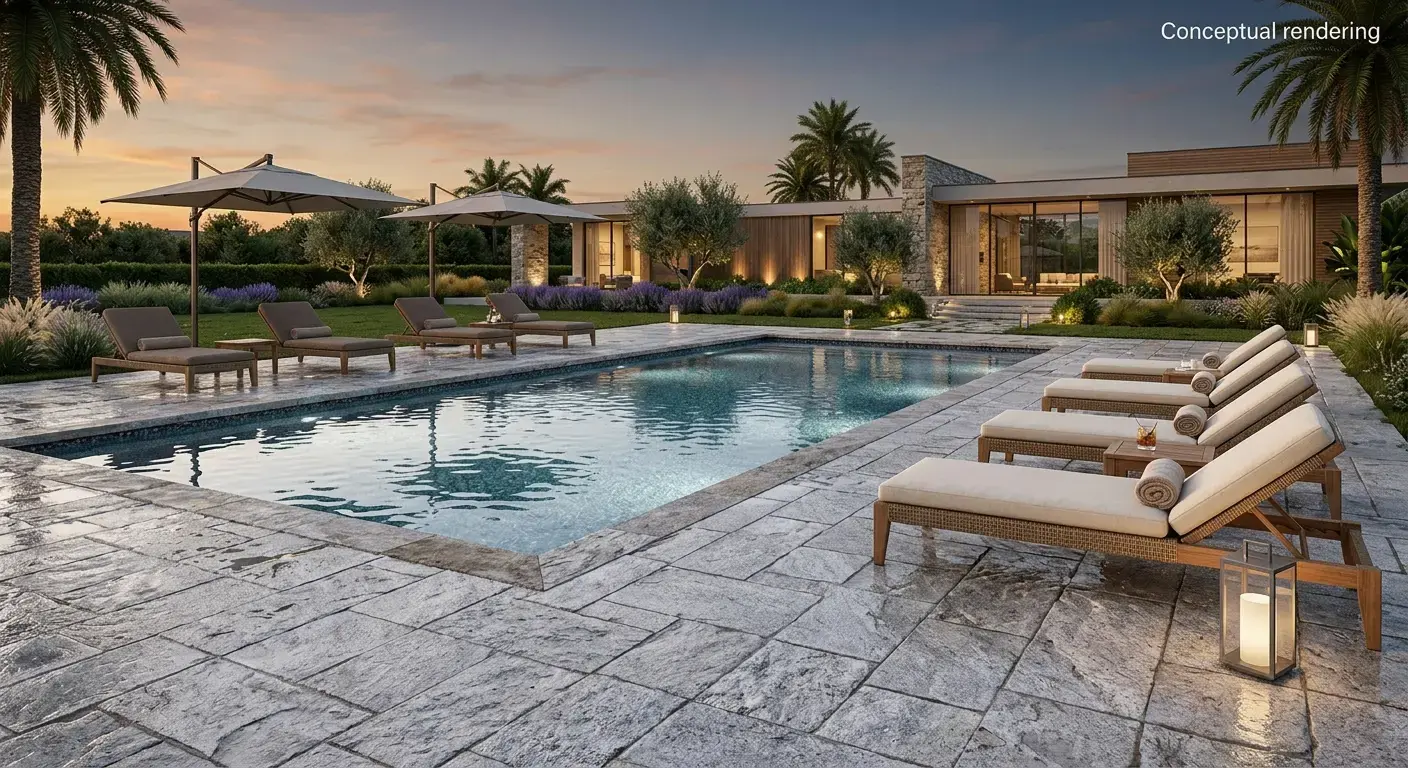
Polished surfaces become slippery when wet, so pool decks and shower-adjacent walkways call for matte or textured finishes. ANSI A326.3 defines the wet DCOF test. The common 0.42 figure applies to level interior floors, so request the wet DCOF result and the manufacturer's rated use for exterior wet areas.
Design Options for Outdoor Living Areas
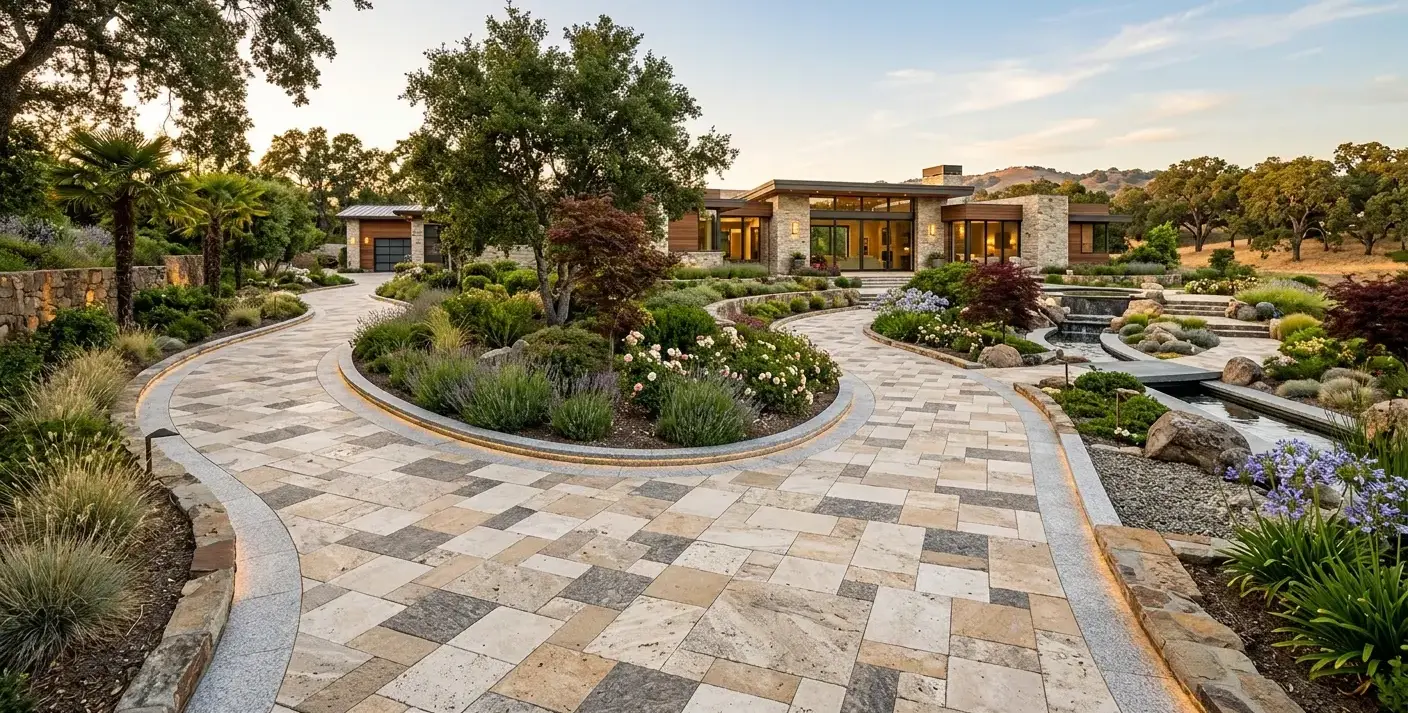
Design flexibility often decides the final selection. Both material families can unify a patio, steps, and surrounding walls, so one surface can carry through several outdoor living zones for a cohesive look.
Finish and Color Choices
Porcelain is offered in polished, honed, and specialty finishes. Natural stone varies by type: granite is available polished, leathered, or specialty, quartzite polished, honed, or specialty, and travertine in all four. Outdoors, non-polished finishes are the practical starting point.
Porcelain keeps color and pattern consistent across a project, while natural stone shifts in tone and veining from piece to piece. Dry-laying natural stone pavers before final placement helps balance those variations across the outdoor flooring surface.
Outdoor Kitchens and Fire Features
Outdoor kitchens add demands beyond foot traffic. Granite, quartzite, and porcelain are suited to countertops, and granite, quartzite, travertine, and porcelain are suited to fireplace surrounds, so one palette can serve the patio, counters, and fire feature.
Food contact depends on material, finish, and sealing. Confirm that any sealer applied to a food preparation surface is non-toxic and food-safe, and check the manufacturer's guidance for the exact product before cooking on it.
How to Choose Pavers for Your Outdoor Living Layout
A structured outdoor living paver comparison keeps the decision grounded in data rather than appearance alone. Work through these steps before selecting a surface for any outdoor flooring project.
- Map the zones. Separate dining areas, walkways, pool surrounds, and outdoor kitchens, since each carries different traction, heat, and traffic demands.
- Match finish to moisture. Choose matte or textured surfaces for wet areas and request the product's wet DCOF data for exterior use.
- Request the data. Ask for ASTM C373 and ASTM C1026 results on porcelain, and UV rating details on any stone placed in full sun.
- Compare in person. Visit the Minden showroom to view finishes in daylight with a design consultant.
- Plan the base. Layout and base preparation belong to a qualified contractor, and this guide to paver installation steps outlines the typical sequence.
Unsure which material suits the space? Book your free consultation today! Bring measurements and photos of the space, and a design consultant will help narrow the options.
 Conceptual rendering
Maintenance and Care for Outdoor Flooring
Both materials clean up with neutral cleaners and clear water. The Natural Stone Institute care guidance warns that acidic products can dull or etch calcareous stones such as travertine, and abrasive scouring powders can scratch some surfaces.
Pool and patio areas that collect algae or moss can be flushed with clear water and treated with a diluted cleaning solution, following the manufacturer's directions. Never mix bleach and ammonia, because the combination creates a toxic gas.
Porcelain rarely needs sealing, and routine rinsing handles most dirt. Natural stone benefits from an impregnating sealer, which makes it more stain resistant rather than stain-proof. Spills should be blotted promptly on every surface.
RENO SHOWROOM
12835 Old Virginia Rd Suite 24, Reno, NV 89521
 Google Maps
Store hours this week:
- Mon. - Fri.: 7:30 am - 6:00 pm
- Sat.: 9:00 am - 3:00 pm
- Sun.: Closed
FERNLEY SHOWROOM
1855 US Highway 95A North, Fernley, NV 89408
Store hours this week:
- Mon. - Fri.: 7:30 am - 4:00 pm
- Sat. - Sun.: Closed
MINDEN SHOWROOM
2548 Business Pkwy, Minden, NV 89423
Store hours this week:
- Mon. - Fri.: 7:30 am - 6:00 pm
- Sat.: 9:00 am - 3:00 pm
- Sun.: Closed
SACRAMENTO SHOWROOM
6100 Warehouse Way, Sacramento, CA 95826
Store hours this week:
- Mon. - Fri.: 7:30 am - 5:00 pm
- Sat. - Sun.: Closed
In outdoor kitchens, place trivets under hot cookware and use cutting boards for food prep. Heat resistance does not equal thermal shock immunity, and scratch resistance varies by material and finish.
Conclusion
The right choice for outdoor living depends on climate exposure, finish, and style priorities. Porcelain delivers consistency and low upkeep, while granite, quartzite, and travertine deliver natural character with sealing and routine care. Comparing both in person, including at the Fernley showroom, makes the trade-offs easy to see.
Nova Tile and Stone serves Fernley, Reno, Minden, and Sacramento with commission-free design consultants who match materials to each project's layout, climate, and budget. Schedule a free consultation now!
Frequently Asked Questions
Neither wins in every case. Porcelain suits outdoor living areas that need low upkeep, consistent color, and verified freeze resistance, while natural stone suits those favoring unique character. Compare each product's test data, finish, and sealing needs before deciding on a surface.
Porcelain pavers generally do not need sealing because the body is dense and absorbs 0.5% or less water under ASTM C373. Follow the manufacturer's guidance for the exact product. Granite, quartzite, and travertine typically benefit from an impregnating sealer to improve stain resistance.
Granite, quartzite, and travertine suit outdoor flooring, while marble and dolomite are better reserved for indoor spaces. UV tolerance is product-dependent, so confirm the exact product's UV rating or the manufacturer's sun exposure approval for full-sun areas, especially with travertine.
Choose a matte or textured finish, since polished surfaces become slippery when wet. Ask for the product’s wet DCOF under ANSI A326.3 and confirm it is rated for exterior wet areas. The common 0.42 figure covers level interior floors only. Check the data sheet for the exact product before purchase.
A useful outdoor living paver comparison covers water absorption, freeze-thaw data, UV rating, finish and traction, sealing needs, and maintenance. Also compare color consistency and the zones each material will serve, such as patios, walkways, pool decks, and outdoor kitchens.