What Are Pavers and Why Do They Matter for Outdoor Living?
Pavers are individual units of natural stone or engineered material set together to form patios, walkways, pool surrounds, and other outdoor surfaces. Stone pavers offer a modular alternative to poured concrete, giving homeowners flexibility in pattern, texture, and color across a property.
For homeowners across Northern Nevada and Northern California, choosing the right stone pavers means balancing climate durability with design goals. Desert heat, seasonal temperature swings, and occasional freeze-thaw cycles all factor into which material performs best over time. Granite, travertine, and porcelain are common outdoor-approved options, each with distinct finish and maintenance characteristics. This guide explores design inspiration, material comparisons, and practical considerations, including modern paver design ideas for outdoor living, to help plan a refreshed exterior space. A complimentary consultation can help match material choices to a specific property and climate.
Benefits of Pavers for Modern Outdoor Living
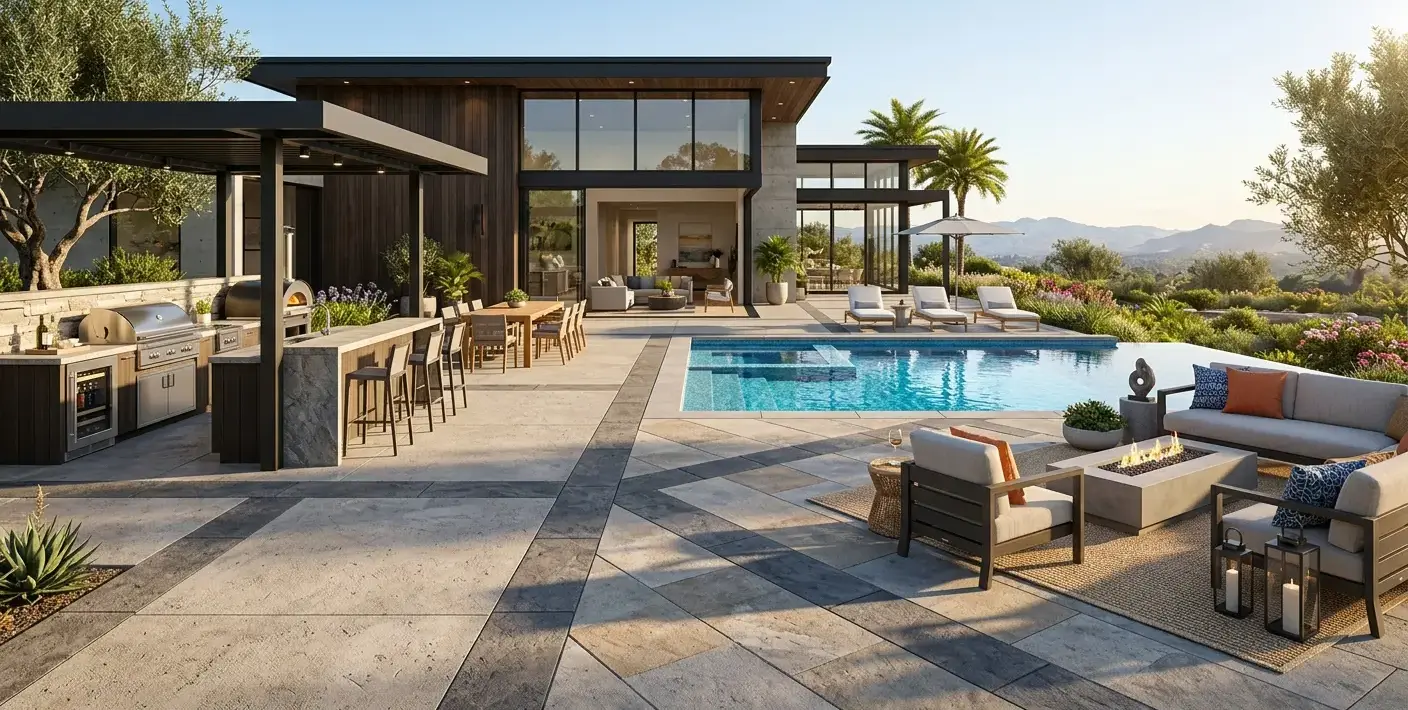 Conceptual rendering
Stone pavers bring several practical advantages to outdoor spaces beyond visual appeal. From surface texture to long-term durability, these benefits explain why stone pavers remain a popular hardscape material for modern homes throughout the region.
- Design flexibility. Stone pavers come in multiple shapes, sizes, and laying patterns, supporting varied outdoor stone pathways and patio layouts.
- Material variety. Granite, travertine, and porcelain options allow different textures and finishes, suited to distinct climate and traffic needs.
- Durability with care. Outdoor-approved stone pavers withstand regular exposure, though proper sealing and cleaning preserve long-term appearance.
- Design continuity. Coordinating stone pavers with interior slab materials creates a cohesive look between indoor and outdoor stone surfaces.
- Slip consideration. Textured or matte finishes reduce slipperiness in wet areas better than polished surfaces. Confirming a paver's DCOF rating with a specialist supports wet-area planning near pools and walkways.
Homeowners refreshing patios often pair stone pavers with the slab collection used inside the home for a unified material palette. This continuity carries a modern outdoor stone project from the yard through to interior kitchen and bath surfaces.
Design Ideas and Applications for Modern Outdoor Spaces
Stone pavers adapt to a wide range of outdoor layouts, from formal courtyards to relaxed garden pathways. The following ideas highlight how material, pattern, and finish choices shape a modern outdoor stone project.
Modern Paver Design Ideas for Outdoor Living
Large-format stone pavers in linear patterns create a clean, contemporary look for patios and entryways, while mixed-size layouts add texture to garden paths. Pairing warm-toned travertine with cooler granite accents is a popular way to define separate outdoor zones without changing material families. Running a single material across a patio and an adjoining walkway also helps a modern property read as one continuous design rather than a series of disconnected areas.
Pool decks benefit from matte or leathered stone finishes, which support better underfoot traction around wet edges. Confirming a specific product's wet-surface rating against standards such as those referenced in this DCOF overview helps match paver choice to pool and walkway safety expectations. Lighter tones also tend to stay cooler underfoot in direct sun, which is a practical consideration for pool surrounds and open patios during warmer months.
Coordinating Stone Pavers with Landscape and Architecture
Stone pavers can echo architectural details already present in a home, such as trim color or roofline material, tying outdoor stone surfaces back into the overall design. Layering stone pavers with gravel, planting beds, or low retaining walls adds depth to garden pathways and courtyard layouts. A staggered or running-bond pattern can also help visually widen a narrow side yard or connect a front entry to a driveway border.
Color and Texture Pairings for Curb Appeal
Neutral granite tones pair well with greenery, while warm travertine complements desert-inspired landscaping common across Northern Nevada properties. Textured finishes also reduce glare in full-sun locations, an important consideration for exposed patios and driveway borders. Mixing two complementary tones, such as a warm travertine field with a darker granite border, can frame a patio or entry without introducing an entirely separate material family.
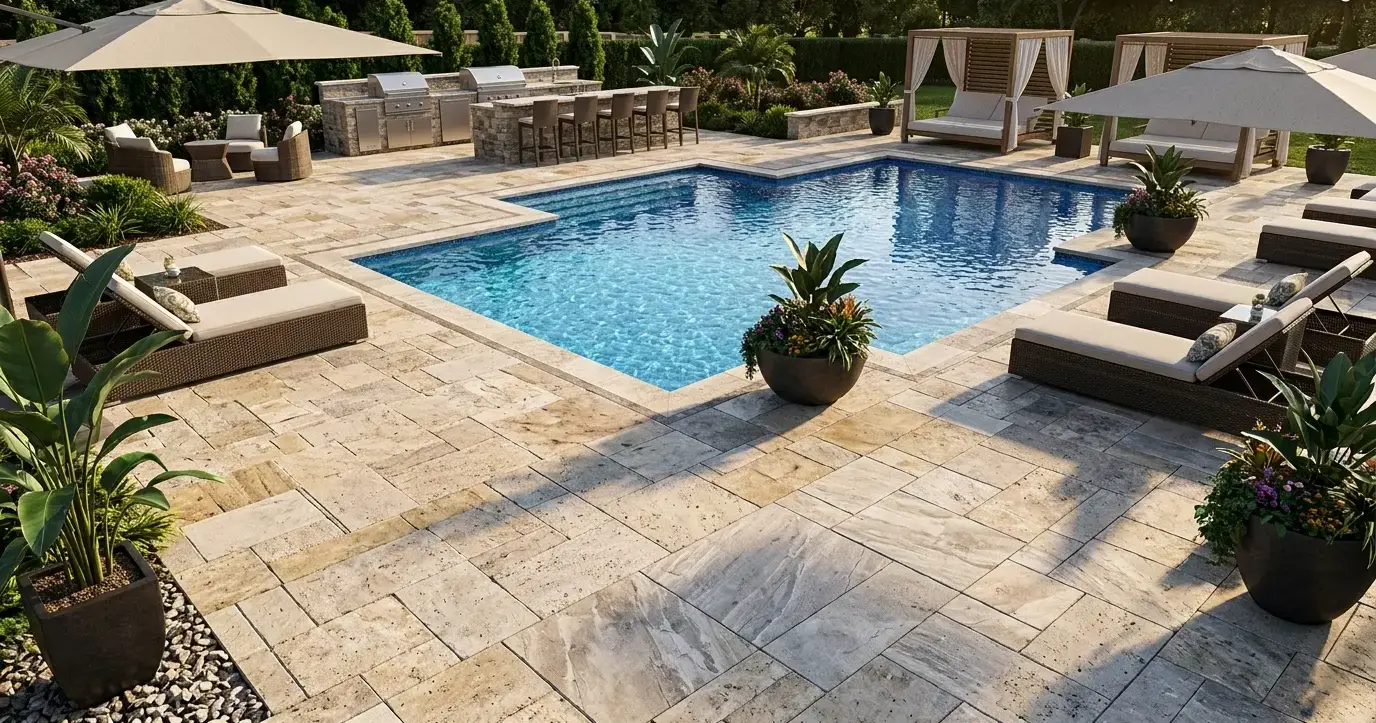 Conceptual rendering
A Quick Guide to Selecting the Right Paver Material
- Define the application. Determine whether the space is a patio, walkway, pool surround, or driveway border, since each carries different traffic and moisture exposure.
- Compare material options. Granite, travertine, and porcelain each offer different natural stone or engineered characteristics suited to specific outdoor uses.
- Select a finish. Textured or matte finishes support better traction in wet or high-traffic areas compared to polished surfaces.
- Consider color and pattern. Coordinating tones with existing architecture and landscaping supports a cohesive exterior look.
- Consult a specialist. A showroom consultation helps confirm sealing needs, UV rating, and sizing details for a specific property.
Comparing Paver Material Options
Feature | Granite | Travertine | Porcelain |
Material Type | Natural stone | Natural stone | Engineered |
General UV-Resistant Category | Included | Confirm product rating | Included |
Sealing Needs | Periodic sealing typical | Periodic sealing typical | Little to no sealing typically needed |
Common Outdoor Uses | Patios, walkways, pool surrounds | Patios, walkways, pool surrounds | Patios, walkways, pool surrounds |
Surface Feel | Polished finishes are slipperier when wet; textured finishes improve traction | Textured or tumbled finishes generally support good traction | Textured finishes offer consistent traction |
Reviewing these factors side by side often clarifies which direction fits a specific project. A patio in full sun with heavy foot traffic favors different priorities than a shaded walkway or a pool surround, which is why matching finish and sealing needs to actual site conditions matters as much as choosing a material family.
Stone Pavers: Advantages and Considerations
Advantages
- Wide range of design and pattern options for modern outdoor layouts
- Individual units allow easier spot replacement compared to poured surfaces
- Natural stone and porcelain options suit different climate and traffic needs
- Texture and finish choices support safer wet-area surfaces
Considerations
- Natural stone options generally require periodic sealing to maintain appearance
- Polished finishes are not recommended for pool decks or high-moisture areas
- Color variation is natural in stone and should be expected across a full project
- Confirming sun exposure and slip ratings with a specialist supports long-term performance
Routine care also supports appearance over time. General guidance on cleaning outdoor stone can offer a helpful starting point for regular upkeep. Separate guidance on sealing stone surfaces covers the broader topic as well, though a specialist should confirm product-specific care steps for a given material and finish. Establishing a simple seasonal routine, such as rinsing off dust before it settles into grout lines or joints, tends to keep outdoor stone looking its best between deeper cleanings.
Explore Stone Pavers at Nova Tile and Stone
Nova Tile and Stone offers a range of granite, travertine, and porcelain paver options suited to patios, walkways, and pool surrounds across Northern Nevada and Northern California. Specialists are available to help match material, finish, and color to a specific property's climate and design goals, and to walk through sealing, traction, and sun-exposure questions before a final selection is made.
Visit the Fernley showroom to view stone paver samples in person. The Reno showroom also carries a selection of outdoor stone materials for browsing. Homeowners near the state line can visit the Minden showroom for additional options. California homeowners can explore the Sacramento showroom for the same curated material selection.
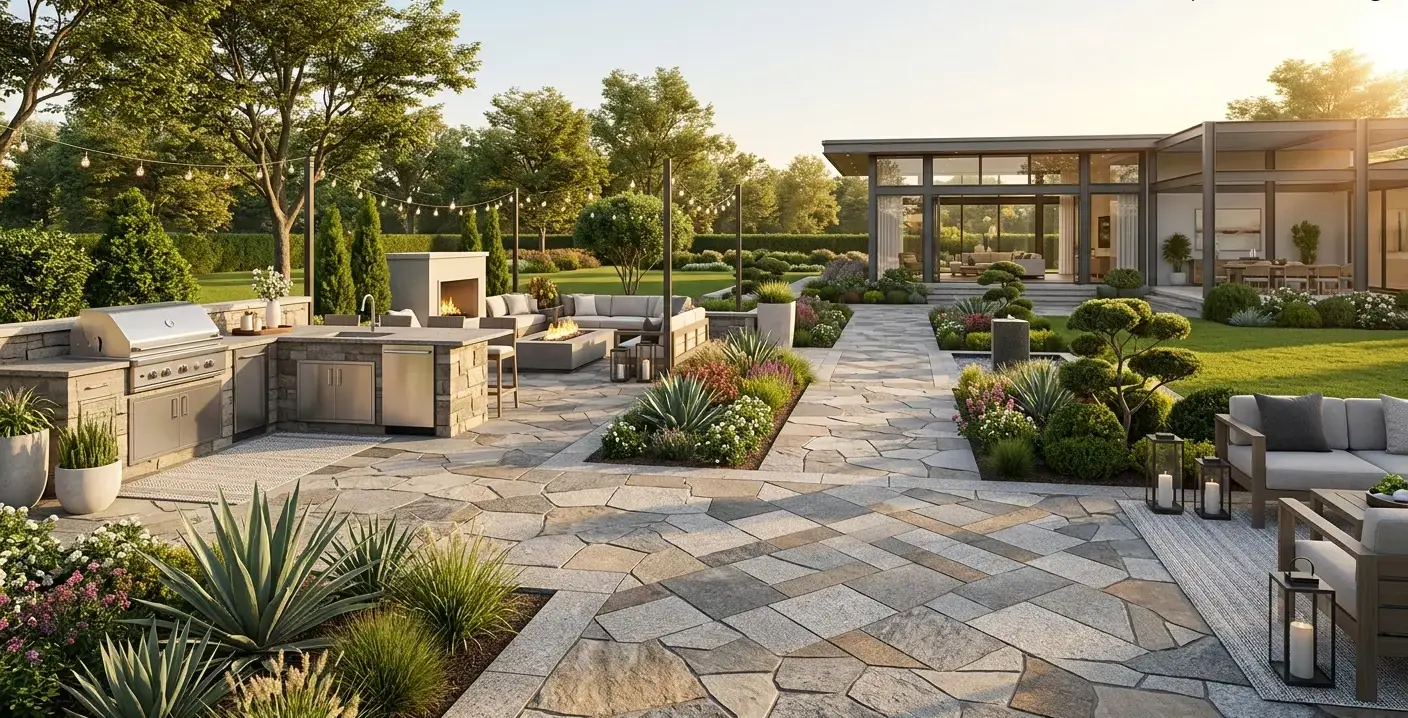 Conceptual rendering
Note: Some images on this page may be conceptual renderings created to illustrate design possibilities and may not depict actual installations.
Conclusion
Pavers remain one of the most versatile ways to refresh outdoor living spaces, whether the goal is a modern patio, a garden pathway, or a redesigned pool surround. Granite, travertine, and porcelain each bring distinct character and performance considerations worth discussing with a specialist. Matching material, finish, and color to a property's climate and architecture supports a cohesive result over time. Book a free consultation today to start planning a stone paver project suited to a specific home and landscape.
Frequently Asked Questions
Granite, travertine, and porcelain are common outdoor-approved options available through Nova Tile and Stone, each offering different textures, finishes, and maintenance needs suited to patios, walkways, and pool surrounds.
Slip resistance depends on the specific product and finish. Textured or matte surfaces generally perform better in wet areas than polished ones, and confirming a product's DCOF rating with a specialist helps match material to pool deck or walkway safety needs.
Travertine is generally approved for outdoor use, though full-sun performance and UV rating vary by product. It is not restricted to shaded areas, but confirming the specific manufacturer's sun exposure rating with a specialist supports long-term appearance in exposed, full-sun locations.
Granite and travertine typically require periodic sealing to help maintain appearance and resist staining, while porcelain generally needs little to no sealing, though product specifics can vary.
Granite and travertine are natural stone materials with unique veining and color variation, while porcelain is an engineered material offering more consistent color and pattern across a full project.
Visit our Showrooms Now!
Scheduling a free consultation ahead of a visit helps narrow material and finish choices in advance, so showroom time can focus on comparing samples side by side.
FERNLEY
1855 US Highway 95A North, Fernley, NV 89408
 Google Maps
Store hours this week:
- Mon. - Fri.: 7:30 am - 4:00 pm
- Sat. - Sun.: Closed
RENO
12835 Old Virginia Rd Suite 24, Reno, NV 89521
Store hours this week:
- Mon. - Fri.: 7:30 am - 6:00 pm
- Sat.: 9:00 am - 3:00 pm
- Sun.: Closed
MINDEN
2548 Business Pkwy, Minden, NV 89423
Store hours this week:
- Mon. - Fri.: 7:30 am - 6:00 pm
- Sat.: 9:00 am - 3:00 pm
- Sun.: Closed
SACRAMENTO
6100 Warehouse Way, Sacramento, CA 95826
Store hours this week:
- Mon. - Fri.: 7:30 am - 5:00 pm
- Sat. - Sun.: Closed