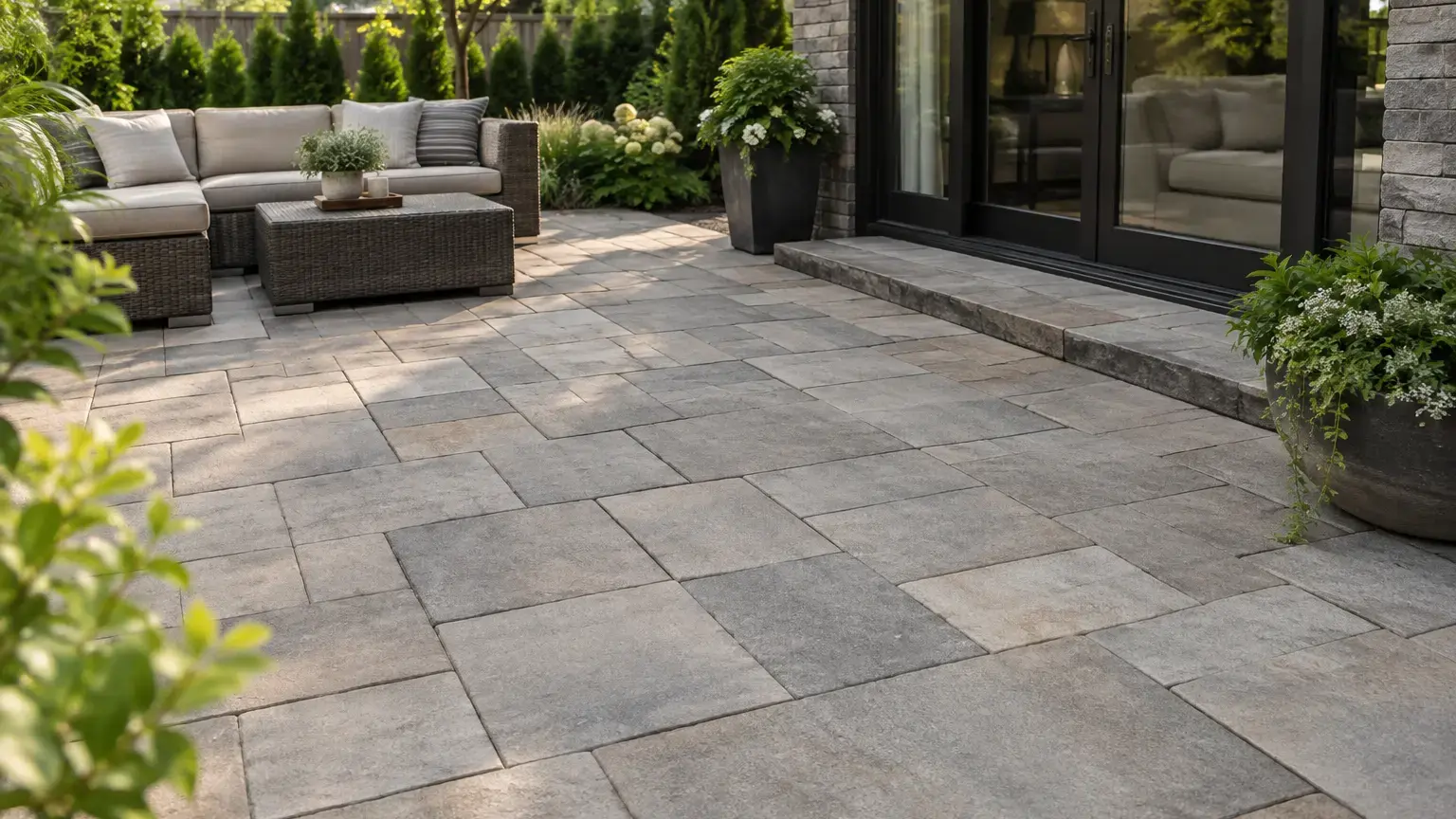
Choosing the right paver stone for a patio comes down to matching the material's density, finish, and maintenance needs to how the space will actually be used and what climate it sits in. Denser natural stones like granite and bluestone tend to hold up best against cracking and freeze-thaw damage, while more porous options like travertine, limestone, and sandstone offer a warmer look but need regular sealing to perform well outdoors. Beyond durability, the right paver stone should also work with the finish, color, and texture of the home's exterior, since patios are one of the most visible and heavily used parts of an outdoor space. This guide breaks down the most common pavers used for patios, how they compare to concrete, brick, and porcelain alternatives, and what to consider before buying.
What Makes a Good Patio Paver
Before comparing specific stone types, it helps to know what actually separates a durable paver from one that will need attention sooner than expected.
Density and absorption rate. Denser stone absorbs less water. That matters because moisture that seeps into a paver and then freezes can expand and cause cracking or flaking over time, a process known as spalling. Stones with lower absorption rates generally hold up better outdoors, especially in climates with real winter weather, which is why paver material standards include specific water-absorption and freeze-thaw resistance testing thresholds.
Surface texture. A honed or polished finish looks refined, but it can become slick when wet. Textured, flamed, or tumbled finishes provide more grip underfoot, which matters more for a patio than it does for an indoor floor.
Thickness. Outdoor pavers are typically cut thicker than interior tile because they need to support foot traffic, furniture, and sometimes vehicles without a subfloor to reinforce them. Thickness requirements vary by use, so a paver rated for a walkway is not necessarily rated for a driveway.
Color consistency versus natural variation. Natural stone will always have some variation from piece to piece. For some homeowners, that variation is the whole appeal. For others who want a more uniform, engineered look, that is worth knowing going in.
Popular Paver Stone Materials for Exterior Use
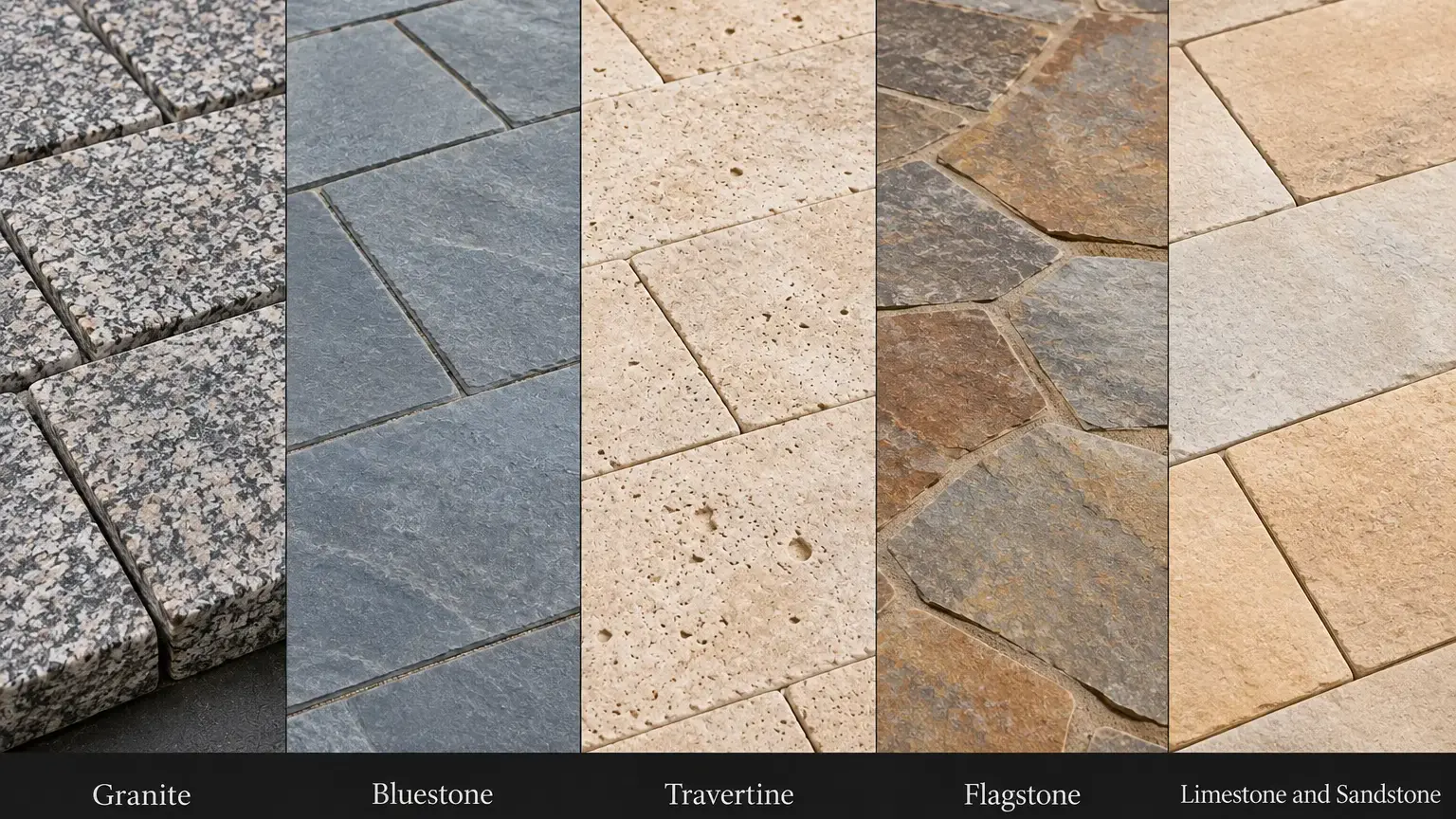
Granite
Granite is one of the densest natural stones used in exterior hardscaping. It resists cracking, holds up well under heavy use, and comes in a range of tones from gray and black to pink and speckled blends. Because it performs well under repeated freezing and thawing, it is often chosen for regions with real winter weather, and its strength makes it a common choice for driveways as well as patios. Textured or flamed finishes are typically used outdoors to improve slip resistance.
Bluestone
Bluestone has a natural blue-gray color that suits both traditional and contemporary outdoor designs. It has a naturally slip-resistant surface, which makes it a practical option for patios and walkways where people will be walking in wet conditions. Like granite, it tends to perform well through freeze-thaw cycles when properly installed.
Travertine
Travertine has a warm, natural look and holds its color well over time, which is part of why it remains popular for outdoor living spaces. It does require sealing, both at installation and periodically afterward, to protect against moisture penetration. Properly sealed and maintained, it can perform well outdoors, but skipping that maintenance step increases the risk of surface damage in wetter or colder climates.
Flagstone
Flagstone is known for its irregular, natural shapes, which give a patio a more organic, less uniform look than cut rectangular pavers. Its texture is naturally slip-resistant, which is one of the reasons it shows up so often on garden pathways and casual outdoor patios. It is available in a range of colors, including gray, brown, red, and blue-green tones, depending on the mineral content of the stone.
Limestone and Sandstone
Limestone offers a soft, warm palette that works well in more formal garden settings. Sandstone has a similarly rustic, textured appeal. Both are more porous than granite or bluestone, which means they perform best with sealing and are generally better suited to covered patios or milder climates rather than fully exposed, freeze-prone environments.
Choosing the right paver material ultimately comes down to balancing appearance, durability, maintenance, and the conditions of your outdoor space. If you want to explore available materials near you, you can shop local or book an appointment to discuss the right option for your exterior project.
Natural Stone Pavers Versus Other Patio Materials
Not every patio project calls for natural stone, and it is worth understanding how it compares to the alternatives.
Concrete pavers are manufactured to consistent sizes and shapes, which makes installation more predictable and often more budget-friendly. They come in a wide range of colors and textures, including options manufactured to mimic natural stone.
Brick pavers offer a classic look with solid freeze-thaw performance, since fired clay is naturally dense.
Porcelain pavers have grown in popularity because they are manufactured at very high temperatures, which creates a dense, low-absorption surface that resists frost damage and requires very little sealing or maintenance.
Natural stone typically costs more than these alternatives, but it offers something manufactured materials cannot fully replicate: genuine variation, texture, and mineral character that ages differently than a manufactured surface. For homeowners planning to stay in a home long-term, or planning to sell in the coming years, natural stone patios are also frequently cited among the outdoor projects real estate agents associate with added resale value.
Matching Paver Stone to Your Home's Exterior
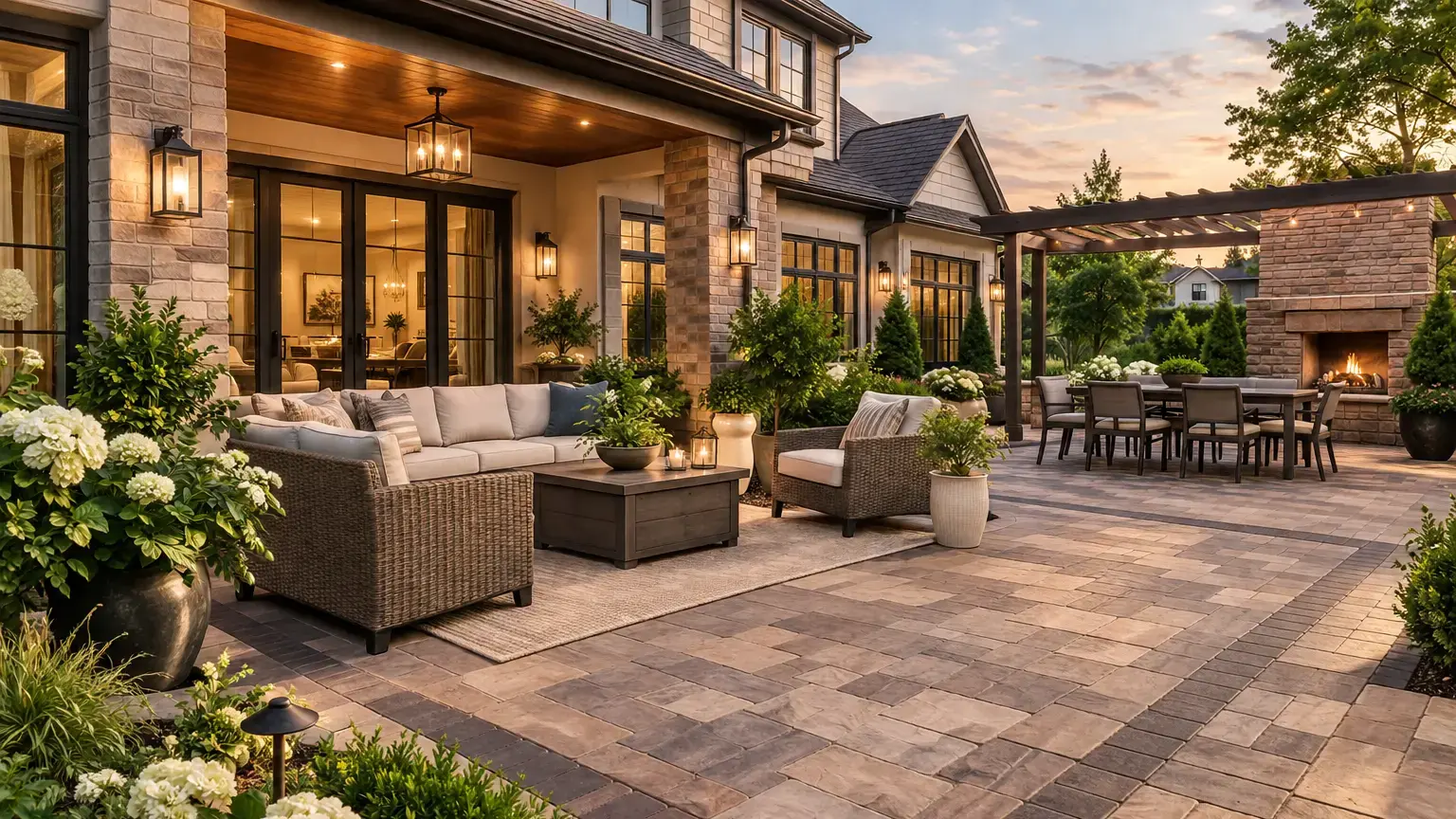
Color coordination between the patio and the house makes a noticeable difference in the finished look. As a general guideline, warm-toned exteriors such as red brick, wood siding, or tan stucco pair naturally with earth-toned pavers in browns, buffs, and tans. Cooler exteriors with gray siding or white render tend to work well with charcoal, slate gray, or cool gray stone. Accent pavers used as a border or inlay can add visual depth without overwhelming the overall palette, especially in larger patio layouts.
Pattern and shape also affect the overall feel of the space. Structured, geometric layouts using uniformly cut stone tend to read as more formal and modern. Irregular, freeform layouts, like those used with flagstone, tend to feel more relaxed and blend more naturally into garden landscaping. These design considerations are part of what we keep in mind when helping homeowners explore our complete collections at Nova Tile and Stone.
How Paver Patios Are Typically Installed
Once a material and look have been chosen, the next question is what actually goes into turning pavers into a finished patio. Even homeowners who plan to hire a professional installer benefit from understanding the general process, since it explains why a properly built patio holds up for decades while a poorly built one can shift, sink, or crack within a few seasons.
Planning and layout come first. The patio area is measured and marked out, and the square footage is calculated to determine how much material is needed, typically with an extra percentage added to account for cuts around edges and curves.
Excavation follows, with the area dug out to a total depth that accounts for the base material, the sand bedding layer, and the thickness of the paver itself. The excavated area also needs a slope that directs water away from the house or other structures so water can run off rather than pool on the surface.
A compacted base layer of crushed gravel comes next, typically spread and compacted in stages rather than all at once, since a single thick layer does not compact as densely or evenly as several thinner ones.
Edge restraints are installed to keep the outer pavers from shifting or spreading outward over time, a detail that is easy to overlook but critical to the patio's long-term stability.
A thin, screeded layer of bedding sand goes down next, providing a uniform surface for the pavers to be set into. The pavers themselves are then laid according to the chosen pattern, tapped into place, and finally locked in with sand swept into the joints. Sealing is often the last step, both to protect the stone itself and to help hold the joint sand in place against wind, rain, and regular foot traffic.
Skipping or rushing any one of these stages, especially base compaction and drainage slope, is the most common reason a patio develops problems within the first few years.
Conclusion
Getting this decision right matters more than it might seem at first. A patio is not something most homeowners replace often, and a stone chosen without weighing durability, maintenance, and climate can end up needing repair or resealing far sooner than expected. There is no single best material, since the right fit depends on the site, the local weather, and how much upkeep a homeowner is realistically willing to keep up with over the years. Taking the time to think through those factors before buying makes it far more likely the finished patio will hold up and still look good long after installation.
For homeowners exploring natural stone options for an outdoor project, Nova Tile and Stone has four showroom locations to visit, in Reno, Minden, Fernley, and Sacramento.
Frequently Asked Questions
Density is the main driver of exterior durability, which puts granite and bluestone at the top of the list. Their tight, low-absorption structure holds up under repeated exposure far better than lighter, more porous stone does.
It comes down to priorities. Concrete offers predictable sizing and a lower price point, while natural stone carries a higher cost in exchange for character and texture that no manufactured material fully replicates.
Sealing needs come down to how porous the stone is. Granite rarely needs it, but softer, more porous stone benefits from being sealed at installation and again every couple of years to keep moisture out.
Thickness needs scale with the load a surface will carry. A seating or dining area can use a thinner paver than a driveway or any space that will bear vehicle weight, so it is worth confirming the rated thickness for the intended use before buying.
Decades, in most cases, when it is built on a properly prepared foundation. Early problems almost always point back to how the patio was put together rather than any flaw in the stone itself.
Note: Some images on this page may be conceptual renderings created to illustrate design possibilities and may not depict actual installations.