What Are Pavers Made Of?
Individual units of natural stone, engineered material, or concrete arranged in a pattern create the surface known for patios, driveways, walkways, and pool surrounds. Granite, quartzite, porcelain, and travertine are the most common natural and engineered choices for exterior projects across Northern Nevada and Northern California.
Each material differs in sun tolerance, sealing needs, and finish options, which is why matching the right stone to the right space matters before any project begins. Climate, foot traffic, and the surrounding architecture all play a role in which option makes the most sense long term.
Homeowners in Fernley, Reno, Minden, and Sacramento often compare these outdoor stone options against poured concrete when planning a patio or driveway refresh. Traffic level, sun exposure, and desired finish all shape which material performs best in a given location.
The sections below break down materials, patterns, and design considerations so the decision feels informed rather than rushed. A short comparison table, a pros-and-cons breakdown, and a step-by-step selection guide follow later in this piece to help narrow the options.
Why Stone Pavers Outperform Poured Concrete
The right exterior stone material brings texture, color depth, and long-term durability that flat poured surfaces cannot easily replicate. Granite and quartzite hold their coloring in direct sun, while textured finishes improve footing near pools and walkways. Below are the core advantages homeowners and designers weigh most heavily when comparing exterior stone materials.
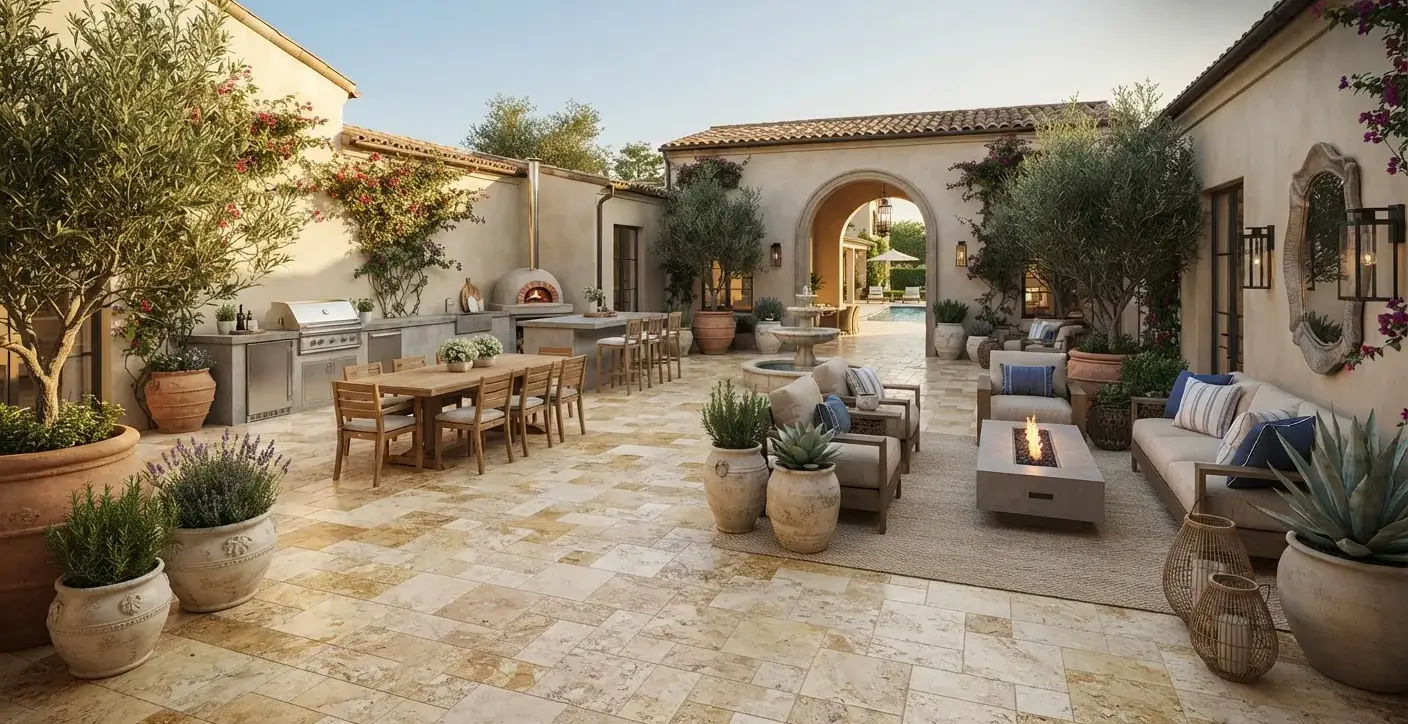 Conceptual rendering
- Natural color variation that poured surfaces cannot replicate, giving every patio or driveway a distinct, individual look
- Textured and flamed finishes available for improved footing near pools, walkways, and other wet areas
- Durability under vehicle and foot traffic when the correct material is matched to the application
- Design flexibility across multiple laying patterns, border details, and edge treatments
- Color retention in full sun, with performance that varies by material and should be confirmed for the specific product selected
Beyond appearance, exterior stone also holds up to seasonal temperature swings common across Northern Nevada and Northern California. Freeze-thaw cycles, intense summer sun, and periodic rain all factor into how a material performs over time. A specialist consultation helps match these conditions to the right stone for a specific address.
Where Exterior Stone Works Best
Different outdoor spaces call for different finishes and materials. A pool deck has different footing needs than a driveway, and a front walkway has different visual goals than a backyard patio. The following breakdown covers material selection, pattern choices, and slip-resistant surfaces for wet areas.
Best Paver Materials for Patios and Driveways
Granite and quartzite are dense, hard-wearing choices suited to driveways and other high-traffic surfaces, and both fall within Nova's outdoor-rated material group alongside porcelain. Travertine is also outdoor-approved and performs well on patios, though the exact sun exposure rating should be confirmed with a specialist for the specific product selected.
Porcelain used outdoors holds up well and typically needs little to no sealing, unlike granite, quartzite, and travertine, which require periodic sealing to protect the surface over time. This lower upkeep profile makes porcelain a common choice for homeowners who want a consistent look across seasons.
Porcelain used outdoors is often backed by third-party porcelain certification standards that test water absorption and durability. Reviewing these standards is worth the time when comparing engineered stone options for a patio or driveway project, since testing methods and thresholds can vary between manufacturers.
Popular Patterns for Outdoor Layouts
Herringbone offers a classic, structured look and works well for driveways because the interlocking angles help distribute vehicle weight evenly. Running bond is a simpler layout with clean, linear lines, often favored on walkways and smaller patios where a tidy look matters most.
Basketweave and ashlar, or random, patterns add visual interest to pool decks and larger patio spaces. Both mix multiple stone sizes for a more organic, less uniform appearance than a single repeating shape. Border details and contrasting edge treatments can further define a space without changing the core material choice.
Color and finish choices interact with pattern selection too. A lighter granite or porcelain tone paired with a structured herringbone layout tends to read as more formal, while varied travertine tones in an ashlar pattern often suit a relaxed courtyard setting.
Pool Decks and Slip-Resistant Surfaces
Wet surfaces around pools call for textured or flamed finishes rather than polished stone, since polished surfaces become notably slipperier when wet. Guidance from ANSI/NFSI wet DCOF standards outlines how walkway surfaces are tested for slip resistance in wet conditions.
This kind of testing offers useful context when comparing finish options for a pool surround or a shaded walkway. A specialist can confirm which finish options best meet the footing expectations for a specific pool deck project and local climate conditions.
Coping stones, the units that sit directly at the pool edge, deserve particular attention since they are exposed to constant splashing and standing water. Textured granite, quartzite, or porcelain coping tends to hold up well in this role when paired with a matching field pattern.
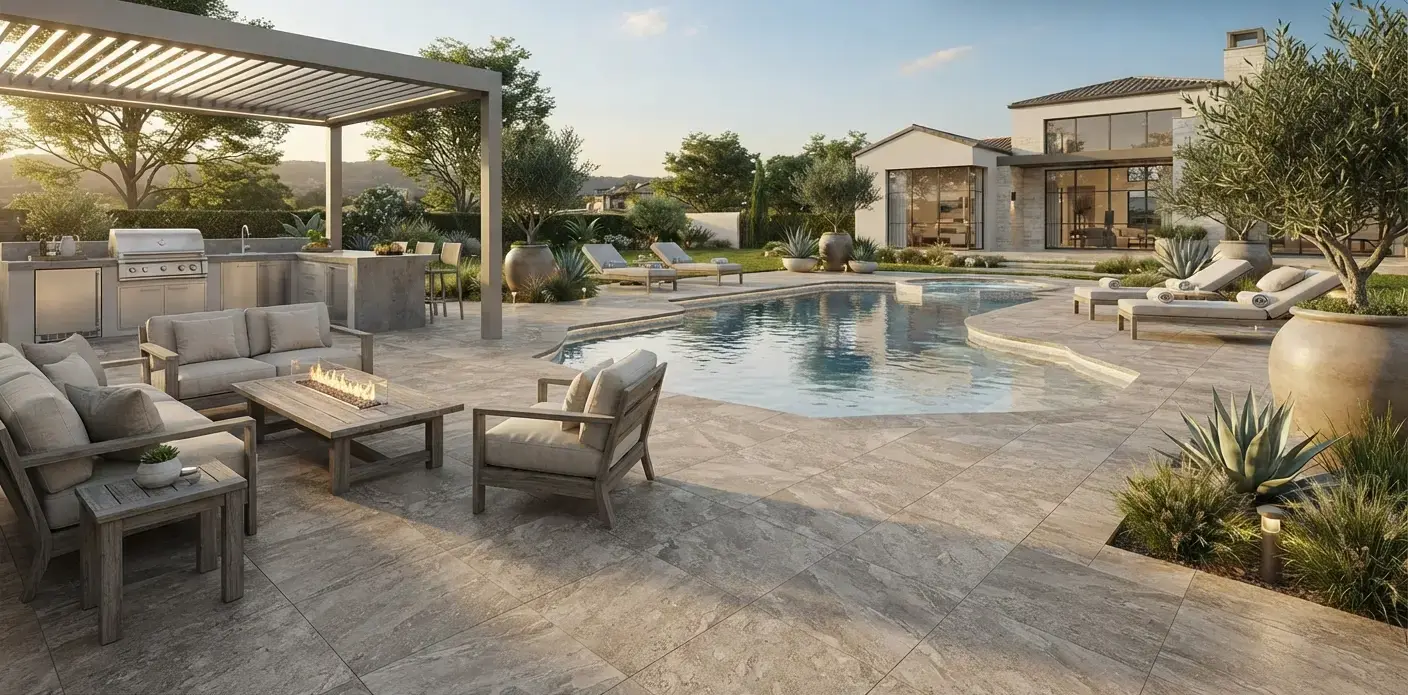 Conceptual rendering
Material Comparison at a Glance
Material | Type | Outdoor Sun Exposure | Sealing Needs | Best Suited For |
Granite | Natural Stone | Outdoor-rated, holds color well | Periodic sealing recommended | Driveways, high-traffic patios |
Quartzite | Natural Stone | Outdoor-rated, holds color well | Periodic sealing recommended | Driveways, walkways |
Travertine | Natural Stone | Outdoor-approved; confirm UV rating with a specialist | Regular sealing, avoid acidic cleaners | Patios, courtyards |
Porcelain | Engineered | Outdoor-rated, holds color well | No sealing, keep away from open flame | Pool decks, patios |
Concrete | Manufactured | Varies by mix and sealer | Sealing recommended | General driveway bases |
Advantages and Considerations of Natural Stone
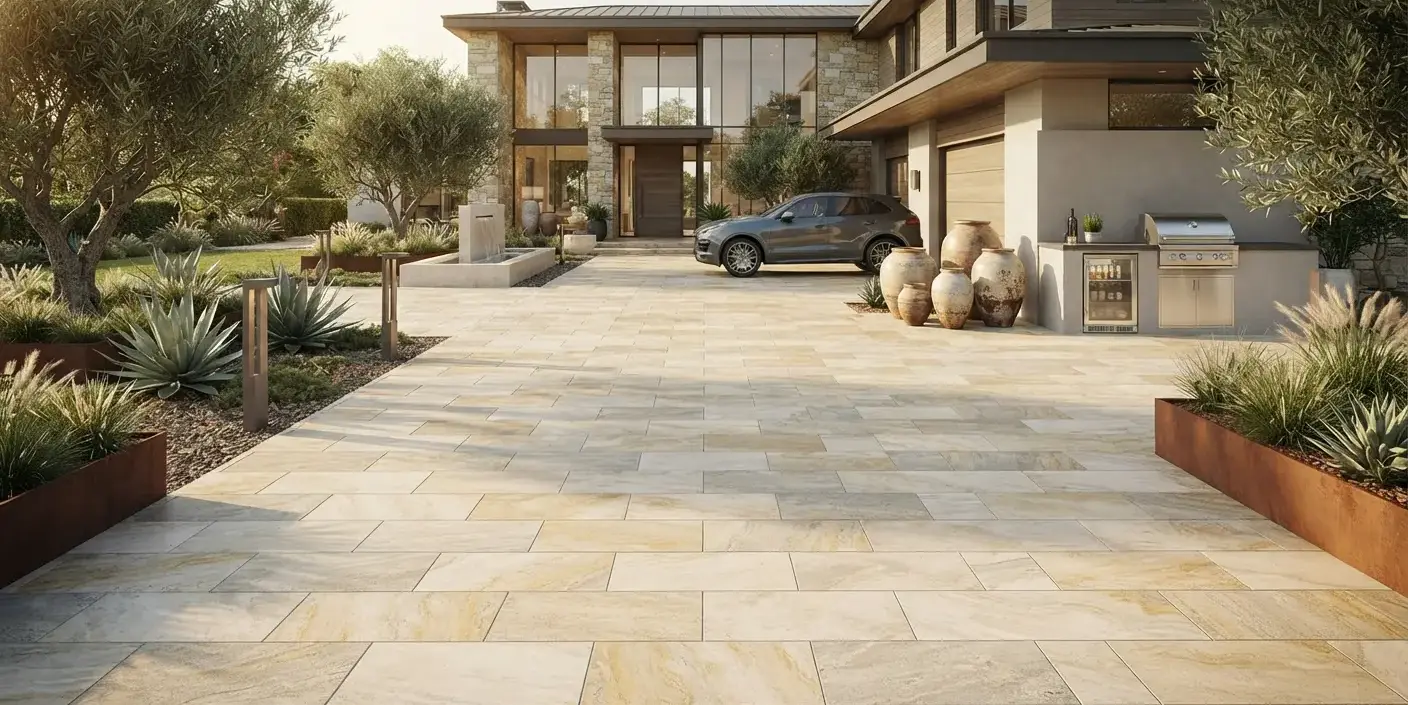 Conceptual rendering
Advantages
- Distinct veining and color depth in every individual piece
- Textured finish options available for better footing near water
- Long-term durability when the material is matched to the application
Considerations
- Granite, quartzite, and travertine require periodic sealing over time
- Natural variation means no two pieces look completely identical
- Heavier units than some engineered alternatives, which affects handling and layout planning
A Simple Path to Choosing the Right Material
- Assess sun exposure. Full-sun driveways and patios benefit from materials with strong outdoor color retention over time.
- Define the space's function. Pool decks prioritize footing and slip resistance, while driveways prioritize load-bearing durability.
- Consider long-term care. Granite, quartzite, and travertine need periodic sealing; porcelain generally needs less ongoing upkeep.
- Confirm specifications with a specialist. UV ratings, sealing schedules, and finish options vary by the exact product chosen.
Routine upkeep also matters once a material has been selected for a project. A general stone cleaning guide outlines everyday care steps, and abrasive cleaners should be avoided on any exterior stone surface regardless of material type.
Finding the Right Stone Through Nova Tile and Stone
Selecting exterior stone benefits from expert guidance, since sun exposure, traffic patterns, and finish all factor into the final decision. Specialists can walk through material options and confirm sealing schedules, UV ratings, and finish recommendations for any specific project under consideration.
A brief consultation, whether at a showroom or scheduled in advance, typically covers material selection, pattern direction, and any climate-specific questions about a driveway, patio, or pool deck.
Delivery assistance is available for confirmed orders across the service area, which simplifies logistics for larger driveway or patio projects. Each showroom location offers a different opportunity to see stone in person before committing to a material for an upcoming project.
- Explore the Fernley showroom for one-on-one material guidance.
- Visit the Reno location to compare finishes side by side.
- Explore the Minden branch for design-focused consultations.
- Visit the Sacramento showroom for personalized project planning.
Scheduling ahead helps make the most of a showroom visit and keeps a project moving forward. Book a consultation to review material options and discuss project details with a specialist before finalizing an order.
Note: Some images on this page may be conceptual renderings created to illustrate design possibilities and may not depict actual installations.
Visit our Showrooms Now!
Book your free consultation today!
RENO SHOWROOM
12835 Old Virginia Rd Suite 24, Reno, NV 89521
 Google Maps
Store hours this week:
- Mon. - Fri.: 7:30 am - 6:00 pm
- Sat.: 9:00 am - 3:00 pm
- Sun.: Closed
SACRAMENTO SHOWROOM
6100 Warehouse Way, Sacramento, CA 95826
Store hours this week:
- Mon. - Fri.: 7:30 am - 5:00 pm
- Sat. - Sun.: Closed
MINDEN SHOWROOM
2548 Business Pkwy, Minden, NV 89423
Store hours this week:
- Mon. - Fri.: 7:30 am - 6:00 pm
- Sat.: 9:00 am - 3:00 pm
- Sun.: Closed
Conclusion
Choosing between granite, quartzite, travertine, and porcelain pavers comes down to sun exposure, traffic, and long-term care preferences. Each material offers a different balance of durability, texture, and upkeep for driveways, patios, and pool decks.
For interior projects, Nova's slab collection covers countertop and wall applications with similar material considerations worth exploring.
Frequently Asked Questions
Granite and quartzite are dense, hard-wearing choices well suited to driveways, while porcelain and travertine tend to perform well on patios. The right choice depends on traffic level, sun exposure, and desired finish for the specific space.
Textured and flamed finishes offer better footing than polished surfaces in wet conditions. Wet-area slip resistance standards can help guide finish selection for pool decks and walkways, and a specialist can confirm the best option for a specific project.
Granite, quartzite, and travertine typically require periodic sealing to protect the surface over time, while porcelain generally needs little to no sealing. A specialist can recommend a sealing schedule based on the exact material and location chosen.
Color retention varies by material, and granite, quartzite, and porcelain generally hold color well outdoors over time. Travertine also performs well in full sun, though the exact UV rating should be confirmed with a specialist for the specific product.
Showrooms are available in Fernley, Reno, Minden, and Sacramento, each offering an opportunity to see material options and finishes in person before starting a project.
Visit Our Fernley Showroom – Nova Tile and Stone
1855 US Highway 95A North, Fernley, NV 89408
Store hours this week:
- Mon. - Fri.: 7:30 am - 4:00 pm
- Sat. - Sun.: Closed