How Sealing Protects Outdoor Stone
Paver sealing comes down to one choice: a penetrating sealer that soaks into the stone, or a topical sealer that forms a protective film on the surface. Penetrating products protect from within and usually keep the natural look. Topical products add sheen and surface stain defense, though the film can scuff, wear, or peel over time.
The better choice depends on the material, its finish, and how much sun, water, and foot traffic the area sees. A clear topical vs penetrating sealer comparison makes that decision easier. Granite, quartzite, and travertine generally benefit from sealing, while porcelain typically does not. Reliable stone care guidance from an industry organization also helps set realistic expectations for upkeep.
Exposure matters, too. Hot summers, strong sun, and cold winter nights across Northern Nevada all test outdoor stone, so protection choices deserve careful attention. This guide explains how each sealer works, where each fits best, and what to confirm before choosing.
Topical vs Penetrating Paver Sealer Comparison: Key Benefits
Sealing can help outdoor stone resist stains, moisture intrusion, and everyday weathering, though results vary by material and product. The table below compares how each sealer type behaves in typical outdoor conditions.
Feature | Penetrating Sealer | Topical Sealer |
How it works | Absorbs into the stone's pores | Forms a film on the surface |
Appearance | Typically natural and matte; enhancing versions may deepen color | Often adds sheen or a wet look |
Breathability | Generally allows moisture vapor to escape | May trap moisture in porous stone |
Wear pattern | Protection sits below the surface, so wear is less visible | Film may scuff, peel, or yellow |
Wet traction | Usually changes surface feel very little | May feel slicker when wet |
Recoating | Often reapplied as water repellency fades | Older film may need removal first, per the label |
Best fit | Porous natural stone such as travertine, granite, and quartzite | Surfaces where added sheen or color depth is wanted |
Penetrating sealers work by filling the stone's pores with repellent compounds beneath the surface. Because no film forms, the stone usually keeps its texture and allows moisture vapor to pass, though protection is never absolute. Topical sealers sit on top of the stone and create a continuous layer. That layer can deepen color and add sheen, but it takes the brunt of traffic and sunlight, so wear shows up sooner on busy surfaces.
Product chemistry also varies. Some penetrating formulas repel only water, while others also repel oils, so label claims should be compared against the stains most likely on the surface, such as grease near outdoor kitchens.
Key benefits of sealing, when matched to the right product:
- Stain resistance: A quality sealer slows liquid absorption, buying time to wipe up spills, though no sealer makes stone stain-proof.
- Moisture management: Penetrating products can reduce water uptake, which helps during freeze-thaw cycles, depending on the stone's porosity.
- Easier cleaning: Sealed surfaces often release dirt more readily, although routine cleaning is still necessary.
- Color control: Natural or enhanced tones are possible, since topical films and enhancing sealers can deepen the stone's color.
- Longer-lasting appearance: Protection supports a fresher look, but sun, traffic, and weather still wear on any finish.
 Conceptual rendering
Clean stone also seals more evenly. This cleaning overview outlines common methods, and the sealer label should always guide final preparation. Browse natural stone slabs suited to exterior use to see which materials generally need sealing and which typically do not.
Choosing a Sealer for Patios, Pool Decks, and Walkways
Each outdoor area stresses stone differently, so the topical vs penetrating sealer comparison looks different from one space to the next. These examples show where each type tends to fit.
Patios and Outdoor Living Areas
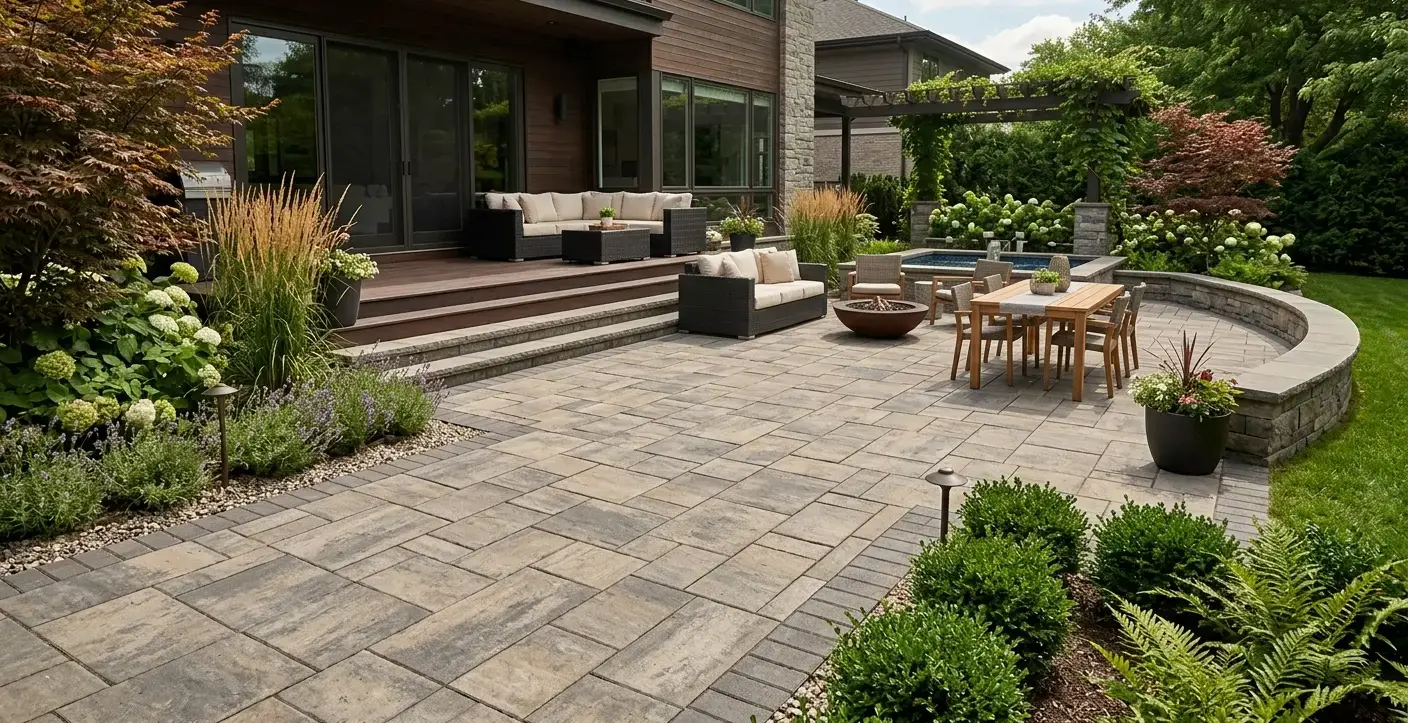
Patios face direct sun, furniture movement, and spills from outdoor dining. A penetrating sealer on travertine, granite, or quartzite helps resist stains while preserving the stone's natural texture.
Sun exposure deserves a closer look. Granite, quartzite, and porcelain sit in Nova's UV-resistant category. Travertine is generally outdoor-approved but falls outside that category, so verify the exact product's UV rating for full-sun areas.
Some topical films can yellow or dull under strong sun, depending on the formula. Explore finishes in daylight at the Reno showroom before committing to a look. Outdoor kitchens add grease and heat. Oil-repellent penetrating formulas may suit areas near grills, and hot cookware should stay off stone, since heat-resistant does not mean thermal-shock proof.
Pool Decks and Wet Zones
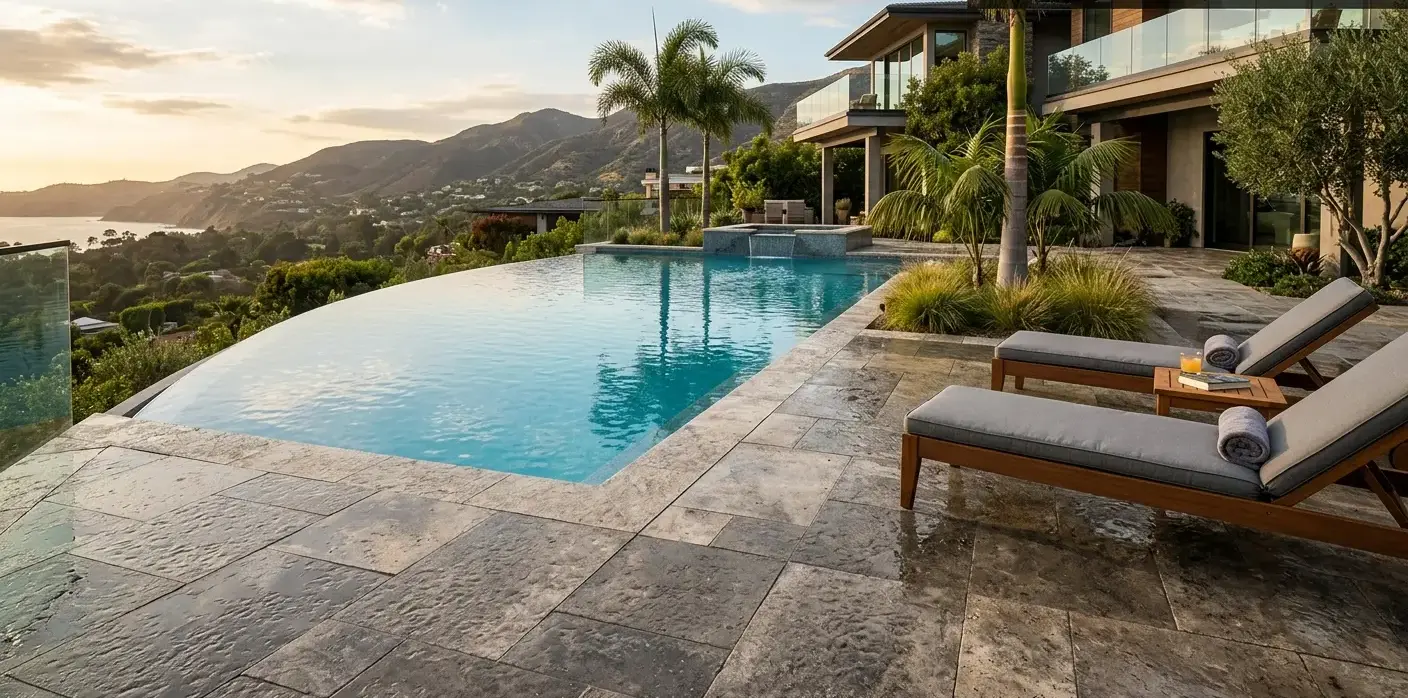
Wet areas call for matte or textured finishes, because polished stone becomes slipperier when wet. Topical sealers can make a surface feel slicker underfoot, so traction deserves careful review.
Ask for slip-resistance data on the exact product rather than assuming a sealer improves grip. Penetrating products usually change surface feel less, though results vary by stone and finish.
Porcelain generally does not require sealing, but the manufacturer's guidance for the specific product always applies. Pool chemicals and splash-out water can also affect finishes over time, so rinse surfaces periodically and follow the sealer manufacturer's care guidance.
 Conceptual rendering
Walkways and Entries
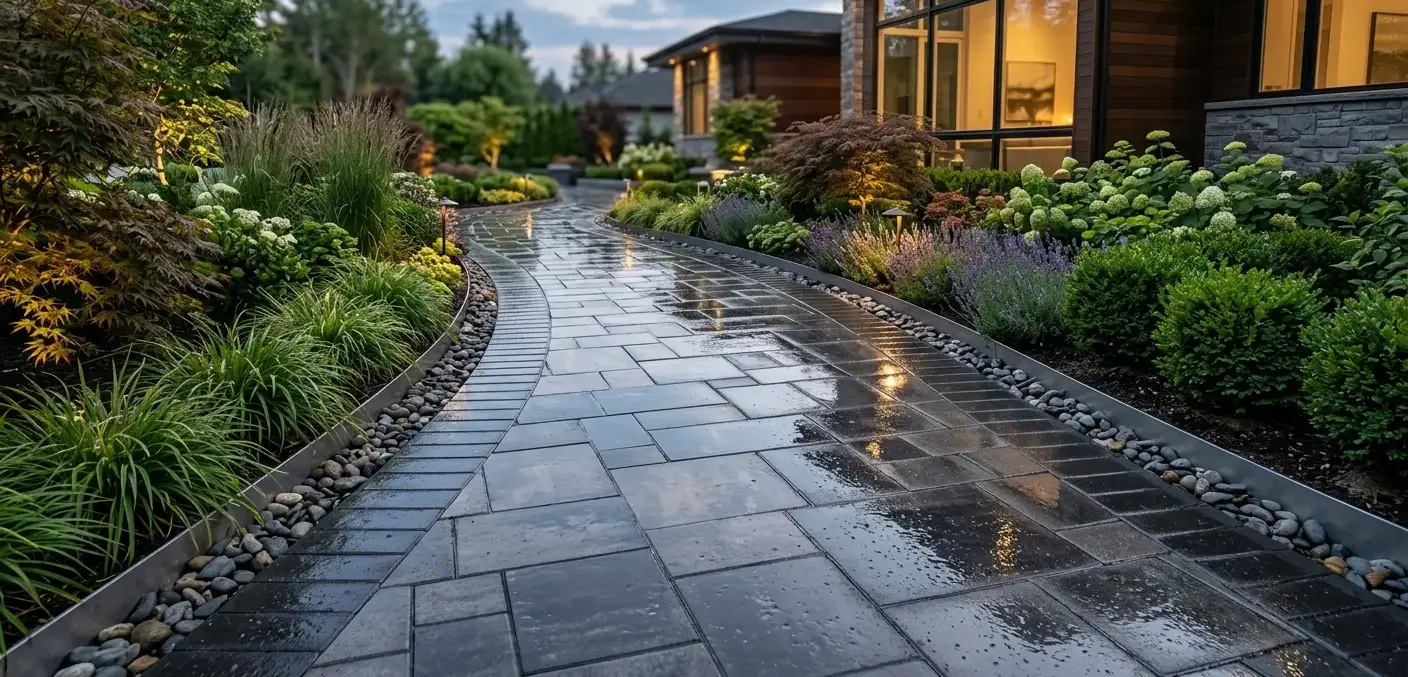
Entry paths take daily foot traffic, grit, and sometimes deicing products. Heavy use can wear a topical film unevenly, leaving patchy sheen, while penetrating protection tends to wear less visibly.
Use pH-neutral cleaners, avoid abrasive products, and clean spills promptly, since harsh cleaners can dull stone and weaken sealer protection. Visit the Minden showroom to compare finish options for entry areas.
Winter brings freeze-thaw cycles, and water that enters porous stone can expand as it freezes. A penetrating sealer may reduce absorption, yet it does not replace choosing a stone suited to outdoor use.
Advantages and Disadvantages at a Glance
Penetrating sealers
- Advantage: Preserves the natural look and generally stays breathable.
- Advantage: Wear is typically less visible in high-traffic areas.
- Disadvantage: Adds little to no sheen or surface gloss.
- Disadvantage: Needs periodic reapplication as water repellency fades.
Topical sealers
- Advantage: Can add sheen and deepen color.
- Advantage: Creates a surface barrier against many stains.
- Disadvantage: May scuff, peel, or yellow over time.
- Disadvantage: Can feel slicker when wet and may trap moisture.
Note: Some images on this page may be conceptual renderings created to illustrate design possibilities and may not depict actual installations.
 Conceptual rendering
5 Steps to Choose the Right Sealer
- Identify the material. Granite, quartzite, and travertine generally need sealing, while porcelain typically does not.
- Review the finish. Polished, honed, and leathered surfaces respond differently, and wet areas favor matte or textured finishes.
- Map the exposure. Note sun, water, salt, and foot traffic, then weigh each against the sealer type.
- Choose the look. Decide between a natural appearance and a deeper, glossier tone.
- Confirm the details. Read the product label for coverage, curing, and reapplication guidance, then ask a Nova design consultant.
For a broader reference, this sealing walkthrough offers a general overview of the process.
Nova Support for Exterior Stone Selection
Nova Tile and Stone offers commission-free design consultants who can discuss paver materials, finishes, and sealer considerations before a purchase decision. Guidance focuses on matching stone to the space and its exposure. Consultants can also explain polished, honed, and leathered finishes and which suit wet or high-traffic areas. Bringing project photos, dimensions, and exposure details makes the conversation more productive.
RENO SHOWROOM
12835 Old Virginia Rd Suite 24, Reno, NV 89521
 Google Maps
Store hours this week:
- Mon. - Fri.: 7:30 am - 6:00 pm
- Sat.: 9:00 am - 3:00 pm
- Sun.: Closed
FERNLEY SHOWROOM
1855 US Highway 95A North, Fernley, NV 89408
Store hours this week:
- Mon. - Fri.: 7:30 am - 4:00 pm
- Sat. - Sun.: Closed
Delivery assistance can be arranged for exterior stone orders, helping projects stay on a practical timeline. Nova serves customers across Reno, Fernley, Minden, and Sacramento. Visit the Fernley showroom to talk through exterior options face to face. Closer to California, the Sacramento showroom offers the same guidance. When ready, schedule a free consultation to compare materials, finishes, and sealing considerations for your outdoor space.
SACRAMENTO SHOWROOM
6100 Warehouse Way, Sacramento, CA 95826
Store hours this week:
- Mon. - Fri.: 7:30 am - 5:00 pm
- Sat. - Sun.: Closed
MINDEN SHOWROOM
2548 Business Pkwy, Minden, NV 89423
Store hours this week:
- Mon. - Fri.: 7:30 am - 6:00 pm
- Sat.: 9:00 am - 3:00 pm
- Sun.: Closed
Conclusion
Paver sealing works best when the sealer type matches the stone, finish, and exposure. Penetrating products suit natural looks and breathable protection, while topical products suit sheen and surface defense, with trade-offs in wear and traction. Exploring natural stone and tile from Nova can anchor that decision. For any patio, pool deck, or walkway, clear priorities on appearance, traction, and upkeep keep the choice simple.
Ready to compare materials and sealer options for your outdoor project? Schedule your free consultation!
Frequently Asked Questions
Penetrating sealers absorb into the stone and protect from within, usually keeping the natural look. Topical sealers form a surface film that adds sheen but may scuff, peel, or yellow over time.
Many natural stones, including travertine, granite, and quartzite, often pair well with breathable penetrating sealers. Topical options can work where added sheen is wanted, but confirm compatibility with the specific stone and the manufacturer's guidance.
Porcelain generally does not require sealing because of its dense body, though guidance varies by product. Confirm the manufacturer's recommendations for the exact surface and finish before deciding.
Timing depends on the sealer, stone porosity, sun, water, and traffic. Follow the product label, and watch for water soaking in rather than beading, which can signal it is time to reapply.
It can, especially with topical films on wet surfaces. Choose matte or textured finishes for wet areas, ask for slip data on the exact product, and avoid assuming any sealer improves traction.