At a Glance
- Herringbone: interlocking zigzag, well suited to driveways and busy zones when pavers are rated for that load.
- Running bond: classic brick-style offset for patios, walkways, and pool surrounds.
- Basket weave: traditional woven look for courtyards, entries, and garden paths.
- Stacked bond: modern grid that fits low-traffic terraces and patios.
- French pattern: mixed sizes for a relaxed, natural look, often chosen with travertine.
- Materials: granite, quartzite, travertine, and porcelain are outdoor-suitable, but confirm each product's rating.
In This Guide
- Benefits of choosing the right layout
- A pattern-by-pattern comparison
- Comparison table, advantages, and disadvantages
- A four-step selection guide
- How Nova supports exterior stone projects
- Key takeaways and frequently asked questions
Which Paver Layout Works Best for Your Outdoor Space?
Herringbone suits driveways and busy entries, running bond fits patios and walkways, and stacked bond delivers a clean modern grid. The best choice depends on traffic, paver shape, and finish.
Paver patterns shape how an outdoor surface looks, how it handles daily use, and how much extra material a project needs. A thoughtful layout turns plain stone into a design feature.
This guide compares the most common layouts and outlines paver pattern options for modern homes using granite, quartzite, travertine, and porcelain pavers rated for outdoor use, with practical notes on traffic, texture, and sun exposure.
Nova Tile and Stone supplies exterior stone across Northern Nevada and Northern California, with design consultants who help match layout, material, and finish to each space.
Every pattern below is a design choice, so final suitability depends on the specific product's thickness, finish, and exposure rating. Confirm those details before selecting a layout for any outdoor project.
Benefits of Choosing the Right Paver Layout
A well-matched layout improves how a surface handles traffic. Interlocking arrangements such as herringbone spread loads across neighboring pavers, though results still depend on paver thickness and the product's rated use.
Layout also changes the visual scale of a space. Long running lines can make a narrow patio feel longer, while a grid reads as tidy and architectural.
Material matters as much as pattern. Browse natural stone slabs and exterior stone to compare granite, quartzite, travertine, and porcelain. Sealing and routine cleaning also influence long-term appearance, so review stone care guidance before final selection.
For contemporary exteriors, simple geometry usually works best, because clean lines complement modern architecture and outdoor furniture.
- Visual impact: pattern adds interest even when a single stone color is used.
- Traffic fit: interlocking layouts generally handle heavier loads better than grids, with the product's rating as the deciding factor.
- Material planning: running bond often needs fewer pattern cuts, so extra material allowances can stay modest.
- Design flexibility: one paver can read classic or modern depending on orientation.
- Surface comfort: textured finishes generally offer more traction than polished finishes when wet.
Popular Paver Patterns Compared by Look and Use
Each layout suits different spaces and traffic levels. Pairing pattern with the right stone, finish, and paver size is what makes paver pattern options for modern homes feel intentional.
 Conceptual rendering
Herringbone Pattern: Strength and Movement
Herringbone arranges rectangular pavers in a zigzag, either at 45 degrees or 90 degrees. The interlocking geometry resists sideways shifting, and CMHA paver guidance recommends it for vehicle areas with interlocking concrete pavers.
Its busy rhythm adds energy to a plain space, though it can feel active on small patios. Vehicle use requires pavers rated for that load, so confirm thickness and rating first.
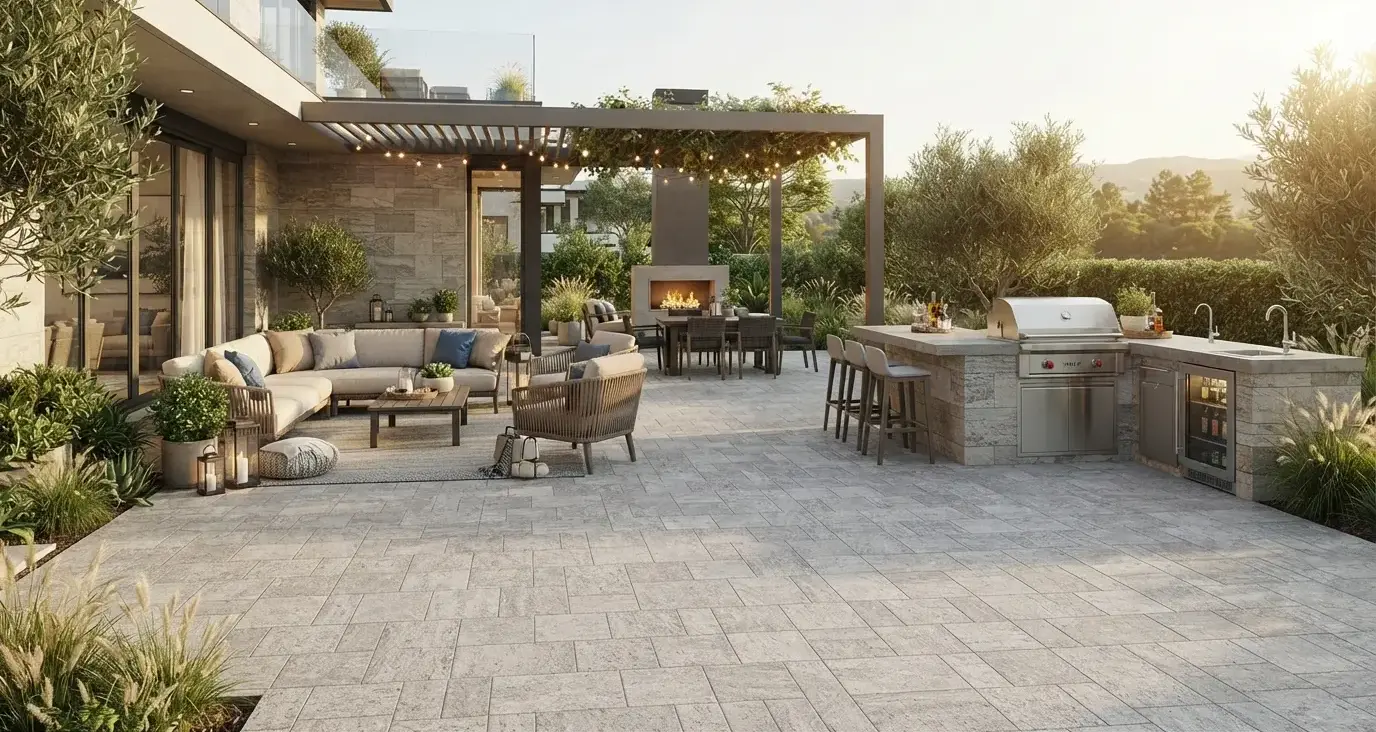 Conceptual rendering
Running Bond Pattern: Classic and Versatile
Running bond offsets each row by half a paver, similar to brickwork. It suits patios, walkways, and pool surrounds, and it works with rectangular or square formats.
Because joint lines run in one direction, the layout guides the eye through a space. Turning rows across a narrow yard can make it feel wider.
Basket Weave Pattern: Traditional Texture
Basket weave pairs two or more pavers side by side, then rotates the next pair for a woven look. It brings traditional charm to courtyards, entries, and garden paths.
Square or near-square formats work best. The pattern is more decorative than load focused, so it fits foot traffic and light use.
 Conceptual rendering
Stacked Bond Pattern: Clean Modern Lines
Stacked bond aligns every joint in a grid. The crisp lines suit contemporary homes, especially with large-format porcelain or granite where the product offers those sizes.
Aligned joints provide less interlock than offset layouts, so stacked bond fits patios, terraces, and walkways better than driveways.
French Pattern: Relaxed Mixed Sizes
Often called Versailles, this layout combines several paver sizes in a repeating set. It delivers a refined, old world look and is especially popular with travertine.
Because it relies on size sets, confirm the chosen product ships in the required formats. Travertine is generally outdoor-approved, but verify the exact product's UV rating before full-sun use.
Quick Comparison Table
Pattern | Look | Best For | Traffic Fit | Material Note |
Herringbone | Dynamic zigzag | Driveways, entries | Highest, with rated pavers | Rectangular pavers; more pattern cuts |
Running Bond | Brick-style offset | Patios, walkways | Light to moderate | Fewer pattern cuts |
Basket Weave | Woven, traditional | Courtyards, paths | Light foot traffic | Square or paired formats |
Stacked Bond | Modern grid | Terraces, patios | Light foot traffic | Even sizes, crisp edges |
French | Mixed, natural | Large patios | Light to moderate | Requires a size set |
Note: Some images on this page may be conceptual renderings created to illustrate design possibilities and may not depict actual installations.
Advantages and Disadvantages of Common Layouts
Advantages
- Interlocking layouts such as herringbone add visual depth and resist shifting under load when rated pavers are used.
- Simple layouts such as running bond and stacked bond keep a clean, contemporary look.
- Offset patterns can soften minor tone variation in natural stone, which suits veined travertine.
Disadvantages
- Complex layouts need larger material allowances, so confirm quantities early.
- Stacked bond shows every joint line, so size variation in natural stone stands out.
- Busy patterns can overwhelm compact spaces.
How to Choose a Pattern in 4 Steps
- Define the use. Decide whether the surface sees foot traffic only or vehicles too. Vehicle areas call for interlocking layouts and pavers rated for that load.
- Match pattern to paver shape. Rectangular pavers suit herringbone and running bond, while square formats suit stacked bond or basket weave.
- Select material and finish. Choose outdoor-suitable stone and a textured finish for wet areas, since polished surfaces are slipperier when wet. Check the product's ANSI A326.3 slip ratings where available.
- Compare in person. Visit the Reno showroom to view paver material at scale. The Fernley showroom offers the same in-person review.
Expert Guidance for Your Exterior Stone Project
Nova Tile and Stone supplies natural stone and porcelain for exterior projects. Commission-free design consultants help match pattern, material, and finish, and Nova supplies materials only.
Showrooms serve homeowners and builders in Fernley, Reno, Minden, and Sacramento. Visit the Minden showroom for in-person guidance on stone selection.
The Sacramento showroom offers the same expert support. Consultants review whether a stone fits full sun, wet zones, or vehicle use, and can coordinate arranged delivery assistance.
Ready to compare paver pattern options for modern homes? Book a design consultation to review layouts, materials, and finishes with an expert.
Key Takeaways
- Herringbone leads for vehicle areas, provided the pavers are rated for that load.
- Running bond is a versatile, forgiving choice for patios and walkways.
- Stacked bond delivers modern lines but offers less interlock.
- Material, finish, and exposure rating matter as much as layout.
- Comparing popular paver patterns in person makes the final decision easier.
Plan Your Pattern With a Design Expert
Choosing a layout is easier with expert input. A Nova design consultant can review the space, traffic needs, and sun exposure, then narrow suitable stone and pattern combinations. Consultants are commission-free, so recommendations stay focused on fit.
Minden
2548 Business Pkwy, Minden, NV 89423
- Mon–Fri: 7:30am – 6:00pm
- Sat: 9:00am – 3:00pm
- Sun: Closed

BOOK NOW
Sacramento
6100 Warehouse Way, Sacramento, CA 95826
- Mon–Fri: 7:30am – 6:00pm
- Sat: Closed
- Sun: Closed

BOOK NOW

Reno
12835 Old Virginia Rd, Suite 24 Reno, NV 89521
- Mon–Fri: 7:30am – 6:00pm
- Sat: 9:00am – 3:00pm
- Sun: Closed

BOOK NOW
Bring photos, measurements, or inspiration images to make the conversation efficient. Schedule your free consultation now!
Frequently Asked Questions
Running bond and herringbone are the most commonly chosen layouts. Running bond suits patios and walkways with a classic offset look, while herringbone adds visual energy and works well for driveways when the pavers are rated for vehicle loads. Confirm product ratings first.
Herringbone is generally preferred because its interlocking geometry resists sideways movement under tires. Suitability still depends on the paver's rated thickness and load approval, so confirm vehicle use for the exact product before choosing a layout. A design consultant can help review options.
Granite, quartzite, travertine, and porcelain are outdoor-suitable options, while marble and dolomite are better reserved for indoor spaces. UV tolerance is product dependent, so verify the exact product's UV rating or manufacturer sun exposure approval before choosing a full-sun location.
Granite, quartzite, and travertine generally need sealing to resist staining, while porcelain pavers typically do not, though that is not an absolute rule. Sealing frequency varies by stone and exposure. Follow the product's care guidance, clean spills promptly, and avoid abrasive cleaners to preserve the surface.
Simple geometry usually suits contemporary architecture. Stacked bond and running bond deliver clean lines, while large-format pavers reduce visible joints where the product offers them. Match the layout to traffic needs, then confirm material, finish, and slip performance for wet areas.
Sources
- Natural Stone Institute: care and cleaning guidance for natural stone
- Concrete Masonry & Hardscapes Association. (2023). PAV-TEC-004: Structural design of interlocking concrete pavement for roads and parking lots.
- TCNA ANSI A326.3 Update: slip resistance classification for hard surface flooring