At a Glance
- Tight joints: give a sleek, continuous look, but need consistent, rectified edges.
- Wide joints: add rustic depth and tolerate size variation, though fill may need refreshing.
- Planted joints: bring soft greenery to low-traffic areas, but need regular trimming and watering.
- Materials: granite, quartzite, travertine, and porcelain suit exterior use.
- Verification: frost and UV ratings vary by product, so confirm each stone’s details.
In This Guide
- Why joint style matters for exterior stone
- Tight, wide, and planted paver joint styles
- A joint style comparison, with advantages and drawbacks
- Stone selection, care, and cleaning basics
- Five steps to choose your joint style
- How Nova Tile and Stone supports your project
Which Joint Style Works Best for Your Patio?
The best paver joint style depends on the look you want and how the space is used. Tight joints feel modern, wide joints feel relaxed, and planted joints add living texture. Drainage, traffic, and upkeep habits should guide the final choice. Joint spacing shapes a patio as much as the stone itself. Narrow lines read as one continuous surface, while generous gaps emphasize each unit and the pattern they form together.
Exterior stone behaves differently from indoor flooring, so joint choices also affect water movement, weed growth, and long-term appearance. A style that looks great in a rendering still needs to suit local weather. This guide compares three popular joint styles, explains where each works best, and shows how to match spacing to your stone, climate, and maintenance routine.
Homeowners around Reno, Minden, Fernley, and Sacramento deal with hot summers, cool nights, and seasonal moisture, so planning joints with the local climate in mind is a smart starting point.
Why Joint Style Matters for Exterior Stone
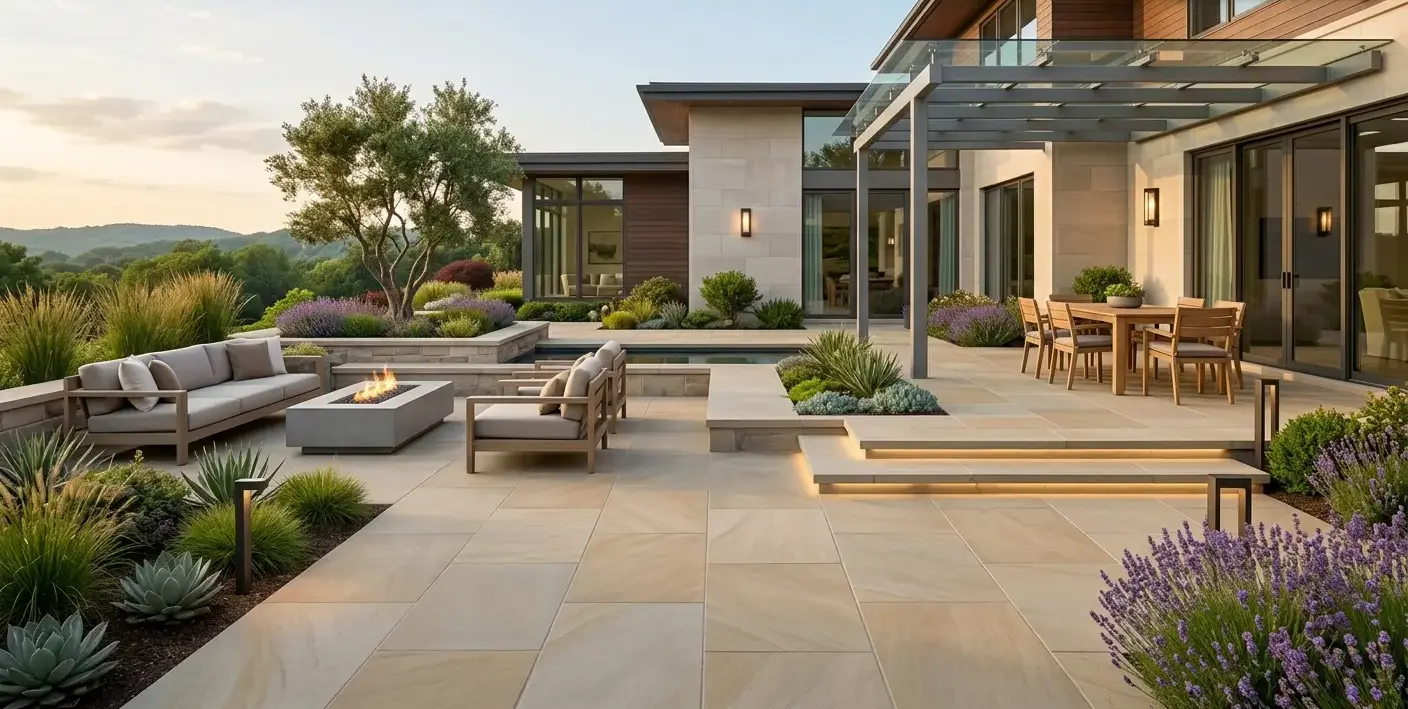
Joint style is a design decision with practical effects. The right spacing can support drainage, soften small layout differences, and strengthen the mood of the outdoor space, though results vary by site conditions. Tight joints for modern patios create a continuous, architectural surface. They work best with stone units that have consistent, rectified edges, because natural size variation makes narrow lines difficult to keep straight.
Wider and planted joints suit relaxed gardens and heritage looks, and they tolerate small size differences between stones. Joint choices also influence how a space feels at different times of day. Narrow lines catch less shadow, while wider gaps create depth under low evening light, which changes the character of gatherings.
Key benefits of choosing joint style deliberately:
- Visual identity: Joint width and fill set the tone, from sleek and linear to soft and garden-like.
- Drainage support: Open or planted joints can help water move through the surface, depending on the base and site conditions.
- Design flexibility: The same stone can look formal or casual by changing the spacing alone.
- Tolerance for variation: Wider joints accommodate natural size differences between stone units.
- Maintenance planning: Tight joints usually leave fewer gaps to clean, while planted joints need regular trimming and watering.
 Conceptual rendering
Paver Joint Design Ideas for Every Outdoor Space
Each joint style suits a different setting. Use these ideas to match spacing to architecture, stone type, and the way the area will be used day to day.
Tight Joints for a Modern Look
Tight paver joint installation for modern patios is a popular search because narrow lines emphasize clean geometry and large-format stone. The result feels calm, continuous, and architectural. Rectified edges allow the narrowest lines. Non-rectified stone shows natural size variation, so it calls for wider joints and a more forgiving, textured appearance. Large-format stone suits tight joints for modern patios, since fewer lines create a cleaner field. Plan joint alignment early so lines stay straight across steps, borders, and transitions.
 Conceptual rendering
Wide Joints for Rustic Character
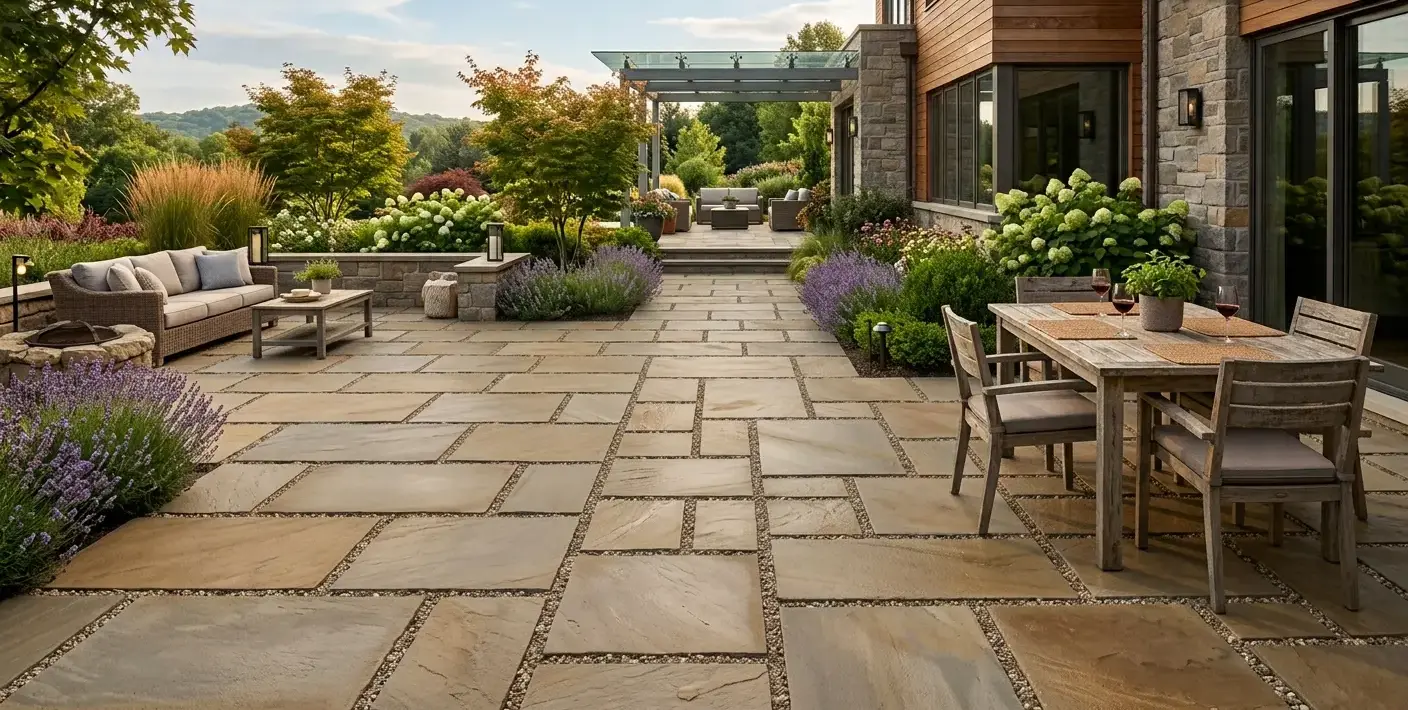
Wide joints give courtyards a rustic, Mediterranean, or cottage feel. The visible gaps frame each stone, which flatters irregular shapes, mixed sizes, and tumbled edges. They also forgive small size differences between units and can offer more room for drainage. Loose fill may need occasional refreshing, and weeds can appear if gaps are neglected. Gravel, sand, or stone chips can fill wide gaps for a textured finish. Match the fill color to the stone so the pattern feels intentional rather than busy.
Planted Joints for Soft, Green Texture
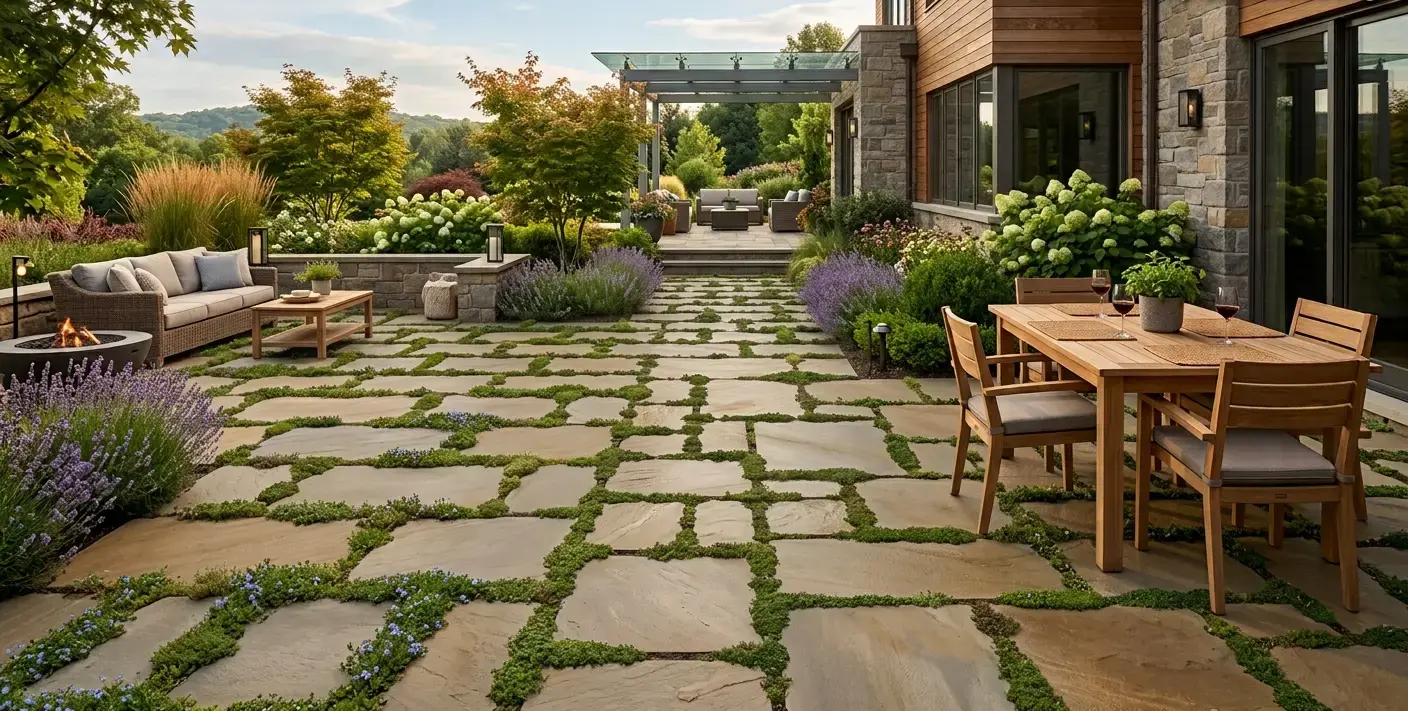
Planted joints invite low-growing groundcover between stones, creating a soft, garden-like pattern. Choose hardy plants suited to your local climate, and expect some trimming and watering. Plants do best in lightly used areas. Busy walkways, dining zones, and furniture placement can crush growth, so keep planted joints to garden paths and borders. Hardy, low-growing groundcovers are common choices, but confirm which varieties tolerate local heat, frost, and foot traffic before committing.
Joint Style Comparison at a Glance
Joint Style | Overall Look | Water Movement | Upkeep Level | Best Suited For |
Tight | Sleek, linear, modern | Limited through joints; surface slope matters | Lower, with periodic cleaning | Modern patios, large-format stone |
Wide | Rustic, textured, classic | Often more open, depending on fill and base | Moderate; refresh fill as needed | Irregular or mixed stone, casual yards |
Planted | Soft, green, natural | Often good, depending on plants and soil | Higher; trimming and watering | Garden paths, low-traffic areas |
Advantages and Drawbacks of Each Style
- Tight, advantage: A sleek look that suits modern architecture and large-format stone.
- Tight, drawback: Needs consistent edges, and narrow gaps may limit drainage through joints.
- Wide, advantage: Tolerates size variation and adds rustic depth.
- Wide, drawback: Fill may need refreshing, and gaps can collect debris or weeds.
- Planted, advantage: Adds greenery and a softer look in low-traffic areas.
- Planted, drawback: Requires trimming and watering, and plants may not survive heavy use.
 Conceptual rendering
Matching Stone to Sun, Frost, and Wet Areas
Granite, quartzite, travertine, and porcelain are suited to outdoor use, while marble and dolomite are better reserved for indoor spaces. Travertine is generally outdoor-approved, yet each product's frost data still matters. Granite, quartzite, and porcelain are UV-resistant choices. Travertine is not in that group, so verify the exact product's UV rating or confirm manufacturer sun exposure approval before planning for full sun.
In cold climates, ask for freeze-thaw test results and absorption data, which ASTM C97 measures for most natural stone. Polished finishes get slippery when wet, so choose textured, flamed, or bush-hammered finishes and ask for the product's DCOF result, measured under ANSI A326.3. For outdoor kitchens or tabletops that complement the patio, browse slab options in granite, quartzite, or porcelain.
Care and Cleaning for Joints
Clean spills promptly, avoid abrasive cleaners, and keep joints free of debris. The Natural Stone Institute offers a stone care course on sealers and cleaners, and each product's care instructions should take priority.Proper care preserves appearance, but no outdoor surface is entirely maintenance-free. Check joints each season. Remove debris, top up loose fill where needed, and trim planted gaps so growth stays tidy and water can keep moving.
How to Choose Your Joint Style
- Define the look. Decide whether the space should feel modern, rustic, or garden-inspired.
- Map the traffic. Note walkways, furniture zones, and entertaining areas where loose fill or plants may struggle.
- Review drainage and climate. Consider slope, rainfall, and freeze-thaw exposure for your location.
- Check stone edges and sizes. Rectified edges support narrower lines, while natural size variation needs wider joints.
- Gather your plans. Bring photos and measurements to a design consultant for a material-focused review.
Note: Some images on this page may be conceptual renderings created to illustrate design possibilities and may not depict actual installations.
Nova Tile and Stone: Expert Guidance for Your Outdoor Project
Nova Tile and Stone offers direct-import natural stone and tile, backed by commission-free design consultants who help compare materials, finishes, and layouts for exterior spaces. Visit the Reno showroom to compare stone finishes side by side. Explore the Minden showroom for more exterior options in person.
The Fernley showroom is also open for in-person visits. The Sacramento showroom offers the same hands-on review. Arranged delivery assistance is available for projects in Fernley, Reno, Minden, and Sacramento.
FERNLEY SHOWROOM
1855 US Highway 95A North, Fernley, NV 89408
 Google Maps
Store hours this week:
- Mon. - Fri.: 7:30 am - 4:00 pm
- Sat. - Sun.: Closed
RENO SHOWROOM
12835 Old Virginia Rd Suite 24, Reno, NV 89521
Store hours this week:
- Mon. - Fri.: 7:30 am - 6:00 pm
- Sat.: 9:00 am - 3:00 pm
- Sun.: Closed
MINDEN SHOWROOM
2548 Business Pkwy, Minden, NV 89423
Store hours this week:
- Mon. - Fri.: 7:30 am - 6:00 pm
- Sat.: 9:00 am - 3:00 pm
- Sun.: Closed
SACRAMENTO SHOWROOM
6100 Warehouse Way, Sacramento, CA 95826
Store hours this week:
- Mon. - Fri.: 7:30 am - 5:00 pm
- Sat. - Sun.: Closed
Consultants can also explain finish options and flag which suit wet or busy zones, so photos, dimensions, and inspiration images make the conversation more productive. Ready to compare ideas? Schedule a free consultation to review stone, finishes, and joint styles with a design consultant.
Conclusion
Choosing the right paver joint style comes down to look, traffic, drainage, and care. Tight joints deliver a modern edge, wide joints add rustic warmth, and planted joints bring greenery. Browse exterior stone and tile ideas online to pair spacing with your stone, climate, and maintenance routine.
Tight, wide, or planted, the best result is a joint style chosen on purpose. A short conversation with an experienced consultant can sharpen the details and narrow the choices. Bring your photos and measurements, and compare options with confidence. Book your free consultation today!
Frequently Asked Questions
Narrow joints suit modern patios, provided the stone has consistent, rectified edges. Non-rectified stone shows natural size variation and needs wider joints for a clean result.
Wide joints often allow more water movement, but drainage also depends on the base, slope, and fill material. Treat joint width as one factor, not a guarantee of a dry surface.
Planted joints suit light-use areas such as garden paths and borders. Frequent foot traffic, heavy furniture, and intense sun can damage plants, so choose hardy varieties and expect ongoing care.
Granite, quartzite, travertine, and porcelain are generally suited to outdoor use, while marble and dolomite are better reserved for indoor spaces. Verify each product's frost rating and, for full sun, its UV rating.
Natural stone such as granite, quartzite, and travertine typically needs sealing, while porcelain generally does not. Follow the product's care instructions, clean spills promptly, and avoid abrasive cleaners.