At a Glance
- Choose the finish and material first, then the look.
- Use honed or leathered pavers around a pool, and look for an Exterior, Wet rating.
- In freezing winters, choose granite, quartzite, or frost-rated porcelain.
- Keep rock salt and calcium chloride off natural stone.
- Porcelain looks uniform, while natural stone varies piece to piece.
- Use large pavers for open spaces and smaller ones for curves and slopes.
- Match the pool coping’s finish to the deck.
- Porcelain needs the least upkeep, and travertine needs periodic sealing.
In This Post
- How Do Granite, Quartzite, Travertine, and Porcelain Pavers Compare?
- Which Paver Finish Is Least Slippery Around a Pool?
- Which Pavers Hold Up Best to Freeze-Thaw Winters?
- How Does Ice Melt Affect Stone Pavers?
- Do You Want Natural Variation or a Uniform Look?
- What Paver Size Should You Choose?
- How Does Sealing Protect Stone Pavers?
- Should Pool Coping Match the Pool Deck?
- What Should You Bring When Choosing Pavers?
- Conclusion
- Frequently Asked Questions
To choose patio pavers, match the finish to how wet the area gets, the material to your winters, and your ice melt to the surface. Granite, quartzite, travertine, and porcelain are all good fits for outdoor paving, but each behaves differently in sun, water, and freezing weather.
Three standards and guidelines cover most of the decision. Under ANSI A137.1, porcelain is defined by water absorption of 0.5 percent or less. The ANSI A326.3 slip resistance standard includes a use category for exterior wet areas such as pool decks and patios, and University of Maryland Extension advises against using sodium and calcium chloride deicers on stone surfaces.
Our position is simple: choose the finish and material for your climate and your water first, then choose the look. Color is easier to settle last, once the shortlist only holds pavers suited to the space.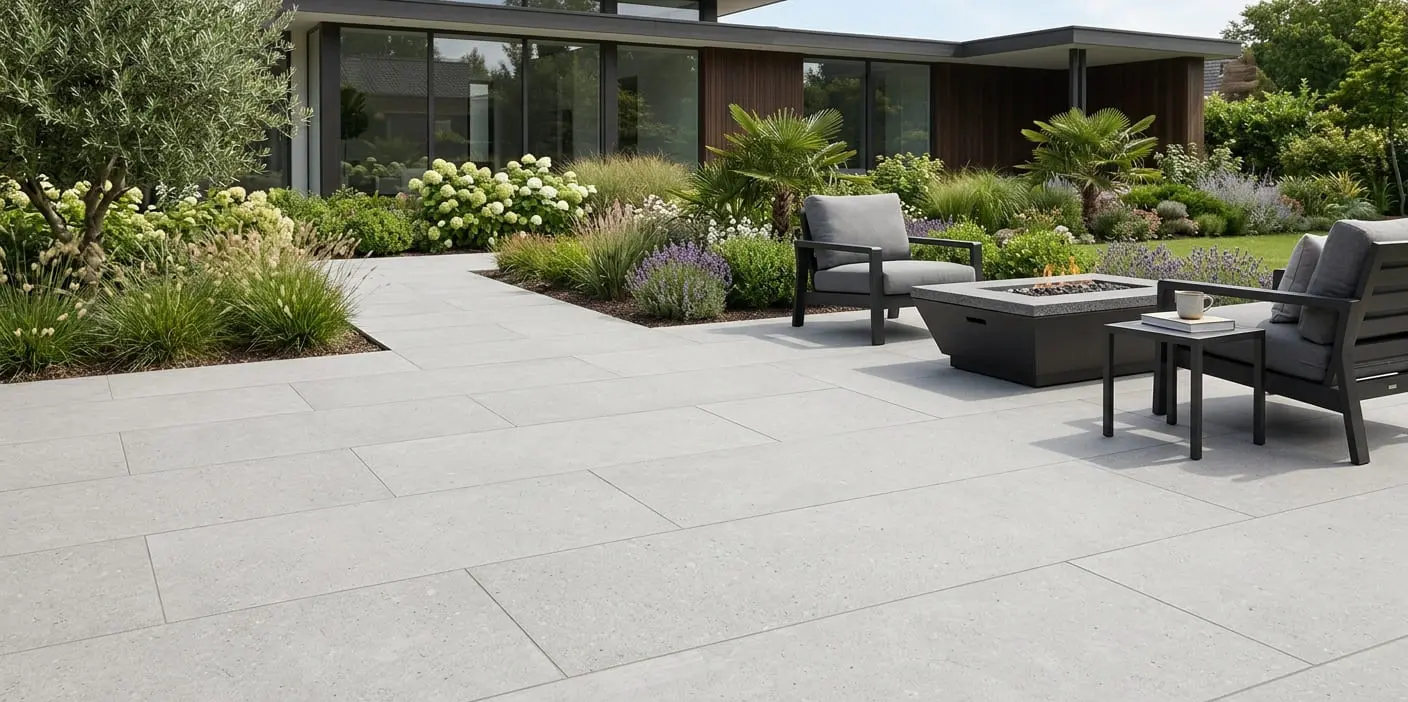
How Do Granite, Quartzite, Travertine, and Porcelain Pavers Compare?
Porcelain is defined by low water absorption and offers the most uniform look, granite and quartzite are the denser natural stones, and travertine is more porous and needs periodic sealing outdoors. The table below sets the four side by side.
Paver material | Absorption and density | Freeze-thaw fit | Acid sensitivity | Sealing | Look |
Granite | Dense natural stone | Strong choice for freeze-thaw areas | Siliceous; avoid acidic cleaners | Less frequent sealing | Natural variation |
Quartzite | Dense natural stone | Strong choice for freeze-thaw areas | Siliceous; avoid acidic cleaners | Less frequent sealing | Natural variation |
Travertine | More porous natural stone | Best sealed and well drained | Calcareous; acids can dull or etch it | Periodic sealing outdoors | Natural variation |
Porcelain | Water absorption of 0.5 percent or less | Usually frost resistant; confirm the rating | Avoid harsh cleaners | Follow manufacturer care | More uniform |
Which Paver Finish Is Least Slippery Around a Pool?
For a pool deck, start with a honed or leathered finish and then confirm the slip rating. Honed and leathered surfaces are matte or textured rather than glossy, and polished granite, quartzite, or travertine is not a finish we recommend for a pool deck.
The Tile Council of North America offers a free copy of ANSI A326.3, a slip resistance standard for hard surface flooring that sorts products into use categories, including Exterior, Wet for pool decks, walkways, and patios. That classification is declared by the manufacturer, so look for it in the product information.
If a paver doesn’t list an Exterior, Wet classification, ask for its test data before choosing it for the pool surround. Natural stone pavers don’t always come with one, so for granite, quartzite, or travertine the practical check is the finish itself, seen and felt in person.
Steps deserve the same scrutiny. The bottom tread of a patio stair is where wet shoes and sunscreen-slick feet meet, so we’d carry the honed or leathered finish all the way down rather than switching to polished for contrast.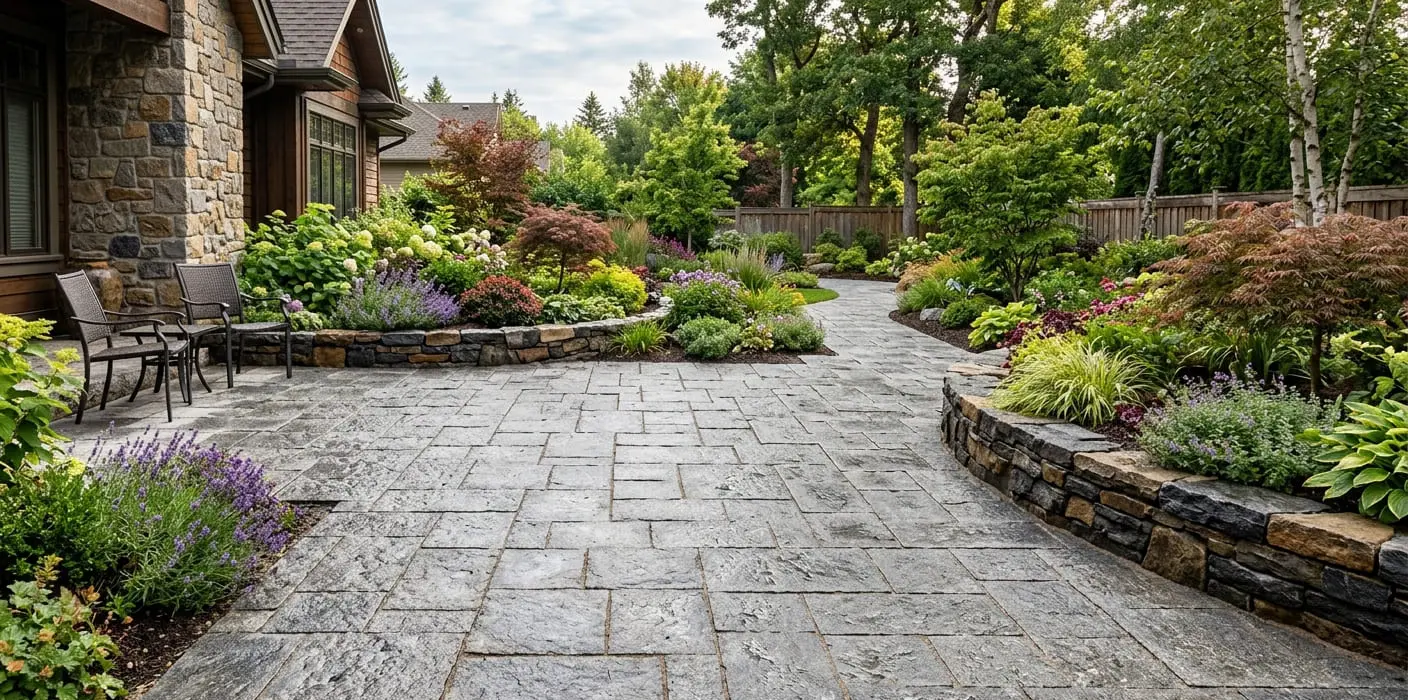
Which Pavers Hold Up Best to Freeze-Thaw Winters?
In hard-freeze areas like Reno, Minden, and Fernley, porcelain with a confirmed frost rating and dense natural stones like granite and quartzite are the strongest candidates. Water that soaks into a porous surface expands when it freezes, and over repeated cycles that can lead to hairline cracks and surface flaking.
Porcelain’s advantage starts with its definition. ANSI A137.1 requires porcelain to have water absorption of 0.5 percent or less, and products carrying the Porcelain Tile Certification Agency mark have been tested against that number.
Low absorption still isn’t a blanket guarantee. The Tile Council of North America notes that porcelain is usually frost resistant, though not always, so ask whether a porcelain paver has been tested under ASTM C1026, the freeze-thaw test method for ceramic tile, or check the manufacturer’s frost rating.
Travertine is a good fit for outdoor use, but it is more porous than granite or quartzite. In Northern Nevada, keep travertine to a sealed, well-drained patio rather than a low spot that holds meltwater.
Sacramento sees far fewer hard freezes than Northern Nevada, so freeze-thaw carries less weight there. A travertine pool deck that needs a careful winter plan in Fernley is a simpler choice in Sacramento, though it still benefits from periodic sealing.
How Does Ice Melt Affect Stone Pavers?
Rock salt and calcium chloride ice melts should stay off natural stone pavers. University of Maryland Extension advises that sodium and calcium chloride should not be applied to stone surfaces, and rock salt is sodium chloride.
The University of Maryland Extension deicer table also covers magnesium chloride and potassium chloride, but it doesn’t describe any of the four products as safe for stone. On a natural stone walkway, sand for traction, which the guide also suggests, is a lower-risk winter option.
Porcelain’s low absorption is one reason we point Northern Nevada households toward porcelain for the main path to the front door, but that doesn’t make rock salt safe on porcelain either. Grout and setting materials are part of the surface too, so follow the manufacturer’s winter care guidance.
Do You Want Natural Variation or a Uniform Look?
Choose porcelain for a uniform look and natural stone for variation. Each granite, quartzite, or travertine paver has its own tone, veining, and movement, so no two pieces match exactly.
Porcelain tends to offer a more consistent look from piece to piece. It is UV resistant, but performance may vary by color and finish, so ask about the specific color you’re considering for a full-sun area.
Porcelain is also made in looks that natural stone can’t offer, such as wood look. Ask our team which looks come in outdoor paver formats, since a wood-look patio can echo an indoor plank floor without bringing real wood outside.
Pavers rarely stand alone in a backyard. If the patio connects to a stone wall, column, or entry, our exterior stone guide covers those vertical applications, so the paving and the walls can be planned as one look.
What Paver Size Should You Choose?
Choose large format pavers for open, rectangular spaces and smaller pavers for curves and slopes. Our outdoor range runs from small to large format, and large formats mean fewer joints, which reads as calm and modern on a contemporary deck and leaves fewer grout lines to collect pine needles and dust.
A winding garden path or a patio that steps down with the grade follows those lines more naturally in smaller units. A large format forced around a curve can end up with awkward slivers at the edges.
Scale the paver to the space, not to the showroom. A large format that looks striking on a display wall can feel oversized in a narrow side yard, so measure the narrowest point of the area before falling for a size. Performance at any size depends on correct installation.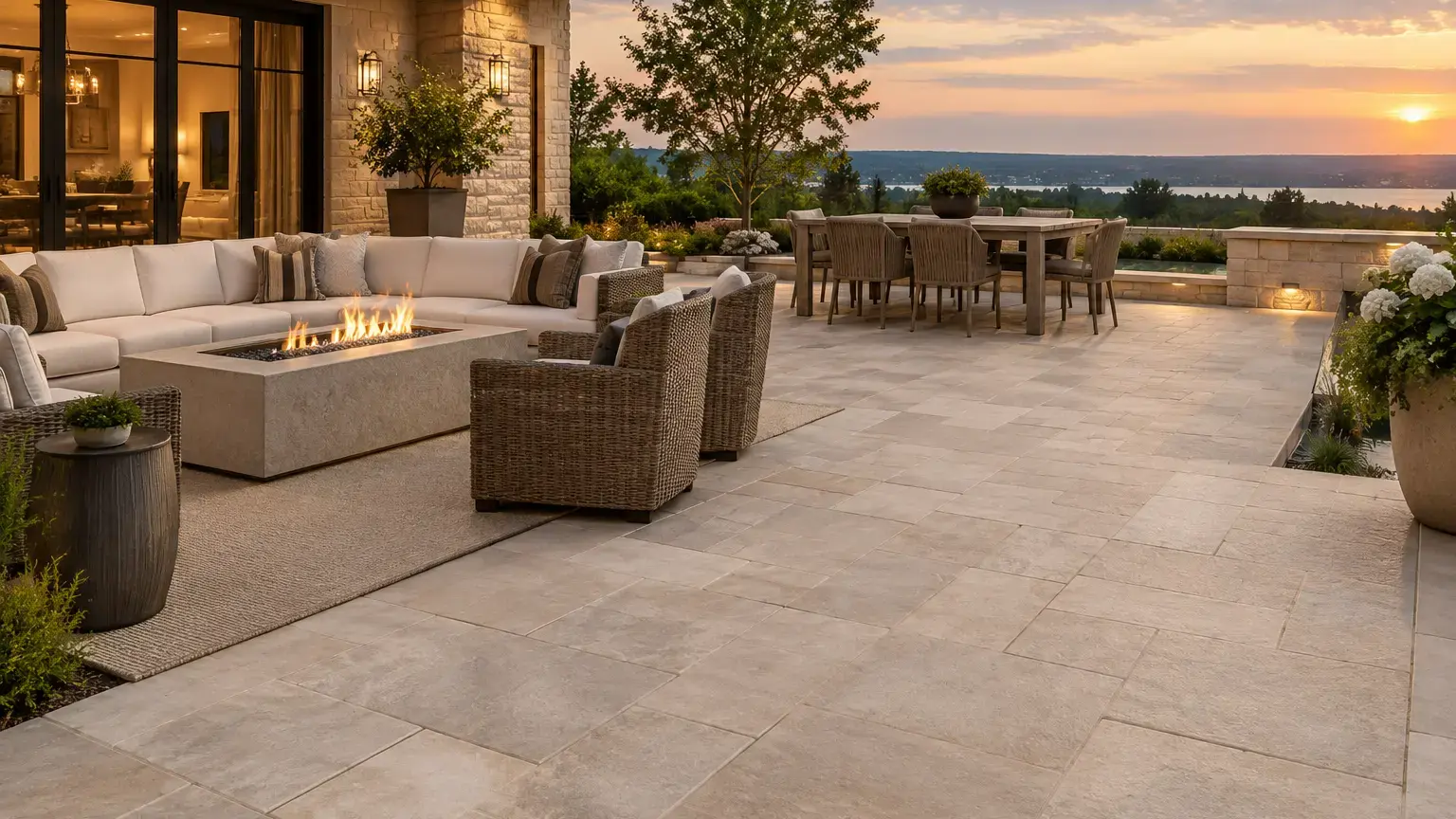
How Does Sealing Protect Stone Pavers?
Sealing makes natural stone pavers more stain resistant, not stain proof. The Natural Stone Institute explains that stone sealers work as repellents, which matters for a dining patio under a grill or a citrus tree.
Travertine is a calcareous stone, and the Natural Stone Institute notes that acidic products like lemon or vinegar can dull or etch calcareous stone, so spills on travertine need a fast rinse. Granite and quartzite are siliceous stones, but spills should still be cleaned promptly and acidic cleaners avoided.
In our view, porcelain is the lowest-maintenance paver of the four. Its absorption is very low, but regular cleaning is still recommended, and harsh cleaners should be avoided.
Should Pool Coping Match the Pool Deck?
Choose pool coping and the deck as one decision, even when the materials differ. Coping sits beside pavers in the Nova Tile and Stone outdoor selection, and because it takes direct splash and barefoot traffic, it should match the deck’s finish and, where the product lists one, its Exterior, Wet classification.
Matching the material pleases the eye, but matching the finish matters more for safety. A honed travertine deck with polished coping puts a glossy surface right where people climb out of the water.
Color affects comfort as well. Darker colors absorb more sunlight than lighter ones, so a pale travertine or a light porcelain is worth considering for the edge of a family pool in a hot Sacramento summer.
What Should You Bring When Choosing Pavers?
Bring three answers: whether the area gets wet, whether it freezes, and how many hours of direct afternoon sun it gets. Those three answers narrow the paver options quickly.
Then judge finalists in daylight. You can book a free design consultation to walk options with our team, or visit one of our showrooms across 150,000 square feet of combined display space. If you’d rather begin online, our full range of tile, stone, and slab options is a good first look.
Bring a photo of the house exterior and its trim colors too. A paver that reads neutral under showroom lights can lean warm or cool next to stucco, and seeing the two together saves a second trip.
Conclusion
For a Sacramento pool deck, our starting point is honed travertine or a light porcelain rated Exterior, Wet. For a front walk in Reno, Minden, or Fernley, porcelain with a confirmed frost rating is our first recommendation, and rock salt stays off any natural stone nearby.
For a dining patio, porcelain is our pick for the lowest-maintenance surface, with granite as the natural stone option. Bring your measurements, sun exposure notes, and a photo of the house to a Nova Tile and Stone showroom, and our team can help you build a shortlist around those answers.
If the project also includes a stone counter or fire feature beside the patio, our live slab inventory shows more than 500 bundles across four locations. You can request a quote on a slab and reserve it for three days while you bring your fabricator.
Note: Some images on this page may be conceptual renderings created to illustrate design possibilities and may not depict actual installations.
Frequently Asked Questions
Porcelain is a strong candidate because certified porcelain absorbs 0.5 percent water or less, which usually makes it frost resistant. It is not guaranteed for every product, so check the manufacturer’s frost rating before choosing one for a hard-freeze climate.
Exterior, Wet is a product use category in the ANSI A326.3 slip resistance standard for outdoor areas such as pool decks, walkways, and patios. The manufacturer declares the classification, so look for it in the product information.
It is best avoided. University of Maryland Extension advises against applying sodium or calcium chloride to stone surfaces, and sand is a lower-risk way to add traction.
Porous stones such as travertine benefit from periodic sealing outdoors, while denser granite and quartzite need less attention. Sealing makes stone more stain resistant, but spills should still be cleaned promptly.
Travertine is a good fit for outdoor patios and pool decks, especially in a honed finish. It is more porous than granite or quartzite, so in freeze-thaw areas it works best where water drains quickly and a sealing plan is in place.