Paver driveways and paver patios differ mainly in paver thickness, base depth, and laying pattern. Driveway pavers are typically 2 3/8 to 3 1/8 inches thick and rest on a 6- to 12-inch compacted base to support vehicle weight, while patio pavers are usually 1 3/8 to 2 inches thick over a 4-inch base built for foot traffic. Because a driveway carries vehicles and a patio only carries people and furniture, each surface calls for a different paver rating, base depth, and pattern, most often herringbone for driveways and running bond or basketweave for patios.
This is the same product used in two different places, but the load each one carries changes nearly every decision underneath the surface, from paver thickness and base depth to material choice and joint stability. Our full range of pavers and exterior stone spans both applications, so it helps to know what separates the two before you start comparing options.
Why Load-Bearing Requirements Change Everything
The single biggest factor separating a driveway from a patio is the load it needs to support. A patio typically handles foot traffic, patio furniture, and the occasional grill or planter. A driveway handles the repeated weight of vehicles, which can range from a few thousand pounds for a compact car to well over that for a truck or SUV, plus the dynamic stress of braking, turning, and parking in the same spot day after day.
This difference in load shapes nearly every other decision in the project. A base that works perfectly well under a patio might not hold up under a driveway, and a paver that looks great on a walkway might not be rated for vehicle traffic at all. Manufacturers typically publish separate compressive strength ratings for pedestrian versus vehicular applications, and it is worth checking that rating before assuming a paver style is suitable for both uses.
Paver Thickness Differences
Thickness is one of the most visible ways driveway and patio pavers differ.
- Patio pavers are commonly available in thinner profiles, often in the range of about 1 3/8 to 2 inches, since they only need to support foot traffic and light furniture.
- Driveway pavers are typically thicker, often in the range of 2 3/8 to 3 1/8 inches, to distribute vehicle weight and resist cracking under repeated pressure.
Some manufacturers produce a single paver line rated for both uses, especially in the standard 2 3/8-inch thickness, provided the paver's overall size isn't too large. Many product lines are still split into pedestrian and vehicular categories specifically because of this thickness and strength requirement. When comparing options, checking the manufacturer's stated application rating is a more reliable guide than judging by appearance alone, since two pavers can look nearly identical while carrying very different load ratings, something worth confirming directly with a supplier, especially for larger driveway projects. Contractors and designers sourcing pavers at volume can apply for a trade account for pricing and job-site delivery.
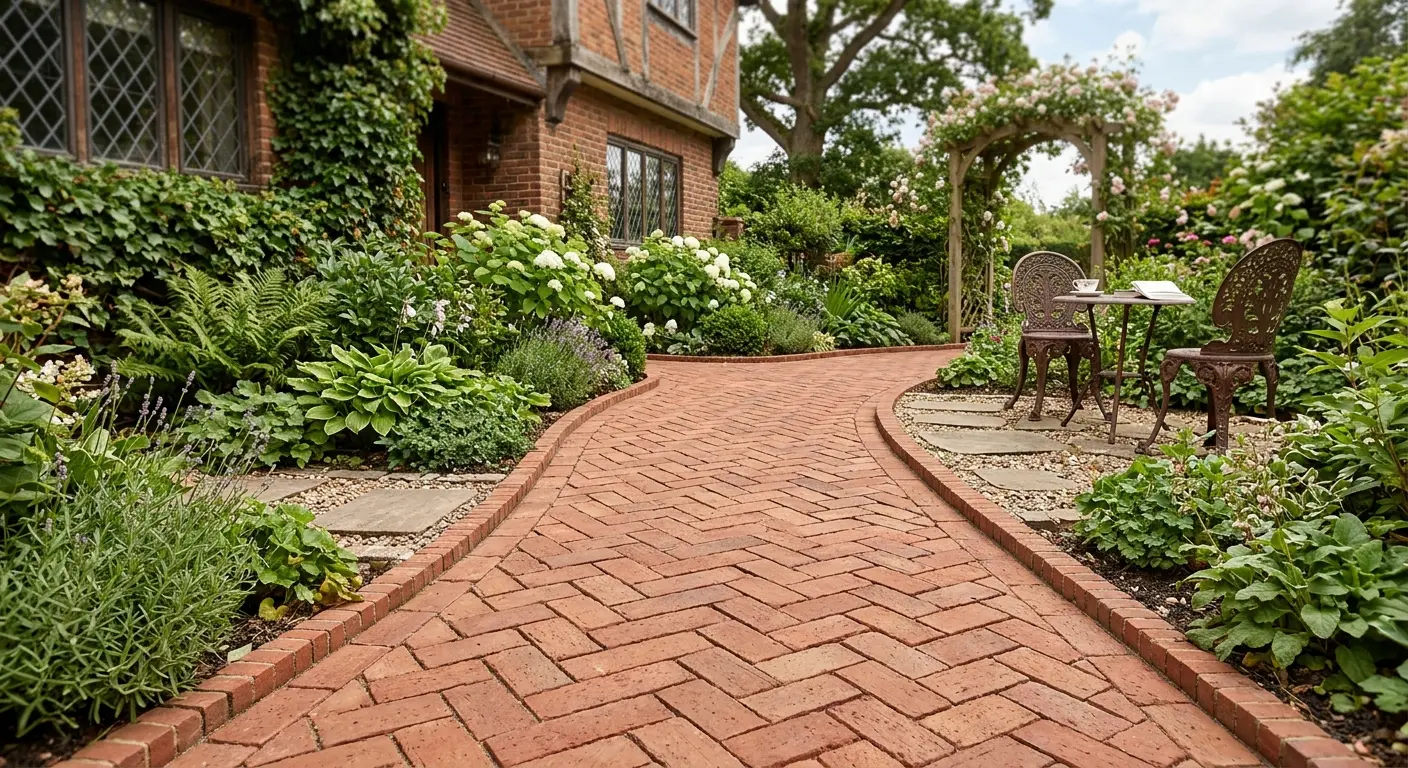
Base Depth and Preparation
Because a driveway has to resist much greater downward and lateral force, the base beneath it is built differently than the base beneath a patio.
A patio base commonly uses a compacted aggregate layer of around 4 inches, topped with a thin bedding layer of sand where the pavers are set. This is enough to provide a stable, well-drained surface for pedestrian use.
A driveway base needs considerably more depth, commonly cited in the range of 6 to 12 inches of compacted aggregate depending on soil conditions, drainage, and climate. Sites with poor drainage, clay-heavy soil, or freeze-thaw winters generally call for the deeper end of that range, while well-draining soil in a stable climate can sometimes get by with less.
This is one of the main reasons driveway projects tend to involve more excavation and more material than patio projects of a similar size. The visible surface may look similar, but the structure underneath is doing very different work.
Material Choices for Each Application
Concrete pavers, clay brick pavers, and natural stone pavers are all used in both driveways and patios, but material selection tends to skew differently depending on the application.
For driveways, concrete pavers are widely used because manufacturers produce vehicular-rated lines specifically engineered for higher compressive strength. Certain natural stone options, such as denser granite or basalt, can also perform well in driveway settings when properly rated and installed, though porous or softer stones are generally reserved for lower-traffic areas.
For patios, the material palette opens up considerably. Natural stone options like travertine, flagstone, and slate are popular for patios because their lighter foot traffic use does not require the same compressive strength as a driveway, and their natural texture and color variation work well for outdoor living spaces.
Color and finish selection also tend to differ by application. Driveways often lean toward finishes that hide tire marks and are easier to keep looking clean, such as mid-tone grays, browns, and blends, while patios have more flexibility to incorporate lighter tones, varied textures, and decorative patterns since they are viewed up close and used for relaxing rather than parking. Homeowners working with a tighter budget can often find both patio and driveway-rated materials in our current overstock selection at reduced pricing.
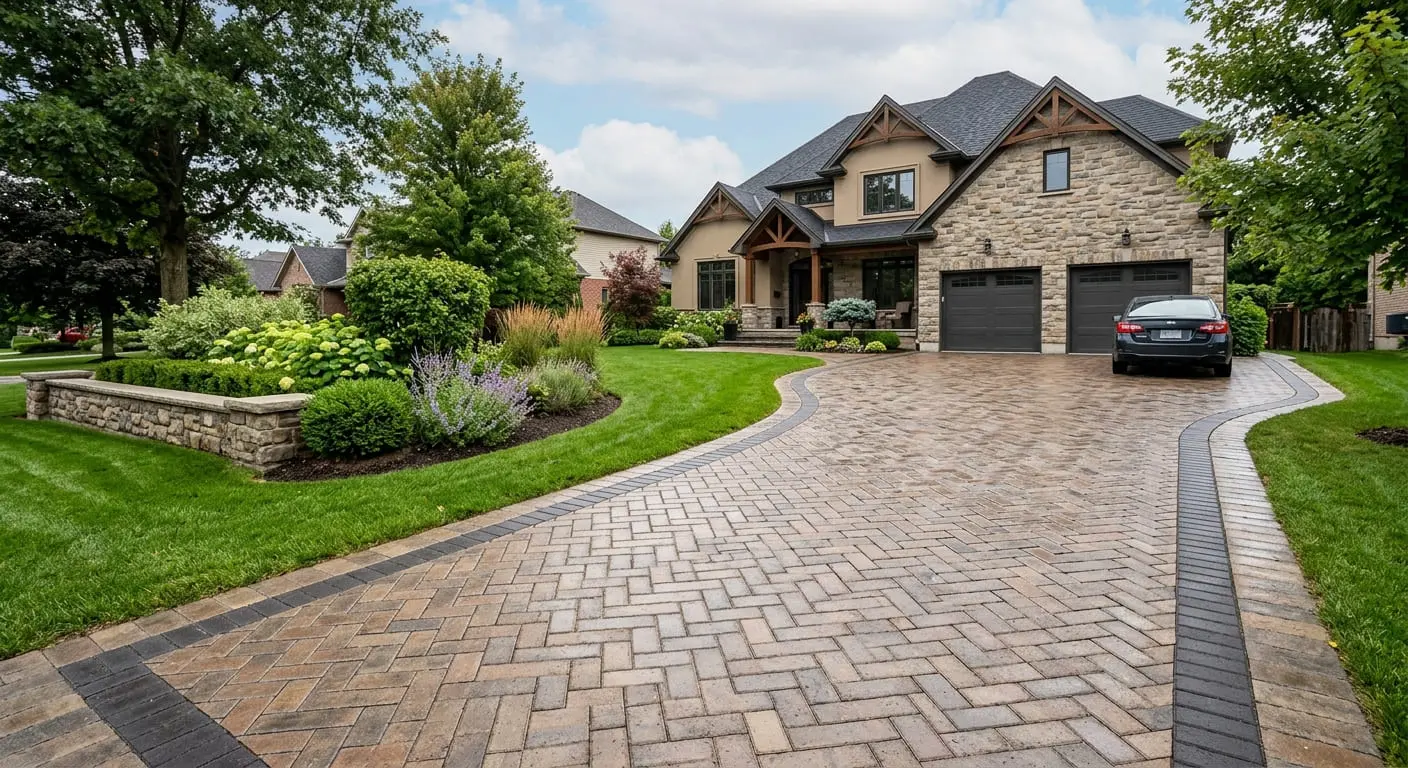
Pattern and Layout Considerations
Paver laying patterns matter differently depending on whether the surface holds furniture or vehicles.
For patios, popular patterns include running bond, herringbone, basketweave, and various mixed-format layouts that emphasize visual interest. Since the pattern is mostly decorative, there is a lot of design freedom.
For driveways, herringbone is one of the most widely recommended patterns specifically because of its structural benefits. The interlocking angles in a herringbone layout distribute weight evenly and help resist shifting from turning wheels, which is especially useful near the ends of a driveway where cars turn in and out. Simpler patterns like running bond are more often reserved for lower-traffic areas of a driveway, since straight joint lines running parallel to the direction of travel don't interlock as effectively under repeated turning forces.
Joint Sand and Edge Restraints
Both driveways and patios rely on joint sand and edge restraints to keep the paver field locked in place, but the demands are higher for driveways.
Polymeric sand, which hardens when activated with water, is commonly used in both applications to help stabilize joints and reduce weed growth. On a driveway, joint stability is especially important because the sand has to resist the lateral force of tires turning and braking, in addition to normal weathering.
Edge restraints, the rigid material installed along the outer edge of a paver field to keep the pattern from spreading outward over time, are also more heavily engineered for driveways. Because vehicle weight pushes outward on the paver field with much more force than foot traffic does, driveway edge restraints are typically anchored more securely and inspected more closely during the design stage.
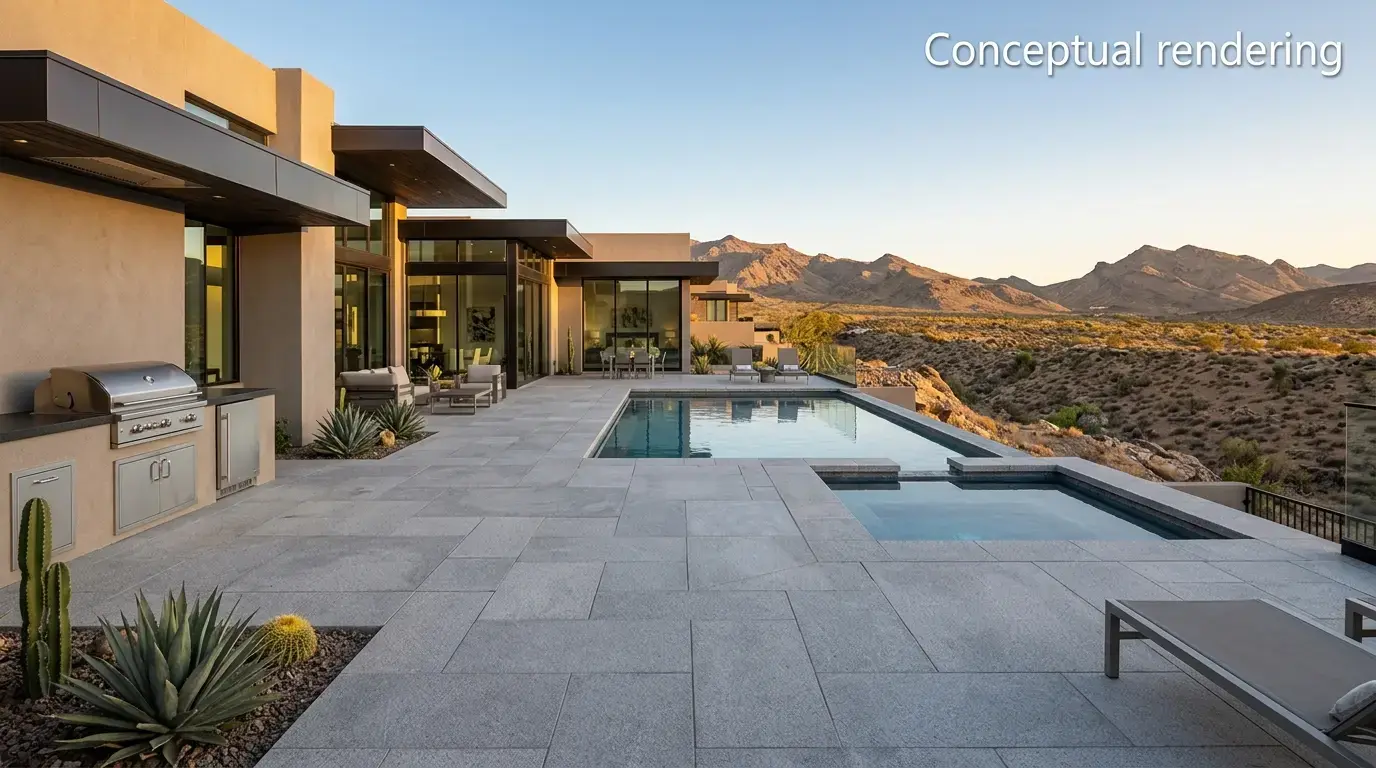
Drainage Differences
Both surfaces need proper drainage, but the consequences of poor drainage differ.
On a patio, standing water is mostly a comfort and appearance issue. On a driveway, standing water combined with vehicle weight can accelerate erosion of the base material, particularly at low points or near the street connection, which over time can lead to settling or an uneven surface. Because of this, driveway designs often pay closer attention to slope and water flow direction, especially where the driveway meets a garage, street, or sloped section of the property.
Which Should You Choose for Your Project?
For most homeowners, the choice is not really driveway pavers versus patio pavers as competing options. It is a matter of matching the right product to the right application. A driveway needs a vehicular-rated paver, a deeper compacted base, and a pattern chosen with structural performance in mind. A patio has more design flexibility since it only needs to support foot traffic and furniture, opening up a wider range of natural stone, color, and pattern options.
If a property includes both a driveway and a patio, it is common to use a coordinated but distinct product for each, choosing materials that complement each other visually while meeting the different performance requirements each surface demands. You can find your nearest showroom to see driveway and patio pavers side by side, and a design consultation can help sort through which paver and pattern combination works best for both surfaces at once.
Conclusion
Choosing between paver options for a driveway or a patio comes down to understanding what each surface actually needs to do. A driveway calls for thicker, vehicular-rated pavers, a deeper compacted base, and a pattern like herringbone that helps resist the lateral stress of tires turning and braking. A patio has more room for design experimentation, since foot traffic and furniture put far less demand on the paver and base than a car does. Matching the paver thickness, base depth, and pattern to the application is what keeps either surface performing well for years to come. Whether you are exploring paver options for a new driveway, a patio refresh, or both, our showrooms in Sacramento, Reno, Minden, and Fernley have paver samples on hand to help you compare colors, textures, and finishes in person before you decide.
Note: Some images on this page may be conceptual renderings created to illustrate design possibilities and may not depict actual installations.
Frequently Asked Questions
Some paver lines, particularly in a standard 2 3/8-inch thickness, are rated for both pedestrian and vehicular use. Others are not. It is important to check the manufacturer's application rating rather than assuming a paver style works for both, since driveway pavers generally need greater thickness and compressive strength than patio pavers.
Patio pavers are commonly around 1 3/8 to 2 inches thick, while driveway pavers are typically 2 3/8 to 3 1/8 inches. The added thickness helps driveway pavers distribute vehicle weight and resist cracking under repeated pressure.
The interlocking angles in a herringbone pattern help distribute weight evenly and resist shifting caused by the turning and braking forces of vehicles. This makes it a more structurally stable choice for driveways than straight-line patterns like running bond.
Yes. A patio base is often around 4 inches of compacted aggregate, while a driveway base commonly falls in the range of 6 to 12 inches depending on soil conditions, drainage, and climate. The deeper base helps the driveway support vehicle weight without settling or shifting.
Denser natural stone options, such as certain granite or basalt pavers, can be used in driveways when they carry an appropriate vehicular rating. Softer or more porous stones are generally better suited to patios and other lower-traffic areas.